Heart Murmurs in Children: Understanding Innocent and Pathologic Murmurs
A comprehensive guide to understanding, diagnosing, and managing heart murmurs in children.
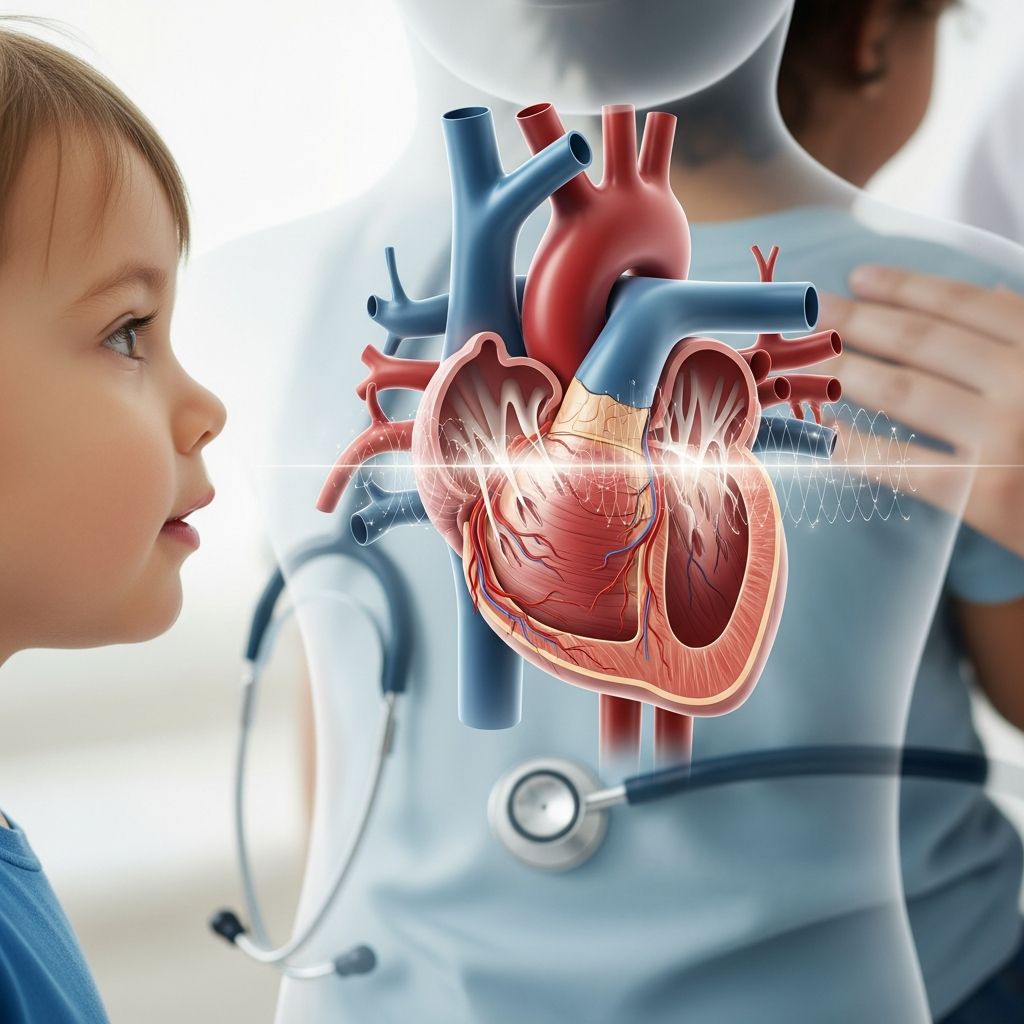
Heart Murmurs in Children: A Comprehensive Guide
Heart murmurs are among the most commonly encountered findings in pediatric clinical practice. Many parents experience significant anxiety when informed that their child has a heart murmur, yet the majority of murmurs detected in children are innocent and require no intervention. Understanding the distinction between innocent murmurs and potentially pathologic conditions is essential for healthcare providers and parents alike. This guide provides detailed information about heart murmurs in children, their characteristics, diagnostic approaches, and management strategies.
What is a Heart Murmur?
A heart murmur is simply an abnormal sound heard when listening to the heart with a stethoscope. Rather than representing disease, a murmur indicates that blood is flowing through the heart in a way that produces audible sound. The heart normally generates distinct sounds during its pumping cycle—the familiar “lub-dub” that reflects the closure of heart valves. When blood flows more turbulently than usual through the heart chambers, valves, or nearby blood vessels, it creates additional sounds that physicians detect as murmurs.
The key concept to understand is that a murmur itself is not a diagnosis but rather a finding that requires proper evaluation. Murmurs can result from normal blood flow patterns or from structural heart abnormalities, making clinical assessment crucial in determining their significance.
Prevalence of Heart Murmurs in Children
Heart murmurs are remarkably common in the pediatric population. Studies indicate that if physicians carefully examined every child using a stethoscope, murmurs would be detected in approximately 90 percent of children. Despite this high prevalence, the vast majority represent innocent, benign findings that do not require treatment or lifestyle restrictions. This frequency emphasizes the importance of distinguishing innocent murmurs from those requiring further evaluation and intervention.
Types of Heart Murmurs
Heart murmurs are classified into two primary categories based on their clinical significance and underlying cause:
Innocent Heart Murmurs
Innocent heart murmurs, also referred to as functional, benign, or flow murmurs, represent normal cardiovascular sounds produced by blood circulating through the heart and blood vessels. These murmurs result from normal blood flow patterns and do not indicate structural heart disease. Innocent murmurs are extremely common in childhood and can be identified by cardiologists based on characteristic auscultatory features heard with a stethoscope. Four distinct types of innocent murmurs occur throughout childhood, each with specific timing, location, and acoustic qualities that help identify them.
Children with innocent murmurs have completely normal hearts and require no treatment, no activity restrictions, and no prophylactic antibiotics. The presence of an innocent murmur should not impact a child’s participation in sports or other activities. Importantly, innocent murmurs may change or disappear as children grow, and parents should not be concerned about these variations.
Pathologic Heart Murmurs
Pathologic murmurs arise from structural or functional abnormalities of the heart. These may result from narrowing of heart valves (stenosis), leaking of heart valves (regurgitation), holes in the heart (septal defects), or other congenital or acquired heart conditions. Pathologic murmurs often require further investigation, ongoing monitoring, and potentially medical or surgical intervention depending on the specific condition and its severity.
Characteristics and Classification of Murmurs
Physicians characterize heart murmurs based on several specific features that help determine their significance:
Timing During the Cardiac Cycle
Murmurs are classified as systolic (occurring during heart contraction when blood is ejected from the ventricles) or diastolic (occurring during heart relaxation when blood fills the ventricles). Diastolic murmurs are more likely to represent pathologic conditions and warrant closer investigation. The specific timing within the cardiac cycle provides important diagnostic information.
Grading System for Murmur Intensity
The Levine grading system quantifies murmur loudness on a scale from 1 to 6:
- Grade 1: Barely audible; requires careful listening with a stethoscope
- Grade 2: Faint but immediately heard with a stethoscope
- Grade 3: Easily heard and moderately loud
- Grade 4: Easily heard over a wide area but without a palpable thrill (vibration felt on the chest wall)
- Grade 5: Loud with a precordial thrill
- Grade 6: Loud enough to hear with the stethoscope raised off the chest
Generally, innocent murmurs tend to be lower grade (typically grades 1 to 3), while pathologic murmurs are more likely to be higher grade (grades 3 to 6). However, grade alone does not definitively determine murmur significance.
Location and Radiation
The location where the murmur is best heard provides diagnostic clues. Different innocent murmurs have characteristic locations—some are best heard at the left sternal border, others at the apex or right upper sternal border. Pathologic murmurs may have different characteristic locations depending on the underlying lesion. The area over which the murmur is heard and whether it radiates to other locations (such as the axilla or back) provide additional diagnostic information.
Quality and Pitch
Murmurs are described qualitatively as harsh, blowing, musical, or vibratory. These descriptors reflect the acoustic characteristics and can assist in diagnosis. Additionally, the pitch or frequency of the murmur—whether high, medium, or low—contributes to the overall characterization.
Red Flag Characteristics Suggesting Pathologic Murmurs
Certain murmur characteristics should raise concern for underlying structural heart disease and prompt referral for further evaluation:
- Holosystolic murmurs (murmurs lasting throughout systole) carry significantly higher odds of representing pathologic lesions
- Grade 3 or higher murmurs warrant closer scrutiny
- Harsh murmur quality increases likelihood of pathology
- Abnormal splitting of the second heart sound (S2)
- Maximal intensity at the upper left sternal border
- Presence of systolic clicks
- Diastolic murmurs of any grade
- Murmurs that increase in intensity with standing (change in position)
The presence of one or more of these characteristics should prompt consideration for referral to a pediatric cardiologist or for echocardiographic evaluation.
Physical Examination Assessment
Comprehensive evaluation of a child with a detected heart murmur requires systematic physical examination beyond simply listening to heart sounds. The examination should include vital signs compared with age-appropriate norms, respiratory assessment, gastrointestinal examination, and thorough cardiovascular evaluation.
Cardiovascular Examination Components
Healthcare providers should inspect the chest wall for abnormalities of the sternum, which may be associated with congenital heart disease. Abnormal cardiac impulses or thrills (palpable vibrations) should be noted. The lungs should be auscultated for abnormal breath sounds such as crackles, which might indicate pulmonary congestion, or wheezing, which could suggest cardiac asthma. Abdominal examination should assess liver location and size, as enlargement or ascites may signal congestive heart failure.
Associated Symptoms and History
The clinical history is equally important as physical examination findings. Physicians should inquire about symptoms such as chest pain, dizziness, fainting, palpitations, or shortness of breath. Feeding difficulties, failure to thrive, or exercise intolerance in infants and young children warrant investigation. A family history of congenital heart disease, sudden cardiac death, or genetic syndromes associated with cardiac abnormalities increases the risk of pathologic murmurs.
Diagnostic Criteria for Innocent Murmurs
In children and adolescents (though not in infants under one year), an innocent heart murmur diagnosis can be confidently made when four specific criteria are met:
- Absence of abnormal physical examination findings except for the murmur itself
- Negative review of systems with no cardiac symptoms reported
- Negative history for features that increase risk of structural heart disease
- Characteristic auscultatory features consistent with a specific innocent murmur pattern
When these criteria are satisfied, no further diagnostic testing is required, and the child can be reassured and managed with routine pediatric care. However, when an innocent murmur cannot be definitively diagnosed based on these criteria, further evaluation is recommended.
Diagnostic Testing and Referral Indications
When clinical assessment cannot confidently establish an innocent diagnosis, diagnostic testing becomes necessary. Echocardiography, which uses ultrasound to visualize heart structures and assess function, serves as the definitive diagnostic test for evaluating murmurs.
Special Considerations in Neonates and Young Infants
Newborns warrant special consideration because they carry substantially higher risk of serious structural heart disease. Approximately 1 percent of newborns have a heart murmur, and 31 to 86 percent of these infants have underlying structural heart disease, including cases where infants are otherwise asymptomatic. Even potentially life-threatening heart defects may present only as an asymptomatic murmur without any other warning signs.
Because of this significantly elevated risk, referral to a pediatric cardiologist and/or echocardiography is recommended for all newborns with detected murmurs. The diagnostic criteria for innocent murmurs are not appropriate for infants younger than one year due to their higher rate of asymptomatic structural heart disease.
Role of Pediatric Cardiologists
Pediatric cardiologists demonstrate greater accuracy in detecting structural heart lesions in newborns and children with heart murmurs compared to other physicians specialists. They can provide confirmation or clarification of diagnoses for both innocent and pathologic murmurs. For families, referral to a pediatric cardiologist is associated with decreased parental anxiety regardless of whether the murmur ultimately proves innocent or pathologic. In geographically remote areas without ready access to pediatric cardiology, phonocardiography (digital heart sound recordings reviewed by pediatric cardiologists) has demonstrated high sensitivity and specificity in distinguishing innocent murmurs from potentially pathologic ones.
Management and Follow-up
Children with confidently diagnosed innocent murmurs require no special management beyond routine pediatric care. No activity restrictions, antibiotic prophylaxis, or dietary modifications are necessary. Children with innocent murmurs should participate fully in school, sports, and other activities appropriate for their age.
Parents should be educated about the benign nature of innocent murmurs and reassured that their child’s heart is structurally and functionally normal. Clear communication about what was found, what it means, and what it does not mean helps reduce unnecessary parental anxiety.
For children with pathologic murmurs, management depends on the specific diagnosis and severity of the condition. Treatment may range from watchful waiting with periodic re-evaluation to medication or surgical intervention.
Frequently Asked Questions About Heart Murmurs in Children
Q: How common are heart murmurs in children?
A: Heart murmurs are extremely common, detected in approximately 90 percent of children upon careful examination. However, the vast majority are innocent murmurs requiring no treatment or follow-up.
Q: Does my child with a heart murmur need to avoid sports and physical activity?
A: Children with innocent murmurs require no activity restrictions and should participate fully in age-appropriate sports and physical activities. Only children with significant structural heart disease may have activity limitations based on their specific condition.
Q: What symptoms should prompt concern about a heart murmur?
A: Symptoms such as chest pain, dizziness, fainting, palpitations, shortness of breath, or poor feeding and growth in infants warrant further evaluation even if a murmur has previously been characterized as innocent.
Q: Can innocent murmurs change or disappear over time?
A: Yes, innocent murmurs may change in quality, intensity, or disappear as children grow and develop. These variations are normal and do not indicate a problem with the heart.
Q: Will my child with a heart murmur need endocarditis prophylaxis?
A: Children with innocent murmurs do not require antibiotic prophylaxis. Only certain structural heart lesions requiring antibiotic prophylaxis before dental or surgical procedures would necessitate preventive antibiotics.
Q: What should I do if my child is diagnosed with a heart murmur?
A: First, ask your child’s physician to clarify whether the murmur is innocent or requires further evaluation. If innocent, no special precautions are needed. If further evaluation is recommended, follow your physician’s guidance regarding referral and testing.
Key Takeaways
Heart murmurs represent one of the most common findings in pediatric practice, yet their presence should not automatically cause concern. The ability to distinguish innocent murmurs from pathologic conditions is crucial for appropriate management and for reducing unnecessary parental anxiety. With careful history, thorough physical examination, and appropriate use of diagnostic testing, physicians can confidently identify innocent murmurs and reassure families. For murmurs requiring further evaluation, referral to pediatric cardiology ensures accurate diagnosis and optimal management. Understanding heart murmurs empowers both healthcare providers and parents to make informed decisions about children’s cardiac health.
References
- Evaluation and Management of Heart Murmurs in Children — American Academy of Family Physicians. 2011-10-01. https://www.aafp.org/pubs/afp/issues/2011/1001/p793.html
- How Serious is a Heart Murmur in a Child — Johns Hopkins All Children’s Hospital. 2024. https://www.hopkinsallchildrens.org
- What is a Heart Murmur? — Johns Hopkins Howard County Medical Center. 2010. https://www.hopkinsmedicine.org
- Understanding Congenital Heart Defects — American Heart Association. 2024. https://www.heart.org
- Pediatric Cardiovascular Assessment Guidelines — American Academy of Pediatrics. 2023. https://www.aap.org
Similar Articles








Read full bio of Sneha Tete