Heart Palpitations: Causes, Symptoms & Treatment
Understanding heart palpitations: Learn about causes, symptoms, diagnosis, and when to seek medical care.
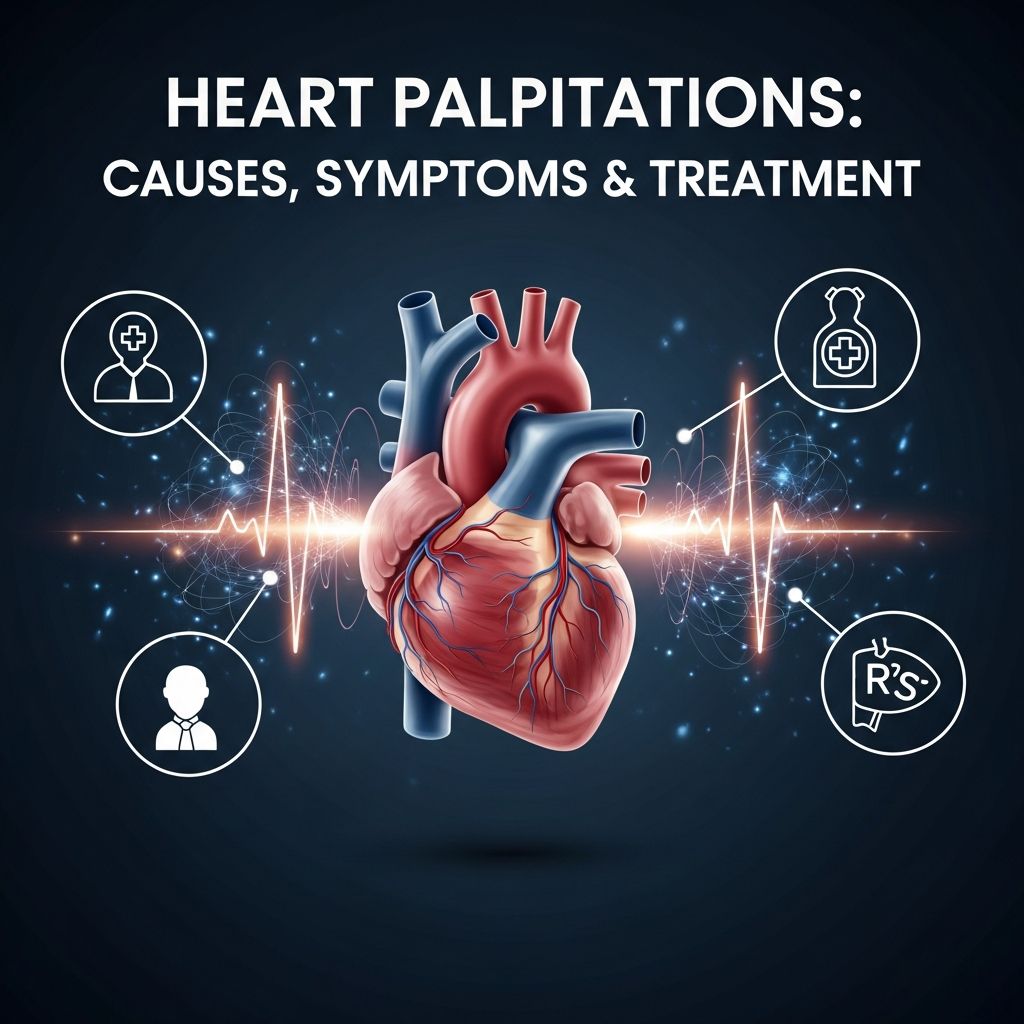
Understanding Heart Palpitations
Heart palpitations are the sensation that your heart is beating fast, irregularly, or forcefully. This common experience affects many people at some point in their lives, and while most palpitations are harmless, understanding their causes and when to seek medical attention is essential for your cardiovascular health. Your heart generates its own beats through intrinsic cells, while your nervous system and adrenaline also play significant roles in regulating heart rate. When these systems are activated, your heart may start beating faster than normal, creating the uncomfortable sensation of palpitations.
Palpitations can be triggered by various factors, ranging from everyday stressors to underlying medical conditions. Some people experience occasional extra beats, while others may have prolonged episodes lasting several hours. The duration and frequency of palpitations can vary significantly from person to person, and understanding the underlying cause is crucial for determining the appropriate course of action.
What Causes Heart Palpitations
Normal Causes of Palpitations
Many palpitations are completely benign and result from normal physiological responses. When your nervous system is activated or your body releases adrenaline, your heart responds by beating faster. This is a natural response to stress, anxiety, fear, or excitement. Exercise and physical exertion can also cause your heart to beat faster, which is a normal adaptation to increased oxygen demand.
Caffeine consumption, nicotine, and certain medications can trigger palpitations in sensitive individuals. Metabolic problems, such as an overactive thyroid, can also cause these kinds of heartbeats. Additionally, fever, anemia, and dehydration may contribute to the sensation of a racing heart. In most cases, these normal palpitations do not indicate a serious problem and tend to resolve on their own without intervention.
Extra Heartbeats
It is very common for people to have occasional extra beats originating from either the top chambers of the heart (atria) or the bottom chambers (ventricles). These premature beats are often described as skipped beats, extra beats, or irregular heartbeats. Many people never notice these extra beats, while others may feel them as a fluttering sensation or a forceful beat. Extra beats rarely cause any problems and usually do not require any treatment or exercise restriction. They often decrease in frequency over time and are generally considered benign occurrences.
Abnormal Heart Rhythms
Some people can have an abnormal fast heart rhythm that occurs because of abnormal electrical connections in the heart. These abnormal rhythms are not normal and often occur at rest, although they can occur with activity as well. These represent an uncommon cause of palpitations, particularly in individuals who do not have congenital heart disease. Unlike normal palpitations and extra beats, abnormal heart rhythms may require medical evaluation and treatment to prevent complications.
Atrial fibrillation is one of the most common abnormal heart rhythms characterized by rapid and erratic heartbeats. In this condition, the atrium beats super fast with impulses swirling around at 600 to 800 beats per minute. The lower chambers are somewhat protected by the AV node, which acts like a filter, but the condition still causes significant symptoms and increases stroke risk. Atrial fibrillation is age-related and becomes increasingly common around age 50, affecting approximately 1 in 10 people by age 81.
Symptoms Associated with Palpitations
The primary symptom of palpitations is the sensation that your heart is beating too fast, too hard, or irregularly. However, palpitations can present with various accompanying symptoms that may help determine their severity and cause. These episodes can be extremely brief, lasting only several seconds, or they can be prolonged, lasting several hours or even longer.
Related Stories



Associated symptoms may include:
- Dizziness or lightheadedness
- Chest pain or discomfort
- Trouble catching your breath or shortness of breath
- Fatigue and decreased exercise tolerance
- Fainting or syncope in severe cases
- A feeling of forceful or pounding heartbeats
- Sensation of skipped beats or irregular rhythm
These symptoms are common both with normal fast heartbeats and abnormal fast heartbeats. However, when multiple symptoms occur together, particularly chest pain, severe shortness of breath, or fainting, it is important to seek immediate medical attention. The combination and severity of symptoms can help healthcare providers determine whether palpitations are benign or require further investigation and treatment.
Diagnosis and Evaluation
If you experience occasional palpitations that resolve quickly and are not accompanied by concerning symptoms, medical evaluation may not be necessary. However, if you have recurrent episodes of palpitations or symptoms that concern you, it is important to consult with a healthcare provider for proper evaluation.
Medical History and Physical Examination
A detailed history and physical examination, including a comprehensive medication history, are essential parts of the workup. Your healthcare provider will ask about the frequency, duration, and characteristics of your palpitations. They will also inquire about associated symptoms, triggers, and your medical history. A physical examination helps identify any underlying cardiac or systemic conditions that may be contributing to palpitations.
Electrocardiogram (ECG)
A 12-lead electrocardiogram is an essential first step toward diagnosis. The ECG provides a graphical representation of your heart’s electrical activity and can reveal abnormal rhythms. The normal ECG shows the P wave (representing upper chamber contraction), the PR interval (the flat area as the impulse travels through the AV node), the QRS complex (representing ventricle contraction), and the T wave (when the heart recovers). Any deviation from this normal pattern may indicate an arrhythmia or other cardiac condition.
Cardiac Monitoring
If your palpitations are not captured during an office visit, you may be referred to a cardiologist to determine whether your palpitations are concerning. In such cases, you may be sent home with a portable cardiac monitor that can record your heart rhythm during your symptoms and transmit it over a phone line for review. This continuous or event-based monitoring can help identify the exact nature of your palpitations and guide treatment decisions.
Additional Testing
In high-risk patients, particularly those with underlying coronary artery disease or structural cardiac abnormalities, additional tests may be recommended. These may include echocardiography, stress testing, or advanced imaging studies to assess heart structure and function. Elderly patients presenting with palpitations have a higher risk of having a cardiac cause, making comprehensive evaluation particularly important in this population.
Treatment Options
Benign Palpitations
Palpitations due to normal fast heartbeats do not require any medications or other testing. They almost always improve over time without intervention. For palpitations triggered by caffeine, nicotine, or stress, lifestyle modifications such as reducing caffeine intake, avoiding stimulants, and implementing stress-reduction techniques can be helpful. Regular exercise, adequate sleep, and maintaining a healthy weight also contribute to overall cardiovascular health and may reduce palpitation episodes.
Abnormal Heart Rhythms
Abnormal heartbeats may require treatment, consisting of either medication or a procedure to eliminate the source of the abnormality. The specific treatment depends on the type of arrhythmia, its frequency, severity, and associated symptoms. Some abnormal rhythms can be cured through catheter ablation, a minimally invasive procedure in which an electrophysiologist identifies and eliminates the source of the abnormal electrical activity.
For atrial fibrillation and other persistent arrhythmias, antiarrhythmic medications may be prescribed to help control heart rate and maintain normal rhythm. Beta-blockers and calcium channel blockers are commonly used to slow the heart rate, while other medications work to prevent the abnormal rhythm from occurring. In some cases, a pacemaker or implantable cardioverter-defibrillator (ICD) may be necessary to manage serious arrhythmias and prevent sudden cardiac events.
When to Seek Medical Attention
While most palpitations are benign and resolve on their own, certain situations warrant immediate medical attention. You should seek emergency care if you experience:
- Severe chest pain accompanied by palpitations
- Fainting or loss of consciousness
- Severe shortness of breath
- Palpitations lasting several hours
- Palpitations occurring frequently or in patterns
- Palpitations accompanied by dizziness and chest discomfort
Additionally, if you have a history of heart disease or if palpitations significantly impact your daily activities, consult with your healthcare provider for proper evaluation and management. Early identification and treatment of serious arrhythmias can prevent complications such as heart failure, stroke, or sudden cardiac death.
Lifestyle Modifications to Reduce Palpitations
Several lifestyle changes can help minimize palpitations and support overall heart health. Reducing caffeine and nicotine consumption is one of the most effective strategies, as these substances are common palpitation triggers. Limiting alcohol intake and avoiding recreational drugs also helps maintain a stable heart rhythm. Managing stress through meditation, yoga, deep breathing exercises, or other relaxation techniques can significantly reduce anxiety-triggered palpitations.
Regular aerobic exercise improves cardiovascular health and can actually reduce the frequency of both normal and abnormal palpitations over time. Maintaining adequate hydration and electrolyte balance is essential, as dehydration and electrolyte imbalances can trigger palpitations. Ensuring adequate sleep and maintaining a consistent sleep schedule also supports cardiovascular health. For individuals with thyroid conditions or other metabolic issues, proper medical management of these underlying conditions is crucial for controlling palpitations.
Frequently Asked Questions
Q: Are heart palpitations dangerous?
A: Most heart palpitations are benign and not dangerous. However, some abnormal heart rhythms can be serious and require treatment. If you experience severe symptoms such as chest pain, fainting, or severe shortness of breath, seek immediate medical attention.
Q: Can anxiety cause heart palpitations?
A: Yes, anxiety and stress can trigger palpitations through the release of adrenaline. These anxiety-related palpitations are usually benign and improve with stress management techniques.
Q: Do I need medication for palpitations?
A: Most benign palpitations do not require medication. However, abnormal heart rhythms may require antiarrhythmic medications or other treatments as determined by your cardiologist.
Q: How long do palpitations typically last?
A: Palpitations can last from just a few seconds to several hours depending on the cause. Most benign palpitations are brief and resolve on their own.
Q: Can exercise cause palpitations?
A: Yes, exercise naturally increases heart rate. However, if palpitations occur at rest or are accompanied by concerning symptoms during exercise, consult your healthcare provider.
Q: What foods can trigger palpitations?
A: Caffeine-containing foods and beverages, high-sugar foods, and highly processed foods can trigger palpitations in sensitive individuals. Maintaining stable blood sugar levels helps prevent these episodes.
References
- Johns Hopkins All Children’s Sports Medicine – Palpitations — Johns Hopkins Medicine. 2023. https://www.hopkinsmedicine.org/health/conditions-and-diseases/palpitations
- Emergency Management of Palpitations in the Elderly: Epidemiology and Diagnostic Approach — Johns Hopkins University School of Medicine. 2024. https://pure.johnshopkins.edu/en/publications/emergency-management-of-palpitations-in-the-elderly-epidemiology–3
- Secret (and Not So Secret) Signs of Arrhythmia — Johns Hopkins Hospital Arrhythmia Service. 2023. https://www.hopkinsmedicine.org/health/conditions-and-diseases/arrhythmias
- New Study Uncovers Major Cause of Deadly Heart Arrhythmias — Johns Hopkins Biomedical Engineering Department. 2024. https://www.bme.jhu.edu/news-events/news/new-study-uncovers-major-cause-of-deadly-heart-arrhythmias/
Similar Articles








Read full bio of Sneha Tete