Heart Rate Variability: 6 Science-Backed Ways To Improve
What heart rate variability means for your heart health, how it's measured, and ways to improve it for better wellness.
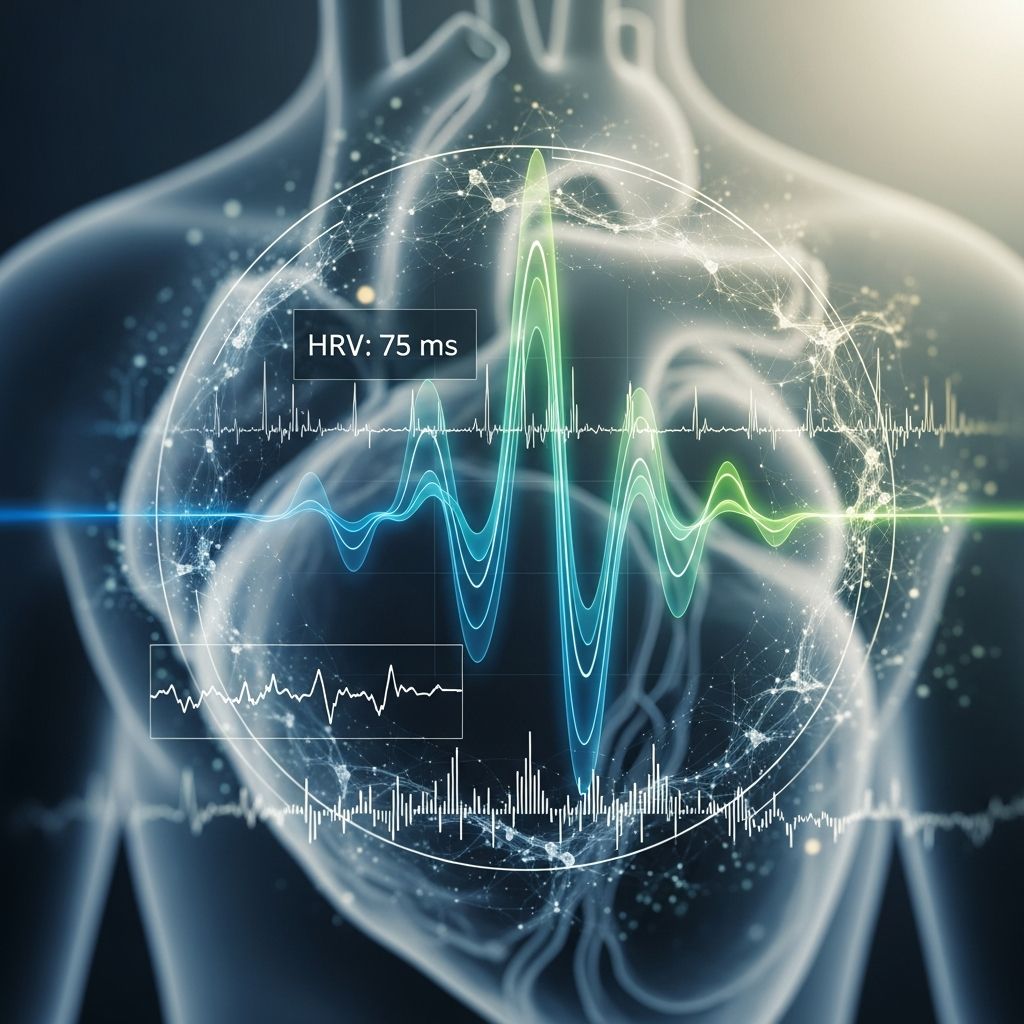
Heart rate variability (HRV) refers to the variation in time intervals between consecutive heartbeats, reflecting the autonomic nervous system’s adaptability to stress and environmental changes. Unlike a steady metronome-like beat, a healthy heart exhibits natural fluctuations driven by interactions between the sympathetic (fight-or-flight) and parasympathetic (rest-and-digest) branches of the nervous system.
Higher HRV generally signals greater cardiovascular resilience, while lower HRV may indicate stress, aging, or underlying health issues like heart disease, diabetes, or hypertension. Monitoring HRV provides insights into overall well-being beyond simple heart rate measurements.
What Is Heart Rate Variability?
HRV measures the millisecond differences in intervals between heartbeats, known as RR or NN intervals (normal-to-normal beats excluding premature ones). A healthy heart’s rhythm is dynamic, constantly adjusting to breathing, activity, and emotions via respiratory sinus arrhythmia (RSA) and baroreceptor reflexes.
This variability arises from heart-brain interactions and nonlinear autonomic processes, allowing rapid adaptation to challenges. For instance, during inhalation, heart rate speeds up slightly; it slows on exhalation due to vagal nerve influence. Low HRV often correlates with faster resting heart rates, reducing time for beat-to-beat variation—a phenomenon called cycle length dependence.
Why Is Heart Rate Variability Important?
HRV serves as a noninvasive marker of autonomic balance and physiological resilience. Higher HRV links to better cardiovascular health, stress recovery, and lower mortality risk. Conversely, reduced HRV predicts future issues like arrhythmias, heart failure, or sudden cardiac events.
- Health Indicator: Low HRV appears in conditions like diabetes, high blood pressure, anxiety, depression, asthma, and heart arrhythmias, signaling poor adaptability.
- Aging Effect: HRV naturally declines with age due to reduced vagal tone, though exercise can mitigate this.
- Performance Metric: Athletes use HRV to gauge recovery and overtraining; elevated resting HRV (with lower rates under 90 bpm) indicates fitness.
Research shows HRV’s prognostic value: resting heart rates exceeding 90 bpm associate with higher mortality, partly due to suppressed variability.
How Is Heart Rate Variability Measured?
HRV assessment uses electrocardiograms (ECG), photoplethysmography (PPG) via wearables like smartwatches, or chest straps. Measurements span 24-hour Holter monitors, short-term (5 minutes), or ultra-short-term (<5 minutes) recordings.
Key metrics fall into time-domain, frequency-domain, and nonlinear categories:
| Domain | Metric | Description | Significance |
|---|---|---|---|
| Time-Domain | RMSSD | Root mean square of successive differences | Primary vagal (parasympathetic) activity measure; reflects short-term beat-to-beat variance |
| Time-Domain | SDNN | Standard deviation of NN intervals | Overall HRV; higher values indicate better adaptability |
| Time-Domain | pNN50 | Percentage of adjacent NN intervals >50ms apart | Correlates with RMSSD and high-frequency power |
| Frequency-Domain | HF (0.15-0.4 Hz) | High frequency, respiratory-linked | Parasympathetic dominance via RSA |
| Frequency-Domain | LF (0.04-0.15 Hz) | Low frequency, baroreflex-related | Mixed sympathetic/parasympathetic; modulated by blood pressure fluctuations |
| Frequency-Domain | VLF (<0.04 Hz) | Very low frequency | Intrinsic cardiac rhythms, physical activity influence |
| Nonlinear | SD1 | Poincaré plot short-term variability | Equivalent to RMSSD; short-term dynamics |
Related Stories



Shorter recordings suit daily tracking but aren’t interchangeable with 24-hour data, which captures circadian rhythms. Devices like Apple Watch or Whoop provide user-friendly HRV via PPG, though accuracy varies.
What Is a Good Heart Rate Variability?
“Good” HRV varies by age, fitness, sex, and measurement duration—no universal norm exists. Generally:
- RMSSD: 20-70 ms for adults (higher in athletes, lower in elderly)
- SDNN (5-min): 50+ ms healthy; <20 ms concerning
- 24-hour SDNN: >100 ms optimal
Trends matter more than absolutes: track personal baselines. Women often show slightly higher HRV; it peaks in 20s-30s, declining thereafter. Compare against population norms cautiously, prioritizing individual changes.
What Affects Heart Rate Variability?
Numerous factors influence HRV:
- Age: Declines progressively due to vagal tone reduction.
- Fitness: Aerobic exercise boosts parasympathetic activity, raising HRV; acute bouts temporarily lower it.
- Stress/Anxiety: Sympathetic dominance suppresses HRV.
- Sleep: Poor quality reduces overnight recovery HRV.
- Breathing: Slow, deep breaths enhance RSA and HF power.
- Medications/Devices: Beta-blockers or pacemakers alter patterns.
- Lifestyle: Caffeine, alcohol, smoking lower HRV; hydration and nutrition support it.
Physical activity initially drops HRV via sympathetic surge but chronically elevates it through vagal enhancement.
Can You Improve Your Heart Rate Variability?
Yes, lifestyle interventions reliably enhance HRV:
- Exercise Regularly: Moderate aerobic training (e.g., 30-60 min/day) increases vagal tone.
- Practice Breathing Exercises: 4-6 breaths/min activates RSA, boosting HF-HRV.
- Prioritize Sleep: 7-9 hours/night for autonomic recovery.
- Manage Stress: Mindfulness, yoga, or meditation reduce sympathetic overdrive.
- Optimize Nutrition: Omega-3s, antioxidants support cardiovascular health.
- Avoid Stimulants: Limit alcohol, caffeine to prevent acute dips.
Consistency yields results: studies show 8-12 weeks of training improve RMSSD by 20-50% in sedentary individuals.
Heart Rate Variability and Heart Disease
Reduced HRV strongly associates with cardiovascular risks. Post-heart attack patients with low HRV face higher mortality; it’s a predictor in congestive heart failure. Sinus arrhythmia beyond respiratory causes warrants evaluation.
HRV tracks disease progression: diabetes erodes variability via neuropathy; hypertension via baroreflex impairment. Monitoring aids risk stratification and therapy efficacy.
Frequently Asked Questions (FAQs)
What does low heart rate variability mean?
Low HRV indicates reduced autonomic flexibility, often from stress, illness, or aging, signaling higher health risks.
Is higher HRV always better?
Generally yes for resilience, but extremes can reflect issues; context like fitness level matters.
How accurate are wearables for HRV?
Modern devices approximate well for trends via PPG, but ECG gold standard for precision.
Does HRV change daily?
Yes, influenced by sleep, activity, stress—measure consistently (e.g., morning rest).
Can HRV predict heart attacks?
It flags risk via poor adaptability, but not diagnostic alone; combine with other metrics.
References
- Heart Rate Variability (HRV) — Cleveland Clinic. 2023-10-20. https://my.clevelandclinic.org/health/symptoms/21773-heart-rate-variability-hrv
- An Overview of Heart Rate Variability Metrics and Norms — PMC (Frontiers in Public Health). 2017-09-22. https://pmc.ncbi.nlm.nih.gov/articles/PMC5624990/
- Heart Rate Variability: An Old Metric with New Meaning — Arrhythmia & Electrophysiology Review. 2017-11-01. https://www.aerjournal.com/articles/heart-rate-variability-old-metric-new-meaning-era-using-mhealth-technologies-health-and
- Update: factors influencing heart rate variability–a narrative review — Frontiers in Physiology. 2024-08-21. https://www.frontiersin.org/journals/physiology/articles/10.3389/fphys.2024.1430458/full
- Heart Rate Variability — American Heart Association (Circulation). 1996-03-01. https://www.ahajournals.org/doi/10.1161/01.cir.93.5.1043
Similar Articles








Read full bio of Sneha Tete