Heartburn Overview: Causes, Symptoms & Treatment
Understanding heartburn: Learn what causes it, how to recognize symptoms, and effective treatment options.
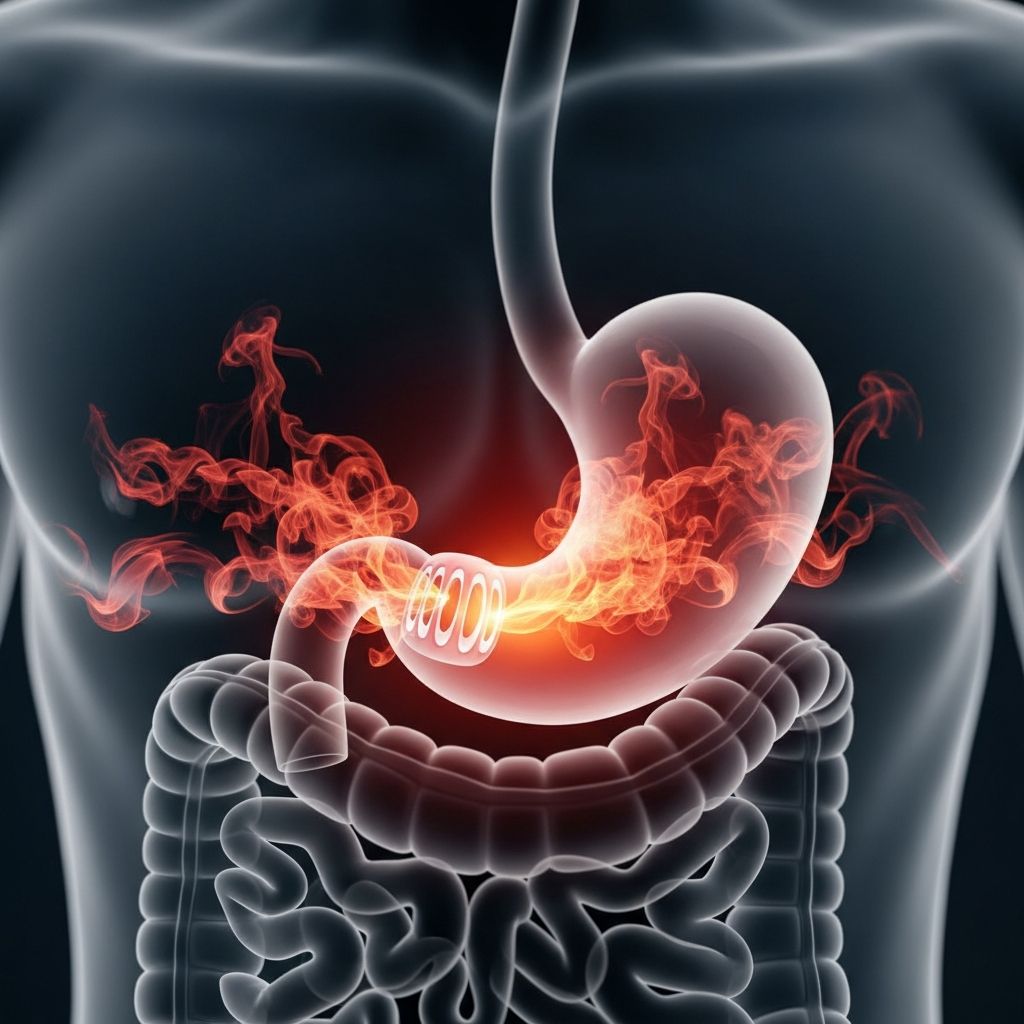
Understanding Heartburn: What It Is and How It Affects You
Heartburn is a painful, burning sensation in the middle of your chest that many people experience at some point in their lives. Despite its misleading name, heartburn has nothing to do with your heart. Instead, the discomfort originates in your esophagus, the tube that carries food from your mouth to your stomach, which runs through your chest close to your heart. This burning sensation occurs when stomach acid rises into your esophagus, a process known as acid reflux.
For many people, heartburn is an occasional nuisance that appears after eating certain foods or lying down too soon after a meal. However, for others, heartburn represents a chronic condition that significantly impacts their quality of life. When heartburn occurs frequently and persistently, it may indicate a more serious condition called gastroesophageal reflux disease, or GERD, which requires ongoing management and medical attention.
What Causes Heartburn
Heartburn develops when the lower esophageal sphincter, a muscular valve located at the bottom of your esophagus, opens when it shouldn’t or fails to close properly. This valve acts as a one-way gate, allowing food to pass from your esophagus into your stomach while preventing stomach contents from traveling backward. When this valve becomes weakened or dysfunctional, the contents of your stomach—including acid, digestive juices, and food particles—begin moving backward into your esophagus, causing irritation and the characteristic burning sensation.
It’s important to note that acid reflux itself doesn’t always produce symptoms. Research indicates that most people can experience up to an hour of reflux per day without noticing any discomfort. However, when reflux becomes problematic or frequent, it triggers the heartburn sensation that prompts people to seek relief.
Common Triggers of Heartburn
Several factors can contribute to the development of heartburn:
- Consuming large or rich meals that take longer to digest
- Lying down too soon after eating, which allows acid to flow backward
- Certain foods and beverages known to relax the esophageal sphincter
- Obesity or excess weight putting pressure on the stomach
- Pregnancy-related changes in hormone levels and abdominal pressure
- Smoking, which weakens the sphincter muscle
- Alcohol consumption, which can irritate the esophagus
- Certain medications that may relax the esophageal sphincter
- Stress and anxiety, which can exacerbate symptoms
Recognizing Heartburn Symptoms
The primary symptom of heartburn is a scorching or burning sensation in the center of your chest. This discomfort typically occurs after eating and may last anywhere from a few minutes to several hours. Many people describe the sensation as feeling like a fire burning in their chest, radiating from their stomach upward through their esophagus.
Beyond the classic burning sensation, heartburn can present with additional symptoms that vary from person to person. Some individuals experience regurgitation, the sensation of food or liquid coming back up into the throat or mouth. Others may develop atypical symptoms such as a persistent cough, throat burning, or a sensation called globus—a feeling of having a lump in the back of the throat even though no physical obstruction exists. These varied presentations sometimes make heartburn difficult to recognize and diagnose, leading people to seek care for what they initially believe to be unrelated conditions.
Related Stories



Heartburn Versus GERD: Understanding the Difference
While heartburn and GERD are related, they are not identical conditions. Heartburn is a symptom—the burning sensation you feel. Acid reflux is the physical process by which stomach acid moves backward into your esophagus. GERD, however, represents a chronic condition in which acid reflux occurs frequently enough to cause ongoing symptoms and potentially damage the esophageal lining.
If you experience heartburn occasionally, typically after specific trigger foods or situations, you likely have simple acid reflux rather than GERD. However, if heartburn occurs frequently—such as two or more times per week—for extended periods, your healthcare provider may diagnose you with GERD, which typically requires more aggressive treatment and monitoring.
When to Seek Medical Attention
Most people can manage occasional heartburn through lifestyle modifications and over-the-counter antacids. However, certain situations warrant professional medical evaluation. You should contact your healthcare provider if:
- Heartburn occurs frequently, more than twice per week for several weeks
- Symptoms persist despite using over-the-counter medications
- You experience severe chest pain that might be mistaken for a heart attack
- You have difficulty swallowing
- You experience persistent vomiting or vomiting blood
- You notice blood in your stool or black, tarry stools
- You’re losing weight unintentionally
Diagnosing Heartburn and GERD
Clinical Evaluation
Heartburn is primarily a clinical diagnosis based on how you describe your symptoms to your healthcare provider. Most providers will recognize heartburn from your description alone, particularly if symptoms are occasional or mild and don’t raise suspicion of more serious underlying conditions. Your doctor may ask about the frequency of symptoms, what triggers them, what provides relief, and whether the symptoms are affecting your daily life.
Diagnostic Tests
If your healthcare provider suspects a chronic condition like GERD or if your symptoms don’t improve with initial treatment, they may recommend diagnostic testing. These tests help determine the exact nature of your condition and rule out other possibilities.
Upper Endoscopy: During this procedure, a doctor uses a thin, flexible tube with a camera to examine your esophagus, stomach, and upper small intestine. This allows direct visualization of any damage, inflammation, or other abnormalities. The doctor can also take tissue samples (biopsies) for further analysis if needed.
Esophageal Manometry: This test measures the pressure and muscle contractions in your esophagus as you swallow. It helps identify problems with esophageal muscle function and can detect conditions like achalasia or other motility disorders.
24-Hour pH Monitoring: A thin tube with a sensor is positioned in your esophagus to measure acid exposure over 24 hours. The tube is secured with clear tape and connected to a portable recorder. You push a button when experiencing heartburn symptoms, allowing your doctor to correlate your symptoms with actual acid exposure. After 24 hours, the catheter is removed, and the data is analyzed.
Wireless pH Monitoring: A small capsule is attached to your esophageal wall during endoscopy and transmits pH data to a portable receiver. You push buttons on the receiver to record symptoms, providing a longer monitoring period than traditional pH testing before the capsule naturally detaches and passes from your body.
Understanding Functional Heartburn
An important distinction exists between typical GERD and a condition called functional heartburn. Some patients experience persistent heartburn symptoms despite having normal levels of acid in their esophagus. When diagnostic testing shows normal acid exposure, normal esophageal anatomy, and normal muscle function, but symptoms persist, the condition is classified as functional heartburn.
Functional heartburn represents a hypersensitivity disorder of the esophagus involving nerve confusion. Patients feel as though acid is present and burning their esophagus, yet testing reveals no abnormal acid exposure. The symptoms result from heightened sensitivity of the visceral nerves in the esophagus, which may be exacerbated by stress, anxiety, and central sensitization. Research suggests that functional heartburn accounts for more than half of all cases where patients don’t respond adequately to proton pump inhibitor therapy.
The good news is that functional heartburn is benign and carries minimal risk of progression to serious complications like esophageal adenocarcinoma. In fact, spontaneous resolution occurs in approximately 40% of cases without intervention.
Treatment Options for Heartburn
Lifestyle Modifications
The first line of defense against heartburn involves making strategic changes to your daily habits and routine:
- Avoid eating large meals; instead, eat smaller portions throughout the day
- Wait at least 2-3 hours after eating before lying down
- Eliminate or reduce foods and beverages known to trigger symptoms
- Maintain a healthy weight through balanced diet and exercise
- Quit smoking, as it weakens the esophageal sphincter
- Limit alcohol consumption, particularly before bedtime
- Elevate the head of your bed 6-8 inches to prevent acid from flowing backward during sleep
- Wear loose-fitting clothing that doesn’t put pressure on your abdomen
- Manage stress through relaxation techniques, exercise, or meditation
Over-the-Counter Medications
Antacids: These medications neutralize stomach acid and provide quick relief of mild heartburn symptoms. They work rapidly but provide only temporary relief, typically lasting 1-3 hours.
H2-Receptor Antagonists: Also called H2 blockers, these medications reduce the production of stomach acid. They take longer to work than antacids but provide longer-lasting relief, making them suitable for preventing heartburn.
Prescription Medications
Proton Pump Inhibitors (PPIs): These prescription-strength medications are among the most effective treatments for GERD and severe heartburn. PPIs work by blocking the enzyme responsible for acid production in the stomach. They provide significant symptom relief and allow damaged esophageal tissue to heal. PPIs are typically taken once daily, preferably in the morning before breakfast for optimal effectiveness.
Pain Modulators: For patients with functional heartburn or those who don’t respond well to acid-suppressing medications, doctors may prescribe pain-modulating medications such as tricyclic antidepressants, selective serotonin reuptake inhibitors (SSRIs), or serotonin-norepinephrine reuptake inhibitors (SNRIs). These medications work through different mechanisms than traditional heartburn treatments and can be highly effective for certain patients.
Referral to Specialists
If your symptoms don’t improve with initial treatment or if your provider suspects a chronic condition, you may be referred to a gastroenterologist, a physician who specializes in the digestive system. These specialists have access to advanced diagnostic tools and can help identify underlying conditions that may not be apparent with routine evaluation.
Heartburn and Age
Heartburn tends to become more common as people age. Several factors contribute to this age-related increase in heartburn symptoms. The muscles in your esophagus may weaken over time, and the esophageal sphincter may not function as effectively as it did in younger years. Additionally, medications commonly used to treat other conditions in older adults can relax the esophageal sphincter or increase acid production. Weight gain, which often accompanies aging, can also increase intra-abdominal pressure and promote reflux. However, age-related heartburn can be effectively managed through appropriate lifestyle modifications and medications.
Frequently Asked Questions About Heartburn
Q: Is heartburn dangerous?
A: Occasional heartburn is generally not dangerous, though it can be uncomfortable. However, chronic GERD can lead to complications such as erosive esophagitis, Barrett’s esophagus, or esophageal strictures if left untreated. This is why persistent heartburn warrants professional evaluation and management.
Q: Can heartburn lead to heart disease?
A: No, heartburn does not cause heart disease. However, because chest pain can indicate both heartburn and serious cardiac conditions, it’s important to have severe chest pain evaluated by a healthcare professional to rule out life-threatening causes.
Q: What foods are most likely to trigger heartburn?
A: Common triggers include spicy foods, fatty or fried foods, citrus fruits, tomato-based products, chocolate, caffeine, and alcohol. However, individual triggers vary, so keeping a food diary can help identify your personal triggers.
Q: Can I take antacids long-term?
A: While occasional antacid use is safe, frequent use may mask underlying conditions or interfere with nutrient absorption. If you need antacids more than twice weekly, consult your healthcare provider about prescription options like PPIs or H2 blockers.
Q: Will my heartburn go away on its own?
A: Occasional heartburn often resolves without treatment. However, chronic GERD typically requires ongoing management. Some cases of functional heartburn spontaneously resolve, with remission rates around 40%, but persistent symptoms usually benefit from professional treatment.
Q: Can lifestyle changes alone cure heartburn?
A: For mild, occasional heartburn, lifestyle modifications may be sufficient. However, for moderate to severe or chronic heartburn, medication combined with lifestyle changes typically provides the best results.
References
- Functional heartburn: An underrecognized cause of PPI-refractory heartburn — Cleveland Clinic Journal of Medicine. 2019-12. https://www.ccjm.org/content/86/12/799
- GERD: A practical approach — Cleveland Clinic Journal of Medicine. 2020-04. https://www.ccjm.org/content/87/4/223
- Heartburn: What It Feels Like, Causes & Treatment — Cleveland Clinic. 2023-01-19. https://my.clevelandclinic.org/health/diseases/9617-heartburn-overview
- 6 Lifestyle Remedies for Acid Reflux Relief — Cleveland Clinic. https://health.clevelandclinic.org/heartburn-lifestyle-changes-to-reduce-acid-reflux-symptoms
- Heartburn, Acid Reflux and GERD Differences — Cleveland Clinic. https://health.clevelandclinic.org/whats-the-difference-between-heartburn-acid-reflux-and-gerd
Similar Articles








Read full bio of Sneha Tete