Heat Rash (Prickly Heat): Causes, Symptoms & Treatment
Understanding heat rash: Learn about symptoms, causes, prevention, and effective home treatments for prickly heat.
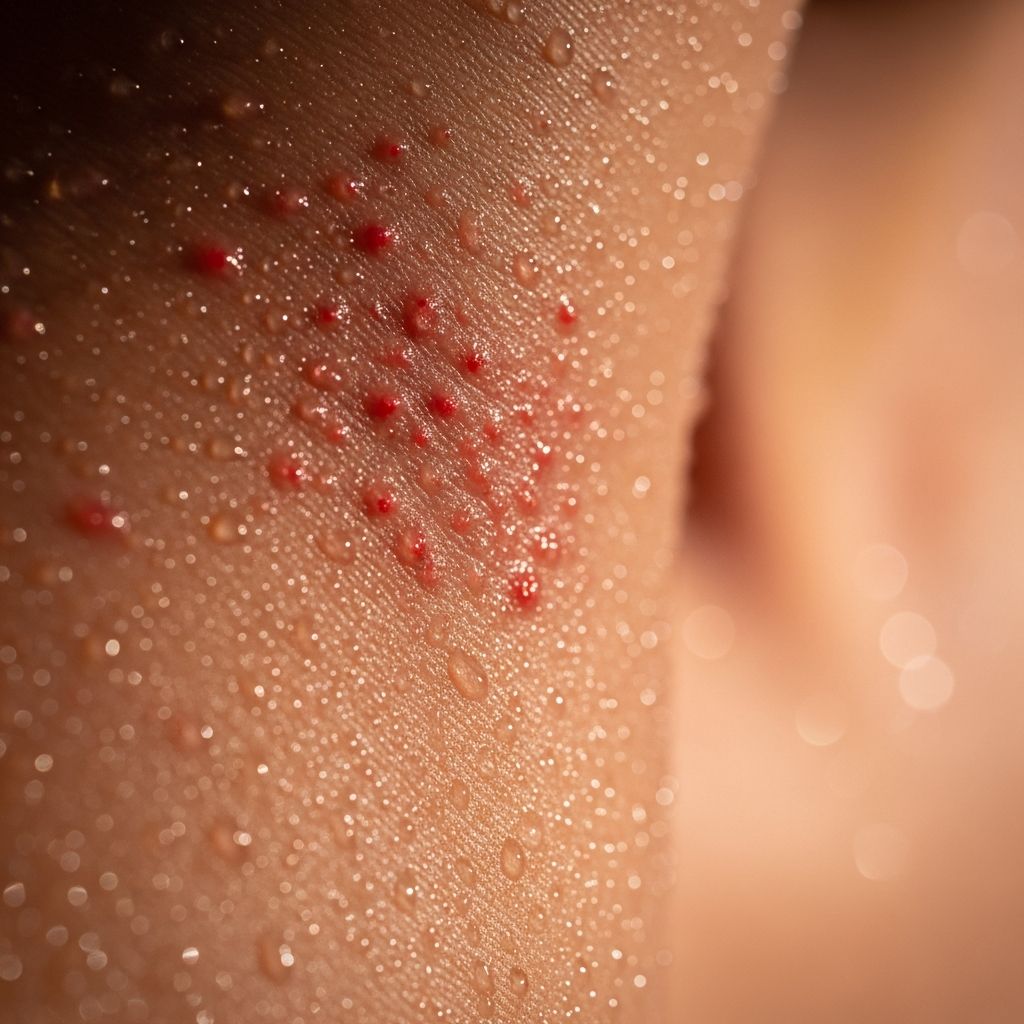
Understanding Heat Rash: A Complete Guide to Prickly Heat
Heat rash, also known as prickly heat or miliaria, is a common skin condition that develops when sweat becomes trapped beneath the surface of your skin. This uncomfortable condition causes small, itchy bumps that feel prickly or tingly to the touch. While heat rash is typically harmless and resolves within a few days with proper care, it can be a source of significant discomfort. Healthcare providers classify heat rash as a mild form of heat-related illness, distinguishing it from more serious conditions like heat exhaustion or heat stroke. The good news is that most cases can be effectively managed at home through simple cooling and drying techniques.
What is Heat Rash?
Heat rash is a skin irritation that occurs when your body’s natural cooling mechanism becomes compromised. Your skin’s sweat glands produce sweat and channel it through tiny tubes called sweat ducts to the surface of your skin, where it evaporates to help regulate body temperature. However, when these ducts become blocked, sweat cannot reach the skin’s surface and instead flows backward into your skin. This trapped sweat causes inflammation in the epidermis (outer layer) and dermis (middle layer) of your skin, resulting in the characteristic rash. The condition is more prevalent in warm, humid climates and is particularly common during summer months when temperatures and humidity levels rise.
Anyone can develop heat rash, but it’s especially common among infants, children, and individuals living in humid environments. The condition is not dangerous in most cases, though it can be quite bothersome and itchy. Understanding the mechanisms behind heat rash development can help you prevent it and recognize when to seek medical attention.
Types of Heat Rash
Healthcare providers recognize three distinct types of heat rash, each varying in severity and appearance:
Miliaria Crystallina
Miliaria crystallina is the mildest form of heat rash and occurs when sweat ducts become blocked at the skin’s surface. This type appears as tiny, clear, fluid-filled bumps that resemble water droplets. These bumps are typically painless and may not cause itching or discomfort. Miliaria crystallina most commonly affects newborns but can also occur in adults. The bumps can break easily due to their delicate nature, but generally cause minimal symptoms.
Miliaria Rubra (Prickly Heat)
Miliaria rubra is the most common form of heat rash and represents what most people experience when they develop prickly heat. This type forms when sweat ducts become blocked deeper within the skin. The condition presents as clusters of small, inflamed, blister-like bumps that look red on light-colored skin and grey or white on darker skin tones. Miliaria rubra typically causes significant itching and prickling sensations, making it more uncomfortable than the crystallina form. The bumps are usually about 1 to 3 millimeters wide and are surrounded by irritated skin.
Miliaria Profunda
Miliaria profunda is the least common form and affects the deepest layer of skin. This type produces firm bumps that resemble goosebumps and can be painful or very itchy. The bumps may break open and are the most uncomfortable of the three types. This form typically develops in individuals who have experienced repeated episodes of heat rash.
Recognizing Heat Rash Symptoms
Heat rash symptoms vary depending on the type and severity, but generally include uncomfortable sensations across affected areas. Your skin may feel itchy, prickly, burning, stinging, or tender. These sensations can be maddening and may create an overwhelming urge to scratch, but scratching should be avoided as it can break the skin and lead to infection.
Visually, heat rash appears as tiny raised bumps or small blisters on the skin. On light-colored skin, these bumps typically appear red, while on darker skin tones they may appear grey, white, or darker. The bumps are usually clustered together in affected areas and are surrounded by irritated skin.
Related Stories



Where Heat Rash Develops
Heat rash commonly develops in areas of your body that don’t receive adequate airflow or are covered with clothing. These areas provide an ideal environment for sweat accumulation and ductal blockage.
Common Areas in Infants and Babies
Babies are particularly susceptible to heat rash in areas typically covered or prone to moisture:
– Neck and chest areas- Areas under the chin- Diaper areas- Skin folds and creases- Areas covered by clothing
Common Areas in Adults
Adults typically develop heat rash in similar areas:
– Neck- Armpits- Chest- Back- Groin area- Elbow creases- Waistline areas covered by tight clothing
What Causes Heat Rash?
Heat rash develops through a specific physiological process involving blocked sweat ducts. Normally, your body’s sweat glands produce sweat in response to heat or physical exertion. This sweat travels through tiny tubes called sweat ducts and exits through pores on your skin’s surface, where it evaporates to cool your body. However, when these ducts become blocked, sweat cannot complete its journey to the surface.
When sweat ducts become clogged, sweat flows backward into your skin instead of outward. This causes inflammation in the skin’s outer and middle layers, resulting in the characteristic rash and uncomfortable sensations. Several factors contribute to sweat duct blockage:
Primary Causes of Duct Blockage
– Excessive sweating that overwhelms your skin’s capacity to regulate moisture- Accumulation of dead skin cells that soften from sweat and clog pores- Bacteria and microorganisms that block ducts- Skin debris and environmental particles
Contributing Factors
Certain circumstances increase your likelihood of developing heat rash. Profuse sweating makes it easier for sweat to build up, softening dead skin cells and making them more likely to accumulate in pores or ducts. Wearing tight or non-breathable clothing traps moisture against your skin. Spending prolonged time in hot, humid environments creates conditions favorable for duct blockage. Lack of air circulation around your skin prevents sweat from evaporating efficiently.
Risk Factors for Heat Rash
Certain groups are more susceptible to developing heat rash than others. Babies, infants, and toddlers have significantly higher risk because their sweat glands and ducts are still developing. Their bodies cannot regulate temperature as effectively as adult bodies, and they’re often bundled in multiple clothing layers. Additionally, diapers provide a non-breathable barrier that prevents moisture from evaporating.
Adults with the following characteristics are at increased risk:
– Those living in or traveling to hot, humid climates- Athletes and people who exercise frequently in heat- Outdoor workers exposed to high temperatures- Individuals who wear tight or non-breathable clothing- People who are bedridden or immobilized- Those with a personal or family history of heat rash
Treating Heat Rash at Home
The primary treatment strategy for heat rash involves keeping affected skin cool, dry, and well-ventilated. Most cases resolve within a few days with these simple home care measures:
Immediate Care Steps
– Move to a cooler environment or air-conditioned space- Remove excess clothing to improve air circulation- Take cool (not cold) baths or showers to lower skin temperature- Pat skin dry gently rather than rubbing- Avoid tight or non-breathable clothing- Stay in well-ventilated areas when possible
Symptom Relief Options
For itching and discomfort, several options can provide relief:
– Apply calamine lotion or other anti-itch creams to affected areas- Use fragrance-free, hypoallergenic moisturizers- Take lukewarm (not hot) baths with colloidal oatmeal- Avoid creams, oils, and ointments that trap heat and moisture- Wear breathable, lightweight cotton clothing- Keep skin as dry as possible throughout the day
When to Seek Medical Care
While most heat rash cases resolve independently, certain situations warrant professional medical evaluation. Contact a healthcare provider if:
– The rash doesn’t clear up within three to four days- The rash worsens or spreads- Symptoms include severe itching that disrupts daily activities- The bumps ooze pus or become swollen- The rash appears bright red, purple, or bruised- You develop a fever alongside the rash- You notice signs of infection such as increased warmth, swelling, or pus drainage- Any other concerning symptoms develop
Potential Complications
Although heat rash is generally harmless, it can occasionally lead to complications. The primary concern is bacterial skin infection, which can develop if the skin barrier breaks (particularly from scratching) and bacteria enter the affected area. Signs of infection include swelling around the rash, warmth to the touch, fever, nausea, and chills. If infection occurs, a healthcare provider may prescribe antibiotics to treat the bacterial infection.
Individuals with darker skin tones may experience post-inflammatory hyperpigmentation or hypopigmentation, where lighter or darker spots remain on the skin for several weeks to months after the rash resolves. This is a cosmetic concern rather than a health risk and typically fades over time.
Preventing Heat Rash
Preventing heat rash is far easier than treating it. The key is maintaining cool, dry skin and ensuring adequate airflow to moisture-prone areas. Effective prevention strategies include:
Environmental Controls
– Maintain cool indoor temperatures when possible- Use air conditioning during hot weather- Stay in shaded areas when outdoors- Limit outdoor activities during peak heat hours- Stay in well-ventilated spaces
Clothing and Personal Care
– Wear lightweight, breathable, natural fabric clothing like cotton- Avoid tight-fitting clothes that restrict air circulation- Change out of sweaty clothes promptly- Take cool baths or showers when you’ve been sweating heavily- Keep skin dry throughout the day- Use breathable, moisture-wicking fabrics during exercise
Lifestyle Modifications
– Stay hydrated to support your body’s cooling mechanisms- Avoid activities that cause excessive sweating when possible- Take frequent breaks in cooler environments during physical activity- Use fans to improve air circulation- Sleep in cool rooms with breathable bedding
For Infants and Young Children
– Avoid overdressing or over-bundling babies- Keep diaper areas clean and dry- Use breathable diaper materials- Dress children in lightweight clothing in hot weather- Maintain cool room temperatures- Allow skin to air out when safely possible
Heat Rash vs. Other Skin Conditions
Heat rash can sometimes be confused with other skin conditions. Unlike sweat pimples, which result from bacteria and oil clogging pores, heat rash is purely a result of blocked sweat ducts. Heat rash creates a prickly, burning itch sensation, while sweat pimples resemble acne bumps. Heat rash affects areas with poor oxygen circulation like armpits and groin, whereas sweat pimples can appear anywhere on the body. If you’re uncertain whether you have heat rash or another condition, a healthcare provider can perform a simple examination to make an accurate diagnosis.
When to Seek Professional Medical Attention
Healthcare providers can typically diagnose heat rash through a simple physical examination. They look for the characteristic appearance of bumps and ask about symptoms and circumstances surrounding the rash’s development. A diagnosis is usually straightforward, but providers may need to rule out other conditions causing similar symptoms.
Professional evaluation is particularly important for infants and children. Call a pediatrician if your child develops a heat rash accompanied by a fever, if the rash persists beyond three or four days, if it causes severe itching or pain, or if it shows signs of infection. Adults should similarly seek care if the rash is severe, doesn’t resolve within a few days, or develops signs of infection.
Long-Term Outlook
The prognosis for heat rash is excellent. Most cases clear up completely within a few days to a week with proper care. Heat rash is self-limiting and typically requires no medical intervention beyond home care measures. Serious complications are rare, and the condition rarely leaves lasting effects. However, individuals prone to heat rash may experience recurrent episodes, particularly if they live in hot, humid climates or engage in activities that cause heavy sweating. Learning to recognize early symptoms and implementing prevention strategies can significantly reduce the frequency and severity of future episodes.
Frequently Asked Questions
Q: How long does heat rash typically last?
A: Most heat rash cases resolve within three to four days once you implement cooling and drying measures. However, severe cases may take up to a week or longer, especially if the rash becomes infected.
Q: Can I use regular lotion on heat rash?
A: Most regular lotions should be avoided on heat rash as they can trap moisture and heat against your skin. Instead, use calamine lotion or specially formulated anti-itch creams designed for heat rash. Keep affected areas as dry as possible.
Q: Is heat rash contagious?
A: No, heat rash is not contagious. It results from blocked sweat ducts and environmental factors rather than infectious agents. You cannot catch heat rash from another person or transmit it to someone else.
Q: Can heat rash cause permanent scarring?
A: Heat rash rarely causes permanent scarring. However, if the rash becomes infected and is scratched severely, minor scarring is possible. Individuals with darker skin may experience temporary discoloration that fades over time.
Q: Should I see a doctor for mild heat rash?
A: Mild heat rash typically doesn’t require professional medical care. Home treatments are usually sufficient. However, if symptoms persist beyond a few days, worsen, or you develop signs of infection or fever, contact a healthcare provider.
Q: How can I prevent heat rash during exercise?
A: Wear moisture-wicking, breathable clothing during exercise. Take breaks in cool environments, drink plenty of water, and change out of sweaty clothes immediately after activity. Shower or bathe to remove sweat and keep skin dry.
References
- Heat Rash (Prickly Heat) — Cleveland Clinic. 2024. https://my.clevelandclinic.org/health/diseases/22440-heat-rashprickly-heat
- Miliaria (Heat Rash) — National Center for Biotechnology Information, U.S. National Library of Medicine. 2024. https://www.ncbi.nlm.nih.gov/books/NBK537176/
- Heat Rash: Symptoms and Causes — Mayo Clinic. 2024. https://www.mayoclinic.org/diseases-conditions/heat-rash/symptoms-causes/syc-20373276
- Heat Rash (Prickly Heat): Causes, Symptoms, and Treatment — WebMD. 2024. https://www.webmd.com/skin-problems-and-treatments/understanding-heat-rash-basics
- Heat-Related Illness (Hyperthermia) — Cleveland Clinic. 2024. https://my.clevelandclinic.org/health/diseases/22111-hyperthermia
Similar Articles








Read full bio of medha deb