Heberden And Bouchard Nodes: Symptoms, Causes & Care Guide
Understanding bony swellings in finger joints caused by osteoarthritis: causes, symptoms, diagnosis, and management strategies.
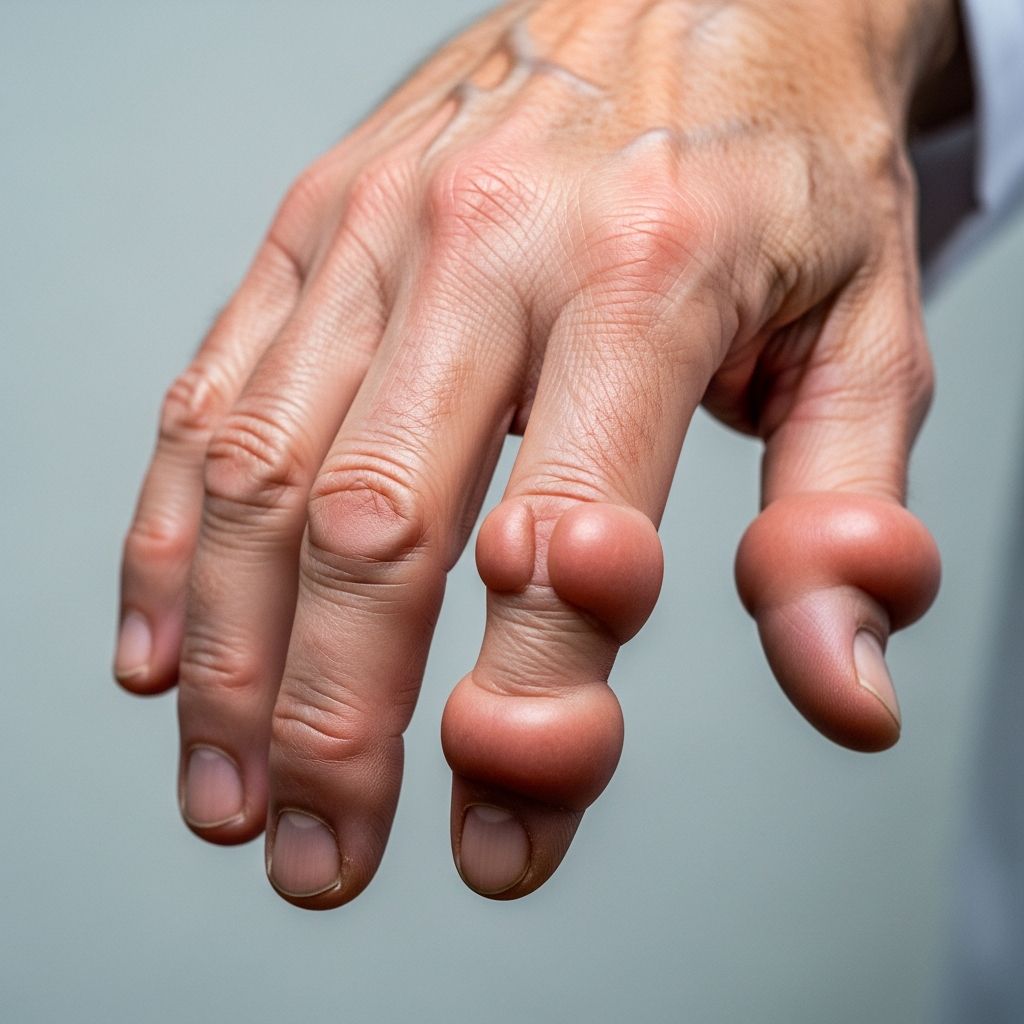
Heberden and Bouchard nodes represent characteristic bony enlargements on the finger joints, primarily resulting from osteoarthritis (OA) of the hands. These nodes are a hallmark of nodal osteoarthritis, affecting the distal interphalangeal (DIP) and proximal interphalangeal (PIP) joints respectively, leading to pain, stiffness, and deformity over time.
What are Heberden and Bouchard nodes?
**Heberden nodes** develop on the
distal interphalangeal joints
(the joints closest to the fingertips), appearing as firm, bony swellings typically on both hands. Named after William Heberden Sr., these nodes signal advanced cartilage breakdown where bone spurs (osteophytes) form due to chronic joint stress.**Bouchard nodes**, named after Charles Jacques Bouchard, affect the
proximal interphalangeal joints
(the middle finger joints). They are similar bony outgrowths but less prominent and occur less frequently than Heberden nodes.Both types arise from exostoses—abnormal bone growths—and are equally prevalent across genders and ethnicities, though more common in postmenopausal women. Unlike rheumatoid arthritis, these nodes do not involve systemic inflammation but localized joint degeneration.
Who gets Heberden and Bouchard nodes?
Heberden and Bouchard nodes predominantly affect individuals over 50, with higher incidence in women post-menopause due to hormonal influences on joint tissues. Genetic predisposition plays a key role; family history increases risk significantly.
- Prevalence: Up to 70% of women and 40% of men over 60 show hand OA signs, with nodes in advanced cases.
- Risk factors: Aging, female sex, genetics, prior joint trauma, obesity, and repetitive hand use (e.g., typing, manual labor).
- Demographics: No racial predilection; common worldwide.
Conditions like gout or hypertension with diuretic use can exacerbate nodes via crystal deposition, mimicking infection.
What causes Heberden and Bouchard nodes?
The primary cause is
osteoarthritis
, a degenerative process where articular cartilage erodes, leading to bone-on-bone friction. This triggers inflammation, synovial leakage, and osteophyte formation.Key mechanisms include:
- Cartilage wear: Slow degeneration from mechanical stress or injury exposes subchondral bone.
- Genetic factors: Mutations in cartilage genes (e.g., COL2A1) heighten susceptibility.
- Inflammation: Capsular rupture from friction causes low-grade synovitis and node swelling.
- Secondary triggers: Trauma, hypermobility, or metabolic issues like hemochromatosis.
Nodes indicate ‘nodal OA,’ a subtype with prominent genetic and female bias, distinct from erosive OA.
What are the signs and symptoms of Heberden and Bouchard nodes?
Initial presentation involves acute pain, redness, and swelling as nodes form rapidly (over weeks) or gradually. Pain often resolves, leaving permanent deformities.
| Symptom | Heberden Nodes (DIP) | Bouchard Nodes (PIP) |
|---|---|---|
| Pain/Tenderness | Intense initially, then mild | Moderate, episodic |
| Swelling | Firm, pea-sized bumps | Broader enlargements |
| Stiffness | Morning >30 min | Activity-related |
| Deformity | Angular fingers (‘Z’ shape) | Swan-neck like |
| Function Loss | Grip weakness, crepitus | Dexterity impairment |
Associated OA symptoms: joint crepitus (grinding), weakness, reduced range of motion (ROM), and tasks like buttoning or writing become challenging. Cysts (mucous cysts) may overlie DIP nodes, risking nail dystrophy or infection.
Related Stories



How is it diagnosed?
Diagnosis relies on clinical exam: visible/palpable nodes, joint tenderness, and OA history. No lab tests confirm; rheumatoid factor/CRP rule out inflammatory arthritis.
- X-rays: Show joint space narrowing, osteophytes, subchondral sclerosis.
- Ultrasound/MRI: Detect synovitis or cysts if needed.
- Differential: Rheumatoid nodules, gout tophi, psoriatic arthritis.
Early nodes may lack X-ray changes; rely on history/genetics.
Management and treatment of Heberden and Bouchard nodes
No cure reverses nodes; focus symptom relief, function preservation, and OA progression halt.
Lifestyle measures
- Weight loss (reduces joint load).
- Hand exercises: ROM, strengthening (e.g., fist clenching, towel squeezes) 2x/day.
- Low-inflammatory diet: Omega-3s, antioxidants.
- Heat/cold therapy: Warm paraffin for stiffness, ice for flares.
Medications
- Topical: NSAID gels, capsaicin cream.
- Oral: Acetaminophen, NSAIDs (ibuprofen); duloxetine for chronic pain.
- Injections: Corticosteroids into joints (cautious due to small size).
Devices and therapy
- Splints/orthoses stabilize joints during flares.
- Occupational therapy: Adaptive tools (jar openers, ergonomic pens).
- Laser therapy: Emerging evidence for pain/swelling reduction.
Surgery
Rare; for severe pain/deformity unresponsive to conservatives:
- Node excision + joint fusion (arthrodesis).
- Joint replacement (arthroplasty) in select PIP cases.
Post-op risks: stiffness, infection; success ~70-80% pain relief.
Prevention of Heberden and Bouchard nodes
Minimize OA risk:
- Protect hands from injury/repetition.
- Maintain BMI <25.
- Early hand strengthening in at-risk (family hx).
- Avoid smoking (accelerates cartilage loss).
Outlook and complications
Nodes persist lifelong but pain diminishes; function varies. Complications: mucous cysts (10-20%), rupture causing infection; secondary OA spread to CMC joint. Most maintain independence with management.
Frequently Asked Questions
Are Heberden and Bouchard nodes painful?
Yes, acutely during formation; chronic pain mild or absent.
Can nodes be reversed?
No, bony growths permanent; symptoms manageable.
Do they affect thumbs?
Yes, DIP equivalent (IP joint).
Is surgery common?
Rare; <5% cases.
Relation to rheumatoid arthritis?
Unrelated; RA causes soft nodules.
References
- Heberden and Bouchard nodes — DermNet NZ. 2023-06-15. https://dermnetnz.org/topics/heberden-bouchard-nodes
- Bouchard’s Nodes: Causes, Symptoms, and Treatment Options — Slocum Center for Orthopedics & Sports Medicine. 2024-02-10. https://slocumcenter.com/conditions/bouchards-nodes/
- Heberden’s Nodes: Symptoms, Causes, and Treatments — WebMD. 2025-01-12. https://www.webmd.com/osteoarthritis/heberdens-nodes-symptoms-causes-treatments
- What are Heberden’s and Bouchard’s Nodes? — Hand and Wrist Institute. 2024-08-20. https://handandwristinstitute.com/blog/what-are-heberdens-and-bouchards-nodes/
- Heberden Nodes: Causes, Symptoms, and Treatment — Healthline. 2024-11-05. https://www.healthline.com/health/osteoarthritis/heberdens-nodes
- Osteoarthritis of the Hand — UCSF Health. 2023-09-18. https://www.ucsfhealth.org/conditions/osteoarthritis-of-the-hand
Similar Articles








Read full bio of Sneha Tete