Heberden’s Nodes: Causes, Symptoms, and Treatment
Understanding Heberden's nodes, their causes, symptoms, and effective treatment options.
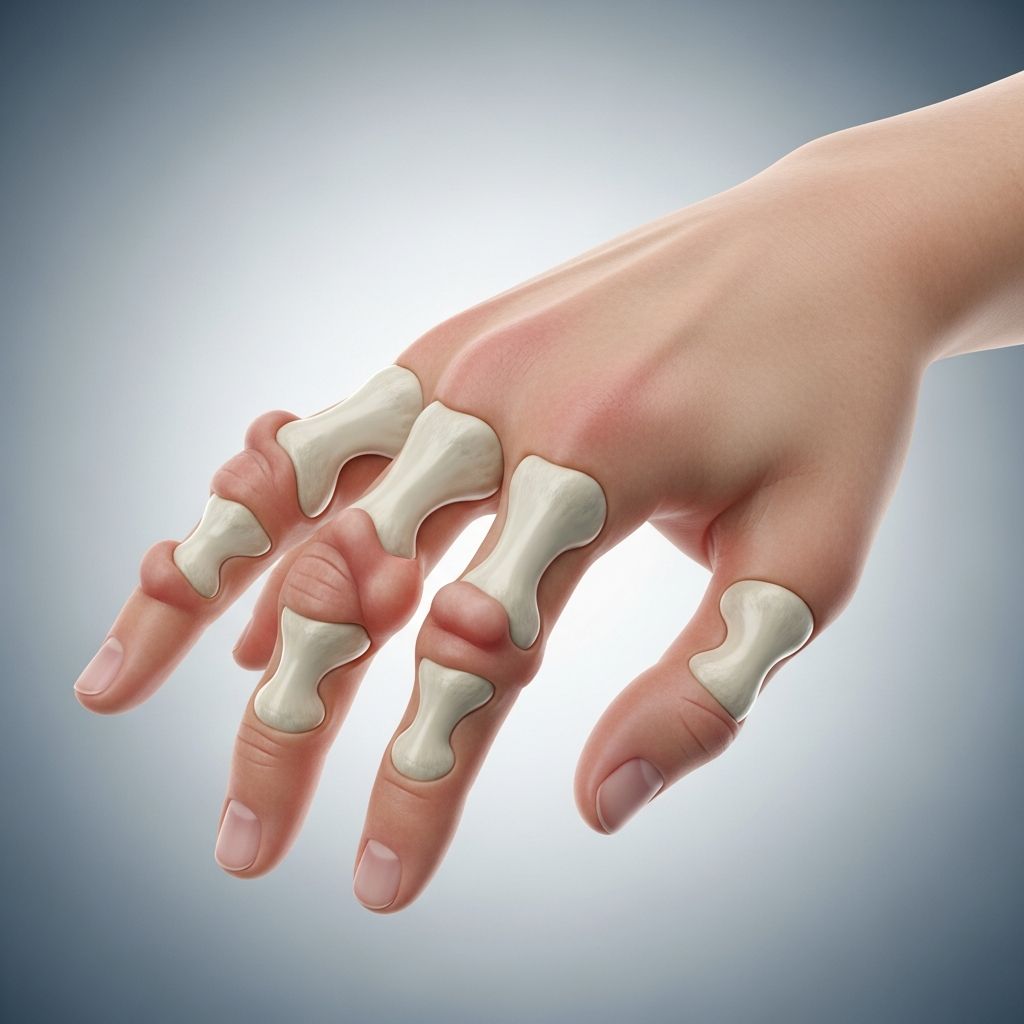
Understanding Heberden’s Nodes
Heberden’s nodes are bony growths that develop on the finger joints, particularly affecting the distal interphalangeal joints—the joints closest to the fingertips. These nodes are a visible sign of severe osteoarthritis (OA) and represent the body’s response to cartilage deterioration in the fingers. Named after the 18th-century physician William Heberden who first described them, these growths are one of the most recognizable physical manifestations of advanced finger osteoarthritis. While they may appear unsightly, understanding their causes and treatment options can help manage symptoms and maintain hand function.
What Causes Heberden’s Nodes?
Heberden’s nodes develop exclusively in individuals with osteoarthritis, a degenerative joint disease. The primary mechanism behind node formation involves the breakdown of cartilage that normally protects the bones in our joints. Each joint in the body has a protective layer of cartilage that acts as a cushion, allowing smooth movement between bones. However, osteoarthritis causes this cartilage to gradually degrade over time, either through slow wear and tear or following a joint injury.
When cartilage deteriorates, the bones beneath begin to make direct contact with each other. This friction causes damage to the bone surfaces, triggering an inflammatory response. The body reacts to this damage by producing new bone formations—a process known as osteophyte formation. Heberden’s nodes are the direct result of this bone remodeling process, occurring only in severe cases of osteoarthritis. The exact biological mechanisms that trigger node formation are not fully understood, but the progression from simple cartilage wear to node development represents advanced joint degeneration.
Recognizing Symptoms of Heberden’s Nodes
Heberden’s nodes present with a variety of symptoms that can range from minimal to severe, depending on the progression of the underlying osteoarthritis.
Common Symptoms Include:
- Bony growths or lumps appearing around the finger joints
- Pain in the affected finger joints
- Inflammation and swelling around the distal interphalangeal joints
- Stiffness in the affected fingers, particularly upon waking or after periods of inactivity
- Loss of motion and reduced finger flexibility
- Deformation of the fingers, which may appear crooked or misaligned
- Redness at the joint site during acute inflammatory phases
Interestingly, some individuals develop Heberden’s nodes without experiencing significant pain or other noticeable symptoms. In other cases, symptoms may go undetected because they are overshadowed by more severe symptoms of osteoarthritis in other joints, or the person has unconsciously adapted their behavior to avoid using affected finger joints. The presence of nodes does not always correlate with symptom severity, making regular medical evaluation important for proper management.
Diagnosis of Heberden’s Nodes
Heberden’s nodes are typically diagnosed through clinical examination. A healthcare provider can usually identify the characteristic bony growths through physical inspection of the hands. X-ray imaging may be used to confirm the diagnosis and assess the severity of underlying osteoarthritis, showing the extent of cartilage loss and bone changes. Because Heberden’s nodes only develop in cases of severe osteoarthritis, their presence indicates advanced joint degeneration that warrants comprehensive treatment planning.
Treatment Options for Heberden’s Nodes
Treatment for Heberden’s nodes focuses on managing the underlying osteoarthritis condition, reducing pain, and maintaining hand function. Since osteoarthritis is a chronic condition with no current cure, the goal of treatment is symptom management rather than node elimination. Healthcare providers typically recommend a multi-faceted approach that may include medications, physiotherapy, lifestyle modifications, and in rare cases, surgical intervention.
Related Stories



Medications
Pharmaceutical interventions form a cornerstone of Heberden’s node management, particularly for pain and inflammation control.
Nonsteroidal Anti-Inflammatory Drugs (NSAIDs): NSAIDs are among the most commonly prescribed medications for Heberden’s nodes. Over-the-counter options include ibuprofen (Advil, Motrin) and naproxen (Aleve), which help reduce both pain and inflammation. For more severe cases, doctors may prescribe higher-dose NSAIDs or recommend prescription-strength formulations. However, NSAIDs should be used judiciously and typically not for extended periods due to potential side effects.
Topical Medications: Creams, sprays, gels, and patches containing NSAIDs or capsaicin can provide localized pain relief without systemic absorption. These topical treatments are particularly useful during acute painful phases and can be applied directly to the affected finger joints.
Acetaminophen: This over-the-counter pain reliever offers an alternative for those who cannot tolerate NSAIDs.
Corticosteroid Injections: In some cases, steroid injections may be administered directly into the affected joints to reduce inflammation and provide temporary relief. However, injecting these joints can be technically challenging due to their small size.
Other Medications: Duloxetine (Cymbalta) and certain antidepressants may be prescribed to help manage chronic pain, anxiety, and depression that often accompany long-standing osteoarthritis.
Physiotherapy and Occupational Therapy
Physiotherapy is a drug-free, non-surgical treatment that has proven effectiveness in reducing arthritis pain and maintaining hand function. The primary goals of physiotherapy for Heberden’s nodes include preventing disability and disease progression, reducing pain, regaining strength, and increasing joint mobility and function.
Physiotherapy interventions may include:
- Stretching, strengthening, and range of motion exercises specifically designed for finger joints
- Activity modification and functional retraining to protect joints during daily activities
- Splinting or bracing to provide joint support and limit excessive movement
- Patient education to help individuals understand their condition and maintain control over symptom management
- Cross-disciplinary pain-relieving therapies tailored to individual needs
Occupational Therapy (OT) and Hand OT: Occupational therapy helps patients learn new ways of using their hands while minimizing stress on affected joints. Hand therapy specialists analyze hand function and recommend specific strategies, including splints, exercise programs, and assistive devices. Some patients benefit from using elastic arthritis gloves with open fingertips to increase hand mobility.
Physical Modalities
Several physical treatments can help manage Heberden’s node symptoms:
Heat and Cold Therapy: Applying heat and cold pads to affected joints can reduce pain and inflammation. Heat therapy improves blood circulation and alleviates discomfort, while cold therapy can reduce acute swelling.
Splint Devices and Orthoses: Specialized splint devices support specific finger joints and help stabilize the hand during activities, reducing stress on the affected joints.
Low-Level Laser Therapy: A small study involving older women showed that low-level laser therapy reduced pain and swelling while increasing mobility in people with Heberden’s nodes. However, more research is needed to establish optimal delivery methods and long-term effects.
Lifestyle Modifications
Lifestyle changes play a crucial role in managing Heberden’s nodes and the underlying osteoarthritis:
Exercise: Regular, structured physical activity is one of the most effective lifestyle interventions for managing osteoarthritis symptoms. Patients should work with physical or occupational therapists to develop personalized exercise plans. Low-impact activities such as swimming and cycling are preferable to high-impact exercises like running, which can place additional strain on finger joints. Consistent engagement in exercise is essential for maximum benefit.
Weight Management: Maintaining a healthy weight reduces stress on all joints, including those in the fingers.
Anti-Inflammatory Diet: Consuming a diet rich in anti-inflammatory foods may help reduce symptom severity.
Cognitive Behavioral Therapy (CBT): CBT helps patients develop strategies for managing chronic pain, sleep disturbances, and stress-related issues that often accompany long-term arthritis.
Surgical Options
Surgery is considered only as a last resort and is rarely necessary for Heberden’s nodes. Surgical intervention is typically reserved for cases where conservative treatments have failed and symptoms are severe and significantly impacting quality of life. Surgical approaches may include:
- Removal of the bony nodes combined with joint reconstruction
- Joint fusion procedures to stabilize severely damaged joints
- Joint replacement or arthroplasty in select cases
It is important to note that unlike bony lumps that form in rheumatoid arthritis, Heberden’s nodes cannot be surgically removed without addressing the underlying joint structure, as they are integral to the bone remodeling that occurs with severe osteoarthritis. Following any surgical intervention, physiotherapy is an important component of rehabilitation and recovery.
When to See a Doctor
Individuals who notice bony growths on their finger joints, experience persistent finger pain, or notice progressive finger deformity should consult with a healthcare provider. Early intervention can help manage symptoms more effectively and potentially slow disease progression. People with advanced osteoarthritis and Heberden’s nodes typically maintain regular contact with their healthcare team to monitor condition progression and adjust treatment as needed.
Frequently Asked Questions About Heberden’s Nodes
Q: Can Heberden’s nodes be cured?
A: No, there is currently no cure for Heberden’s nodes, as they result from severe osteoarthritis, which is a chronic degenerative condition. However, various treatments can effectively manage pain and maintain hand function.
Q: Are Heberden’s nodes hereditary?
A: While osteoarthritis has genetic components, Heberden’s nodes are not directly inherited. However, a family history of osteoarthritis increases the risk of developing these nodes.
Q: Will Heberden’s nodes affect my ability to work or perform daily activities?
A: This depends on the severity of your symptoms and the extent of your osteoarthritis. Many people with Heberden’s nodes can maintain normal activities with appropriate pain management and occupational therapy strategies. Working with healthcare professionals can help you adapt activities and maintain function.
Q: How quickly do Heberden’s nodes develop?
A: The development of Heberden’s nodes is typically a gradual process occurring over years as osteoarthritis progresses. The rate of development varies among individuals based on the severity and progression of their underlying arthritis.
Q: Can I prevent Heberden’s nodes from developing?
A: Since Heberden’s nodes develop only in cases of severe osteoarthritis, maintaining joint health through regular exercise, appropriate weight management, and prompt treatment of finger injuries may help reduce your risk.
Q: What is the difference between Heberden’s and Bouchard’s nodes?
A: Both are bony growths caused by osteoarthritis, but they occur at different finger joints. Heberden’s nodes form on the distal interphalangeal joints (DIP joints) nearest the fingertips, while Bouchard’s nodes form on the proximal interphalangeal joints (PIP joints) in the middle of the fingers.
References
- Heberden’s Nodes — pt Health. Accessed December 1, 2025. https://www.pthealth.ca/conditions/heberdens-nodes/
- Heberden’s Nodes: Causes, Symptoms, and Treatment — Medical News Today. Accessed December 1, 2025. https://www.medicalnewstoday.com/articles/322363
- Heberden Nodes: Causes, Symptoms, and Treatment — Healthline. Accessed December 1, 2025. https://www.healthline.com/health/osteoarthritis/heberdens-nodes
- Heberden’s Nodes: Symptoms, Causes, and Treatments — WebMD. Accessed December 1, 2025. https://www.webmd.com/osteoarthritis/heberdens-nodes-symptoms-causes-treatments
- Heberden’s Nodes FAQ — OKUNO CLINIC. Accessed December 1, 2025. https://okuno-y-clinic.com/en/pain-technical-questions/heberdens-nodes-faq/
- Heberden and Bouchard Nodes — DermNet. Accessed December 1, 2025. https://dermnetnz.org/topics/heberden-bouchard-nodes
Similar Articles








Read full bio of Sneha Tete