Hedgehog Inhibitors for Eye Area Skin Cancers
Discover how sonic hedgehog inhibitors like vismodegib and sonidegib target periocular basal cell carcinoma, balancing efficacy with side effect management.
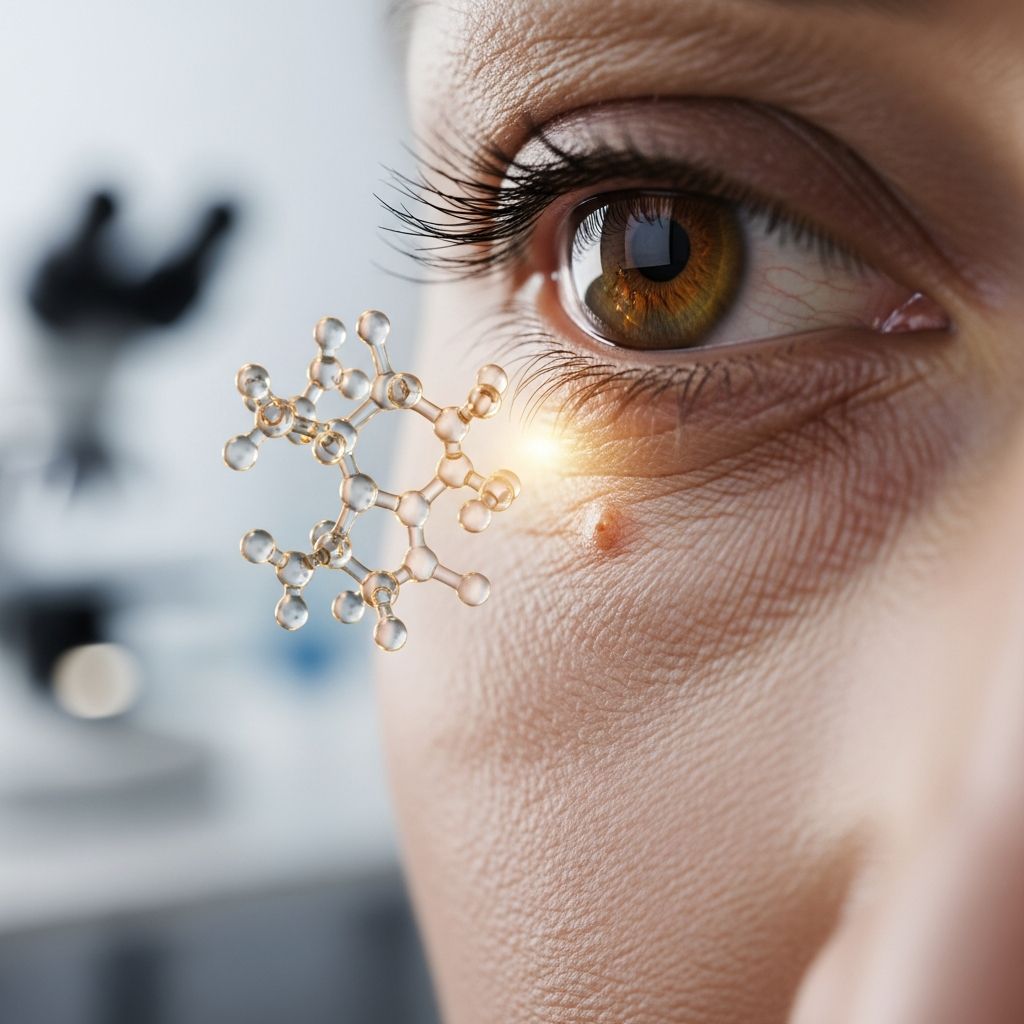
Hedgehog pathway inhibitors represent a targeted therapy breakthrough for basal cell carcinoma (BCC), particularly in challenging periocular locations where surgery risks vision and aesthetics. These oral drugs block aberrant signaling driving tumor growth, offering alternatives when excision is impractical.
The Biology Behind Hedgehog Signaling in Skin Tumors
The hedgehog pathway regulates embryonic development and tissue repair but becomes dysregulated in BCC, the most common human cancer. In about 90% of cases, mutations in PTCH1 or SMO genes unleash uncontrolled Gli transcription factors, promoting keratinocyte proliferation and tumor formation. Periocular BCC often arises in sun-exposed skin around eyelids, canthi, or orbits, complicating standard treatments due to proximity to globe, lacrimal structures, and cosmetic concerns.
Normally, sonic hedgehog (Shh) ligand binds Smoothened (Smo) receptor only when Patched (PTCH) is inhibited. In BCC, loss-of-function PTCH mutations or activating SMO mutations free Smo, activating Gli1/2, which drive oncogenes like Cyclin D and Myc. Inhibitors like vismodegib and sonidegib competitively bind Smo, restoring pathway suppression and inducing tumor regression.
Key Drugs: Vismodegib and Sonidegib Profiles
Vismodegib (Erivedge), FDA-approved in 2012, is the pioneer HPI for locally advanced (laBCC) or metastatic BCC (mBCC). Dosed at 150 mg daily continuously until progression or intolerance, it achieves objective response rates (ORR) of 30-45% in mBCC and 43-68% in laBCC per independent reviews.
Sonidegib (Odomzo), approved in 2015, targets laBCC at 200 mg daily. The BOLT trial reported 43% ORR by central review (58% investigator-assessed), with 5% complete responses. Both drugs shrink tumors, enabling surgery in neoadjuvant settings or palliation in inoperable cases.
| Drug | Dose | laBCC ORR (IRF) | mBCC ORR (IRF) | FDA Approval Year |
|---|---|---|---|---|
| Vismodegib | 150 mg QD | 43-68% | 30-37% | 2012 |
| Sonidegib | 200 mg QD | 43% | Not approved | 2015 |
Why Periocular BCC Demands Specialized Approaches
- Anatomical Risks: Tumors near eyelids can invade orbit, causing ptosis, exposure keratopathy, or globe perforation if neglected.
- Surgical Limits: Mohs surgery succeeds in 95%+ for primary BCC but yields higher recurrence (10-15%) in recurrent/periocular sites due to irregular margins and tissue scarcity.
- Patient Factors: Elderly patients with comorbidities or Gorlin syndrome (nevoid BCC syndrome) develop multiple aggressive BCCs, favoring systemic therapy.
Systemic HPIs shine here, reducing tumor burden by 50%+ in responders, often preserving vision and appearance without incisions.
Clinical Evidence from Major Trials
The STEVIE trial (n=499) confirmed vismodegib’s real-world efficacy: 68.5% laBCC ORR, durable up to 39 months in some. BOLT (n=229) for sonidegib showed median progression-free survival of 13.3 months (200 mg arm). In periocular subsets, response rates mirror overall data, with tumor shrinkage facilitating globe-sparing surgery.
Phase 1 data on sonidegib in steroid-refractory chronic graft-versus-host disease (cGVHD)—a fibrotic condition sharing hedgehog-driven pathology—demonstrated skin improvements in 47% via reduced Shh, Snail, and β-catenin expression in biopsies. Though not BCC-focused, this underscores pathway modulation in skin fibrosis near eyes.
Ocular and Periocular Side Effects: What to Monitor
HPIs cause class-effect toxicities from pathway suppression in normal tissues: muscle spasms (70%), alopecia (60%), dysgeusia (50%), weight loss (45%). Ocular issues affect 10-30%:
Related Stories



- Blepharitis/Keratitis: Meibomian gland dysfunction from Gli suppression leads to dry eyes; manage with lubricants.
- Ptosis/Ectropion: Transient lid changes resolve post-discontinuation.
- Visual Changes: Rare blurred vision or photophobia; baseline ophthalmology exam essential.
In one series, 25% developed periocular erythema or madarosis, but no permanent vision loss. Dose interruptions restore tolerability in 80%.
Managing Resistance and Long-Term Use
Primary resistance (non-responders) stems from non-canonical hedgehog activation or Gli amplifications. Acquired resistance arises from SMO mutations (e.g., W535L) in 20-30% after 12 months, reactivating the pathway.
Strategies include:
- Drug holidays (e.g., vismodegib 150 mg weekly post-regression cuts recurrence).
- Combination therapies: Arsenic trioxide + itraconazole bypasses SMO via Gli2 destabilization.
- Switching agents: Sonidegib after vismodegib progression in some cases.
Neoadjuvant use shrinks defects by 27%, per Vismoneo trial, minimizing morbidity.
Role of Ophthalmologists in HPI Therapy
Eye specialists guide candidacy: stage tumors via ultrasound/biopsy, assess baseline dry eye, monitor monthly for progression or toxicity. Multidisciplinary input with dermatology/oncology optimizes outcomes. Contraindications include pregnancy (teratogenic) and severe baseline spasms.
Patient Selection and Counseling Essentials
- Ideal: Inoperable laBCC, neoadjuvant high-risk cases, Gorlin multiples.
- Counsel on 50% discontinuation rate at 12 months due to AEs; emphasize reversible nature.
- Supportive care: Gabapentin for spasms, nutrition for taste loss.
Future Directions in Hedgehog-Targeted Therapy
Next-gen HPIs evade SMO mutations via Gli-direct inhibition (e.g., Glasdegib). Topical formulations minimize systemic effects for periocular use. Trials explore combos with PD-1 inhibitors for immunoresistant BCC. Biomarkers like PTCH/SMO sequencing predict response, personalizing care.
Frequently Asked Questions (FAQs)
What is the success rate of hedgehog inhibitors for eye-area BCC?
ORRs range 40-70% for locally advanced cases, with tumor reduction enabling surgery in many.
Are side effects permanent?
Most resolve within months of stopping; ocular effects like dry eye respond to standard treatments.
Can pregnant patients use these drugs?
No—absolute contraindication due to embryotoxicity; use reliable contraception.
How long is treatment duration?
Continuous until progression, toxicity, or complete response; median 10-18 months.
What if the cancer doesn’t respond?
Options include switching HPIs, combos, radiation, or clinical trials.
References
- Phase 1 study of the Hedgehog pathway inhibitor sonidegib — Blood Advances (ASH Publications), Arai S et al. 2017-10-24. https://ashpublications.org/bloodadvances/article/1/22/1919/15688/Phase-1-study-of-the-Hedgehog-pathway-inhibitor
- Hedgehog Pathway Inhibitors: Clinical Implications and Resistance — PMC (NCBI), Ruiz-Salas V et al. 2021-03-02. https://pmc.ncbi.nlm.nih.gov/articles/PMC7971714/
Similar Articles








Read full bio of medha deb