Hemangioma Of The Eye: Symptoms, Diagnosis, And Treatment
Discover the essentials of eye hemangiomas: from early detection to effective treatments that protect vision in children.
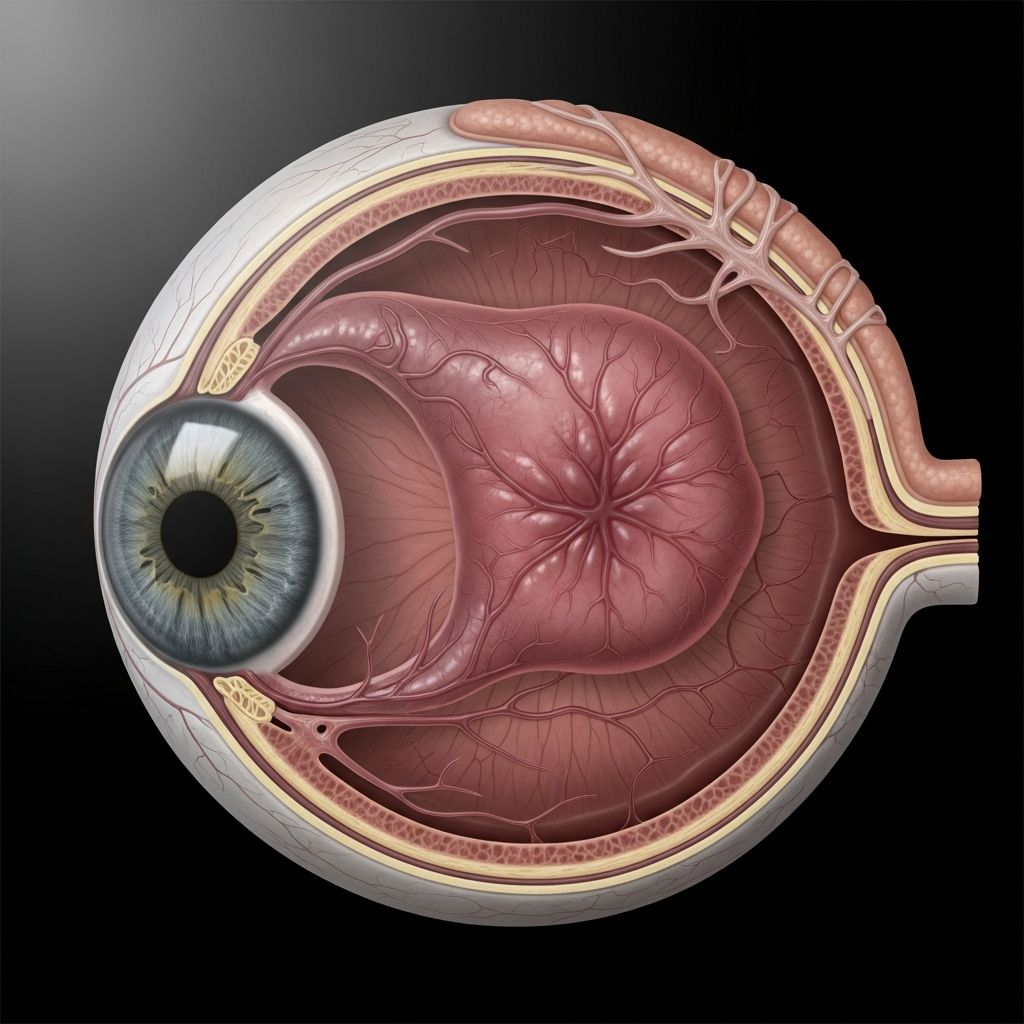
Benign vascular tumors known as hemangiomas represent a frequent occurrence in pediatric populations, particularly when they develop near or within the eye structures. These non-cancerous proliferations of blood vessels often emerge shortly after birth and can pose significant risks to visual development if located on eyelids, conjunctiva, or orbital areas.
Defining Ocular Hemangiomas and Their Benign Nature
Hemangiomas consist of abnormally clustered blood vessels forming raised, spongy masses that appear red or purple on the skin. In the context of the eye, they are classified as capillary hemangiomas, also termed infantile or strawberry hemangiomas due to their textured appearance. These growths qualify as hamartomas—overgrowths of normal tissue in typical locations—primarily involving endothelial cells lining the vessels.
Unlike malignant tumors, ocular hemangiomas follow a predictable lifecycle: rapid proliferation in the first year of life, followed by gradual involution. Approximately 40% resolve fully by age four, and 80% by age eight, though intervention becomes necessary when vision is compromised.
Prevalence and Demographic Patterns
These lesions affect up to 5% of infants under one year, with about one-third visible at birth and 90% manifesting by six months. They predominantly occur on the head, neck, or extremities, with a notable affinity for the upper eyelid or brow in ocular cases.
- Superficial types present as bright red, raised skin nodules.
- Deep variants appear bluish-purple beneath the skin.
- Combined or orbital forms extend into deeper tissues, potentially displacing the eyeball.
Mechanisms Behind Hemangioma Formation
The precise etiology remains multifactorial, involving genetic predispositions and environmental triggers. Premature infants face higher risks, alongside associations with syndromes like PHACES (encompassing posterior fossa anomalies, arterial issues, cardiac defects, eye abnormalities, and sternal defects). Large, segmental hemangiomas spanning multiple dermatomes raise suspicion for this syndrome, which heightens treatment needs due to elevated amblyopia risks.
Pathologically, early stages feature dense endothelial cell nests with minimal vascular lumens. Mature lesions display lobular capillary networks, while regressing ones exhibit fibrosis and vessel occlusion.
Recognizing Symptoms in the Ocular Zone
Many hemangiomas remain asymptomatic, causing only mild irritation. However, periocular locations trigger specific concerns:
| Location | Key Symptoms | Potential Complications |
|---|---|---|
| Eyelid | Ptosis (droopy lid), mechanical obstruction of vision | Astigmatism, amblyopia (lazy eye) |
| Conjunctiva | Bright red patch, occasional bleeding or bloody tears | Mild irritation, cosmetic issues |
| Orbit | Proptosis (eye bulging), optic nerve compression | Vision loss, strabismus |
Cutaneous lesions blanch under pressure and feel spongy, changing color with crying but lacking pulsation or bruit. Eyelid involvement induces astigmatic anisometropic amblyopia—the leading cause of vision impairment—via corneal pressure altering shape.
Diagnostic Approaches for Accurate Identification
Diagnosis relies primarily on clinical examination: observing raised, red-blue masses that evolve predictably. Palpation confirms compressibility without thrill.
Related Stories



For ambiguous or extensive cases, imaging clarifies orbital depth:
- Ultrasound: Assesses vascular flow and extent.
- MRI: Details soft tissue involvement, ruling out differentials like rhabdomyosarcoma.
- No biopsy typically needed due to characteristic features.
Screen for systemic links, especially PHACES, via multidisciplinary evaluation.
Treatment Strategies: Balancing Observation and Intervention
Management hinges on functional impact, cosmetic concerns, or complications like ulceration. Small, asymptomatic lesions often warrant watchful waiting given high spontaneous regression rates.
Active interventions prioritize vision preservation:
Pharmacological Options
Propranolol, a beta-blocker, stands as first-line therapy for vision-threatening cases. Oral administration shrinks lesions rapidly; topical forms suit superficial sites. Close cardiac monitoring initiates treatment, with efficacy proven in reducing size and improving eyelid function.
Surgical and Procedural Interventions
Reserved for non-responders or complications:
- Excision: For localized, residual lesions post-involution.
- Laser therapy: Targets superficial vessels.
- Intralesional steroids: Older approach, now less favored due to risks.
Indications include amblyopia risk, optic compression, or severe deformity.
Potential Complications and Long-Term Outlook
Untreated periocular hemangiomas risk permanent vision deficits via amblyopia, strabismus, or optic atrophy. Rare issues encompass ulceration, infection, or scarring.
Post-treatment, most children regain normal vision with early action. Residual skin changes or ptosis may necessitate cosmetic surgery after involution.
Prevention and Early Monitoring Tips
No preventive measures exist, but prompt recognition aids outcomes. Parents should photograph evolving lesions and seek pediatric ophthalmology consults for eyelid/orbit involvement. Regular vision screenings detect amblyopia early.
Frequently Asked Questions (FAQs)
Do all eye hemangiomas require treatment?
No, many regress spontaneously. Treatment targets those impairing vision or causing complications.
Is propranolol safe for infants?
Yes, when monitored; it’s the standard for problematic cases, with proven safety in studies.
Can hemangiomas recur after treatment?
Rarely, as they naturally involute. Regrowth prompts re-evaluation.
How quickly do hemangiomas grow?
Most rapid expansion occurs in the first 6-12 months, then stabilizes.
Are hemangiomas linked to cancer?
No, they are benign and do not transform malignantly.
Multidisciplinary Care for Optimal Results
Managing ocular hemangiomas demands collaboration among ophthalmologists, dermatologists, and pediatricians. Early referral to specialists ensures timely intervention, safeguarding lifelong visual health.
In summary, while hemangiomas pose temporary challenges, proactive strategies yield excellent prognoses, minimizing lasting harm.
References
- Conjunctival Hemangioma — Vagelos College of Physicians and Surgeons, Columbia University. Accessed 2026. https://www.vagelos.columbia.edu/departments-centers/ophthalmology/education/digital-reference-ophthalmology/cornea-and-external-diseases/tumor/conjunctival-hemangioma
- Hemangioma Near the Eye — Texas Children’s Hospital. Accessed 2026. https://www.texaschildrens.org/content/conditions/hemangioma-near-eye
- Hemangioma — MedlinePlus, U.S. National Library of Medicine. Accessed 2026. https://medlineplus.gov/ency/article/001459.htm
- Hemangioma Treatment for Skin Tumors Near Eyes — Idaho Eyelid and Face. Accessed 2026. https://www.idahoeyelidandface.com/reconstructive-procedures-boise-idaho/skin-tumors/hemangioma/
- Capillary Hemangioma — EyeWiki, American Academy of Ophthalmology. Accessed 2026. https://eyewiki.org/Capillary_Hemangioma
- Hemangioma – Symptoms and causes — Mayo Clinic. 2023-06-23. https://www.mayoclinic.org/diseases-conditions/hemangioma/symptoms-causes/syc-20352334
Similar Articles








Read full bio of medha deb