Hemarthrosis: Joint Bleeding Causes, Symptoms & Treatment
Understanding joint bleeding: causes, symptoms, diagnosis, and effective treatment options.
What Is Hemarthrosis?
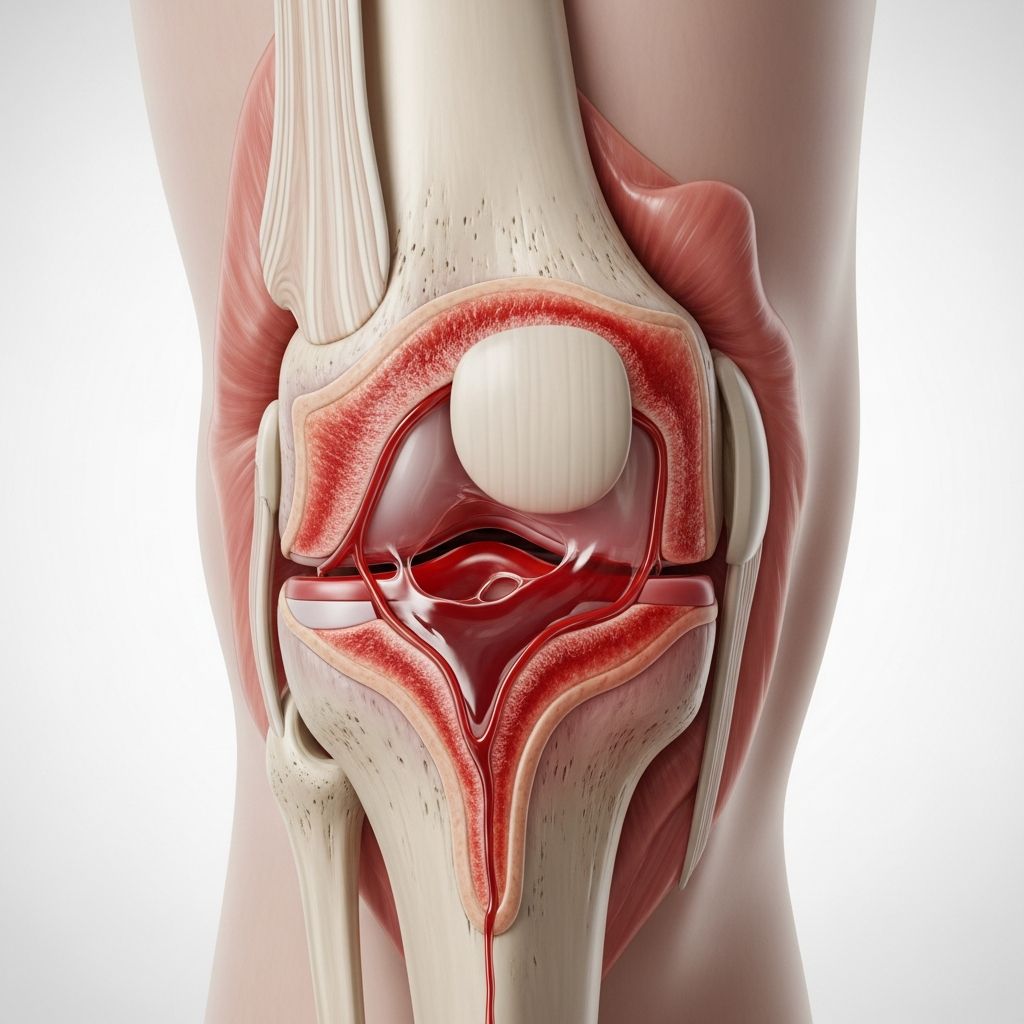
Hemarthrosis is a medical condition characterized by bleeding into the space around one of your joints. This occurs when blood leaks into your synovial membrane or the cavity inside one of your joints, causing swelling and potentially making it difficult to use the affected joint. While hemarthrosis can develop in any synovial joint in your body, it most commonly affects the knees, though it can occur in any joint that moves.
Your synovial membranes play a crucial protective role by surrounding your joints and working in conjunction with your cartilage, tendons, and ligaments to reduce friction between bones during movement. When bleeding occurs in these joints, it disrupts normal function and requires prompt medical attention.
There are two primary types of hemarthrosis: acute hemarthrosis, which is temporary bleeding caused by an injury or short-term illness, and chronic hemarthrosis, which occurs when a bleeding disorder causes the condition to recur repeatedly. Studies have found that approximately half of all people with hemophilia will experience hemarthrosis at some point in their lives.
Common Locations for Hemarthrosis
While hemarthrosis can technically occur in any synovial joint, certain joints are more frequently affected than others:
– Knees (most common location)- Ankles- Elbows- Shoulders- Hips (particularly concerning due to increased risk of complications)- Wrists
The knee is the most vulnerable joint for hemarthrosis, with approximately half of all cases of knee hemarthrosis being caused by ACL tears and other damage to knee ligaments.
Causes of Hemarthrosis
Hemarthrosis can develop through various mechanisms, ranging from acute trauma to underlying medical conditions. Understanding the cause is essential for determining the appropriate treatment approach.
Traumatic Injuries
Traumatic injuries represent one of the most common causes of hemarthrosis. These include:
– Torn ligaments, particularly ACL injuries- Fractures within or near the joint- Cartilage damage- Direct blunt force trauma to the joint- Sports-related injuries- Dislocations
Bleeding Disorders and Medical Conditions
Individuals with bleeding disorders face significantly higher risk of developing hemarthrosis. These conditions include:
– Hemophilia A and B- Von Willebrand disease- Other clotting factor deficiencies- Thrombocytopenia- Anticoagulant therapy complications
Medication Side Effects
Certain medications can increase bleeding risk and contribute to hemarthrosis development. Blood thinners and antiplatelet medications are particularly concerning in this regard.
Post-Surgical Complications
Hemarthrosis can develop following joint surgery as a normal part of the healing process or due to complications during the procedure.
Symptoms of Hemarthrosis
Recognizing the symptoms of hemarthrosis is crucial for seeking timely medical attention. The presentation can vary depending on age and the underlying cause.
Common Symptoms
– Swelling around the affected joint- Pain or aching in the joint- Stiffness and limited range of motion- Warmth around the joint area- Visible bruising or discoloration- Difficulty bearing weight on the affected limb- Weakness in the affected joint
Age-Related Presentations
In adults and older children, hemarthrosis typically begins with prodromal stiffness or tingling that precedes pain and swelling. In infants, signs may include irritability and decreased use of the affected limb, making diagnosis more challenging in very young patients.
Related Stories



Diagnosis of Hemarthrosis
Diagnosing hemarthrosis typically involves a comprehensive approach, as the condition is usually part of a differential diagnosis—a list of conditions that share similar symptoms. Since many issues cause joint swelling, healthcare providers must rule out other causes before confirming hemarthrosis.
Imaging Tests
Your healthcare provider may recommend several imaging options:
– X-rays to assess for fractures- Ultrasound to visualize fluid accumulation- Magnetic resonance imaging (MRI) for detailed soft tissue evaluation- CT scans for complex cases- Magnetic resonance angiography for specialized assessment
Joint Aspiration (Arthrocentesis)
One of the most definitive diagnostic procedures is joint aspiration. During this procedure, your healthcare provider removes some of the excess fluid from around your joint and sends it to a laboratory for analysis. The synovial fluid from hemarthrosis may appear red, pink, or brown depending on the cause of bleeding. This analysis can definitively differentiate hemarthrosis from other conditions such as simple effusion, lipohemarthrosis, and septic arthritis.
Clinical Evaluation
Your healthcare provider will perform a thorough physical examination, review your medical history, inquire about recent injuries or trauma, and assess your symptoms and their severity.
Treatment Approaches
Treatment for hemarthrosis focuses on two primary objectives: stopping the bleeding and managing symptoms. The specific treatment plan depends on the underlying cause and severity of the condition.
Conservative Treatment
For many cases of hemarthrosis, conservative management is effective:
– Rest and immobilization of the affected joint- Ice application to reduce swelling- Elevation of the affected limb- Compression using supportive wrapping- Pain management with appropriate analgesics
Medical Interventions
Depending on the cause, medical treatment may include:
– Blood transfusions when necessary- Factor replacement therapy for bleeding disorders- Medications to address the underlying condition- Temporary cessation of anticoagulant medications if applicable
For individuals with hemophilia presenting with acute hemarthrosis, coagulation factor specific to their type of hemophilia should be infused promptly at the first sign of joint bleeding, ideally within 2 hours of bleed identification. Treatment is particularly important during the prodromal stiffness or tingling phase that precedes pain and swelling.
Procedural Interventions
In cases where conservative treatment fails to provide relief, additional interventions may be necessary:
– Arthrocentesis to remove excess fluid and reduce pressure, particularly when hemarthrosis is tense, painful, and shows no improvement after 24 hours of conservative treatment- Synovectomy (surgical removal of the inflamed synovial lining)- Embolization to stop bleeding- Surgical repair of underlying structural damage
Studies report well-documented success of needle aspiration for acute hemarthrosis that was present for less than five days. However, this method loses effectiveness once hemarthrosis is present for more than one week, due to intraarticular fibrin organization and clotting pathophysiology already underway.
Pain Management Considerations
When managing pain from hemarthrosis, it’s important to consult with your healthcare provider before taking over-the-counter medications. Many common pain relievers, particularly non-steroidal anti-inflammatory drugs (NSAIDs), can thin your blood and worsen the bleeding that caused hemarthrosis. COX-2 inhibitors are often preferred for pain control in these situations. Medications with anti-platelet activity should be avoided.
Recovery Timeline
How long recovery takes from hemarthrosis depends significantly on what caused the bleeding into your joint. Some people recover in just a few days if the bleeding stops quickly, while other cases take several weeks to heal completely.
If hemarthrosis was caused by trauma like a bone fracture, recovery may take considerably longer. It’s essential to discuss with your healthcare provider or surgeon what to expect, when you can safely start using your joint again, and when it’s appropriate to resume physical activities. Rushing recovery can lead to rebleeding and complications.
Hemarthrosis vs. Joint Effusion
While hemarthrosis and joint effusion both cause swelling around a joint, they are distinct conditions. Joint effusion is a general term for any swelling in the area around your joints caused by extra fluids flooding the tissues. The condition can result from various causes including injuries, overuse, or infections. The fluid buildup in joint effusion might contain some blood, but it’s not exclusively caused by bleeding as hemarthrosis is.
Long-Term Complications
Repeated joint bleeding leads to chronic complications including chronic synovitis, cartilage damage, and bone alterations that result in hemophilic arthropathy. These changes are associated with pain, functional impairment, and poor quality of life. In chronic hemarthrosis cases, bleeding occurs on a mechanical basis with the hypervascular synovium becoming trapped between opposing articular surfaces. This creates a vicious cycle where even the replacement of clotting factors cannot stop recurrent joint bleeds.
Bleeding into the hip joint is particularly concerning due to the greater risk of increased intra-articular pressure and potential osteonecrosis of the femoral head. In hemophilic hemarthrosis, one joint is typically affected at a time, though bilateral joint involvement is possible.
When to Seek Medical Care
It’s crucial to visit a healthcare provider if you’re experiencing swelling around one of your joints, especially if it hurts or makes movement difficult. Seek prompt medical attention if you notice:
– New swelling around a joint- Joint pain that doesn’t improve with rest- Difficulty moving or bearing weight on a joint- Bruising or discoloration around a joint- Warmth around the joint area- Any signs of infection such as fever or increased redness
Frequently Asked Questions
Q: What is the difference between hemarthrosis and a regular bruise?
A: Hemarthrosis is bleeding specifically into the joint cavity and surrounding synovial space, causing swelling and functional impairment of the joint. A regular bruise is bleeding into the tissues under the skin but doesn’t necessarily involve the joint space itself.
Q: Can hemarthrosis develop without an obvious injury?
A: Yes, hemarthrosis can develop without obvious injury in individuals with bleeding disorders, during or after joint surgery, or as a side effect of certain medications like blood thinners. Minor trauma that wouldn’t normally cause problems can trigger hemarthrosis in these cases.
Q: How is hemarthrosis different from arthritis?
A: Hemarthrosis is acute bleeding into the joint, while arthritis is chronic inflammation of the joint. However, recurrent hemarthrosis can lead to hemophilic arthropathy, a form of secondary arthritis caused by repeated bleeding episodes.
Q: Is hemarthrosis life-threatening?
A: While hemarthrosis itself is typically not immediately life-threatening, it requires prompt treatment to prevent complications. In individuals with severe bleeding disorders, it can be part of a serious bleeding episode requiring emergency care.
Q: Can physical therapy help after hemarthrosis?
A: Yes, physical therapy is often beneficial once acute bleeding has stopped and initial healing has occurred. Your healthcare provider can advise when it’s safe to begin therapeutic exercises to restore strength and range of motion.
Q: What medications should I avoid with hemarthrosis?
A: Avoid NSAIDs and other anti-platelet medications as these can thin your blood and worsen bleeding. Always consult your healthcare provider before taking any pain relievers or over-the-counter medications.
References
- Hemarthrosis (Joint Bleeding): Causes, Symptoms and Treatment — Cleveland Clinic. 2024. https://my.clevelandclinic.org/health/diseases/24225-hemarthrosis-joint-bleeding
- Hemarthrosis — National Center for Biotechnology Information (NCBI) StatPearls. 2024. https://www.ncbi.nlm.nih.gov/books/NBK525999/
- A Review of Current Management of Knee Hemarthrosis in the Non-Hemophilic Patient — PubMed Central. 2022. https://pmc.ncbi.nlm.nih.gov/articles/PMC8808899/
- Pain in and Around a Single Joint — Merck Manuals Professional Edition. 2024. https://www.merckmanuals.com/professional/musculoskeletal-and-connective-tissue-disorders/pain-in-and-around-joints/pain-in-and-around-a-single-joint
- Secondary Joint Diseases: Hemorrhagic Joint Diseases — Britannica. 2024. https://www.britannica.com/science/joint-disease/Secondary-joint-diseases
Similar Articles








Read full bio of medha deb