Hemianopia Treatment: 4 Promising Advances To Restore Vision
Exploring cutting-edge therapies from brain stimulation to prism glasses revolutionizing vision restoration for hemianopia patients.
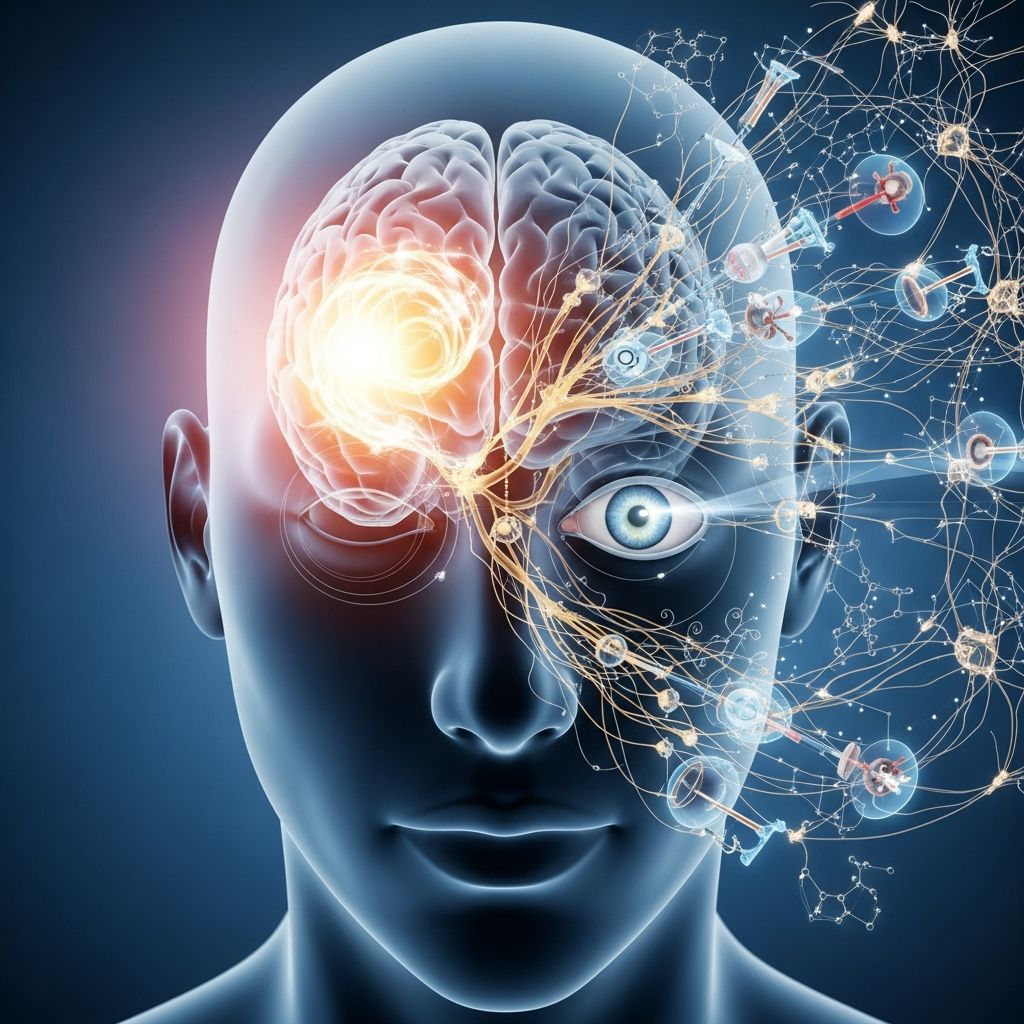
Homonymous hemianopia, characterized by the loss of half the visual field in both eyes, profoundly impacts daily activities like reading, navigating crowds, and driving. Primarily caused by strokes affecting the brain’s visual pathways, this condition affects thousands annually with no definitive cure. Recent innovations, however, offer renewed hope through targeted therapies that either compensate for the loss or aim to restore function.
Understanding the Impact of Hemianopia on Daily Life
Patients with hemianopia often collide with obstacles on their blind side, struggle with text comprehension, and face mobility challenges in busy environments. This visual field defect arises from damage to the optic tract, lateral geniculate nucleus, or visual cortex, leading to congruent defects in both eyes. Unlike peripheral vision loss, hemianopia disrupts central processing, making adaptation essential.
- Mobility issues: Increased risk of bumps in stores or stations.
- Reading difficulties: Slower speeds and frequent omissions.
- Safety concerns: Inability to drive legally in many regions.
These limitations extend to emotional tolls, including frustration and reduced independence, underscoring the urgency for effective interventions.
Traditional Vision Rehabilitation Strategies
Vision rehabilitation remains a cornerstone, emphasizing compensatory techniques to maximize residual vision. Therapists train patients in systematic scanning to shift gaze toward the affected field, enhancing environmental awareness.
Scanning and Saccadic Training
Saccadic training develops rapid eye movements to explore blind areas deliberately. Patients practice directing gaze left or right, improving stimulus detection speed and precision. Studies show this boosts scanning efficiency, though gains vary by individual motivation and lesion chronicity.
| Training Type | Focus | Expected Benefits |
|---|---|---|
| Saccadic Eye Movements | Quick shifts to blind field | Faster obstacle detection |
| Visual Search Drills | Locating targets in scenes | Enhanced peripheral awareness |
| Reading Aids | Head/eye coordination | Improved text navigation |
These methods, while non-invasive, require consistent practice and yield moderate improvements rather than field expansion.
Optical Solutions: Prism Glasses and Field Expanders
Prism spectacles shift images from the blind field into intact areas, effectively expanding perception without surgery. Traditional prisms provide basic deviation, but newer multi-periscopic prism (MPP) and full-field periscopic prism (FPP) designs offer superior coverage.
Clinical Trials on Advanced Prism Lenses
Ongoing trials, such as NCT04827147, compare MPP and FPP in crossover designs. MPP lenses use multiple prisms for broader expansion, potentially reducing adaptation time. Early data suggest improved navigation and fewer collisions, vital for non-legally blind patients ineligible for certain aids.
- MPP: Multi-layered prisms for panoramic view.
- FPP: Single high-power prism per eye.
- Benefits: Immediate field augmentation, no training needed.
Experts like Dr. Deliso highlight prisms’ success in low-vision care, with tech advancements like digital augmenters promising further gains.
Breakthrough: Cross-Frequency Brain Stimulation
A paradigm shift comes from non-invasive brain stimulation mimicking natural neural oscillations. EPFL’s cf-tACS targets stroke-induced desynchronization between the primary visual cortex (V1) and medio-temporal area (MT), key for motion perception.
Related Stories



How cf-tACS Works
Patients undergo visual training on motion discrimination at their blind field’s edge while receiving bifocal stimulation: high-frequency gamma to MT and low-frequency alpha to V1, replicating forward-pattern brain communication. Placebo-controlled trials with 16 chronic patients showed significant visual field expansions and real-world gains, like detecting a passenger’s arm during driving.
Lead researcher Friedhelm Hummel notes: “This innovative strategy, inspired by brain physiology, enhances visual functions even in long-standing cases.” Biomarkers predict responders, aiding personalization.
cf-tACS Advantages
- Non-invasive, 10 daily sessions.
- Restores neural synchronicity per EEG.
- Sustained improvements post-training.
Emerging Tech: Mixed Reality and Digital Aids
Mixed reality glasses overlay digital cues to highlight blind-side objects, combining AR with eye-tracking. While prisms and training show limited efficacy alone, these wearables integrate with rehab for hybrid solutions. Smartphone apps aid object recognition and navigation, democratizing access.
Comparing Treatment Modalities
| Modality | Mechanism | Evidence Level | Accessibility |
|---|---|---|---|
| Vision Rehab | Compensatory training | Moderate (observational) | High |
| Prism Glasses | Optical shift | Clinical trials ongoing | Medium (custom fit) |
| cf-tACS | Neural oscillation sync | Proof-of-concept RCT | Low (specialized) |
| Mixed Reality | Digital augmentation | Preliminary | Emerging |
Combination therapies may yield best outcomes, with rehab amplifying device effects.
Patient Selection and Future Directions
Success hinges on factors like lesion timing, size, and biomarkers. Acute cases respond best to stimulation, while chronic benefit from prisms. Larger trials are needed to validate cf-tACS scalability and prism efficacy.
Future research explores pharmacology-neurostimulation hybrids and AI-driven personalization, potentially curing hemianopia subsets.
Frequently Asked Questions (FAQs)
What causes hemianopia?
Strokes damaging visual pathways in the brain’s right or left hemisphere.
Can hemianopia be cured?
No full cure exists, but therapies restore function and compensate effectively.
Are prism glasses comfortable?
Initial adaptation required, but advanced designs minimize distortion.
How long does brain stimulation take?
Two blocks of 10 daily 30-minute sessions.
Who qualifies for these treatments?
Stroke survivors with confirmed homonymous hemianopia via perimetry.
References
- Understanding Homonymous Hemianopia: Blue Fin Vision® Guide — Blue Fin Vision. 2023. https://bluefinvision.com/blog/what-is-homonymous-hemianopia/
- Can’t see to one side? Hemianopia finally has a treatment — New Atlas. 2024-11-17. https://newatlas.com/stroke/hemianopia-stroke-blindness-treatment/
- Clinical Trial of Multi-Periscopic Prism Glasses for Hemianopia — ClinicalTrials.gov. 2024-12-01. https://clinicaltrials.gov/study/NCT04827147
- New therapy restores vision after stroke induced blindness — News-Medical.net. 2025-11-17. https://www.news-medical.net/news/20251117/New-therapy-restores-vision-after-stroke-induced-blindness.aspx
- Study Tests New Hemianopia Treatment — MCPHS. 2024. https://www.mcphs.edu/news/national-clinical-trial-aiming-to-improve-vision-rehabilitation
- Management options offer promising solutions for patients with hemianopic field loss — Optometry Times. 2024-10-01. https://www.optometrytimes.com/view/management-options-offer-promising-solutions-for-patients-with-hemianopic-field-loss
Similar Articles








Read full bio of Sneha Tete