Hemiplegia: Causes, Symptoms, and Treatment Options
Understanding hemiplegia: paralysis on one side of the body and recovery strategies.
What Is Hemiplegia?
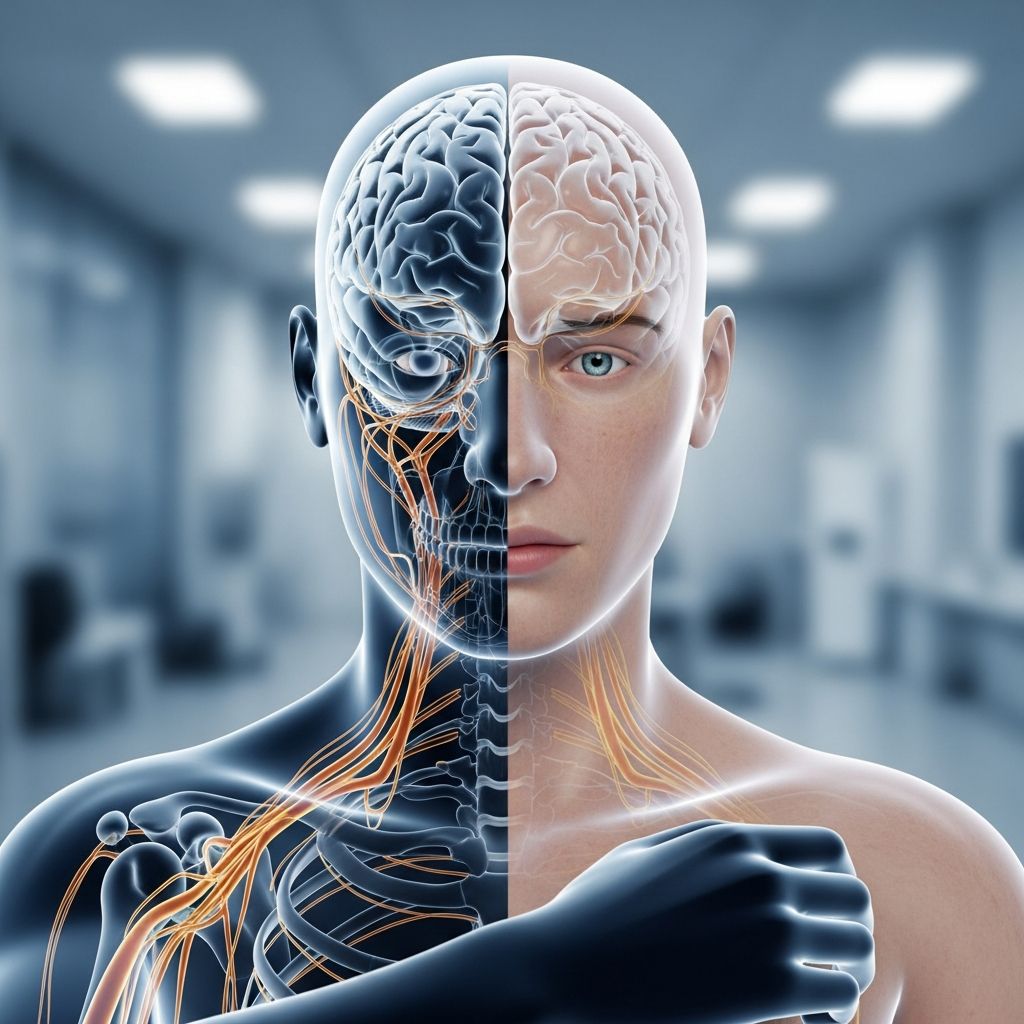
Hemiplegia is a neurological condition characterized by partial or complete paralysis of one side of the body. The term comes from the Greek word “hemi,” meaning half, which accurately describes how this condition affects one-half of the body. Typically, hemiplegia impacts the arm, leg, and lower face on the affected side, significantly limiting a person’s ability to perform everyday activities.
Hemiplegia differs from hemiparesis in severity. While hemiparesis indicates weakness on one side of the body, hemiplegia indicates partial or total paralysis. However, these terms are often used interchangeably since both produce similar symptoms and result from similar underlying causes affecting the motor pathways in the brain.
This condition severely impairs patients’ abilities to perform activities of daily living (ADL), affecting their overall quality of life and independence. The extent of disability depends on the severity of the initial injury and the effectiveness of rehabilitation interventions.
Understanding the Causes of Hemiplegia
Hemiplegia arises from damage to or disease of the brain or spinal cord, specifically affecting the areas that control the motor system. This damage may occur prior to birth, during birth, or after birth as a result of accidents, illnesses, or strokes.
Stroke: The Primary Cause
The most common cause of hemiplegia is stroke, resulting from cerebrovascular disease. Strokes occur when blood flow to the brain is disrupted, either through clotting (ischemic stroke) or bleeding (hemorrhagic stroke) from diseased arterial walls. This disruption damages motor control areas in the brain, leading to paralysis on one side of the body.
During a stroke, the corticospinal tracts in one hemisphere of the brain are damaged. The internal capsule is the site most often affected, as this area contains densely packed nerve fibers that descend from the motor cortex of the brain into the spinal cord.
Other Common Causes
While stroke is the leading cause, several other conditions can result in hemiplegia:
- Traumatic brain injury (TBI): Accidents and head injuries that damage motor pathways in the brain
- Spinal cord injury: Incomplete spinal cord injuries may paralyze one side of the body while leaving the other side functional
- Brain tumors: Growths that damage motor control areas
- Brain infections: Conditions that affect motor function
- Birth complications: Damage occurring during fetal development or delivery
Recognizing Symptoms of Hemiplegia
Symptoms of hemiplegia vary depending on the severity of brain damage and the specific location of the injury. Common manifestations include:
- Paralysis on one side of the body (the primary symptom)
- Muscle weakness and spasticity (muscle stiffness and involuntary contractions)
- Poor balance and coordination
- Gait problems, including limping and toe drop
- Difficulty walking due to motor impairment
- Loss or lack of balance
- Inability to grasp objects
- Speech difficulties
- Epileptic seizures
- Visual field defects
- Emotional and behavioral problems
- Sensory deficits on the affected side
Symptom Progression After Stroke
The progression of symptoms after a stroke follows a particular pattern. Immediately after a stroke, the affected body parts are initially limp and flaccid. Within days or weeks, the limbs become stiff and spastic as muscle tone increases. The initial onset of stroke can be massive, producing widespread paralysis, inability to speak, coma, or even death within hours or days.
Related Stories



However, onset may also manifest gradually through transient ischemic attacks (TIAs), during which patients experience temporary weakness and numbness of an arm, leg, or side of the face. These episodes may recur many times before more widespread and permanent paralysis develops.
Symptoms in Children
Children with hemiplegia may display distinctive signs that differ from adult presentations:
- Delayed walking or developmental milestones
- Walking on their tip toes
- Keeping one hand fisted
- Favoring one hand over the other before the age of 12 years
Why Does Hemiplegia Affect One Side?
The brain’s motor pathways, known as the corticospinal tracts, follow a critical anatomical pattern called decussation (crossing). These nerve fibers cross in the brainstem, meaning that damage to the right cerebral hemisphere results in paralysis of the left side of the body, and vice versa. This contralateral relationship is a fundamental principle in understanding why hemiplegia affects the opposite side of the body from the brain injury.
Additionally, damage to the left hemisphere in right-handed persons may result in aphasia, a language disorder affecting speech and comprehension.
Diagnosis and Assessment
Diagnosing hemiplegia typically involves a combination of clinical evaluation and imaging studies. Healthcare providers assess:
- Patient history and onset of symptoms
- Physical examination of motor function and muscle strength
- Neurological assessment of reflexes and coordination
- Brain imaging (CT or MRI) to identify the location and extent of damage
- Evaluation of associated symptoms such as speech or vision problems
- Assessment tools to measure severity, such as the Pusher Syndrome scale for certain traumatic brain injuries
Treatment and Rehabilitation Options
Treatment for hemiplegia depends on severity and focuses on both addressing the underlying cause and recovering motor function. Modern rehabilitation approaches have significant clinical potential to provide personalized and effective treatment strategies.
Physical and Occupational Therapy
Physical therapy is fundamental to hemiplegia treatment, helping to restore movement and improve functional abilities. Therapists design personalized exercise programs to strengthen affected muscles and improve coordination.
Occupational therapy helps patients adapt to physical limitations and relearn skills necessary for activities of daily living, such as dressing, eating, and personal hygiene.
Constraint-Induced Movement Therapy (CIMT)
CIMT is a revolutionary approach rooted in neuroplasticity theory. This therapy involves restricting the unaffected limb and compelling patients to engage the affected side in high-intensity, task-oriented training (≥6 hours per day). Research demonstrates impressive results: in chronic stroke patients, CIMT has been shown to increase affected limb use fivefold within 2 weeks, with effects persisting beyond 2 years. Neuroimaging studies support its role in cortical reorganization, expanding motor cortex representation and increasing gray matter density in the affected hemisphere.
Functional Electrical Stimulation (FES)
Functional electrical stimulation uses electrical currents to stimulate affected muscles, helping to restore muscle strength, endurance, and control. Research shows that hemiplegic patients receiving FES in conjunction with traditional rehabilitation therapy achieved better outcomes in terms of ADL scores (such as the Barthel Index) and muscle strength tests compared with control groups. By aiding in muscle recovery, FES enables patients to use affected limbs more effectively in daily life and reduce dependence on external assistance.
Speech and Language Therapy
For patients experiencing speech difficulties or aphasia due to left-hemisphere damage, speech therapy is essential. Speech-language pathologists work with patients to improve communication abilities and swallowing function if affected.
Additional Treatment Options
Depending on individual needs, other treatments may include:
- Braces or orthotics: Devices that support affected limbs and improve mobility
- Mirror therapy: A technique that may improve motor function in hemiplegic limbs
- Medications: Drugs to manage spasticity, pain, or seizures
- Acupuncture: May be used as a complementary therapy
- Surgery: In some cases, surgical interventions may be considered
Long-Term Impact on Daily Life
Hemiplegia is considered a long-term condition, requiring ongoing management and rehabilitation. The condition significantly affects quality of life, as patients face challenges in:
- Performing self-care activities (bathing, dressing, grooming)
- Walking and mobility
- Work and employment capabilities
- Social participation and relationships
- Psychological well-being due to emotional and behavioral changes
Increased energy expenditure results from compensatory adjustments during walking that produce abnormal movements of the body’s center of gravity. This can lead to fatigue and further limitations in activity tolerance.
Secondary Complications
Without appropriate rehabilitation interventions, hemiplegia can lead to secondary conditions:
- Joint deformities: Contractures that limit range of motion
- Muscle contractures: Permanent shortening of muscles
- Pressure sores: Skin breakdown from prolonged immobility
- Learned nonuse: Psychological adaptation where patients stop attempting to use the affected limb
Early and sustained rehabilitation significantly reduces the risk of these complications.
Distinguishing Hemiplegia from Hemiparesis
While hemiplegia indicates partial or total paralysis on one side of the body, hemiparesis indicates weakness on one side. The key difference lies in severity: mild to moderate nerve or brain damage produces hemiparesis, while moderate to severe damage results in hemiplegia.
Importantly, the same injury can produce both symptoms at different times, particularly when nerves are compressed or the spinal cord is swollen. Early in an injury’s course, it’s often impossible to determine whether a patient will develop hemiparesis or hemiplegia.
Frequently Asked Questions
Q: Is hemiplegia permanent?
A: Hemiplegia is typically a long-term condition, but recovery is possible with intensive rehabilitation. The extent of recovery depends on the severity of the initial injury and the consistency of therapy. Many patients experience significant functional improvements through modern therapeutic interventions.
Q: Can someone recover from hemiplegia?
A: Yes, recovery is possible, particularly in the first few months after stroke or brain injury when neuroplasticity is highest. Modern rehabilitation approaches, including constraint-induced movement therapy and functional electrical stimulation, have demonstrated significant potential for functional recovery and improved independence.
Q: What is the difference between hemiplegia and hemiparesis?
A: Hemiplegia refers to partial or complete paralysis on one side of the body, while hemiparesis refers to weakness on one side. Hemiplegia is more severe, and the same injury can cause either condition depending on its severity and the degree of nerve damage.
Q: What causes hemiplegia most commonly?
A: Stroke is the most common cause of hemiplegia, resulting from cerebrovascular disease that disrupts blood flow to the brain. Other causes include traumatic brain injury, spinal cord injury, brain tumors, and infections.
Q: How is hemiplegia treated?
A: Treatment involves addressing the underlying cause and rehabilitation therapy. Evidence-based approaches include physical therapy, occupational therapy, constraint-induced movement therapy, functional electrical stimulation, and speech therapy, tailored to individual patient needs.
Q: Can children develop hemiplegia?
A: Yes, children can develop hemiplegia from birth complications, childhood strokes, traumatic brain injuries, or other neurological conditions. Early intervention and specialized pediatric rehabilitation are crucial for optimal developmental outcomes.
References
- Hemiplegia | Research Starters – EBSCO — EBSCO Health. Accessed January 2026. https://www.ebsco.com/research-starters/consumer-health/hemiplegia
- Hemiplegia: Symptoms, causes, and more — Medical News Today. Accessed January 2026. https://www.medicalnewstoday.com/articles/hemiplegia
- Advances in hemiplegia rehabilitation: modern therapeutic interventions — National Center for Biotechnology Information (NCBI). 2024. https://pmc.ncbi.nlm.nih.gov/articles/PMC11985468/
- Hemiplegia — Physiopedia. Accessed January 2026. https://www.physio-pedia.com/Hemiplegia
- Hemiparesis vs Hemiplegia: Causes, Symptoms, Differences — Spinal Cord. Accessed January 2026. https://www.spinalcord.com/blog/what-is-the-difference-between-hemiplegia-and-hemiparesis
- Hemiplegia | Definition, Causes, & Treatment — Britannica. Accessed January 2026. https://www.britannica.com/science/hemiplegia
Similar Articles








Read full bio of Sneha Tete