Hemolytic Anemia: Causes, Symptoms, and Treatment
Comprehensive guide to hemolytic anemia: understanding red blood cell destruction and effective treatment options.
What is Hemolytic Anemia?
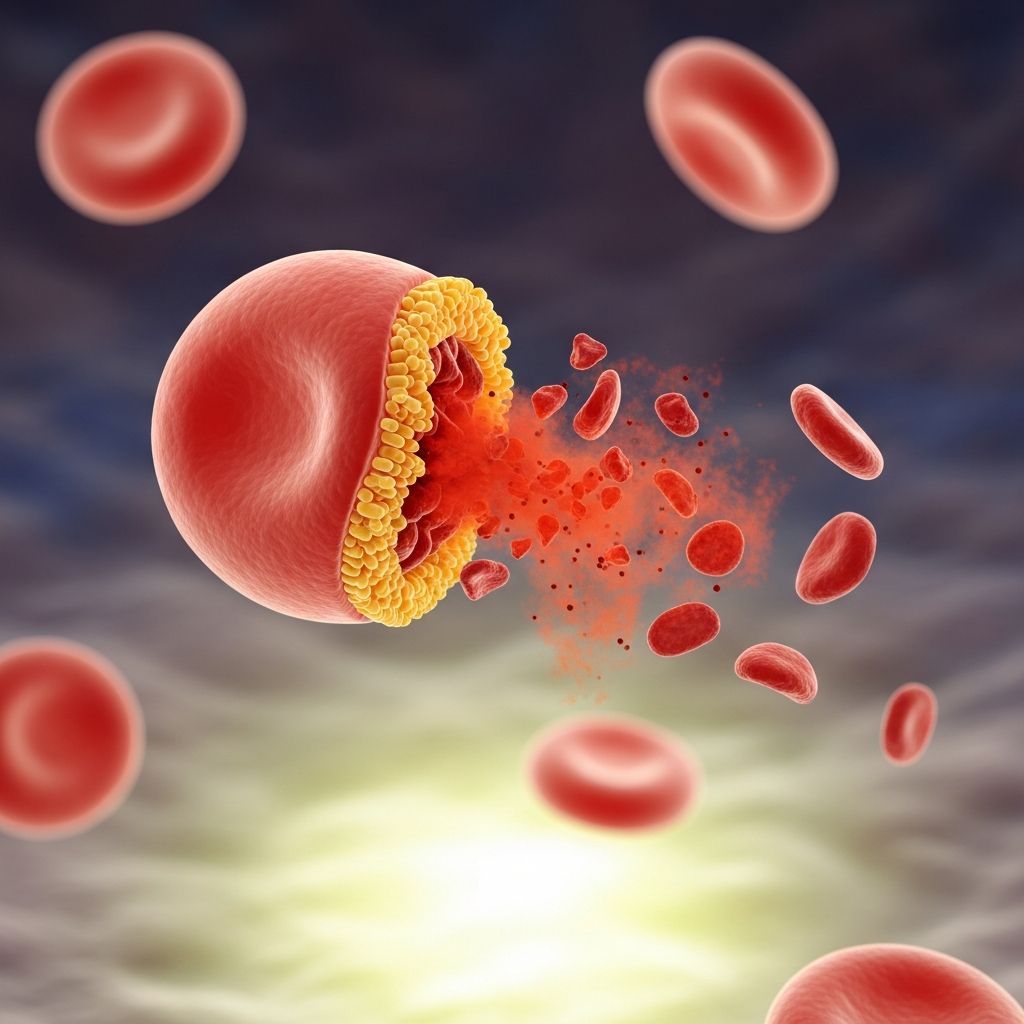
Hemolytic anemia is a blood disorder characterized by the destruction of red blood cells at a faster rate than the body can produce new ones. Red blood cells normally live for approximately 120 days, but in hemolytic anemia, they may be destroyed in just a few weeks or even days. This accelerated destruction leads to insufficient oxygen-carrying capacity in the blood, resulting in various symptoms and complications. The condition can range from mild to severe, with some individuals experiencing few symptoms while others require ongoing medical intervention.
Types of Hemolytic Anemia
Hemolytic anemia is classified into two main categories: inherited and acquired. Understanding the distinction between these types is crucial for proper diagnosis and treatment planning.
Inherited Hemolytic Anemia
Inherited hemolytic anemia occurs when parents pass genetic mutations to their children that affect red blood cell structure or function. These conditions are present from birth and persist throughout life. Common inherited forms include:
– Sickle cell disease, where red blood cells assume an abnormal crescent shape- Thalassemia, characterized by defective hemoglobin production- Hereditary spherocytosis, involving abnormal red blood cell membrane structure- Glucose-6-phosphate dehydrogenase (G6PD) deficiency, affecting red blood cell metabolism- Pyruvate kinase deficiency, another metabolic disorder affecting red blood cells
Acquired Hemolytic Anemia
Acquired hemolytic anemia develops later in life when external factors damage otherwise normal red blood cells produced by the bone marrow. Unlike inherited forms, individuals are born without the condition but develop it due to various triggers. Causes of acquired hemolytic anemia include:
– Autoimmune disorders such as lupus, rheumatoid arthritis, and ulcerative colitis- Certain infections, both viral and bacterial- Medications including penicillin, antimalarial drugs, sulfa medicines, and acetaminophen- Blood cancers and lymphomas- Mechanical heart valves that may damage red blood cells during circulation- Overactive spleen (hypersplenism)- Severe transfusion reactions- Environmental toxins and heavy metals
Symptoms of Hemolytic Anemia
The symptoms of hemolytic anemia vary depending on the severity and rate of red blood cell destruction. Some individuals may experience mild symptoms that develop gradually, while others may have acute presentations requiring emergency care.
Common symptoms include:
– Weakness and fatigue- Pale or yellowish complexion- Jaundice (yellowing of skin and eyes)- Dark-colored urine- Fever- Dizziness and lightheadedness- Shortness of breath- Chest pain or discomfort- Heart murmur- Inability to perform physical activities- Confusion or difficulty concentrating- Rapid or irregular heartbeat- Enlarged spleen (splenomegaly)- Enlarged liver (hepatomegaly)
The severity of symptoms often correlates with how quickly red blood cells are being destroyed. In some cases, hemolytic anemia may cause serious complications if left untreated, including gallstones from increased bilirubin excretion, pulmonary hypertension, heart failure, and syncope (fainting episodes).
Causes and Risk Factors
Hemolytic anemia can result from various causes, which are often classified as intrinsic or extrinsic depending on whether the problem originates within the red blood cell itself or from external factors.
Intrinsic Causes
Intrinsic hemolytic anemia results from defects within the red blood cells themselves, typically due to inherited genetic conditions affecting cell structure or metabolism. These include abnormalities in hemoglobin, red blood cell membrane proteins, or cellular metabolic functions.
Related Stories



Extrinsic Causes
Extrinsic hemolytic anemia develops when external factors destroy healthy red blood cells. The spleen may trap and destroy normal red blood cells, or autoimmune reactions may attack these cells. Other extrinsic causes include infections, mechanical damage from prosthetic heart valves, tumors, and medication side effects.
Diagnosis of Hemolytic Anemia
Diagnosing hemolytic anemia involves a comprehensive evaluation combining clinical presentation, blood tests, and sometimes additional specialized tests. Healthcare providers use several diagnostic methods to confirm the condition and identify its underlying cause:
Key diagnostic tests include:
– Complete blood count (CBC) to measure red blood cell levels and hemoglobin- Reticulocyte count to assess bone marrow’s red blood cell production capacity- Peripheral blood smear to examine red blood cell appearance- Coombs test (direct antiglobulin test) to detect antibodies on red blood cells- LDH (lactate dehydrogenase) and bilirubin levels to assess hemolysis- Haptoglobin levels, which decrease during hemolysis- Urinalysis to detect hemoglobin in urine- Genetic testing for inherited forms- Imaging studies to evaluate organ involvement
Treatment Options for Hemolytic Anemia
Treatment for hemolytic anemia depends on several factors including the underlying cause, severity of the condition, patient age, overall health status, and symptom severity. The primary goals of treatment are to reduce or stop red blood cell destruction, increase red blood cell counts to acceptable levels, and address the underlying cause.
Mild Hemolytic Anemia
Individuals with mild hemolytic anemia may not require immediate treatment if symptoms are minimal and the condition remains stable. However, regular monitoring is essential to track disease progression.
Symptomatic Treatments
Blood Transfusions
Blood transfusions provide immediate relief for severe anemia by replacing destroyed red blood cells. This symptomatic treatment is often necessary in emergency situations or when hemoglobin levels drop dangerously low. However, transfusions carry risks including transfusion reactions and iron overload with repeated transfusions.
Corticosteroid Medications
For autoimmune hemolytic anemia, corticosteroids like prednisone and methylprednisolone suppress immune system activity, reducing the destruction of red blood cells. These medications can be highly effective, though long-term use may cause side effects.
Intravenous Immunoglobulin (IVIG)
IVIG boosts immune system function and can help control hemolysis in acute severe cases, particularly when combined with corticosteroids. This treatment is especially useful when rapid intervention is needed.
Rituximab
This monoclonal antibody targets B cells involved in autoimmune hemolytic anemia. Rituximab is particularly useful for steroid-resistant cases and may provide longer-lasting remission than corticosteroids alone.
Folic Acid and Iron Supplementation
When red blood cells are destroyed rapidly, the body loses essential nutrients needed for new blood cell production. Folic acid and iron supplements help replenish these stores, supporting bone marrow’s ability to produce replacement cells.
Advanced Treatment Options
Splenectomy (Spleen Removal Surgery)
Surgical removal of the spleen may be considered when the spleen is primarily responsible for destroying red blood cells. This procedure can be particularly effective for hereditary spherocytosis and extravascular hemolysis cases. Success rates vary, with approximately 50-70% of patients experiencing significant improvement.
Immunosuppressive Therapy
For severe cases that don’t respond to steroids or rituximab, additional immunosuppressive agents like azathioprine or cyclophosphamide may be prescribed. These powerful medications require careful monitoring due to potential side effects.
Plasmapheresis
This procedure removes antibody-containing plasma from the blood and replaces it with donor plasma. Plasmapheresis can provide rapid relief in acute situations but is typically not a long-term solution.
Blood and Marrow Stem Cell Transplantation
For severe hereditary forms of hemolytic anemia that don’t respond to conventional treatments, stem cell transplantation offers a potential cure by replacing the defective blood-producing cells with healthy donor cells.
Complications of Hemolytic Anemia
Untreated or inadequately managed hemolytic anemia can lead to serious complications affecting multiple organ systems:
Cardiovascular Complications
Chronic hemolysis can cause pulmonary hypertension (increased pressure in lung arteries), leading to heart arrhythmias, cardiomyopathy, and eventual heart failure. Patients may experience syncope, chest pain, and progressive shortness of breath.
Gallstone Formation
Increased bilirubin from continuous red blood cell breakdown increases gallstone risk, potentially requiring cholecystectomy.
Organ Damage
Chronic hemolysis can damage the kidneys, liver, and nervous system. Free hemoglobin released during intravascular hemolysis can cause acute kidney injury in severe cases.
Living with Hemolytic Anemia
Individuals with hemolytic anemia should maintain regular follow-up appointments with their healthcare provider to monitor disease progression and treatment effectiveness. Lifestyle modifications may include avoiding strenuous exercise during acute episodes, maintaining proper nutrition, and managing stress. Genetic counseling is important for those with inherited forms, particularly when planning pregnancy. Patients should also be vaccinated against infections that could trigger hemolytic episodes and informed about medication interactions.
Frequently Asked Questions
Q: Is hemolytic anemia curable?
A: Some forms of hemolytic anemia can be cured, particularly with splenectomy for certain hereditary conditions or stem cell transplantation for severe inherited forms. However, many cases require ongoing management and treatment to control symptoms and prevent complications.
Q: Can hemolytic anemia be fatal?
A: Severe hemolytic anemia can be fatal if not properly treated. However, with appropriate medical management and treatment, most patients have good prognoses and normal life expectancies.
Q: Is hemolytic anemia hereditary?
A: Only inherited forms of hemolytic anemia are hereditary. Acquired hemolytic anemia develops due to environmental factors, infections, medications, or autoimmune conditions and is not passed genetically to offspring.
Q: What should I avoid if I have hemolytic anemia?
A: Avoid strenuous exercise during acute episodes, certain medications that may trigger hemolysis, and situations that increase infection risk. Work with your healthcare provider to identify specific triggers relevant to your condition.
Q: How often should I have follow-up appointments?
A: Follow-up frequency depends on disease severity and treatment type. Mild cases may require appointments every few months, while severe cases may need more frequent monitoring. Your healthcare provider will recommend an appropriate schedule.
References
- Hemolytic Anemia — National Heart, Lung, and Blood Institute (NHLBI), National Institutes of Health. Updated 2024. https://www.nhlbi.nih.gov/health/anemia/hemolytic-anemia
- Hemolytic Anemia: MedlinePlus Medical Encyclopedia — U.S. National Library of Medicine. Updated 2024. https://medlineplus.gov/ency/article/000571.htm
- Hemolytic Anemia — Cleveland Clinic. Updated 2024. https://my.clevelandclinic.org/health/diseases/22479-hemolytic-anemia
- Hemolytic Anemia: Causes, Symptoms, and Diagnosis — Healthline. Updated 2024. https://www.healthline.com/health/hemolytic-anemia
- Hemolytic Anemia — University of Rochester Medical Center. https://www.urmc.rochester.edu/encyclopedia/content?contenttypeid=85&contentid=p00076
- How Is Hemolytic Anemia Treated? — Heart and Orthopedic Associates of New York. https://www.hoacny.com/patient-resources/blood-disorders/what-hemochromatosis/how-hemolytic-anemia-treated
- Hemolytic Anemia: Symptoms, Diagnosis & Treatment — Cincinnati Children’s Hospital Medical Center. https://www.cincinnatichildrens.org/health/h/hemolytic-anemia
Similar Articles








Read full bio of Sneha Tete