Hemoperitoneum: Causes, Symptoms & Treatment
Understanding hemoperitoneum: internal bleeding in the abdominal cavity explained.
Understanding Hemoperitoneum: Internal Bleeding in the Abdominal Cavity
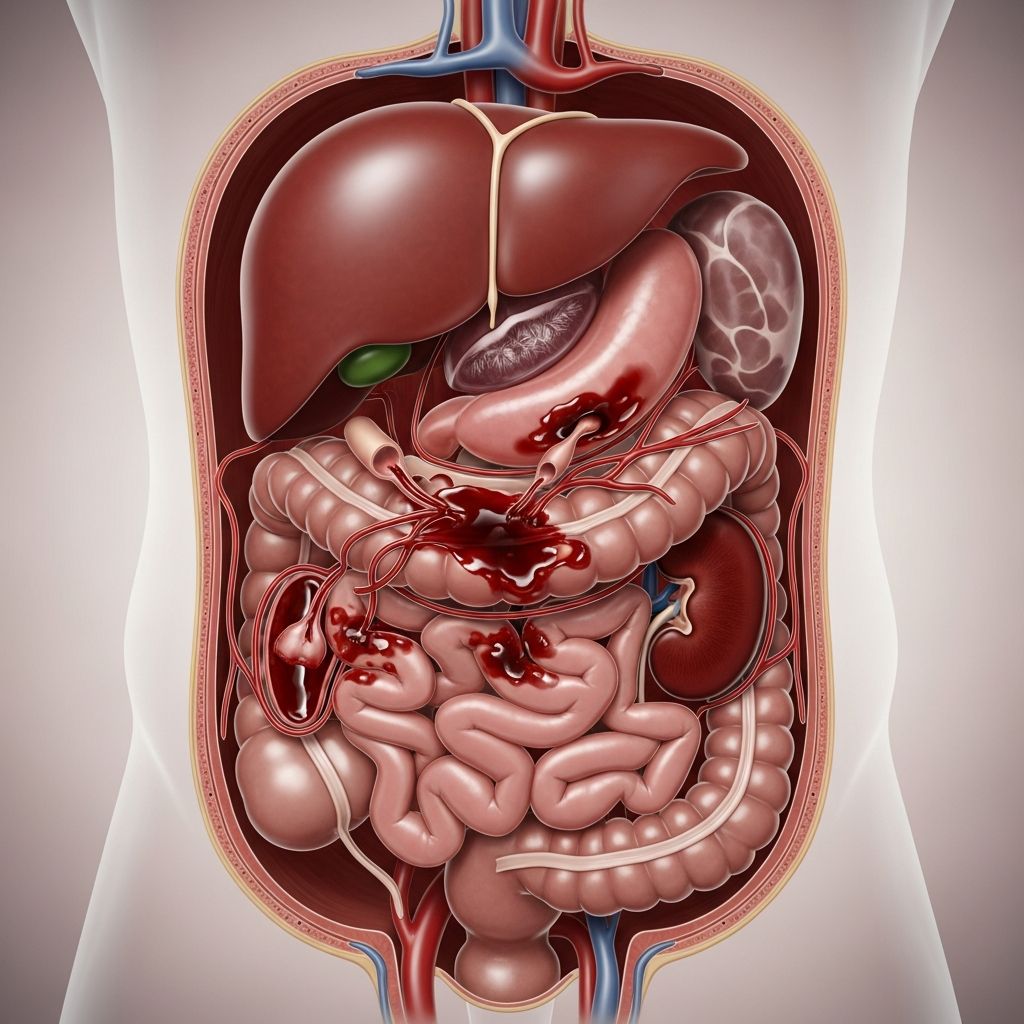
Hemoperitoneum is a serious medical condition characterized by bleeding within your peritoneal cavity, the space that contains your abdominal and pelvic organs. The term derives from “hemo,” which means blood, and “peritoneum,” the membrane that lines your peritoneal cavity. This condition is also known as intraperitoneal hemorrhage or intra-abdominal hemorrhage. When blood leaks from its normal pathways into this space, your organs and tissues receive diminished oxygen and nutrients, which can have severe consequences for your health. Because the peritoneal cavity can hold a significant volume of blood, it is often difficult to determine how much or how rapidly you are losing blood when bleeding occurs internally. If bleeding continues without medical intervention, it can quickly progress to life-threatening blood loss requiring emergency care.
What Is the Peritoneum?
The peritoneum is a thin, delicate membrane that lines the inside of your abdomen and pelvis. It consists of two layers: the parietal layer, which lines the abdominal wall, and the visceral layer, which covers your internal organs. This membrane creates a potential space where fluid can accumulate, and in the case of hemoperitoneum, blood collects in this space. The peritoneal cavity is normally a sterile environment with only a small amount of lubricating fluid, which allows your organs to move freely. Understanding the anatomy of the peritoneum is crucial for comprehending how hemoperitoneum develops and why it requires urgent medical attention.
Causes of Hemoperitoneum
Healthcare providers categorize hemoperitoneum causes into three primary types: traumatic, spontaneous, and iatrogenic. Each category represents a different mechanism of bleeding and requires specific diagnostic and treatment approaches.
Traumatic Hemoperitoneum
Traumatic hemoperitoneum results from an injury to one of the organs or blood vessels within the peritoneal cavity. The most common sources include the liver and spleen, which are particularly prone to bleeding due to their rich vascular supply and friable tissue composition. Traumatic injuries can be classified as either blunt or penetrating. Blunt trauma occurs from a hard impact without breaking the skin, such as from motor vehicle accidents, falls from height, or direct abdominal impact. Penetrating trauma involves an object entering your body, such as gunshot wounds, stab wounds, or impalement injuries. Motor vehicle accidents represent one of the most common causes of traumatic hemoperitoneum, followed by falls and assaults. Even seemingly minor trauma can result in significant internal bleeding, particularly in patients with underlying bleeding disorders or those taking anticoagulation medications.
Spontaneous Hemoperitoneum
Spontaneous hemoperitoneum occurs without preceding trauma and can result from various medical conditions. Common causes include ectopic pregnancy rupture, which remains among the most frequent causes of spontaneous hemoperitoneum in reproductive-age women. Other spontaneous causes include bleeding from gastrointestinal stromal tumors, ruptured abdominal aortic aneurysms, spontaneous rupture of the spleen in patients with hematologic malignancies or severe infections, and bleeding from anticoagulation therapy complications. Patients with liver cirrhosis, portal hypertension, and bleeding disorders also face elevated risk for spontaneous hemoperitoneum. In some cases, the source of bleeding may be difficult to identify, complicating diagnosis and treatment.
Iatrogenic Hemoperitoneum
Iatrogenic hemoperitoneum occurs as an unintended side effect of medical procedures. While rare, this complication can occur when a procedure accidentally injures one of the organs or blood vessels within the peritoneal cavity. Procedures with potential risk include laparoscopic surgery, abdominal biopsies, dialysis catheter placement, and interventional radiologic procedures. The risk of iatrogenic hemoperitoneum is generally low when procedures are performed by experienced practitioners using proper techniques, but vigilance remains important during all invasive procedures.
Symptoms and Clinical Presentation
The symptoms of hemoperitoneum vary depending on the rate of bleeding, the total volume of blood lost, and the underlying cause. Acute hemoperitoneum typically presents with sudden onset symptoms that progress rapidly, while chronic or slowly developing hemoperitoneum may present more insidiously.
Related Stories



Common Symptoms Include:
– Severe abdominal pain or tenderness that may be diffuse or localized depending on the bleeding source
– Abdominal distention or swelling caused by blood accumulation in the peritoneal cavity
– Signs of shock, including rapid heart rate (tachycardia), low blood pressure (hypotension), and dizziness
– Pale or clammy skin resulting from decreased circulating blood volume
– Nausea and vomiting, particularly if bleeding is rapid or severe
– Weakness or fatigue due to reduced oxygen delivery to tissues
– Loss of consciousness in severe cases with massive hemorrhage
The severity of symptoms correlates with the volume of bleeding and the rate at which bleeding occurs. Rapid bleeding may cause dramatic hemodynamic changes requiring immediate intervention, while slower bleeding may allow time for compensation and more measured treatment decisions.
Diagnosis of Hemoperitoneum
Accurate and timely diagnosis of hemoperitoneum is critical for patient survival and optimal outcomes. Several diagnostic modalities are employed, often in combination, to confirm the diagnosis and identify the bleeding source.
Physical Examination
During the initial assessment, healthcare providers perform a thorough physical examination looking for signs of peritonitis, abdominal distention, and hemodynamic instability. The presence of bruising over the abdomen or flank may suggest traumatic injury, while the degree of abdominal tenderness can indicate the severity of inflammation or bleeding.
Focused Assessment with Sonography for Trauma (eFAST)
eFAST is a rapid ultrasound examination that can be performed at the bedside in emergency settings. It is highly sensitive for detecting free fluid in the peritoneal cavity and can rapidly confirm the presence of hemoperitoneum. This examination is particularly valuable in trauma patients because it requires minimal time and can be repeated serially to assess for ongoing bleeding.
Computed Tomography (CT) Scan
CT scanning with intravenous contrast is the gold standard for diagnosing hemoperitoneum and identifying the specific source of bleeding. CT can demonstrate the volume and distribution of blood within the peritoneal cavity, identify active bleeding through contrast extravasation, and characterize solid organ injuries or vascular injuries. Multi-phase CT imaging is particularly useful for detecting active bleeding, which appears as contrast material pooling in sequential phases. Specific findings suggestive of mesenteric injury include active contrast leakage indicating active bleeding, intermesenteric free fluid often forming triangular patterns, irregular appearance of mesenteric vessels showing beading or abrupt termination, and accumulation of contrast on multiphase images.
Laboratory Studies
Laboratory testing provides important information about the degree of blood loss and the patient’s physiologic response. Complete blood count reveals the hemoglobin and hematocrit levels, with serial measurements helping determine whether bleeding is ongoing. Coagulation studies assess the patient’s ability to form clots, which is critical information for guiding transfusion therapy and determining treatment strategy.
Treatment Strategies
Treatment of hemoperitoneum depends on several factors including the patient’s hemodynamic status, the rate of bleeding, the source of bleeding, and the patient’s overall condition and comorbidities. Treatment approaches range from conservative medical management to emergency surgical intervention.
Conservative Management
In hemodynamically stable patients with slow or self-limited bleeding, conservative management may be appropriate. This approach includes close monitoring, serial laboratory studies, and serial imaging to assess whether bleeding has stopped or continues. Patients receive supportive care with intravenous fluids and blood product transfusions as needed. This strategy requires careful patient selection and close observation, as clinical deterioration necessitates immediate transition to surgical management.
Interventional Radiologic Procedures
Minimally invasive endovascular techniques can treat certain types of hemoperitoneum without open surgery. Splenic artery embolization is frequently used for splenic bleeding, particularly in patients with high surgical risk or significant comorbidities. Similarly, hepatic artery embolization can control liver bleeding in selected cases. These procedures have lower morbidity than open surgery and may preserve organ function.
Surgical Intervention
Emergency surgery is indicated for hemodynamically unstable patients or those with ongoing hemorrhage despite resuscitation efforts. Surgical exploration allows direct visualization of the bleeding source and enables definitive hemorrhage control through methods such as vessel ligation, organ repair, or in some cases, organ removal. In cases of mesenteric laceration, surgical management may include vessel ligation, bowel resection if segments are non-viable, and repair of mesenteric defects. Perioperative transfusion of blood products including red blood cells and fresh frozen plasma may be necessary to maintain circulating blood volume and support coagulation.
Supportive Care
Regardless of the primary treatment approach, supportive care is essential and includes fluid resuscitation with crystalloid solutions such as Ringer’s lactate, blood product transfusions as indicated by clinical status and laboratory values, and correction of coagulation abnormalities. Adequate oxygenation and ventilation must be maintained, and pain control is important for patient comfort and cooperation with treatment.
Prognosis and Recovery
The prognosis for hemoperitoneum depends on multiple factors, with the speed of diagnosis and treatment being among the most important. Patients who receive rapid appropriate treatment have substantially better outcomes than those with delayed diagnosis. The rate of bleeding significantly influences prognosis, with rapid massive hemorrhage carrying higher mortality risk than slower bleeding. Underlying medical conditions, particularly bleeding disorders and chronic liver disease, negatively impact prognosis. Age and overall health status also influence recovery potential. If complications from severe blood loss can be avoided through prompt treatment, many patients achieve full recovery with return to baseline function.
Complications of Hemoperitoneum
Without appropriate treatment, hemoperitoneum can lead to serious complications including hypovolemic shock from massive blood loss, organ failure from inadequate perfusion, disseminated intravascular coagulation from consumption of clotting factors, acute respiratory distress syndrome, and death. Even with treatment, complications may include surgical site infections, adhesion formation after surgery, and chronic abdominal pain in some patients.
Prevention and Risk Reduction
While many causes of hemoperitoneum cannot be prevented, certain measures can reduce risk. Safe driving practices and use of seatbelts reduce motor vehicle trauma. Fall prevention strategies, particularly for elderly individuals, decrease fall-related injuries. Proper anticoagulation management under medical supervision reduces bleeding complications in patients requiring anticoagulant therapy. For women, awareness of ectopic pregnancy warning signs enables early diagnosis and treatment.
Frequently Asked Questions
Q: What is the difference between hemoperitoneum and hemothorax?
A: Hemoperitoneum is bleeding within the peritoneal cavity surrounding abdominal and pelvic organs, while hemothorax is bleeding within the pleural cavity surrounding the lungs. Both are serious conditions requiring urgent medical attention, but the anatomy involved and treatment approaches differ.
Q: Can hemoperitoneum resolve on its own?
A: Small amounts of bleeding in hemodynamically stable patients may resolve with conservative management and close monitoring. However, ongoing or rapid bleeding requires intervention. Even when bleeding appears to have stopped, patients require careful surveillance as hemorrhage can recur.
Q: How quickly must hemoperitoneum be treated?
A: Hemodynamically unstable patients with hemoperitoneum require immediate treatment, ideally within minutes to hours. Even stable patients require prompt diagnosis and initiation of appropriate management. Delays in treatment significantly increase mortality and complication risk.
Q: What imaging is best for diagnosing hemoperitoneum?
A: CT scan with intravenous contrast is the gold standard for diagnosing hemoperitoneum and identifying the bleeding source. eFAST ultrasound is valuable for rapid bedside confirmation, particularly in trauma settings, but CT provides superior anatomic detail.
Q: Can hemoperitoneum be caused by minor trauma?
A: Yes, minor trauma can cause significant internal bleeding, particularly in patients taking anticoagulation medications or those with bleeding disorders. This is why any significant abdominal trauma warrants medical evaluation.
References
- Hemoperitoneum: What It Is, Symptoms, Causes & Treatment — Cleveland Clinic. 2024. https://my.clevelandclinic.org/health/diseases/hemoperitoneum
- Peritoneum: Anatomy, Function, Location & Definition — Cleveland Clinic. 2024. https://my.clevelandclinic.org/health/body/22894-peritoneum
- Hemoperitoneum secondary to mesenteric laceration after blunt trauma: a case report — National Institutes of Health, PMC. 2021. https://pmc.ncbi.nlm.nih.gov/articles/PMC7897987/
- Atraumatic splenic rupture in acute myeloid leukemia — Cleveland Clinic Journal of Medicine. 2019. https://www.ccjm.org/content/86/11/715
- Spontaneous Hemoperitoneum From a Ruptured Gastrointestinal Stromal Tumor — Cureus. 2021. https://www.cureus.com/articles/30775-spontaneous-hemoperitoneum-from-a-ruptured-gastrointestinal-stromal-tumor
Similar Articles








Read full bio of Sneha Tete