Hemophilia in Children: Understanding Symptoms and Treatment
Complete guide to hemophilia in children: symptoms, diagnosis, treatment options, and management strategies.
Hemophilia is a rare genetic bleeding disorder that affects the body’s ability to form blood clots properly. In children with hemophilia, the blood lacks sufficient clotting factors, which are proteins necessary for normal blood coagulation. This condition can result in prolonged bleeding from cuts and injuries, spontaneous bleeding into joints and muscles, and serious complications if not properly managed. Understanding hemophilia and its implications is essential for parents and caregivers to ensure their children receive appropriate care and support.
What is Hemophilia?
Hemophilia is an inherited bleeding disorder passed down through families via an X-linked recessive genetic pattern. The condition results from a deficiency or dysfunction of specific clotting factors in the blood. There are two main types of hemophilia: Hemophilia A, which involves a deficiency of clotting factor VIII, and Hemophilia B, which involves a deficiency of clotting factor IX. Both types prevent blood from clotting effectively, leading to excessive bleeding.
The incidence of hemophilia varies by type. Hemophilia A occurs in approximately 1 in 5,000 male births in the United States, making it more common than Hemophilia B, which occurs in roughly 1 in 25,000 male births. Since hemophilia is an X-linked recessive disorder, it predominantly affects males, while females typically serve as carriers, though some female carriers may experience symptoms.
How Does Hemophilia Develop?
Hemophilia is an inherited condition caused by mutations in genes responsible for producing clotting factors. Because it follows an X-linked recessive inheritance pattern, males need only one mutated gene to develop the disorder, while females typically need mutations on both X chromosomes to be affected. Females with one mutated gene are usually carriers and may experience mild symptoms or no symptoms at all.
Children with hemophilia are born with the condition. It does not develop over time or result from lifestyle factors or injuries. All children diagnosed with hemophilia will have the disorder for life, though modern treatment options have dramatically improved outcomes and quality of life for affected individuals.
Symptoms and Signs of Hemophilia in Children
The symptoms of hemophilia in children can vary depending on the severity of the clotting factor deficiency. Recognizing these signs early is crucial for prompt diagnosis and treatment.
Common Bleeding Manifestations
Children with hemophilia may experience several types of bleeding:
- Excessive bleeding from minor cuts or injuries that is difficult to stop
- Frequent nosebleeds without apparent cause
- Bleeding from the gums or after dental procedures
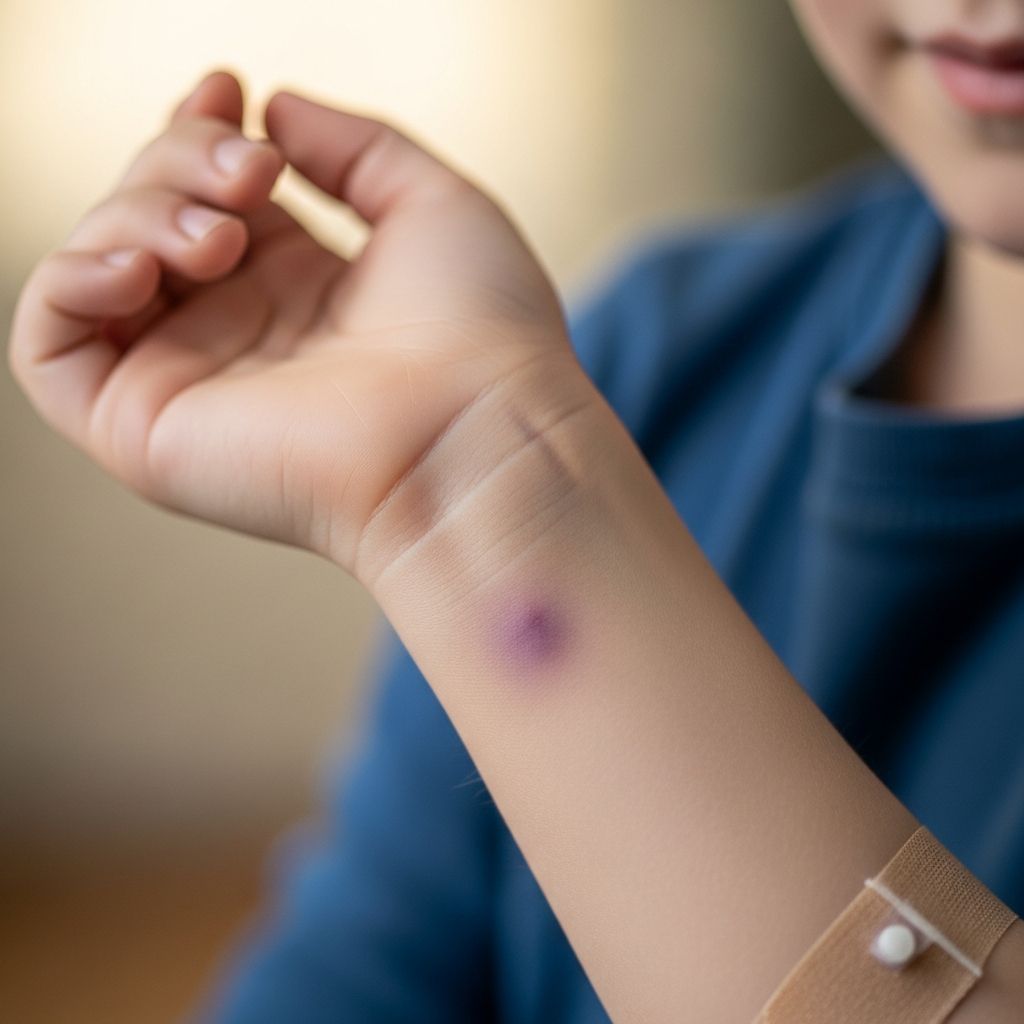
- Easy bruising with large bruises from minor bumps or trauma
- Blood in urine or stool, which appears as dark or discolored urine and black or tarry stools
- Spontaneous bleeding into joints (hemarthrosis), causing swelling, pain, and restricted movement
- Bleeding into muscles (intramuscular hematomas) causing swelling, pain, and limited mobility
- Prolonged bleeding after surgical procedures, dental work, or vaccinations
Severity Classifications
Hemophilia is classified into three severity categories based on clotting factor levels:
| Severity Level | Factor Level | Bleeding Pattern |
|---|---|---|
| Severe | Less than 1% | Spontaneous bleeding without injury |
| Moderate | 1-5% | Bleeding with minor trauma or activity |
| Mild | 5-40% | Bleeding with significant trauma or surgery |
Diagnosis of Hemophilia
Hemophilia is diagnosed through a combination of clinical presentation and laboratory testing. Many cases are identified either through family history or through unexpected bleeding events such as postoperative bleeding after routine procedures like circumcision.
Diagnostic Testing Process
When hemophilia is suspected, physicians order several blood tests to evaluate clotting function:
- Prothrombin Time (PT): Measures the time it takes for blood to clot through one pathway
- Activated Partial Thromboplastin Time (APTT): Tests clotting through another pathway and is often prolonged in hemophilia
- Platelet Count: Determines the number of platelets, which are essential for clotting
- Fibrinogen Level: Measures a protein essential for clot formation
- Specific Factor Assays: Directly measure the levels of clotting factor VIII or IX to confirm hemophilia type and severity
- Von Willebrand Factor Testing: Helps differentiate hemophilia from other bleeding disorders
Related Stories



Genetic testing may also be performed to identify the specific mutation causing hemophilia, which is particularly useful for family planning and genetic counseling.
Treatment Options for Hemophilia
Modern treatment approaches for hemophilia have significantly improved outcomes for children with this disorder. Treatment focuses on replacing the deficient clotting factor to restore normal blood coagulation.
Factor Replacement Therapy
The primary treatment for hemophilia is factor replacement therapy, which involves infusing the missing clotting factor intravenously. There are two types of replacement products:
Plasma-Derived Factor Products: These are extracted from donated human blood plasma. While effective, they require screening for infectious diseases and carry a small theoretical risk of pathogen transmission.
Recombinant Factor Products: These are manufactured using recombinant DNA technology and do not come from human blood. They are considered safer regarding infectious disease transmission and are increasingly the preferred choice for treatment.
Prophylactic vs. On-Demand Treatment
Children with hemophilia may receive treatment through two approaches:
Prophylactic Treatment: Regular infusions of clotting factor given on a scheduled basis to prevent bleeding episodes before they occur. This approach is recommended for children with severe hemophilia and has been shown to significantly reduce joint damage and improve quality of life.
On-Demand Treatment: Factor infusions administered when bleeding occurs or is anticipated before surgery. This approach is sometimes used for mild to moderate hemophilia but requires quick access to medical care.
Emerging Therapies
New treatment options are expanding the management possibilities for hemophilia in children. Extended half-life factor products require fewer infusions by maintaining therapeutic factor levels longer. Gene therapy represents a promising frontier, potentially offering long-term correction of the clotting factor deficiency.
Managing Hemophilia in Daily Life
Children with hemophilia can live active, fulfilling lives with proper management and precautions. However, certain considerations are important for maintaining their health and safety.
Activity and Sports Participation
Physical activity is beneficial for children with hemophilia, promoting cardiovascular health, muscle strength, and psychological well-being. However, the type and intensity of activities must be carefully selected based on the severity of hemophilia and the child’s individual circumstances. Low-impact activities such as swimming, walking, and recreational cycling are generally safe, while high-contact or high-impact sports like football or hockey should be discussed with the child’s hematologist.
Dental and Medical Care
Before any dental procedure or surgery, the child’s healthcare team must be informed about the hemophilia diagnosis. Factor replacement therapy may be necessary before and after procedures to prevent excessive bleeding. Routine dental care is important, including regular brushing and flossing to minimize the need for emergency dental interventions.
Vaccinations
Children with hemophilia should receive all recommended vaccinations. Subcutaneous injections are preferred over intramuscular injections when possible to reduce the risk of muscle hematoma formation. Parents should inform the healthcare provider administering vaccines about their child’s hemophilia.
School and Social Participation
With proper support and management, children with hemophilia can attend school regularly and participate in many social activities. Schools should be informed about the child’s condition and trained to respond appropriately in case of injury. Many children with hemophilia show positive personality trait development, including increased enthusiasm and self-reliance, demonstrating their resilience and adaptability.
Complications of Hemophilia
Without proper treatment and management, hemophilia can lead to serious complications. Joint damage from repeated bleeding (hemarthrosis) is one of the most significant long-term complications, potentially resulting in arthritis and mobility limitations. Intramuscular bleeding can compromise surrounding nerves and blood vessels, causing significant disability.
Inhibitor development represents another serious complication where the immune system produces antibodies against the clotting factor, reducing treatment effectiveness. This complication occurs in approximately 30% of children with Hemophilia A and 3% with Hemophilia B.
Life-threatening complications can include bleeding in the brain (intracranial hemorrhage) or severe bleeding into the airway or gastrointestinal tract. These medical emergencies require immediate hospitalization and intensive factor replacement therapy.
Psychosocial Considerations
Living with hemophilia can have psychological and social implications for children and their families. Parents may experience anxiety about their child’s safety and future, while children may feel frustrated by activity restrictions or worried about their condition.
Support groups, counseling, and connections with other families managing hemophilia can provide valuable emotional support and practical advice. Many children develop strong coping mechanisms and maintain positive outlooks on life despite their condition’s challenges.
Genetic Counseling and Family Planning
Parents of children with hemophilia should receive genetic counseling to understand the inheritance pattern and implications for other family members. Siblings should be evaluated to determine if they are affected or are carriers. For families planning future pregnancies, prenatal diagnosis and preimplantation genetic testing are available options.
Frequently Asked Questions
Q: Can hemophilia be cured?
A: Currently, hemophilia cannot be cured, but it can be effectively managed with factor replacement therapy and supportive care. Gene therapy shows promise as a potential cure but is still being studied.
Q: Will my child with hemophilia be able to participate in sports?
A: Many children with hemophilia can participate in sports, particularly low-impact activities. The specific activities should be discussed with the child’s hematologist based on hemophilia severity.
Q: How often does a child with hemophilia need factor infusions?
A: The frequency depends on the treatment approach. Prophylactic treatment typically requires infusions 2-3 times weekly or more frequently, while on-demand treatment is given only when bleeding occurs.
Q: What should I do if my child has a severe bleeding episode?
A: Seek emergency medical care immediately. Administer first aid by applying pressure to the wound and immobilizing the area if possible. Inform healthcare providers about the hemophilia diagnosis.
Q: Can girls have hemophilia?
A: Yes, though less common, girls can have hemophilia if they inherit mutated genes from both parents. More commonly, girls are carriers and may experience mild symptoms.
Conclusion
Hemophilia in children is a serious inherited bleeding disorder, but advances in treatment have transformed it from a potentially life-threatening condition into a manageable disorder. With proper diagnosis, appropriate factor replacement therapy, and comprehensive medical care, children with hemophilia can attend school, participate in many activities, and achieve their potential. Parents and caregivers who understand the condition and work closely with their hematology team provide the best support for helping their children thrive despite this lifelong challenge.
References
- Diagnosis of hemophilia in newborn circumcision: A case presentation — National Center for Biotechnology Information, U.S. National Library of Medicine. 2019-02-15. https://pmc.ncbi.nlm.nih.gov/articles/PMC6357687/
- Athletic participation in severe hemophilia: Bleeding and joint outcomes — Johns Hopkins University. https://pure.johnshopkins.edu/en/publications/athletic-participation-in-severe-hemophilia-bleeding-and-joint-ou-3
- Parent Attitudes and Child Personality Traits in Hemophilia — SAGE Publishing. https://journals.sagepub.com/doi/10.2190/67XA-E87F-QH9C-X3R0
- Hemophilia B — Mayo Clinic. 2024-03-12. https://www.mayoclinic.org/diseases-conditions/hemophilia/symptoms-causes/syc-20373327
- Bleeding Disorders: Hemophilia — Centers for Disease Control and Prevention. 2024-10-15. https://www.cdc.gov/ncbddd/hemophilia/index.html
Similar Articles








Read full bio of medha deb