Hemostasis: 3 Stages Of The Blood-Clotting Process
Understanding hemostasis: How your body stops bleeding and forms protective clots.
Hemostasis: Your Body’s Natural Defense Against Bleeding
Hemostasis is your body’s remarkable biological process of stopping bleeding and repairing injuries to blood vessels. Seconds after an injury occurs, your body springs into action, forming a protective plug or clot that seals the wound and prevents excessive blood loss. This intricate process involves multiple systems working in perfect coordination to maintain the delicate balance between bleeding and clotting. Understanding how hemostasis works is essential for recognizing why some people bleed excessively while others face the opposite problem of forming dangerous blood clots.
The term hemostasis comes from the Greek words “hemo” meaning blood and “stasis” meaning standing still or stopping. This process is not a single event but rather a sophisticated series of coordinated steps that your body has refined over millions of years of evolution. When functioning properly, hemostasis prevents both life-threatening hemorrhages and unwanted clot formation. When something goes wrong with this delicate system, it can lead to serious health complications ranging from minor bleeding disorders to major thrombotic events.
Understanding the Three Stages of Hemostasis
Hemostasis occurs in three distinct phases, each playing a critical role in stopping bleeding and protecting your body from both excessive blood loss and unwanted clotting complications. These stages work sequentially and with remarkable precision to achieve the proper balance.
Stage 1: Platelet Activation and Primary Hemostasis
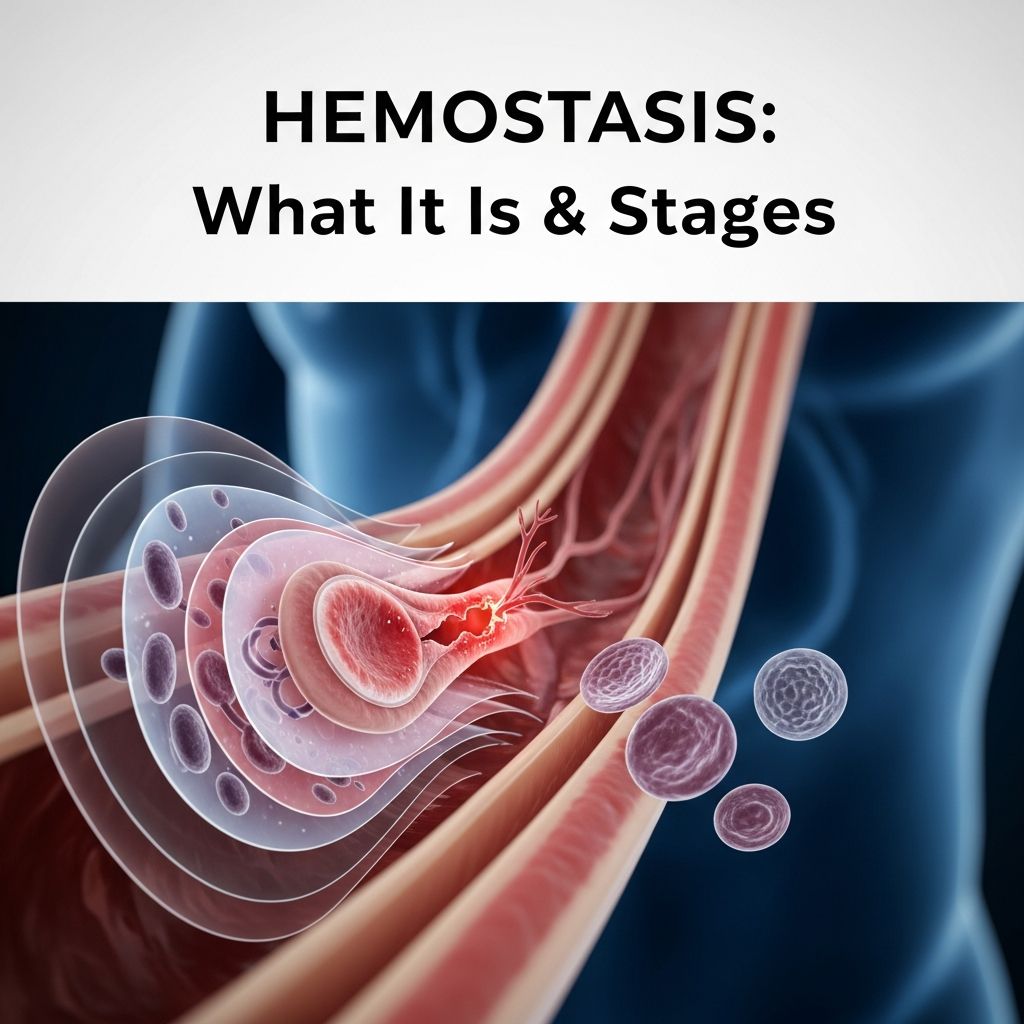
The first stage of hemostasis begins the moment a blood vessel is injured. When the vessel wall sustains damage, the inner layer of the blood vessel, known as the endothelium, is torn away, exposing the underlying tissue. This exposure triggers an immediate response as subendothelial collagen and tissue factor become visible to circulating blood components.
Platelets are small, disc-shaped blood cells that constantly patrol the bloodstream searching for signs of damage. Upon sensing the exposed tissue factor and collagen, platelets become activated and begin their critical work. These activated platelets adhere to the damaged vessel wall through intricate interactions involving von Willebrand factor, factor VIII, glycoprotein IIb/IIIa receptors, and fibrinogen. This process is called platelet adhesion, and it forms the foundation of the hemostatic response.
As platelets stick to the damaged area, they release chemical messengers and attract additional platelets to the injury site. This platelet-to-platelet interaction is mediated by fibrinogen and other adhesive molecules, creating what is called platelet aggregation. Within seconds, a temporary platelet plug forms at the wound site, providing an initial barrier against blood loss. However, this temporary plug is not stable enough to provide long-term protection, which is why the body must proceed to the next stage.
Stage 2: Coagulation and Thrombus Formation
While the temporary platelet plug is being established, a more complex cascade of events unfolds that will create a permanent, stable clot. The coagulation cascade is a sophisticated sequence of chemical reactions involving more than a dozen clotting factors, all working in precise coordination.
The exposure of tissue factor at the injury site initiates this cascade. Tissue factor binds with factor VII in the bloodstream, forming the tissue factor-VIIa complex. This complex then activates additional clotting factors in sequence, including factors V, IX, and X. This sequential activation of prothrombotic coagulation factors leads to the conversion of prothrombin into thrombin, which is the most powerful enzyme in the entire hemostatic system.
Related Stories



Thrombin serves as the master coordinator of blood clotting. One of its most important functions is converting fibrinogen, a soluble protein in the blood plasma, into fibrin. Fibrin polymerizes to form long, sticky fibers that create a mesh-like network at the injury site. This fibrin mesh is then cross-linked through a process called fibrin stabilization, which involves the enzyme factor XIIIa. The result is a stable, robust blood clot that firmly seals the wound and prevents any further blood loss.
All coagulation factors except for factor VIII, which is produced in hepatic sinusoidal endothelial cells, are synthesized in the liver. This is why liver disease can significantly impair hemostasis and lead to bleeding complications. The coordination between platelets and coagulation factors creates a powerful hemostatic barrier that can withstand physiological forces and remain stable until the wound heals.
Stage 3: Fibrinolysis and Clot Dissolution
Once a clot has formed and the immediate threat of bleeding has been resolved, the body must eventually break down and remove the clot to restore normal blood flow. This process, called fibrinolysis, is equally important as clot formation itself. Without proper fibrinolysis, clots would persist indefinitely, potentially blocking blood vessels and causing serious complications.
Fibrinolysis is initiated by the activation of plasminogen, a precursor protein in the blood. Two key enzymes activate plasminogen to form plasmin: tissue plasminogen activator (tPA) and urokinase plasminogen activator (uPA). Once plasmin is generated, it begins to break down the fibrin mesh, dissolving the clot gradually. This process is carefully regulated to ensure that clots dissolve only after sufficient healing has occurred and not before.
The balance between clot formation and clot dissolution is critical for maintaining hemostatic health. When fibrinolysis is too slow, clots may persist and cause thrombotic complications. When fibrinolysis is too rapid, clots may break down prematurely, leading to renewed bleeding. The body maintains this delicate equilibrium through various regulatory mechanisms and inhibitory factors such as plasminogen activator inhibitor-1 (PAI-1).
Key Components Involved in Hemostasis
Several essential components work together to ensure effective hemostasis. Understanding these components helps clarify how hemostatic disorders develop.
Platelets: The First Line of Defense
Platelets are among the most important cellular components of hemostasis. These small, disc-shaped fragments originate from megakaryocytes in the bone marrow and circulate in the blood at concentrations of approximately 150,000 to 400,000 per microliter. Platelets contain numerous granules packed with chemical messengers and adhesive proteins that are released when platelets become activated. Beyond their role in forming the initial plug, platelets also serve as a platform for coagulation cascade reactions and produce substances that amplify the hemostatic response.
Clotting Factors: The Cascade of Activation
More than a dozen clotting factors circulate in the blood, each playing a specific role in the coagulation cascade. These factors are typically identified by Roman numerals (I through XIII, with VI being a historical designation no longer used). Each factor is produced by the liver and circulates in an inactive form until activated by preceding factors in the cascade. This sequential activation ensures that clotting is a controlled, step-wise process rather than an uncontrolled explosion of clotting activity.
Fibrinogen and Fibrin: The Structural Foundation
Fibrinogen is a large protein synthesized in the liver that circulates in the blood plasma. When converted to fibrin by thrombin, fibrinogen monomers polymerize to form long fibers. These fibers interweave to create the structural scaffold of blood clots. Fibrin not only provides mechanical strength to clots but also serves as a scaffold for wound healing and tissue repair processes.
What Happens When Hemostasis Goes Wrong
Hemostatic disorders occur when the delicate balance between clotting and bleeding is disrupted. These disorders can manifest as either excessive bleeding or inappropriate clot formation.
Bleeding Disorders
Bleeding disorders result from deficiencies or dysfunctions in any component of hemostasis. These may include insufficient platelets (thrombocytopenia), deficient or defective clotting factors (such as hemophilia or von Willebrand disease), or disorders of fibrin formation. Individuals with bleeding disorders experience prolonged bleeding after injuries, spontaneous bleeding into joints or muscles, excessive menstrual bleeding, or easy bruising. In severe cases, bleeding disorders can be life-threatening.
Hypercoagulable States and Thrombosis
Conversely, hypercoagulable states occur when hemostasis becomes excessively active, leading to inappropriate clot formation. These conditions increase the risk of venous thromboembolism, arterial thrombosis, and other serious complications. Hypercoagulability can result from genetic factors (such as factor V Leiden mutations), acquired conditions (such as antiphospholipid syndrome), or situational factors (such as prolonged immobility, pregnancy, or cancer).
Cirrhotic Coagulopathy: A State of Rebalanced Hemostasis
Liver disease, particularly cirrhosis, presents a unique hemostatic challenge. Rather than a simple hypocoagulable state, cirrhosis results in a simultaneous decrease in both procoagulant and anticoagulant factors, resulting in a delicate state of rebalanced hemostasis. Patients with cirrhosis have both decreased clotting factors (leading to prolonged prothrombin time) and decreased anticoagulant factors like proteins C and S. Interestingly, studies have shown that the overall thrombin generation potential in plasma from cirrhotic patients is similar to that of healthy individuals, confirming this rebalanced state.
This rebalanced hemostasis in cirrhosis is easily disturbed by acute events such as infection, renal failure, or invasive procedures, which can tip the balance toward either bleeding or thrombotic complications. Conventional coagulation tests do not accurately reflect this rebalanced state and may overestimate bleeding risk, potentially leading to inappropriate blood product transfusions that can actually increase thrombotic complications.
Diagnostic Evaluation of Hemostasis Disorders
When hemostatic disorders are suspected, careful laboratory evaluation is essential. Traditional tests such as platelet count and prothrombin time provide basic information but do not fully characterize hemostatic function. More sophisticated testing methods, including thromboelastography, assess both clot formation and clot strength more accurately than conventional tests.
Specialized laboratories offer comprehensive testing for hemostasis disorders, including evaluation of inherited and acquired bleeding disorders, platelet dysfunction, and hypercoagulable states. Expert interpretation of test results integrated with the patient’s medical and drug history is critical for accurate diagnosis and appropriate management recommendations.
Clinical Management and Prevention
Management of hemostatic disorders depends on the underlying cause and whether the problem is excessive bleeding or inappropriate clotting. For bleeding disorders, treatment may include clotting factor replacement, platelet transfusions, or medications that enhance hemostasis. For hypercoagulable states, anticoagulant therapy is typically employed to reduce clot formation risk.
Importantly, routine transfusion of blood products to artificially “correct” coagulopathy before low-risk procedures is not supported by evidence and does not decrease procedure-specific bleeding risk while itself carrying significant risks. The decision to transfuse or provide hemostatic interventions should be based on a careful assessment of individual risk and benefit.
Frequently Asked Questions About Hemostasis
Q: How quickly does hemostasis occur after an injury?
A: Hemostasis begins within seconds of a blood vessel injury. The initial platelet response occurs within 1-2 seconds, while the coagulation cascade typically reaches completion within 3-10 minutes, resulting in a stable clot that can effectively stop bleeding.
Q: What is the difference between hemostasis and thrombosis?
A: Hemostasis is the normal physiological process of stopping bleeding after injury. Thrombosis refers to pathological clot formation that occurs inappropriately in intact blood vessels, which can block blood flow and cause serious complications like heart attacks or strokes.
Q: Can hemostasis disorders be inherited?
A: Yes, many hemostasis disorders have genetic components. Conditions like hemophilia, von Willebrand disease, and factor V Leiden are inherited disorders. However, many hemostasis problems are acquired through illness, medication use, or other environmental factors.
Q: How does liver disease affect hemostasis?
A: Since the liver produces most clotting factors, liver disease impairs hemostasis. Interestingly, cirrhosis creates a rebalanced hemostatic state where both clotting and anticlotting factors are decreased simultaneously, making the hemostatic system fragile and prone to either bleeding or clotting complications depending on what triggers disturb this balance.
Q: What medications can affect hemostasis?
A: Anticoagulant medications (like warfarin and direct oral anticoagulants) inhibit clotting, while antiplatelet drugs (like aspirin) reduce platelet function. Some antibiotics, NSAIDs, and other medications can also affect hemostasis, which is why medication history is important when evaluating bleeding or clotting disorders.
Q: When should I be concerned about my hemostasis?
A: Seek medical evaluation if you experience unexplained easy bruising, prolonged bleeding from minor cuts, nosebleeds that are difficult to stop, heavy menstrual bleeding, blood in urine or stool, or a family history of bleeding or clotting disorders. Similarly, a history of recurrent blood clots warrants evaluation for hypercoagulable states.
References
- Cirrhotic coagulopathy: A rebalanced hemostasis — Cleveland Clinic Journal of Medicine. 2022-09-15. https://www.ccjm.org/content/89/9/523
- Hemostasis & Thrombosis Laboratory Services — Cleveland Clinic Laboratories. 2024. https://clevelandclinic.com
- What Are Platelets? Function & Anatomy — Cleveland Clinic. 2024. https://my.clevelandclinic.org/health/body/22879-platelets
- Blood Clots: What They Are and What They Do — Cleveland Clinic. 2024. https://my.clevelandclinic.org/health/body/17675-blood-clots
- Hemostasis: What It Is & Stages — Cleveland Clinic. 2024. https://my.clevelandclinic.org/health/symptoms/21999-hemostasis
Similar Articles








Read full bio of Sneha Tete