Henrietta Lacks: Her Life, Legacy, and Impact on Medicine
The story of how one woman's cells revolutionized medical science and ethical research practices.
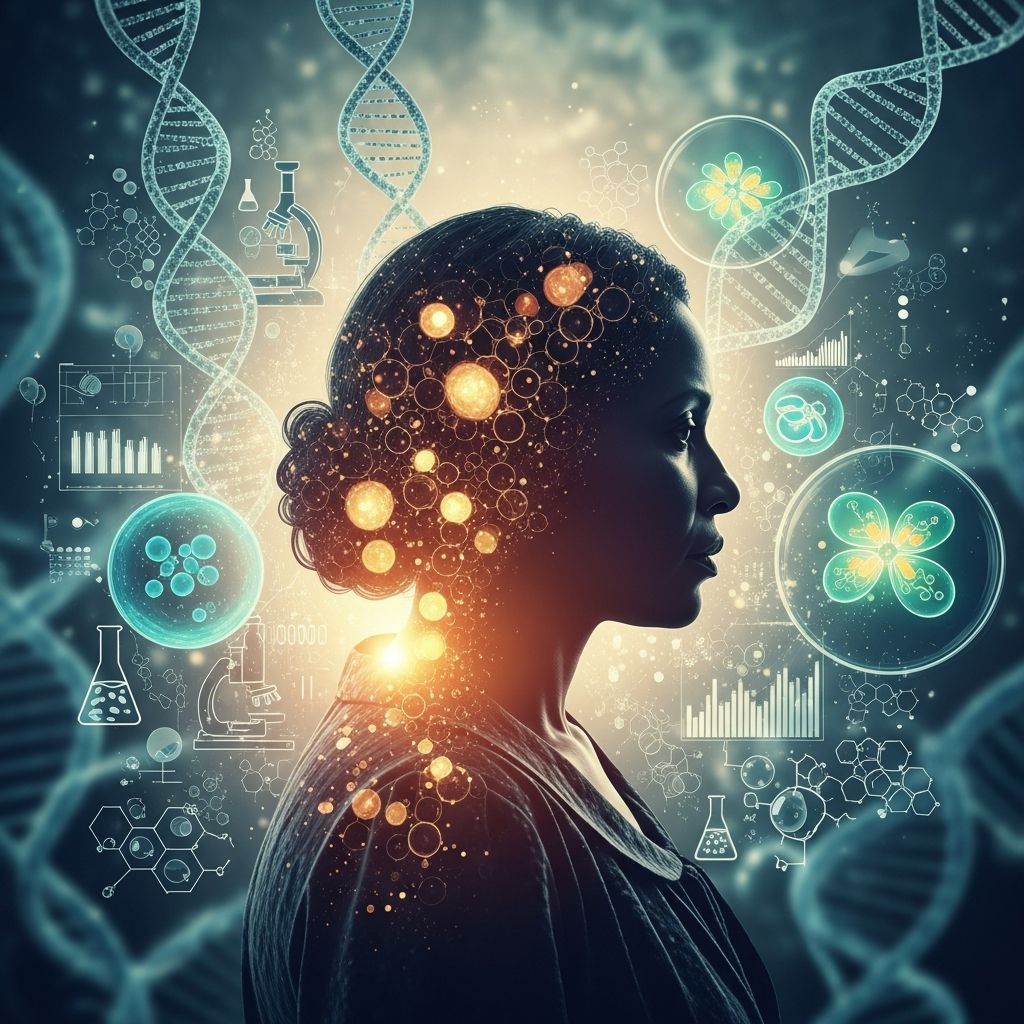
The Life and Legacy of Henrietta Lacks
Henrietta Lacks was born on August 18, 1920, in Roanoke, Virginia, and spent much of her early life as a tobacco farmer in the American South. She later moved to Baltimore, Maryland, where she worked as a domestic worker and raised five children with her husband. Her life, though marked by personal struggles and limited economic opportunities, would ultimately lead to one of the most significant contributions to modern medicine—though she would never know the profound impact her cells would have on scientific research and public health.
A Diagnosis That Changed Medicine
In early 1951, Henrietta began experiencing abnormal vaginal bleeding and sought medical care at Johns Hopkins Hospital in Baltimore, one of the few institutions at the time that treated African American patients. During her initial visit on February 1, 1951, doctors discovered a malignant cervical tumor after performing a biopsy. She was diagnosed with stage 1 cervical cancer, and physicians recommended radium treatments, which were the standard therapy for cervical cancer during that era.
What Henrietta did not know, and what would become central to her legacy, was that doctors removed samples of both her cancerous and healthy cervical tissue during the biopsy procedure. This collection of cells occurred without her knowledge or explicit consent—a practice that, while standard at Johns Hopkins at the time, reflected the troubling absence of informed consent protocols in medical research during the 1950s.
The Scientific Discovery: The HeLa Cell Line
Dr. George Otto Gey, the head of tissue culture research at Johns Hopkins Hospital, received Henrietta’s cell samples as part of Dr. Richard TeLinde’s research into cervical cancer. TeLinde was investigating whether carcinoma in situ often preceded invasive cervical cancer. What happened next would revolutionize medical research forever.
An Unprecedented Discovery
When Gey examined Henrietta’s cells, he discovered something extraordinary. Unlike previous cell samples obtained from other patients, which typically survived for only a few days in laboratory conditions, Henrietta’s cells exhibited unprecedented behavior. They divided continuously and could be kept alive and growing indefinitely. Gey successfully isolated a single cell and began multiplying it, creating what became known as the HeLa cell line—derived from the first two letters of Henrietta’s first and last names.
This discovery was momentous because scientists had long struggled to maintain human cells in culture. The ability to preserve and reproduce human cells opened entirely new possibilities for medical research, drug testing, and vaccine development. HeLa cells became the first documented human cell line that could divide easily and indefinitely, providing researchers with an invaluable tool for advancing medical science.
Medical Breakthroughs Enabled by HeLa Cells
The applications and achievements made possible by HeLa cells have been extraordinary and far-reaching. Within a decade of Henrietta’s death on October 4, 1951, at age 31, her cells were instrumental in developing the polio vaccine, one of the most significant public health achievements of the twentieth century. The ability to test viral behavior using HeLa cells accelerated the vaccine development process and contributed to the eventual eradication of polio as a major public health threat.
Diverse Applications in Modern Medicine
The impact of HeLa cells extended far beyond polio research. Scientists utilized HeLa cells to:
– Test and develop the human papillomavirus (HPV) vaccine, preventing cervical cancer and other cancers caused by HPV- Advance understanding of cancer biology and how malignant cells respond to various treatments, pharmaceuticals, and radiation- Study viral behavior, replication, and infection mechanisms across multiple disease agents- Conduct gene mapping and cloning research, laying groundwork for genetic science- Investigate the effects of radiation on human cells and assist in developing new research methodologies- Explore how space travel and radiation exposure impact the human body, with HeLa cells even being transported to outer space by 1960
Related Stories



HeLa cells have been used in research on conditions ranging from leukemia to HIV/AIDS, and they continue to be essential tools in laboratories worldwide. The widespread use of these cells in research institutions across the globe has led to countless medical breakthroughs and remains central to contemporary biomedical research.
The Ethical Crisis and Medical Ethics Transformation
While HeLa cells revolutionized medicine, Henrietta’s story also exposed serious ethical violations in medical research practices and became a catalyst for transforming how medical research is conducted in the United States.
Unethical Research Practices
The circumstances surrounding Henrietta’s cell collection were not isolated incidents. Medical history reveals a disturbing pattern of research conducted on African Americans and other marginalized populations without consent. In the 1840s, enslaved African American women underwent experimental gynecological procedures without anesthesia at the hands of Dr. James Marion Sims. Later, the Tuskegee Syphilis Study involved African American men who were denied treatment for syphilis despite penicillin becoming available, resulting in blindness, insanity, and death among participants.
When respected cancer researcher Chester Southam at the Sloan-Kettering Institute attempted to inject HeLa cells into cancer patients and healthy controls without their knowledge in 1954, the ethical violations became public. Three junior physicians refused to participate, arguing the research violated fundamental patient rights and was illegal and immoral. When the story reached the press and prompted hearings by the New York State Board of Regents, public awareness of research ethics violations grew significantly.
The Birth of Informed Consent Requirements
Henrietta’s story became a turning point in discussions about informed consent and patient rights in medical research. At the time her cells were taken, there were no legal requirements for doctors to obtain permission from patients before using their biological materials for research purposes. The lack of informed consent protocols left patients vulnerable to exploitation.
In response to cases like Henrietta’s and the broader crisis in research ethics, the U.S. government introduced the “Common Rule” in 1991, which established comprehensive ethical guidelines for human research subjects. These regulations now require that patients be fully informed about how their tissues, blood, and data will be used in research and must provide explicit consent before participation. The Common Rule represents a fundamental shift in medical ethics, ensuring that research subjects maintain autonomy over their biological materials and personal health information.
Henrietta’s Legacy and Cultural Recognition
In recent decades, Henrietta Lacks has received significant recognition for her unwitting but profound contribution to medical science and for the injustices she experienced. Her story has become a powerful symbol of the need for ethical medical practices, racial justice in healthcare, and respect for patient rights.
Tributes and Honors
Several institutions and locations now bear Henrietta’s name or commemorate her legacy:
– A historical marker in Clover, Virginia, bears her name, honoring her birthplace and origins- Henrietta Lacks High School in Washington state was named after her, ensuring that students learn about her contribution to science and medical ethics- In 2010, Rebecca Skloot’s groundbreaking and best-selling book, “The Immortal Life of Henrietta Lacks,” brought her story to mainstream audiences, sparking widespread discussion about medical ethics, racial injustice, and the need for reform in research practices- Her family has been increasingly recognized and included in discussions about HeLa cells and research ethics- Johns Hopkins Hospital and the broader medical community have acknowledged the ethical failings in her case and worked toward greater transparency and accountability
Understanding HeLa Cells: Science and Impact
| Year | Achievement | Impact |
|---|---|---|
| 1951 | HeLa cell line established | First immortal human cell line created |
| 1953 | Polio vaccine testing | Accelerated vaccine development |
| 1955 | Radiation studies | Understanding of radiation effects on human cells |
| 1956 | Cancer cell behavior research | Insights into malignant cell responses |
| 1960 | Space radiation research | Understanding impact of space travel on human body |
Frequently Asked Questions About Henrietta Lacks
Q: What exactly are HeLa cells?
A: HeLa cells are human cancer cells taken from Henrietta Lacks’ cervical biopsy in 1951. They are “immortal” because they can divide indefinitely in laboratory conditions, unlike normal human cells which have a limited lifespan. This unique property made them invaluable for medical research.
Q: Why didn’t Henrietta Lacks consent to having her cells used for research?
A: In 1951, there were no legal requirements for doctors to obtain informed consent from patients before using their cells for research. This was standard practice at the time, though it was ethically problematic. Henrietta’s case helped establish the need for informed consent protocols.
Q: How did Henrietta Lacks’ family respond to the use of her cells?
A: For decades, Henrietta’s family was unaware that her cells were being used in research and profited from commercially. When they discovered this, they felt understandably betrayed. Over time, the family has been increasingly included in discussions about HeLa cells and has received recognition for Henrietta’s contribution.
Q: What is the Common Rule and how did it change medical research?
A: The Common Rule, introduced in 1991, established federal ethical guidelines requiring researchers to obtain informed consent from human research subjects and protect their rights. It fundamentally changed how medical research is conducted by ensuring patients have control over their biological materials.
Q: Are HeLa cells still used in medical research today?
A: Yes, HeLa cells remain one of the most commonly used cell lines in laboratories worldwide. They continue to be essential for vaccine development, cancer research, and many other areas of biomedical research more than 70 years after their discovery.
Q: What diseases have benefited from HeLa cell research?
A: HeLa cells have contributed to research on polio, cervical cancer, HPV-related cancers, leukemia, HIV/AIDS, and numerous other diseases. Their use spans vaccine development, drug testing, genetic research, and understanding fundamental aspects of human cell biology.
References
- The Complicated History of HeLa Cells: Henrietta Lacks’ Legacy in Biomedical Research — Stanford Blood Center. 2024. https://stanfordbloodcenter.org/the-complicated-history-of-hela-cells-henrietta-lacks-legacy-in-biomedical-research/
- The Immortal Life of Henrietta Lacks — Faroque A Khan, JIMA Journal. 2011. https://pmc.ncbi.nlm.nih.gov/articles/PMC3516052/
- Celebrating the Life of Henrietta Lacks: How one Black Woman’s Cells Changed Medicine — National Society of Genetic Counselors Perspectives. 2024. https://perspectives.nsgc.org/Article/celebrating-the-life-of-henrietta-lacks
- Henrietta Lacks and America’s Dark History of Research Ethics — DL Baptiste, Journal of Advanced Nursing. 2022. https://pmc.ncbi.nlm.nih.gov/articles/PMC9374392/
- Henrietta Lacks Film Highlights Important Issues in Medical Ethics — Johns Hopkins University Hub. 2017. https://hub.jhu.edu/2017/04/18/johns-hopkins-henrietta-lacks-message-screenings/
Similar Articles








Read full bio of medha deb