Heparin: Essential Anticoagulant Guide For Clinicians
Discover how heparin prevents and treats life-threatening blood clots with this comprehensive overview of its uses, administration, and safety considerations.
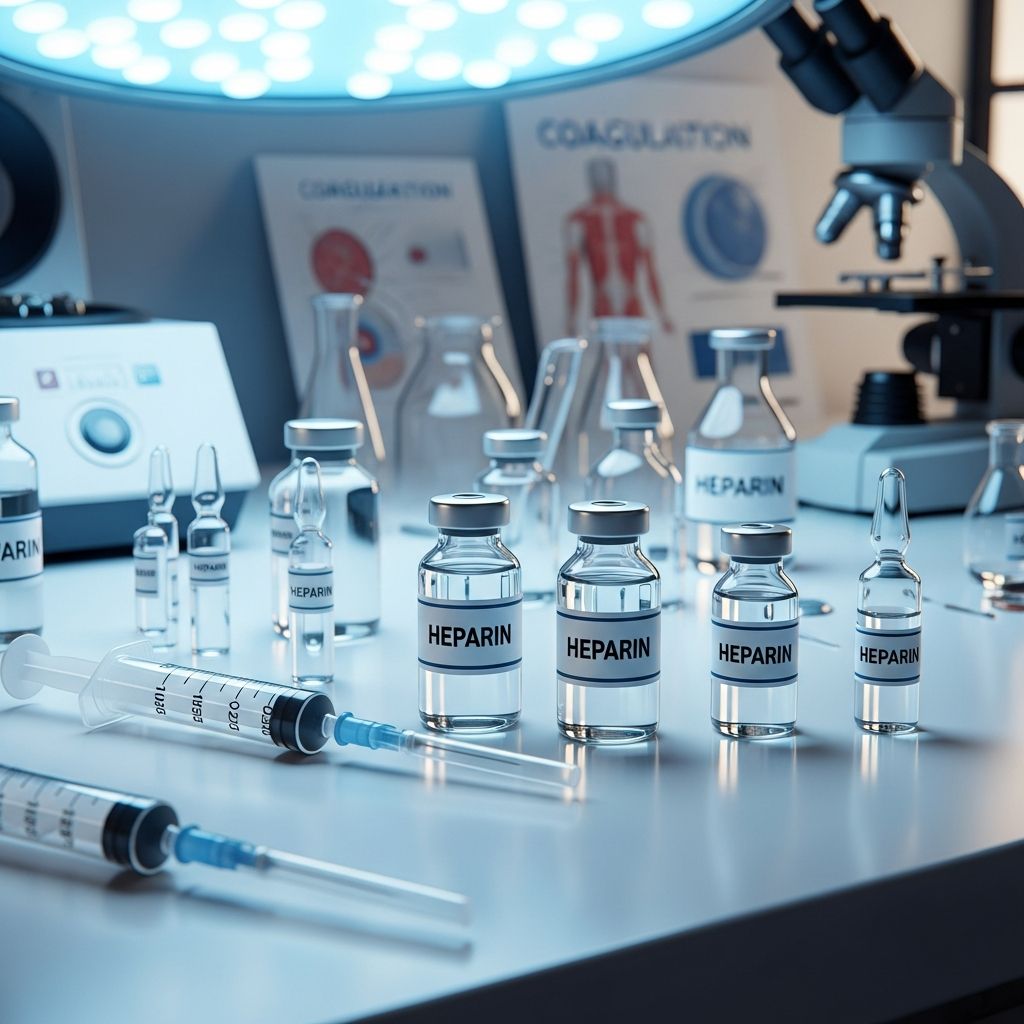
Heparin serves as a cornerstone in anticoagulation therapy, primarily functioning to inhibit blood clot formation and extension in various medical scenarios. This naturally occurring compound enhances the body’s natural defenses against clotting by amplifying the effects of antithrombin, a key protein that neutralizes clotting factors.
Understanding Heparin’s Biological Role
Naturally present in the body, heparin resides mainly in mast cells, where it contributes to inflammatory responses and defense mechanisms at injury sites. Beyond anticoagulation, research suggests it plays roles in combating bacterial invasions and modulating immune reactions, observed even in species without complex coagulation systems. Its structure as a highly sulfated glycosaminoglycan gives it the highest negative charge density among known biological molecules, enabling unique interactions with proteins and cells.
Primary Therapeutic Applications
Heparin finds extensive use in preventing and treating thrombotic conditions. It is particularly vital in acute settings where rapid anticoagulation is needed.
- Venous Thromboembolism (VTE): Includes deep vein thrombosis (DVT) and pulmonary embolism (PE), where heparin halts clot progression and prevents recurrence.
- Acute Coronary Syndromes: Such as non-ST-elevation myocardial infarction (NSTEMI) and unstable angina, often combined with antiplatelet agents.
- Atrial Fibrillation: Prevents stroke-causing emboli in patients with irregular heart rhythms.
- Perioperative Anticoagulation: Maintains blood flow during heart surgery, cardiopulmonary bypass, and extracorporeal membrane oxygenation (ECMO).
- Dialysis and Catheter Maintenance: Prevents clotting in hemodialysis circuits and indwelling catheters.
In hospital environments, heparin infusion provides immediate effects for life-threatening clots, while subcutaneous injections suit prophylactic needs.
How Heparin Works at the Molecular Level
Heparin binds to antithrombin III, accelerating its inhibition of thrombin (factor IIa) and factor Xa, critical enzymes in the clotting cascade. This action prevents fibrin formation without dissolving existing clots, distinguishing it from thrombolytics. Low doses primarily target factor Xa, while higher doses inhibit thrombin directly. Its rapid onset and offset make it ideal for acute management, with effects monitored via activated partial thromboplastin time (aPTT).
| Clotting Factor | Heparin’s Primary Inhibition | Clinical Impact |
|---|---|---|
| Factor Xa | Low-dose priority | Prevents clot initiation |
| Thrombin (IIa) | High-dose effect | Blocks clot extension and stabilization |
| Overall Cascade | Antithrombin enhancement | Prolongs aPTT for monitoring |
Administration Methods and Dosing Strategies
Heparin’s versatility allows multiple delivery routes tailored to clinical urgency.
- Intravenous (IV) Infusion: For immediate anticoagulation in hospitals, starting with a bolus followed by continuous drip. Dosing adjusts based on aPTT every 4-6 hours.
- Subcutaneous (SQ) Injection: Preferred for outpatient prophylaxis, self-administered in the abdomen or thigh, typically 5000 units every 8-12 hours.
- Low Molecular Weight Variants: Like enoxaparin, derived from heparin, offer fixed dosing with longer half-lives and subcutaneous ease, though unfractionated heparin remains for reversal needs.
Dosing nomograms guide therapy, with weight-based protocols common for VTE treatment (e.g., 80 units/kg bolus, then 18 units/kg/hour infusion).
Monitoring and Safety Protocols
Regular lab checks ensure therapeutic levels without excess bleeding risk. aPTT targets 1.5-2.5 times baseline, drawn 6 hours post-dose adjustment. Platelet counts monitor for heparin-induced thrombocytopenia (HIT), and anti-Xa levels serve as alternatives in certain cases.
Patients on heparin receive education on injection technique: clean skin, pinch skin fold, insert needle at 90 degrees, and rotate sites to avoid bruising.
Potential Risks and Adverse Reactions
While effective, heparin carries bleeding as its chief concern, ranging from minor bruising to severe hemorrhage like intracranial bleeds.
Related Stories



- Heparin-Induced Thrombocytopenia (HIT): Immune reaction causing low platelets and paradoxical clotting, occurring 5-10 days post-initiation. Requires immediate cessation and alternative anticoagulants.
- Osteoporosis: Prolonged use (>3 months) risks bone density loss, more with SQ therapy.
- Hyperkalemia: Suppresses aldosterone, elevating potassium levels.
- Local Reactions: Pain, hematoma at injection sites; hypersensitivity rare.
Contraindications include active bleeding, recent stroke, uncontrolled hypertension, and history of HIT.
Drug Interactions and Precautions
Heparin amplifies effects of antiplatelets (aspirin, clopidogrel), NSAIDs, and thrombolytics, heightening bleed risk. Avoid IM injections to prevent hematomas. During pregnancy, it crosses placenta minimally, making it safer than warfarin for VTE management.
| Interaction Type | Examples | Management |
|---|---|---|
| Increased Bleeding | Aspirin, Warfarin | Monitor closely, adjust doses |
| Reduced Efficacy | Nitroglycerin IV | Increase heparin dose if needed |
| Platelet Effects | GP IIb/IIIa inhibitors | Use cautiously in ACS |
Special Populations and Considerations
Pregnancy: Category C; preferred for DVT/PE due to no fetal bone issues like warfarin. Monitor aPTT as renal clearance increases.
Pediatrics: Weight-based dosing with frequent monitoring; used in ECMO and post-surgery.
Elderly: Higher bleed risk due to comorbidities; start conservatively.
Renal Impairment: Unfractionated heparin preferred over LMWH as it doesn’t accumulate.
Reversal Agents and Emergency Management
Protamine sulfate neutralizes heparin rapidly: 1 mg per 100 units IV, given slowly to avoid hypotension. Partial reversal for overdoses; monitor for rebound anticoagulation.
Emerging Roles Beyond Anticoagulation
Investigations explore heparin’s anti-inflammatory properties in conditions like asthma, ARDS, and cancer metastasis inhibition via angiogenesis blockade. Animal models show promise, though human trials vary.
Patient Education and Lifestyle Advice
Patients learn to recognize bleeding signs (gums, urine, stools), avoid trauma sports, and use soft toothbrushes. Inform all providers of heparin use before procedures. Carry alert cards noting therapy duration.
Frequently Asked Questions (FAQs)
What if I miss a subcutaneous dose?
Take as soon as remembered unless near next dose; do not double up. Consult prescriber for IV adjustments.
Can heparin be used long-term?
Unfractionated heparin suits acute phases; transition to oral agents like warfarin or DOACs for chronic needs to avoid osteoporosis.
How soon does heparin start working?
IV effects within minutes; SQ prophylactic action in 1-2 hours.
Is heparin safe during breastfeeding?
Yes, minimally excreted in milk; safe per guidelines.
What foods interact with heparin?
No major dietary restrictions unlike warfarin; maintain consistent vitamin K if combined.
This guide empowers informed decisions on heparin therapy, balancing benefits against risks through vigilant monitoring and adherence.
References
- Heparin – Wikipedia — Wikimedia Foundation. 2026 (accessed). https://en.wikipedia.org/wiki/Heparin
- Heparin Injection: MedlinePlus Drug Information — U.S. National Library of Medicine. 2026 (accessed). https://medlineplus.gov/druginfo/meds/a682826.html
- Heparin: Uses, Interactions, Mechanism of Action | DrugBank — DrugBank Online. 2026 (accessed). https://go.drugbank.com/drugs/DB01109
- Heparin: What It Is, Uses & Side Effects – Cleveland Clinic — Cleveland Clinic. 2026 (accessed). https://my.clevelandclinic.org/health/treatments/16017-heparin-infusion
- Heparin: Past, Present, and Future – PMC — National Center for Biotechnology Information. 2016-09-19. https://pmc.ncbi.nlm.nih.gov/articles/PMC5039491/
Similar Articles








Read full bio of medha deb