Heparin Infusion: Uses, Benefits, and Important Safety Information
Understanding heparin infusions: How this blood thinner prevents and treats dangerous blood clots effectively.
Heparin Infusion: A Comprehensive Treatment Guide
Heparin infusion is a critical medical therapy used to prevent and treat blood clots in patients at risk of serious circulatory complications. As one of the most widely used anticoagulants in modern medicine, heparin infusions work by inhibiting your body’s natural clotting mechanisms, allowing blood to flow more freely through your veins and arteries. Whether administered in a hospital, clinic, or home setting, understanding how heparin infusions work and what to expect during treatment can help you make informed decisions about your healthcare and recognize potential complications early.
What Is Heparin Infusion?
Heparin infusion is the intravenous delivery of heparin, a potent anticoagulant medication that prevents blood from forming dangerous clots. Unlike oral medications, heparin must be injected directly into the bloodstream because stomach acid would destroy it if taken by mouth. When administered as an infusion, heparin is delivered continuously through an intravenous (IV) line, allowing for precise dosing and consistent therapeutic levels in your blood.
Heparin belongs to a class of medications called blood thinners, though the name is somewhat misleading—heparin doesn’t actually thin your blood. Instead, it works by activating your body’s natural anti-clotting processes, making it harder for your blood to form clots. This mechanism of action makes heparin particularly valuable in acute medical situations where rapid anticoagulation is essential.
Why Is Heparin Infusion Prescribed?
Healthcare providers prescribe heparin infusions for several important medical reasons:
- Treatment of existing blood clots: Heparin infusion is used to treat deep vein thrombosis (DVT), where clots form in deep veins, usually in the legs, and pulmonary embolism (PE), where clots travel to the lungs and can be life-threatening.
- Prevention after surgery: Following major surgical procedures, patients receive heparin infusions to prevent blood clots from forming during recovery.
- Acute cardiovascular events: Patients experiencing heart attacks or unstable angina receive heparin to prevent clot formation around the affected area.
- Atrial fibrillation management: This irregular heart rhythm increases clot risk, and heparin helps prevent stroke caused by clots.
- Prevention during prolonged immobility: Patients confined to bed rest or those undergoing extended hospitalization receive prophylactic heparin infusions.
- Hemodialysis support: Heparin prevents clotting in dialysis equipment used by patients with kidney failure.
How Does Heparin Infusion Work?
Heparin works through a sophisticated molecular mechanism that interrupts your body’s clotting cascade. When you have a heparin infusion, the medication enters your bloodstream and binds to a natural protein called antithrombin. This binding dramatically increases antithrombin’s ability to neutralize clotting factors in your blood, particularly factors IIa and Xa. By deactivating these crucial clotting factors, heparin prevents the formation of thrombin, an enzyme essential for converting fibrinogen into fibrin—the actual substance that forms blood clots.
The beauty of heparin therapy is that it allows your body to maintain some clotting ability, which is crucial for stopping bleeding from injuries, while preventing the pathological clotting that causes strokes, heart attacks, and pulmonary embolisms. This balance is carefully maintained through ongoing monitoring and dose adjustments based on your individual response to the medication.
Types of Heparin Used in Infusions
Two main types of heparin are used in clinical practice, and understanding the difference is important for your treatment:
Unfractionated Heparin (UFH)
Unfractionated heparin consists of heparin molecules of varying sizes. UFH is the traditional form of heparin and remains the preferred choice for acute venous thromboembolism (VTE) treatment, particularly for patients who may require advanced therapies or those with severe kidney disease. UFH has a shorter half-life, meaning it leaves your system more quickly, which is advantageous if bleeding complications develop. Weight-based dosing is recommended, typically starting with an 80 U/kg bolus followed by an 18 U/kg/hour intravenous infusion, with dosing adjustments targeting an anti-Xa assay level of 0.3 to 0.7 IU/mL.
Related Stories



Low Molecular Weight Heparin (LMWH)
Low molecular weight heparin consists of smaller, more uniform heparin molecules created through special processing of unfractionated heparin. LMWH products like enoxaparin (Lovenox) have more predictable pharmacokinetics, meaning their behavior in your body is more consistent and easier to predict. While LMWH can be used for VTE treatment, it’s more commonly used for prevention in outpatient settings because it requires less frequent monitoring than UFH.
Administration of Heparin Infusion
Settings for Administration
Heparin infusions are most commonly administered in hospital settings where continuous monitoring is possible. However, depending on your condition and your healthcare provider’s assessment, heparin may be given in:
- Hospital intensive care units or general medical floors
- Outpatient infusion centers
- Home settings with proper training and monitoring
How the Infusion Process Works
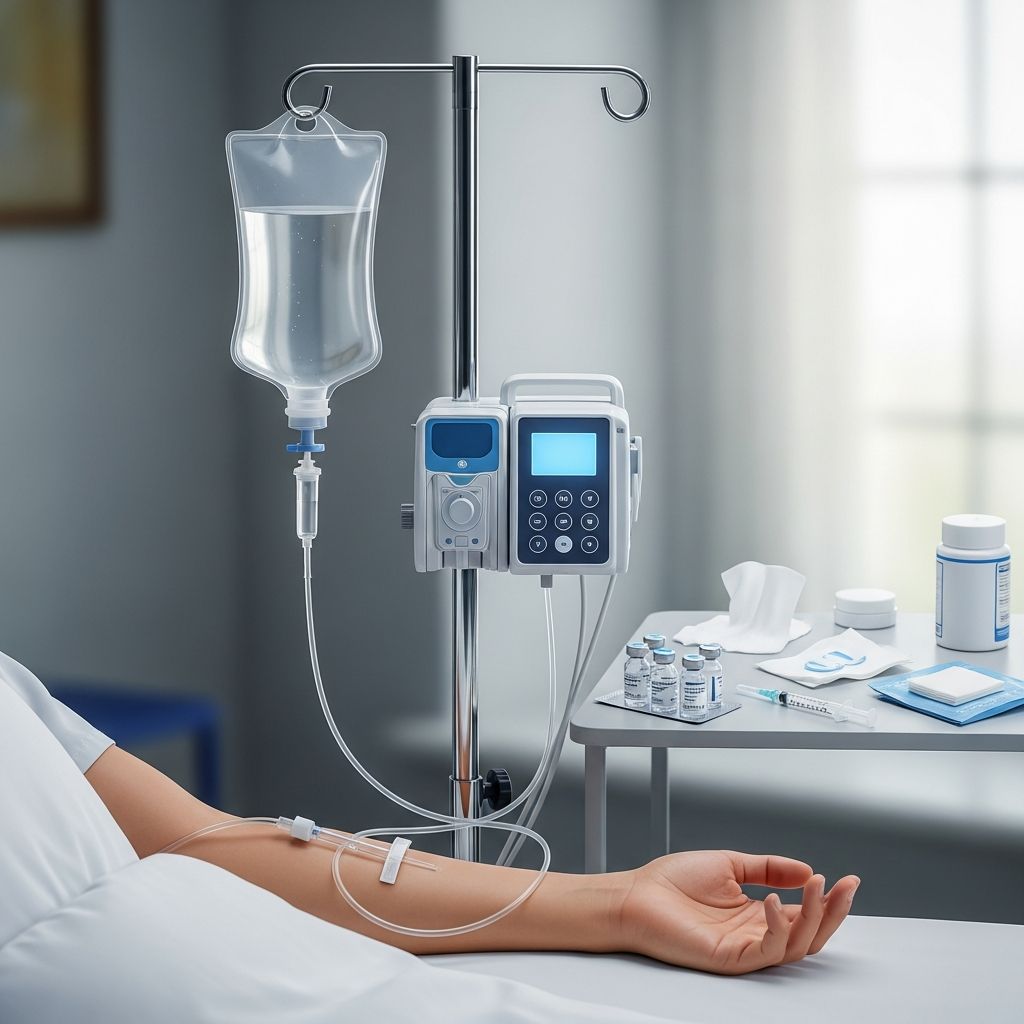
When you receive a heparin infusion, a healthcare professional will insert an IV line into a vein in your arm or hand. The heparin solution is then connected to this IV line and delivered continuously through an electronic infusion pump that precisely controls the medication flow rate. You’ll remain connected to the IV line throughout your treatment period, which can range from several days to weeks depending on your condition.
Your healthcare team will regularly check your IV site for signs of infection or complications. If you need to move around, the IV pole can be transported with you. For patients receiving heparin at home, thorough training in proper preparation, administration, and site care is essential before discharge from the hospital.
Monitoring During Heparin Infusion Therapy
Effective heparin therapy requires careful monitoring to ensure you’re receiving the right dose and to detect any complications early. Your healthcare provider will order regular blood tests, including:
- Activated partial thromboplastin time (aPTT): This test measures how long your blood takes to clot and is the primary way to monitor UFH therapy. Adjustments to your heparin dose depend on your aPTT results.
- Platelet counts: These are checked regularly, especially after day 4 of heparin therapy, to screen for heparin-induced thrombocytopenia (HIT), a serious complication where your platelet count drops dangerously low.
- Anti-Xa assay: This specialized blood test directly measures heparin activity and is increasingly used to guide dosing adjustments.
- Hemoglobin and hematocrit: These tests monitor for signs of bleeding complications.
Potential Side Effects and Complications
Common Side Effects
While many patients tolerate heparin infusion well, some experience mild side effects including mild pain or bruising at the injection site, skin irritation, or allergic reactions. Most of these side effects are minor and resolve once heparin therapy ends.
Serious Complications
Bleeding: The most significant risk of heparin therapy is excessive bleeding. This can range from minor bleeding, like nosebleeds or increased bruising, to serious internal bleeding. If you notice unusual bruising, blood in your urine, bloody stools, coughing up blood, or signs of internal bleeding, seek immediate medical attention.
Heparin-Induced Thrombocytopenia (HIT): This is a potentially life-threatening complication occurring in approximately 5% of patients receiving heparin for more than four days. In HIT, your immune system mistakenly attacks platelets in the presence of heparin, causing your platelet count to drop and paradoxically increasing your risk of developing serious blood clots rather than preventing them. About half of patients with HIT develop new clots, such as deep vein thrombosis or pulmonary embolism. If HIT is suspected, heparin must be stopped immediately and replaced with an alternative anticoagulant.
Osteoporosis: Long-term heparin therapy, particularly beyond three months, may weaken your bones. Your healthcare provider will discuss bone health if you require extended heparin treatment.
Thrombosis: Paradoxically, in rare cases heparin can cause blood clots despite its anticoagulant purpose, though this is uncommon with proper dosing and monitoring.
What to Expect During Treatment
When beginning heparin infusion therapy, expect frequent blood draws for laboratory monitoring, especially during the first few days of treatment to ensure your dose is optimal. You’ll need to remain relatively still while the IV is in place, though you can usually move around with assistance from nursing staff. Your healthcare team will explain all procedures and answer your questions about the treatment process.
Most patients notice no immediate sensation from the heparin itself, though some report mild discomfort related to the IV line rather than the medication. Your nurses will work to keep you comfortable and will adjust the IV site if needed.
Transition from Heparin Infusion
Heparin infusions are typically a temporary therapy. Once your acute condition stabilizes and your blood clotting reaches therapeutic levels, your healthcare provider may transition you to an oral anticoagulant like warfarin or a newer direct oral anticoagulant (DOAC) for long-term management. This transition is carefully managed to ensure continuous anticoagulation protection. If you required heparin due to a blood clot, you may need to continue anticoagulation therapy for weeks to months after stopping the infusion.
Important Safety Considerations
Medication Interactions
Inform your healthcare provider about all medications, supplements, and herbal products you take, as some interact with heparin. Aspirin and nonsteroidal anti-inflammatory drugs (NSAIDs) increase bleeding risk when combined with heparin.
Allergies
Tell your healthcare team about any medication allergies, particularly if you’ve had reactions to heparin or heparin products in the past. If you experienced HIT previously, you must avoid heparin in the future and should wear medical alert identification indicating this.
Lifestyle Considerations
During heparin infusion therapy, avoid activities that could cause trauma or injury, as even minor injuries may result in significant bleeding. Use a soft toothbrush to prevent gum bleeding, and be careful with sharp objects. Avoid contact sports and activities with high injury risk.
When to Seek Emergency Medical Attention
Contact emergency services immediately if you experience:
- Severe bleeding that won’t stop
- Coughing up blood or blood in vomit
- Bloody or black, tarry stools
- Blood in urine
- Severe abdominal pain
- Sudden severe headache or difficulty speaking
- Weakness or numbness on one side of your body
- Chest pain or difficulty breathing
- Severe allergic reaction symptoms
Frequently Asked Questions About Heparin Infusion
Q: How long will I need to stay on heparin infusion?
A: The duration depends on your specific condition. Acute treatment typically lasts several days to a few weeks, while some patients may require longer therapy. Your healthcare provider will determine the appropriate duration based on your response to treatment and underlying condition.
Q: Can I go home while receiving heparin infusion?
A: Yes, in some cases. Home heparin infusion is possible for stable patients with proper training, reliable IV access, and close medical follow-up. Your healthcare team will assess whether home therapy is appropriate for your situation.
Q: What happens if my aPTT is too high or too low?
A: If your aPTT is too high, indicating over-anticoagulation and increased bleeding risk, your heparin dose will be decreased. If it’s too low, indicating inadequate anticoagulation and clot risk, your dose will be increased. These adjustments are made through a standardized dosing protocol.
Q: Is heparin infusion safe during pregnancy?
A: Yes, heparin is considered safe during pregnancy because it doesn’t cross the placenta to reach the fetus. Unlike warfarin, which can cause birth defects, heparin is the anticoagulant of choice for pregnant patients requiring anticoagulation.
Q: What should I do if I think I’m having a bleeding complication?
A: Contact your healthcare provider immediately or go to the emergency room if you notice signs of bleeding such as excessive bruising, blood in your urine or stool, nosebleeds that won’t stop, or any other unusual bleeding. Prompt evaluation and treatment are essential.
References
- Heparin-Induced Thrombocytopenia: Symptoms & Treatment — Cleveland Clinic. 2024. https://my.clevelandclinic.org/health/diseases/24014-heparin-induced-thrombocytopenia
- Heparin Injection: Uses & Side Effects — Cleveland Clinic. 2024. https://my.clevelandclinic.org/health/drugs/19322-heparin-injection
- Cleveland Clinic Anticoagulation Management Guidelines — Cleveland Clinic Department of Hospital Medicine. 2023. https://my.clevelandclinic.org/-/scassets/files/org/anticoagulation/6-anticoagulation-management.ashx
- Update on the management of venous thromboembolism — Cleveland Clinic Journal of Medicine, 84(12 Suppl 3):39-49. 2017. https://www.ccjm.org/content/84/12_suppl_3/39
- Anticoagulants (Blood Thinners) — Cleveland Clinic. 2024. https://my.clevelandclinic.org/health/treatments/22288-anticoagulants
- Type II Heparin-Induced Thrombocytopenia: New Treatment Options — Cleveland Clinic Medical Education. 2001. https://www.clevelandclinicmeded.com/medicalpubs/pharmacy/septoct2001/thrombocytopenia.htm
Similar Articles








Read full bio of Sneha Tete