Heparin Injection: Uses, Dosage & Side Effects
Complete guide to heparin injection: how it works, when it's used, and what to expect.
What Is Heparin Injection?
Heparin injection is a medication that belongs to a class of drugs known as anticoagulants, commonly referred to as blood thinners. This medication is specifically designed to prevent and treat blood clots that can form in your veins, arteries, lungs, or heart. Blood clots are collections of blood that form when blood changes from a liquid to a partially solid state, and they can pose serious health risks if left untreated.
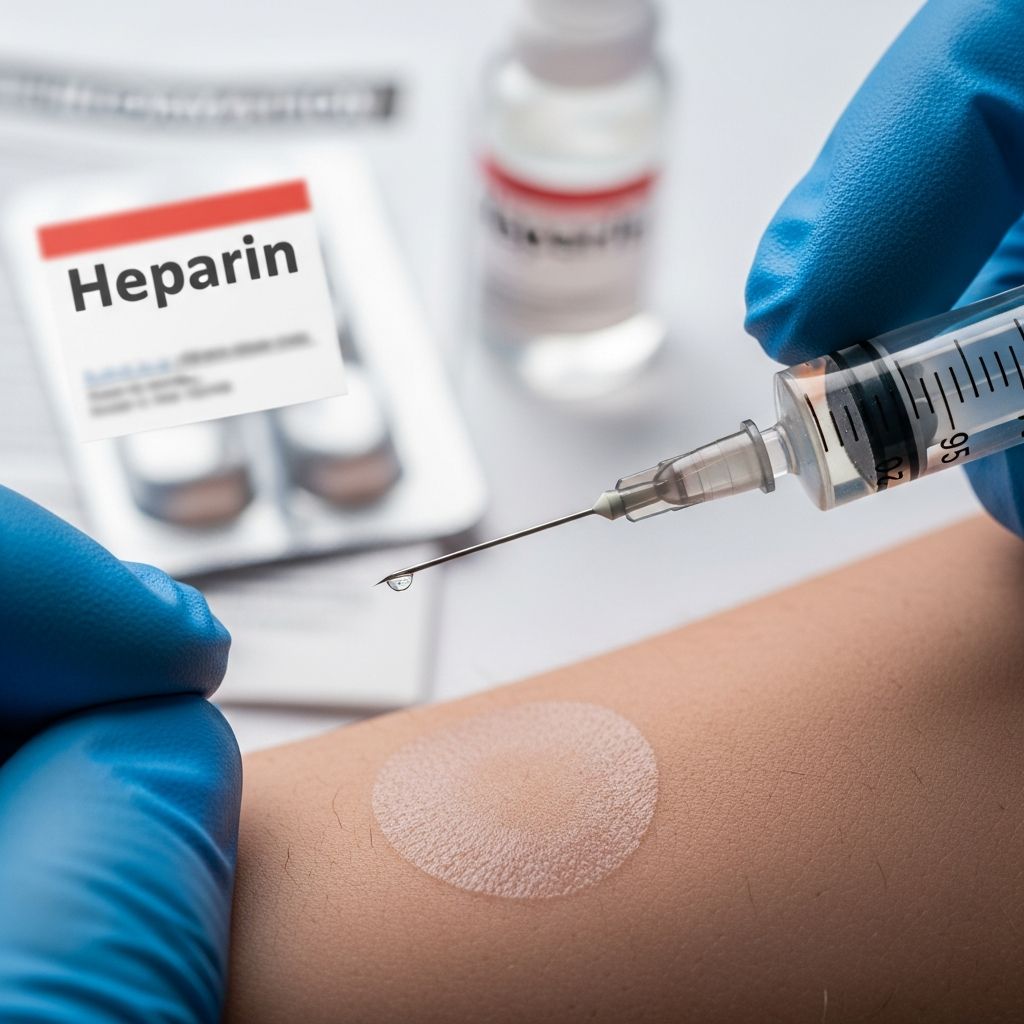
Heparin works by making your blood less able to clot, which helps prevent dangerous clots from forming in the first place or stops existing clots from growing larger. Unlike some medications that can break down clots that have already formed, heparin primarily works to prevent new clots and manage existing ones. Your healthcare provider will typically administer this medication through an injection into your vein or under your skin in a hospital or clinic setting, though in some cases you may be taught to administer it at home.
How Does Heparin Injection Work?
Understanding how heparin works at the molecular level can help you appreciate why this medication is so effective. Heparin functions by interfering with your body’s natural clotting process through two primary mechanisms. First, it inactivates thrombin, a protein that plays a major role in clot formation. Second, it blocks factor Xa, another critical clotting factor in your blood that would normally contribute to the clot-making process.
Think of your body’s clotting system as an assembly line designed to create clots when needed. Heparin essentially removes important tools from two key workers on this production line, preventing them from completing their jobs. This dual action makes heparin particularly effective at preventing blood clots from forming. The medication works quickly when given through an IV, with effects beginning immediately, while subcutaneous injections typically begin working within one to two hours.
Administration Methods and Dosage
Heparin injection can be administered in two different ways, depending on your medical condition and treatment needs. Your healthcare provider will determine the most appropriate method for your situation.
Intravenous Administration
When heparin is administered intravenously, it enters your bloodstream directly through a vein, and the medication begins working immediately. This method is typically used in hospital settings where patients can be closely monitored. Weight-based dosing is the standard approach, with typical protocols involving an initial bolus of 80 units per kilogram of body weight, followed by a continuous intravenous infusion of 18 units per kilogram per hour. Your healthcare team will adjust these doses based on blood test results to ensure the medication is working effectively at the desired level.
Subcutaneous Injection
Heparin can also be injected under your skin, which allows for more flexibility in administration settings, including at-home treatment. Subcutaneous heparin typically requires an initial bolus of 333 units per kilogram, followed by maintenance doses of 17,500 units given twice daily. If you receive this medication at home, your healthcare provider will teach you how to properly prepare and administer the injections. It’s crucial to follow their instructions precisely and maintain consistent timing between doses for optimal effectiveness.
Medical Uses and Indications
Heparin injection is prescribed for several important medical conditions and situations where blood clot prevention or treatment is necessary. Your healthcare provider may recommend heparin injection if you have:
Related Stories



- Deep vein thrombosis (DVT), which is a blood clot in a deep vein, typically in the legs
- Pulmonary embolism (PE), where a blood clot travels to the lungs
- Atrial fibrillation with a high risk of stroke
- Recent heart attack or acute coronary syndrome
- Mechanical heart valve requiring anticoagulation
- Genetic or acquired conditions that predispose you to forming blood clots
- Need for clot prevention after surgery or trauma
- Hemodialysis procedures to prevent clot formation in the dialysis equipment
Additionally, some pregnant women may receive heparin if there is concern about potential pregnancy complications. Heparin is particularly suitable for pregnant patients because it does not cross the placenta to reach the fetus, making it a safer choice than some other anticoagulants during pregnancy. The duration of heparin therapy varies depending on your specific condition. For example, after surgery, you may need heparin for seven days or until you can prevent blood clots through normal mobility and walking around.
Monitoring and Blood Testing
When you receive heparin through an IV infusion, your healthcare provider must carefully monitor how well the medication is working. Before starting heparin therapy, your provider will draw and test your blood to determine the correct dose for your specific situation. Throughout your treatment, regular blood tests are essential to ensure heparin is maintaining the appropriate level of anticoagulation.
Activated Partial Thromboplastin Time (aPTT) Test
The activated partial thromboplastin time test measures how long it takes for your blood to clot. If you already have heparin in your body, this test reveals how well the medication is working. Your healthcare provider uses aPTT results to adjust your heparin dose as needed, ensuring consistent and safe anticoagulation. Testing is typically performed within 24 hours of starting therapy and then every 2 to 3 days during treatment to maintain therapeutic levels.
Activated Clotting Time (ACT) Test
When rapid results are needed, healthcare providers may use an activated clotting time test instead of aPTT. This test provides quicker feedback about your blood’s clotting status, making it particularly useful in time-sensitive situations such as during cardiac procedures.
Important Administration Instructions
For heparin injection therapy to work as effectively as possible, it is essential to follow your healthcare provider’s instructions precisely. Take each dose exactly as prescribed on your prescription label and avoid skipping doses. Skipping doses or stopping this medication without your care team’s approval can significantly increase your risk of developing a blood clot, which could have serious or life-threatening consequences.
If you are receiving heparin at home, your healthcare provider will give you detailed information about how to prepare and administer each injection. They will teach you the correct injection sites and how to safely handle and dispose of used needles. If you have questions or concerns about your treatment, contact your care team immediately rather than making changes on your own.
Side Effects and Adverse Reactions
Like all medications, heparin injection can cause side effects, though many patients tolerate it well. Common side effects may include mild bruising at injection sites, minor bleeding from gums or nose, and skin reactions at the injection location. Most of these effects are mild and may resolve as your body adjusts to the medication.
However, you should be aware of more serious potential complications. In rare cases, a patient’s immune system may cause platelets to clump together in response to heparin, a condition called heparin-induced thrombocytopenia (HIT). This paradoxically causes blood clots to form despite receiving an anticoagulant. This serious reaction can occur weeks after stopping heparin. Contact your healthcare team immediately if you experience pain, swelling, or warmth in your leg, shortness of breath, or chest pain, as these may indicate a serious complication.
Other potential adverse reactions, though rare, may include hypersensitivity reactions, fever, urticaria (hives), and hyperkalemia (elevated potassium levels). Active bleeding and known heparin allergy are contraindications to this medication, meaning patients with these conditions cannot receive heparin.
Contraindications and Precautions
Heparin injection is contraindicated in certain patient populations. Patients with active bleeding, a known heparin allergy, or a history of heparin-induced thrombocytopenia should not receive heparin. Your healthcare provider will carefully review your medical history before prescribing this medication to ensure it is safe for you.
Certain patient-specific characteristics will determine whether heparin is the most appropriate medication choice. If you have any conditions that might increase your bleeding risk, inform your healthcare provider before starting treatment. Patients with severe thrombocytopenia (platelet count below 50,000 mm³) should not receive heparin.
Duration of Treatment
The length of time you will need to take heparin depends on why you are receiving it. Your healthcare provider will determine the appropriate duration based on your specific diagnosis and clinical response. Some patients may need only short-term therapy, while others may require extended treatment. Regular communication with your care team is important to understand when your heparin therapy will conclude and what follow-up care you will need.
Heparin in Special Patient Populations
Heparin remains the anticoagulant of choice in several special situations. It is preferred for patients undergoing hemodialysis, percutaneous transluminal angioplasty, and cardiopulmonary bypass because of its short plasma half-life and complete reversibility with protamine. This makes it ideal for procedures where anticoagulation needs to be quickly reversed if necessary. Hospitalized and critically ill patients who often have acute kidney injury or require frequent interruptions of therapy for invasive procedures also benefit from heparin’s flexibility and safety profile across various renal function levels.
Monitoring Your Condition
While receiving heparin injection, your condition will be monitored carefully by your healthcare team. Tell your care provider if your symptoms do not start to improve or if they get worse. You may need blood work done periodically while taking this medication to ensure it’s working properly and that you’re not experiencing any adverse effects. Regular monitoring helps your healthcare provider make any necessary adjustments to your treatment plan.
Frequently Asked Questions
Q: How quickly does heparin injection start working?
A: Heparin works immediately when given intravenously. When injected under the skin, it typically begins working within one to two hours. Your healthcare provider will monitor blood tests to confirm effectiveness.
Q: Can I inject heparin myself at home?
A: Yes, in many cases you can give yourself heparin injections at home. Your healthcare provider will teach you the proper technique, including where to inject and how to safely handle needles. Always follow their instructions carefully.
Q: What should I do if I miss a dose?
A: Contact your healthcare provider immediately if you miss a dose. Do not double your next dose to make up for the missed one. Missing doses can increase your risk of blood clots.
Q: Can heparin treat existing blood clots?
A: Heparin cannot break down existing clots, but it can help prevent them from getting larger and may help them dissolve naturally over time. Your healthcare provider will determine the best treatment approach based on your specific situation.
Q: Is heparin safe during pregnancy?
A: Yes, heparin is considered safe during pregnancy because it does not cross the placenta to reach the fetus. However, only your healthcare provider can determine if heparin is appropriate for your specific pregnancy situation.
Q: What are signs of heparin-induced thrombocytopenia (HIT)?
A: Signs of HIT include pain, swelling, or warmth in your legs, shortness of breath, or chest pain. These symptoms can occur weeks after stopping heparin. Contact your healthcare provider immediately if you experience any of these symptoms.
Q: Can I stop taking heparin whenever I want?
A: No. Never stop taking heparin without your healthcare provider’s approval. Stopping the medication without medical guidance can significantly increase your risk of developing dangerous blood clots.
Q: How is heparin monitored in hospital settings?
A: Your healthcare team will perform regular blood tests, such as aPTT or ACT tests, to measure how well heparin is working. Based on these results, they may adjust your dose to maintain the proper level of anticoagulation.
References
- Heparin Infusion: What It Is, Uses & Side Effects — Cleveland Clinic. 2024. https://my.clevelandclinic.org/health/treatments/16017-heparin-infusion
- Heparin Injection: Uses & Side Effects — Cleveland Clinic. 2024. https://my.clevelandclinic.org/health/drugs/19322-heparin-injection
- Update on the Management of Venous Thromboembolism — Cleveland Clinic Journal of Medicine. 2015. https://www.ccjm.org/content/84/12_suppl_3/39
- Anti-Xa Assays: What is their Role Today in Antithrombotic Therapy? — Cleveland Clinic Journal of Medicine. 2019. https://www.ccjm.org/content/86/6/417
- Outcomes of Cardiovascular Surgery Utilizing Heparin versus Direct Thrombin Inhibitors — PubMed/NCBI. 2020. https://pubmed.ncbi.nlm.nih.gov/31887779/
- Cleveland Clinic Anticoagulation Management Guidelines — Cleveland Clinic. 2024. https://my.clevelandclinic.org/-/scassets/files/org/anticoagulation/6-anticoagulation-management.ashx
Similar Articles








Read full bio of medha deb