Hepatitis A: Symptoms, Transmission, and Prevention
Complete guide to hepatitis A: Understanding transmission, symptoms, diagnosis, and effective prevention strategies.
Understanding Hepatitis A
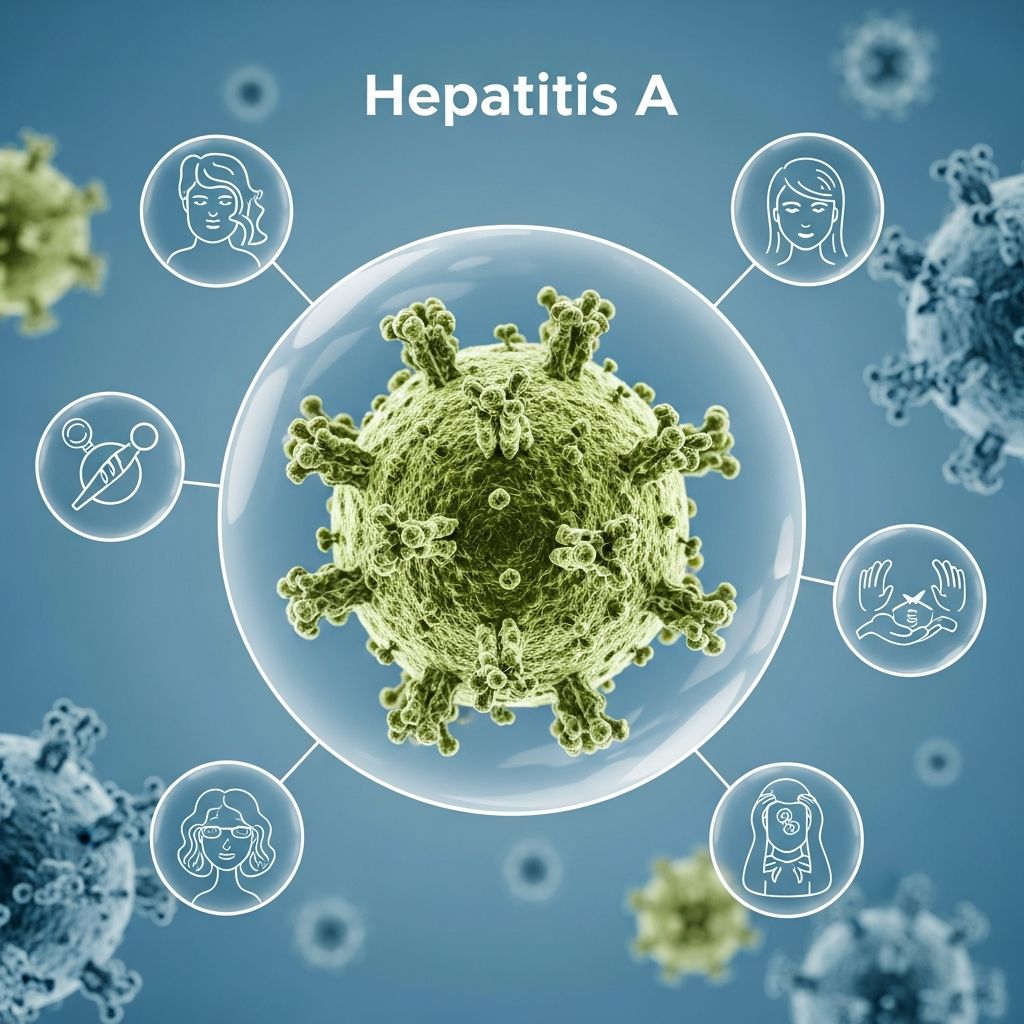
Hepatitis A is a highly contagious viral infection that affects the liver and is acquired through the fecal-oral route. This acute viral disease can spread through person-to-person contact, sexual contact, or ingestion of contaminated food and water. Unlike some other forms of hepatitis, hepatitis A does not result in chronic infection or chronic liver disease, making it generally self-limited in most cases. However, understanding how it spreads, recognizing its symptoms, and knowing prevention measures is essential for protecting your health and the health of those around you.
How Hepatitis A Spreads
Hepatitis A transmission occurs primarily through the fecal-oral route, meaning the virus enters through the mouth and is shed in feces. The virus can spread in several ways:
- Person-to-person contact, particularly in settings with poor sanitation or hygiene practices
- Sexual contact with an infected individual
- Consumption of contaminated food or water
- Close contact with infected individuals, especially in household or institutional settings
Children shed the virus for longer periods than adults, sometimes for up to 10 weeks, making them particularly important vectors for transmission in community settings. Understanding these transmission routes helps in implementing appropriate prevention strategies in various settings, from households to food service establishments.
Recognizing Hepatitis A Symptoms
The symptoms of hepatitis A typically appear after an incubation period of approximately 28 days, though the range can extend from 15 to 50 days. It is important to note that children under six years of age are frequently asymptomatic, meaning they may carry and transmit the virus without showing any signs of illness.
When symptoms do occur, they usually develop with an abrupt onset and may include:
- Fever and malaise
- Nausea and vomiting
- Abdominal pain and discomfort
- Dark urine and acholic stools (pale-colored stools)
- Jaundice (yellowing of skin and eyes)
- Joint pain and arthralgia
- Headache and anorexia
Symptomatic hepatitis A infection is usually mild and self-limited, though fulminant hepatic failure occurs in less than 1% of cases. The likelihood of developing symptomatic illness from hepatitis A infection increases directly with age, meaning older individuals are more likely to experience noticeable symptoms than younger people.
Diagnostic Testing for Hepatitis A
Accurate diagnosis of hepatitis A involves several testing methods to confirm the presence of the virus and distinguish it from other causes of acute hepatitis.
Serological Testing
Serological tests detect antibodies to hepatitis A virus and are the primary diagnostic tools:
- HAV IgM antibody: This test is diagnostic for acute hepatitis A infection and may become positive 5-10 days prior to symptom onset, making it valuable for early detection.
- Total anti-HAV test: This test detects both IgM and IgG antibodies. A positive result may reflect either current infection or prior exposure to the virus.
- HAV IgG antibody: This antibody remains positive for life following infection and is present in 20-80% of asymptomatic adults in the United States, indicating prior exposure or vaccination.
IgM anti-HAV remains elevated for up to 12 months after the resolution of infection, providing a window for diagnosis even after acute symptoms have subsided.
Related Stories



Molecular Testing
While less commonly needed to diagnose acute hepatitis A infection, molecular methods such as PCR (polymerase chain reaction) can detect viral RNA in blood or stool specimens. These tests are particularly useful in confirming hepatitis A in specific clinical situations or outbreak investigations.
Clinical Criteria
A confirmed case of hepatitis A typically meets specific clinical and laboratory criteria, including an acute illness with a discrete onset of symptoms and either jaundice, elevated total bilirubin levels of 3.0 mg/dl or greater, or elevated serum alanine aminotransferase (ALT) levels exceeding 200 IU/L.
Treatment and Management
Since hepatitis A is typically self-limiting, specific antiviral treatment is not available. Instead, management focuses on supportive care and monitoring for complications.
Acute Infection Care
The primary approach to managing acute hepatitis A infection includes:
- Adequate bed rest to help the body direct energy toward fighting the infection
- Maintaining proper hydration by drinking sufficient fluids
- Monitoring liver function and clinical status
- Pain management for abdominal discomfort
Approximately 10-15% of symptomatic cases of hepatitis A infection require hospitalization, particularly those with severe symptoms or underlying conditions. Hospitalization becomes especially important for individuals with underlying liver disease, such as hepatitis C, as acute hepatitis A can be more severe in these populations.
Complications and Recovery
While uncommon, hepatitis A can lead to complications including prolonged cholestasis, relapsing disease, fulminant hepatitis, and autoimmune manifestations. Relapsing hepatitis A, where symptoms return after initial improvement, occurs in about 10-15% of symptomatic cases and may last up to six months. Persons experiencing relapsing hepatitis A should be considered infectious and can transmit the virus to others.
Once recovered from hepatitis A infection, individuals develop durable long-term immunity and cannot develop chronic hepatitis A, as the virus does not establish chronic infection.
Hepatitis A Vaccination
Vaccination is the most effective way to prevent hepatitis A infection. Two types of hepatitis A vaccines are available and recommended for various populations.
Vaccination Schedule
The standard vaccination schedule consists of a two-dose regimen given at 0 and 6-12 months, which provides robust protection against hepatitis A. Vaccination is recommended for:
- All children aged 12-23 months
- Unvaccinated children and adolescents aged 2-18 years
- Adults at risk for hepatitis A infection
- International travelers to regions with high hepatitis A prevalence
- Persons with chronic liver disease, including hepatitis B and hepatitis C
- Men who have sex with men
- People who use injection drugs
- Homeless populations
- People with high-risk occupations
Pre-Exposure Prophylaxis
For those planning international travel or at ongoing risk of hepatitis A exposure, pre-exposure prophylaxis is recommended. For international travelers, a single dose of hepatitis A vaccine is adequate when given anytime before departure. The usual adult strategy involves vaccines such as VAQTA or HAVRIX, with a booster dose after 6 months recommended to help engender long-term immunity.
Prevaccine testing is not routinely suggested and is optional, particularly when considering cost and whether the candidate has specific risk factors or comes from a region with high hepatitis A prevalence. There is no need for post-immunization antibody status testing, as the vaccine produces excellent immune responses in most people, resulting in assumed seropositive status.
Immune Globulin for Prevention
Immune globulin may be used as pre-exposure prophylaxis for certain populations, particularly those at risk for severe hepatitis A disease or complications, such as older adults, immunocompromised individuals, patients with chronic liver disease, and those with other chronic conditions. Immune globulin can be repeated every 2 months if necessary for ongoing protection. Additionally, due to decreasing titers of hepatitis A antibodies in the general population, immune globulin doses have been increased since 2017 to provide adequate protection.
Post-Exposure Prophylaxis
Post-exposure prophylaxis is highly effective when administered within 2 weeks after exposure to hepatitis A and can prevent development of symptomatic illness in exposed persons while preventing further transmission to others.
Vaccination After Exposure
For most healthy people exposed to hepatitis A, the hepatitis A vaccine is adequate for post-exposure prophylaxis. The vaccine is recommended for all ages 12 months and older. For healthy individuals, the hepatitis A vaccine alone provides equivalent efficacy for protection compared to immune globulin.
Immunoglobulin After Exposure
Immunoglobulin is recommended following exposure for specific populations:
- Infants
- Adults aged 40 years and older (based on risk assessment)
- Immunocompromised individuals
- Those with chronic liver disease
- Others identified through risk assessment guidance
Contacts of infected persons are eligible to receive post-exposure prophylaxis within 2 weeks of exposure, though the efficacy of hepatitis A post-exposure prophylaxis has not been established beyond this timeframe.
Special Considerations
Hepatitis A and Other Liver Conditions
While hepatitis A does not cause chronic liver disease on its own, it can complicate existing liver conditions. Individuals with preexisting chronic liver disease who contract hepatitis A may experience more severe disease and develop acute liver failure. This makes prevention through vaccination particularly important for those with known liver disease.
Distinguishing Hepatitis A from Other Types
Symptomatic hepatitis A infection is clinically indistinguishable from other types of acute viral hepatitis, making laboratory testing essential for proper diagnosis. The differential diagnosis includes hepatitis B, hepatitis C, Epstein-Barr virus, enteroviruses, and other infectious causes of hepatitis.
Frequently Asked Questions
Q: Is hepatitis A preventable?
A: Yes, hepatitis A is highly preventable through vaccination. The hepatitis A vaccine is safe, effective, and recommended for most people, particularly those at increased risk of infection or those planning to travel to areas where hepatitis A is common.
Q: Can you get hepatitis A more than once?
A: No, once you recover from hepatitis A infection, you develop lifelong immunity to the virus and cannot develop the infection again. HAV IgG antibodies remain positive for life following infection.
Q: How long does hepatitis A last?
A: Most symptoms of hepatitis A resolve within 8 weeks, though approximately 10-15% of people may have problems lasting up to 6 months, particularly if relapsing hepatitis A occurs.
Q: Is hepatitis A serious?
A: Hepatitis A is usually mild and self-limited, with fulminant hepatic failure occurring in less than 1% of cases. However, it can be more severe in older adults, immunocompromised individuals, and those with underlying liver disease.
Q: How soon after exposure should I seek post-exposure prophylaxis?
A: Post-exposure prophylaxis is most effective when given within 2 weeks after exposure to hepatitis A. If you have been exposed, you should contact your healthcare provider promptly to discuss whether prophylaxis is appropriate for your situation.
Q: Do I need prevaccine testing before getting the hepatitis A vaccine?
A: Prevaccine testing is not routinely suggested and is optional, depending on cost considerations and your specific risk factors or geographic background. Most healthy people can proceed with vaccination without prior testing.
References
- Hepatitis A — Johns Hopkins ABX Guide. 2024. https://www.hopkinsguides.com/hopkins/view/Johns_Hopkins_ABX_Guide/540260/all/Hepatitis_A
- Chapter 3: Hepatitis A — Centers for Disease Control and Prevention, Manual for the Surveillance of Vaccine-Preventable Diseases. 2024. https://www.cdc.gov/surv-manual/php/table-of-contents/chapter-3-hepatitis-a.html
- Prevention and Management of Hepatitis A Virus Infection in Adults — National Center for Biotechnology Information, New York State Department of Health AIDS Institute. 2024. https://www.ncbi.nlm.nih.gov/books/NBK570934/
- Hepatitis A Vaccine (HAV) — Johns Hopkins ABX Guide. 2024. https://www.hopkinsguides.com/hopkins/view/Johns_Hopkins_ABX_Guide/540261/6/Hepatitis_A_vaccine__HAV_
- Your Complete Guide to Liver Health — Johns Hopkins University Press. 2023. https://www.press.jhu.edu/books/title/12298/your-complete-guide-liver-health
Similar Articles








Read full bio of medha deb