Hepatitis B: Causes, Symptoms, Treatment & Prevention
Comprehensive guide to understanding hepatitis B: transmission, diagnosis, treatment options, and vaccination strategies.
Understanding Hepatitis B
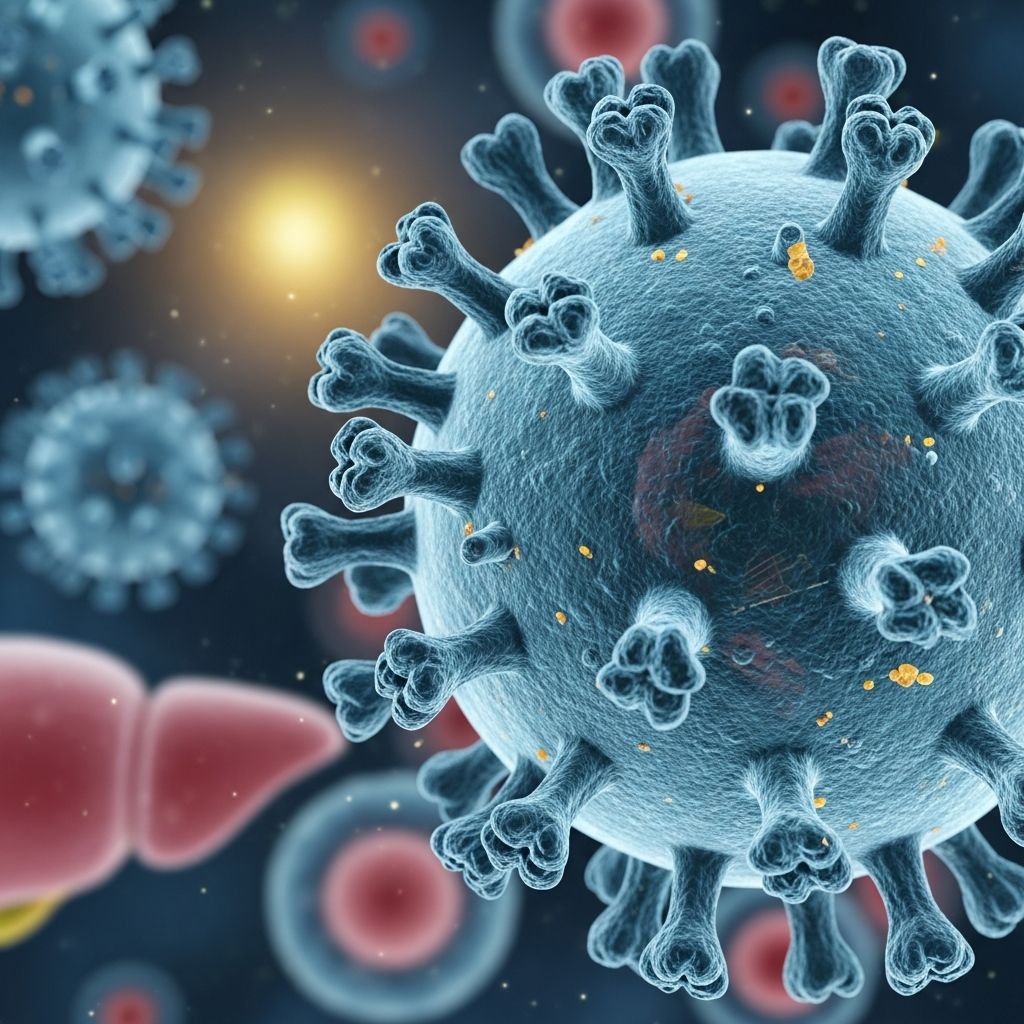
Hepatitis B is a serious viral infection that affects the liver and impacts approximately 290 million people worldwide, making it a leading cause of liver damage, liver cancer, and liver failure. The disease is caused by the hepatitis B virus (HBV), which is an enveloped partially double-stranded DNA virus with a surface antigen surrounding a nucleocapsid made up of core protein, viral genome, and polymerase protein. Understanding this condition is critical for prevention, early detection, and effective management.
How Hepatitis B is Transmitted
Hepatitis B virus is transmitted through contact with infected blood or body fluids. The primary transmission routes include:
- Unprotected sexual contact with an infected person
- Sharing needles during injection drug use
- Transmission from mother to child during pregnancy or delivery, which carries the greatest risk for chronic infection
- Contact with infected blood through open wounds or cuts
- Occupational exposure in healthcare settings
It is important to note that hepatitis B is not transmitted through casual contact, sharing food or utensils, kissing, coughing, sneezing, or other common interactions.
Symptoms of Hepatitis B Infection
Hepatitis B infection presents with a range of symptoms that vary depending on whether the infection is acute or chronic. Acute infection is typically associated with jaundice, fatigue, fever, pruritus, dark urine, nausea and vomiting, and anorexia. However, many individuals with acute hepatitis B may not experience any noticeable symptoms, particularly in the early stages.
Chronic hepatitis B, defined as the presence of HBsAg for at least 6 months, may progress silently with minimal symptoms for years. This silent progression makes regular screening and monitoring essential for those at risk of infection.
Risk Factors and Screening Recommendations
The CDC has expanded recommendations for hepatitis B screening to include all adults aged 18 years and older at least once during their lifetime, using three laboratory tests. Additionally, risk-based testing is recommended for populations with increased risk for HBV infection, including:
- Persons incarcerated or formerly incarcerated in a jail, prison, or other detention setting
- Persons with a history of sexually transmitted infections or multiple sex partners
- Persons with a history of hepatitis C virus infection
- Healthcare workers with potential occupational exposure
- Pregnant women (universal screening already recommended)
- People with HIV infection
- Household contacts of individuals with HBV infection
Diagnostic Testing for Hepatitis B
Accurate diagnosis of hepatitis B infection relies on specific serologic markers that indicate different stages and status of infection. Understanding these markers is crucial for proper interpretation of test results.
The Three Main Serologic Markers
The three main serologic markers used to determine HBV infection status are hepatitis B surface antigen (HBsAg), antibody to hepatitis B surface antigen (anti-HBs), and antibody to hepatitis B core antigen (anti-HBc).
Hepatitis B Surface Antigen (HBsAg): The presence of HBsAg indicates HBV infection, either acute or chronic, except when it might be transiently positive shortly after a dose of hepatitis B vaccine. HBsAg is typically the first marker to appear during infection and helps confirm active infection.
Related Stories



Antibody to Hepatitis B Surface Antigen (anti-HBs): The appearance of anti-HBs after a decline of HBsAg indicates recovery from HBV infection. Among immunocompetent persons never infected with HBV, anti-HBs at concentrations of 10 mIU/mL or greater at 1–2 months after completion of a hepatitis B vaccine series indicates immunity. Hepatitis B immune globulin (HBIG) can provide anti-HBs for 4–6 months after administration; therefore, testing for anti-HBs within 6 months after HBIG administration is not an accurate measure of a person’s immune status.
Total Antibody to Hepatitis B Core Antigen (anti-HBc): Total anti-HBc develops in all HBV infections, resolved or current, and typically persists for life. Persons whose immunity to HBV is from a vaccine do not develop anti-HBc. Assays for total anti-HBc detect both immunoglobulin M (IgM) and immunoglobulin G (IgG) antibodies to HBcAg. During the typical course of chronic infection, total anti-HBc and HBsAg will be present, whereas IgM anti-HBc will disappear.
Additional Markers for Viral Replication
Beyond the three primary screening markers, additional testing may be performed to assess viral load and infectivity. HBV DNA is a measure of viral load and indicates the amount of virus present in the bloodstream. Hepatitis B e antigen (HBeAg) is a marker for viral replication and high infectivity, while antibody to HBeAg (anti-HBe) can be used to monitor response to treatment and chronic HBV infection progression. After identifying a person with HBV infection, testing for HBeAg, anti-HBe, and HBV DNA can provide information on the level of viral replication and infectivity and help guide clinical management.
Treatment Options for Hepatitis B
Treatment approaches for hepatitis B vary depending on whether the infection is acute or chronic, and the level of liver damage present. Acute hepatitis B infections often resolve on their own with supportive care. However, chronic hepatitis B infection requires ongoing management and may necessitate antiviral therapy.
The Johns Hopkins Viral Hepatitis Center is at the forefront of hepatitis B elimination efforts in the United States, comprised of a highly specialized team of researchers and clinicians well-positioned to shepherd in a new era of life-saving pharmacologic interventions aimed at the cure of chronic hepatitis B infection.
Hepatitis B Vaccination
Vaccination is the most effective way to prevent hepatitis B infection. Several hepatitis B vaccines are available, each offering protection through different formulations:
Hepilsav-B: A yeast-derived vaccine created with a novel adjuvant Toll-like receptor 9 (TLR9) agonist that enhances immune response.
Recombivax HB: A recombinant vaccine produced by Saccharomyces cerevisiae (baker’s yeast) that has been used for decades with proven safety and efficacy.
Engerix-B: Another recombinant vaccine also produced by Saccharomyces cerevisiae offering similar protection to Recombivax HB.
Twinrix: A bivalent vaccine protecting against both hepatitis A and B, containing HAV (720 ELISA units/mL) and HBV (20 mcg HBsAg/mL), ideal for those needing protection against both viruses.
Vaccination Schedule and Recommendations
The standard hepatitis B vaccination series involves either a 2-dose or 3-dose schedule depending on the vaccine used and the age of the recipient. Universal hepatitis B vaccination is recommended for all infants, with catch-up vaccination recommended for older children and adolescents who were not previously vaccinated. Adults at risk for infection should also be vaccinated, and the CDC now recommends shared clinical decision-making for vaccination of all adults aged 19–59 years.
Prevention and Lifestyle Management
Beyond vaccination, several preventive measures can reduce the risk of hepatitis B transmission:
- Practice safe sex by using barriers such as condoms
- Avoid sharing personal items such as toothbrushes, razors, or nail clippers
- Do not share needles or injection equipment
- Ensure proper sterilization of equipment used for body piercing or tattooing
- In healthcare settings, follow universal precautions and proper infection control procedures
- Know the hepatitis B status of sexual partners and take appropriate precautions
- If you are at risk, get tested regularly for early detection
When to Seek Medical Attention
If you experience symptoms suggestive of hepatitis B, such as persistent fatigue, jaundice, dark urine, abdominal pain, or unusual bruising, seek medical attention promptly. Additionally, if you believe you have been exposed to the hepatitis B virus, contact your healthcare provider immediately, as post-exposure prophylaxis may be available to prevent infection.
Monitoring and Follow-up Care
Individuals diagnosed with hepatitis B infection require ongoing monitoring to assess disease progression and determine if treatment is necessary. Regular blood tests measuring liver function and viral load help guide clinical management decisions. In one study from a free screening clinic, 78% of patients with HBV infection elected to undergo follow-up monitoring including alanine aminotransferase (ALT) and HBV DNA testing, and 24% of those monitored were found to be eligible for treatment based on a viral load of more than 20,000 copies per mL.
Frequently Asked Questions
Q: Can hepatitis B be cured?
A: While acute hepatitis B infections typically resolve on their own, chronic hepatitis B currently cannot be cured completely. However, ongoing research and new antiviral treatments are advancing toward potential cures, and treatment can significantly reduce viral load and slow disease progression.
Q: Is hepatitis B contagious?
A: Yes, hepatitis B is contagious and can be transmitted through contact with infected blood and body fluids. However, it is not spread through casual contact, food, water, or air.
Q: How often should I get tested for hepatitis B?
A: All adults should receive hepatitis B screening at least once in their lifetime. Those with risk factors may require more frequent testing. Consult with your healthcare provider about the appropriate testing schedule for your situation.
Q: Can I donate blood if I have hepatitis B?
A: If you have active hepatitis B infection (HBsAg positive), you cannot donate blood, plasma, or other blood products. However, if you have recovered from hepatitis B and have developed immunity, you may be eligible to donate depending on specific screening criteria.
Q: Is the hepatitis B vaccine safe?
A: Yes, hepatitis B vaccines have an excellent safety profile and have been used successfully for decades. Serious side effects are rare, and the benefits of vaccination far outweigh the risks.
Q: What should I do if I think I’ve been exposed to hepatitis B?
A: Contact your healthcare provider immediately. Depending on the timing of exposure, post-exposure prophylaxis with hepatitis B vaccine and/or hepatitis B immune globulin may be available to prevent infection.
References
- Screening and Testing for Hepatitis B Virus Infection — Centers for Disease Control and Prevention. 2023-02-23. https://www.cdc.gov/mmwr/volumes/72/rr/rr7201a1.htm
- Hepatitis B (HBV) Vaccines — Johns Hopkins ABX Guide, The Johns Hopkins University. 2025-05-10. https://www.hopkinsguides.com/hopkins/view/Johns_Hopkins_ABX_Guide/540263/all/Hepatitis_B__HBV__vaccines
- Hepatitis B: Elimination on the Horizon — Johns Hopkins Medicine. 2024-03-04. https://www.hopkinsmedicine.org/health/conditions-and-diseases/hepatitis/hepatitis-b
- Hepatitis B — Johns Hopkins HIV Guide, The Johns Hopkins University. 2023-03-12. https://www.hopkinsguides.com/hopkins/view/Johns_Hopkins_HIV_Guide/545089/all/Hepatitis_B
Similar Articles








Read full bio of medha deb