Hepatorenal Syndrome: Causes, Symptoms & Treatment
Understanding hepatorenal syndrome: A life-threatening kidney complication of severe liver disease.
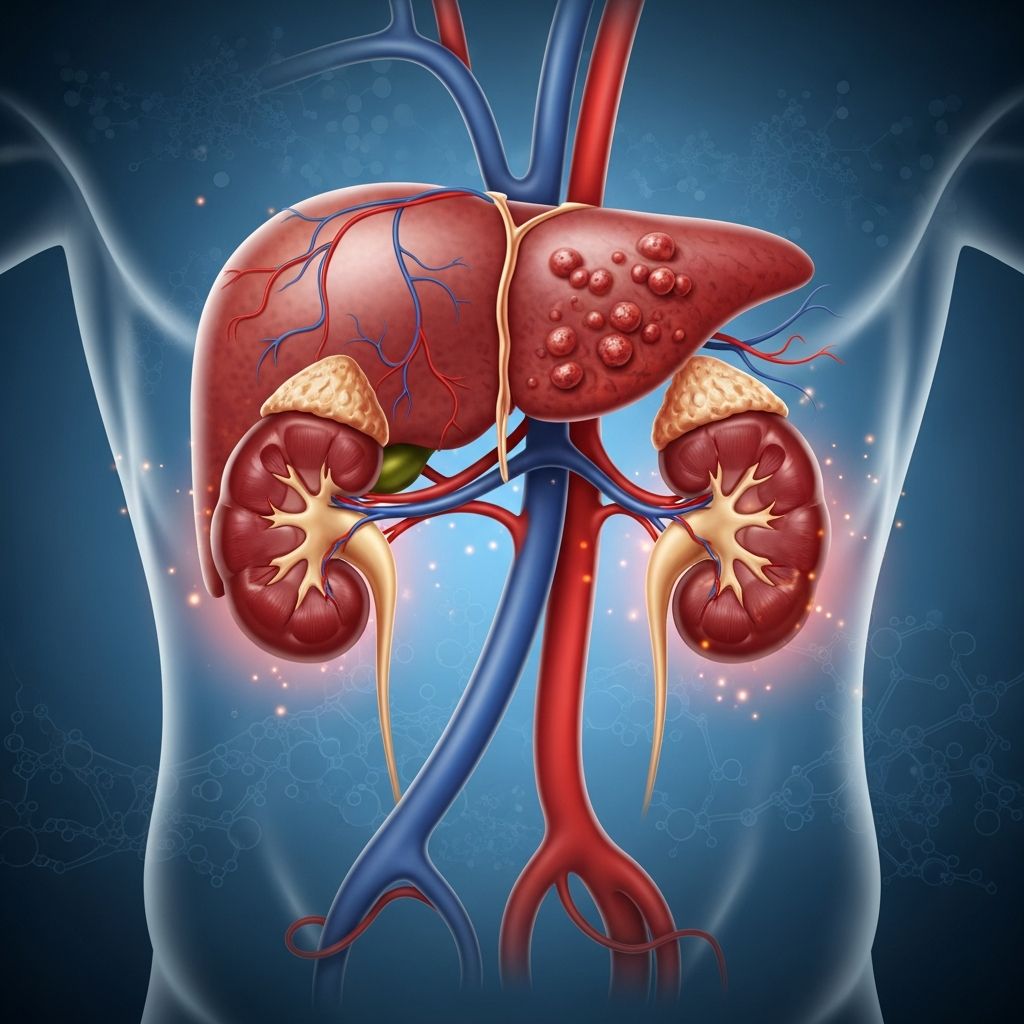
Hepatorenal Syndrome: What It Is, Symptoms & Treatment
Hepatorenal syndrome (HRS) represents a life-threatening complication of severe liver disease that causes kidney failure in patients without prior kidney problems. This serious medical condition occurs when liver failure directly affects the blood vessels in the kidneys, preventing adequate blood flow and causing kidney function to deteriorate rapidly. Understanding HRS is crucial for patients with advanced liver disease and their healthcare providers, as early recognition and intervention can significantly impact outcomes.
What Is Hepatorenal Syndrome?
Hepatorenal syndrome is a form of acute kidney injury that develops specifically in patients with severe liver disease, typically in the context of cirrhosis and ascites. The condition is characterized by the kidneys’ inability to filter waste and maintain fluid balance, despite the absence of direct kidney damage or disease. In HRS, the liver failure affects the kidney’s blood supply rather than damaging the kidney tissue itself.
The hallmark feature of HRS is intense renal vasoconstriction, where blood vessels supplying the kidneys narrow significantly, combined with widespread peripheral arterial vasodilation. This creates a paradoxical circulatory situation where blood vessels in the kidneys constrict while blood vessels elsewhere dilate. Tubular function within the kidneys remains preserved, and there is an absence of proteinuria or histologic kidney damage, distinguishing HRS from other forms of kidney failure.
HRS exists on a spectrum ranging from milder forms of acute kidney injury in patients with cirrhosis to severe, rapidly progressive renal failure. Research indicates that approximately 40% of people with end-stage liver disease will develop HRS, with up to 10% of those hospitalized for acute or chronic liver failure experiencing this complication. These individuals represent all ages and sexes, though HRS more commonly affects people in the second half of their lives.
Types of Hepatorenal Syndrome
HRS is now classified into two distinct types based on the progression and severity of kidney dysfunction:
HRS-AKI (Acute Kidney Injury)
Formerly known as Type 1 HRS, this form involves a rapid decline in kidney function that develops over days to weeks. HRS-AKI is characterized by a quick progression of renal failure and is associated with significantly increased mortality risk. This type requires urgent intervention and intensive medical management.
HRS-Chronic Kidney Disease
Previously referred to as Type 2 HRS, this form features progressively worsening kidney function that develops more gradually over weeks to months. While chronic HRS progresses at a slower pace than the acute form, it still represents a serious complication requiring ongoing management and monitoring.
Causes and Risk Factors
The development of hepatorenal syndrome stems from complex changes in the circulatory system associated with advanced liver disease. The pathophysiology involves several interconnected mechanisms that ultimately lead to reduced kidney blood flow.
Splanchnic vasodilation—widening of blood vessels in the abdominal organs—serves as one of the key causative factors in HRS. This vasodilation occurs due to increased nitrous oxide production in the splanchnic region combined with reduced nitrous oxide in the liver sinusoids. Additional vasodilators, including calcitonin gene-related peptide and adrenomedullin, accumulate in increased concentrations due to heightened production and decreased hepatic clearance.
Central hypovolemia, or reduced blood volume in the central circulation, results from decreased systemic vascular resistance. The combination of widespread vasodilation and restricted portal blood flow causes blood to pool excessively in the splanchnic circulation, creating an effective reduction in central blood volume. This abnormality triggers compensatory responses, though these responses become dysfunctional in cirrhotic patients. The baroreceptor reflex and cardiovascular responses to angiotensin II, norepinephrine, and vasopressin all become dysregulated, leading to further blood pressure instability and renal hypoperfusion.
Related Stories



Risk factors for developing HRS include advanced cirrhosis, the presence of ascites, spontaneous bacterial peritonitis, gastrointestinal bleeding, acute alcoholic hepatitis, and the use of nephrotoxic medications. Infections and kidney injury from other causes can precipitate HRS in susceptible patients with severe liver disease.
Symptoms of Hepatorenal Syndrome
Patients with hepatorenal syndrome often present with vague symptoms of general unwellness and deterioration. Common symptoms include:
- Fatigue and weakness
- Nausea and loss of appetite
- Abdominal discomfort or swelling
- Mental confusion or difficulty concentrating
- Yellowing of skin and eyes (jaundice)
- Dark urine or pale stools
- Easy bruising or bleeding
- Itching of the skin
- Swollen legs or abdomen
These symptoms overlap significantly with those of advanced liver disease and liver failure, making HRS challenging to recognize clinically. Because HRS develops as a complication of existing severe liver disease, patients typically already exhibit signs of hepatic dysfunction. The rapid progression of HRS in its acute form means symptoms worsen dramatically over days to weeks, requiring urgent medical evaluation and intervention.
Diagnosis of Hepatorenal Syndrome
Healthcare providers diagnose hepatorenal syndrome through a systematic approach that confirms both liver disease and kidney failure while ruling out other potential causes of renal dysfunction. The diagnostic process involves several components:
Clinical Assessment
Physicians first establish the presence of underlying liver disease through patient history, physical examination, and review of previous medical records. They assess for signs of cirrhosis, portal hypertension, and hepatic decompensation.
Laboratory Testing
Blood tests measure kidney function markers, including serum creatinine levels and glomerular filtration rate (GFR). HRS is typically defined by a serum creatinine level greater than 1.5 mg/dL or a 24-hour creatinine clearance less than 40 mL/minute. Additional blood tests evaluate liver function, electrolyte balance, and assess for complications such as hyperkalemia and metabolic acidosis.
Urine Testing
Urinalysis helps exclude kidney damage as the cause of renal failure. In HRS, urinalysis typically shows minimal abnormalities with the absence of significant proteinuria, helping differentiate HRS from primary kidney disease.
Imaging Studies
Ultrasound or other imaging may be performed to evaluate kidney structure, exclude obstruction, and assess liver architecture. These imaging modalities help rule out other structural causes of kidney dysfunction.
Exclusion Criteria
A diagnosis of HRS requires the exclusion of alternative causes of kidney failure, including:
- Shock or hypotension from any cause
- Active bacterial infection or sepsis
- Recent use of nephrotoxic medications
- Significant fluid losses from vomiting or diarrhea
- Weight loss exceeding 500-1,000 grams daily
- Primary kidney disease or structural abnormalities
HRS is fundamentally a diagnosis of exclusion, requiring careful clinical judgment to distinguish it from other causes of acute kidney injury in cirrhotic patients.
Treatment Options for Hepatorenal Syndrome
Medical Management
Medical treatment for HRS focuses on expanding central blood volume by increasing total plasma volume while reducing peripheral vasodilation. The cornerstone of modern medical management involves:
Albumin Infusion: Intravenous albumin represents the primary fluid replacement therapy. By increasing plasma volume, albumin therapy raises central blood volume and improves cardiac preload, helping to correct some cardiac dysfunction while enhancing kidney perfusion through increased mean arterial blood pressure. Albumin therapy typically continues for up to 14 days.
Vasoconstrictor Medications: Pharmacological options to manage HRS include:
- Midodrine and octreotide combination therapy
- Norepinephrine administration
- Terlipressin, which has demonstrated improved outcomes in clinical trials
In clinical trials, terlipressin combined with albumin showed significantly improved reversal of HRS compared to placebo. Verified reversal of HRS, defined as two consecutive serum creatinine values of 1.5 mg/dL or less with survival without dialysis for 10 days, occurred in 32% of patients receiving terlipressin compared to 17% in the placebo group.
Symptom Management: Treatment also addresses complications and symptoms, including management of electrolyte abnormalities, particularly hyperkalemia and metabolic acidosis, which represent major causes of death in untreated HRS. Healthcare providers monitor fluid status carefully and manage ascites through sodium restriction and diuretics when appropriate.
Advanced Interventions
TIPS (Transjugular Intrahepatic Portosystemic Shunt): TIPS procedures reduce portal pressure by establishing a shunt between the portal and hepatic veins, reducing the portal pressure gradient by an average of 10 mm Hg. This intervention allows blood previously pooled in the splanchnic circulation to reenter systemic circulation. Studies demonstrate that sodium excretion and serum creatinine can improve within hours after TIPS, with renal hemodynamics normalizing within 6 to 12 months in the majority of patients. However, TIPS may worsen the hyperdynamic circulation characteristic of HRS by increasing systemic vasodilation and cardiac output.
Renal Replacement Therapy: Dialysis or continuous renal replacement therapy may become necessary in patients with severe electrolyte disturbances, fluid overload, or progressive uremia. These interventions serve as supportive measures rather than definitive treatments.
Liver Transplantation
Liver transplantation remains the only definitive cure for hepatorenal syndrome. Transplantation addresses the underlying cause by replacing the diseased liver with a healthy organ, thereby reversing the circulatory and hemodynamic abnormalities that caused HRS. Pretransplant treatment with medical management and advanced interventions aims to improve patients’ overall health status and make them suitable candidates for transplantation, ultimately improving outcomes if transplantation can be performed.
Prognosis and Survival Outlook
The prognosis of hepatorenal syndrome depends significantly on the type of HRS and whether liver transplantation is available. Without liver transplantation, the outlook for most patients is poor. The median survival for patients with acute onset HRS and no transplant is approximately two weeks, reflecting the rapidly progressive nature of acute kidney injury in this setting. Patients with more chronic HRS have a somewhat longer median survival of three to six months.
Life expectancy also depends on overall health status and medical stability. Patients already severely ill with HRS may not be healthy enough to undergo liver transplantation, significantly limiting treatment options and survival prospects. However, patients who receive a liver transplant have substantially improved survival and quality of life, as the transplanted liver typically reverses the pathophysiological mechanisms causing HRS.
Prevention and Risk Reduction
While HRS cannot always be prevented, certain measures may reduce risk in patients with advanced liver disease:
- Avoiding nephrotoxic medications, including NSAIDs and some antibiotics
- Prompt treatment of infections, particularly spontaneous bacterial peritonitis
- Careful fluid and electrolyte management
- Sodium restriction and appropriate use of diuretics for ascites management
- Monitoring kidney function regularly with serum creatinine and other markers
- Minimizing alcohol consumption and managing underlying liver disease
Frequently Asked Questions
Q: Can hepatorenal syndrome be cured without a liver transplant?
A: Liver transplantation is the only definitive cure for hepatorenal syndrome. However, medical management with albumin and vasoconstrictor medications can improve kidney function and serve as a bridge to transplantation in appropriate candidates. Without transplantation, HRS typically progresses despite treatment.
Q: How quickly does hepatorenal syndrome develop?
A: HRS-AKI, the acute form, develops rapidly over days to weeks. HRS-chronic kidney disease develops more gradually over weeks to months. The acute form carries higher mortality risk and requires urgent medical intervention.
Q: Who is at highest risk for developing hepatorenal syndrome?
A: Patients with advanced cirrhosis, ascites, and severe liver disease have the highest risk. Those with spontaneous bacterial peritonitis, gastrointestinal bleeding, or acute alcoholic hepatitis are at particularly elevated risk. Risk increases with age and the presence of multiple complications of liver disease.
Q: What is the difference between HRS-AKI and HRS-chronic kidney disease?
A: HRS-AKI represents acute, rapidly progressive kidney failure developing over days to weeks with high mortality risk. HRS-chronic kidney disease develops gradually over weeks to months with slower progression. Both types require treatment, but HRS-AKI typically necessitates more intensive intervention.
Q: Can hepatorenal syndrome be diagnosed with blood tests alone?
A: Diagnosis requires a combination of clinical assessment, blood tests (particularly serum creatinine and kidney function markers), urine testing, and imaging studies. Importantly, other causes of kidney failure must be excluded to confirm HRS as a diagnosis of exclusion.
References
- Hepatorenal Syndrome: A Review of Pathophysiology and Current Management — National Center for Biotechnology Information (NCBI/PMC). 2015. https://www.ncbi.nlm.nih.gov/pmc/articles/PMC4640915/
- What Is the Role for Terlipressin in Hepatorenal Syndrome? — Cleveland Clinic Journal of Medicine. 2023. https://www.ccjm.org/content/90/11/664
- Diagnosis and Management of Ascites, Spontaneous Bacterial Peritonitis, and Hepatorenal Syndrome — Cleveland Clinic Journal of Medicine. 2023. https://www.ccjm.org/content/90/4/209
- Multisystem Hemodynamic Effects of Terlipressin in Cirrhosis — PubMed/National Center for Biotechnology Information. 2024. https://pubmed.ncbi.nlm.nih.gov/39955856/
- International Perspectives on Liver Failure in Critical Care — Cleveland Clinic Medical Education. 2024. https://www.clevelandclinicmeded.com/live/courses/liverfailure/
Similar Articles








Read full bio of medha deb