Hereditary Multiple Exostosis: Causes, Symptoms, and Treatment
Understanding hereditary multiple exostosis: genetic causes, clinical presentation, and management options.
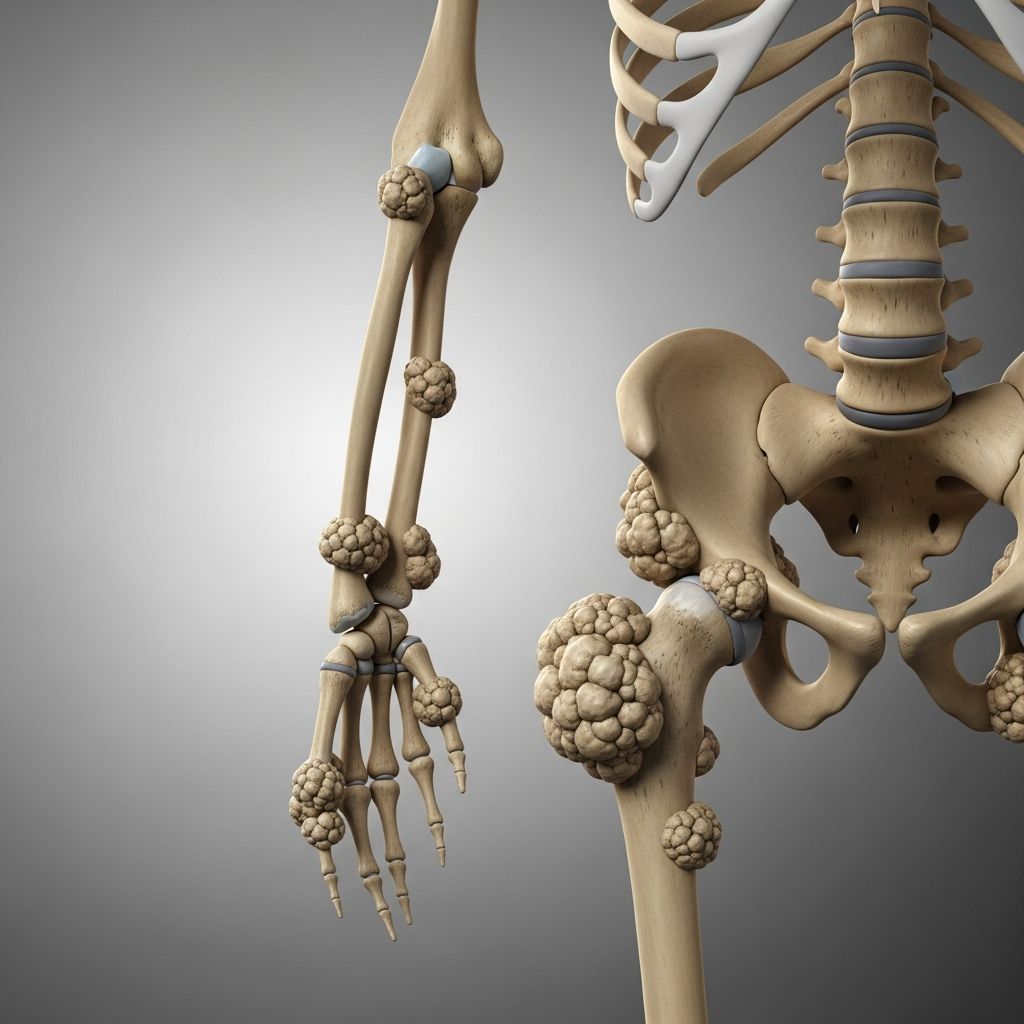
What is Hereditary Multiple Exostosis?
Hereditary multiple exostosis (HME), also known as hereditary multiple osteochondromas, diaphyseal aclasis, or multiple cartilaginous exostosis, is a genetic disorder characterized by the development of multiple benign bone tumors called osteochondromas or exostoses. These noncancerous growths typically develop at the ends of long bones, particularly around the knees, hips, ankles, shoulders, and elbows, though they can appear virtually anywhere on the skeletal system. The condition is inherited as an autosomal dominant genetic trait, meaning that only one mutated gene copy from either parent is necessary to develop the disease.
Hereditary multiple exostosis affects approximately 1 in 50,000 individuals in the general Caucasian population, though it can occur in people of all ethnic backgrounds. The condition typically presents during childhood and early adolescence, with most cases manifesting between ages 2 and 10 years, and the majority of diagnoses occurring by age 6. The tumors themselves are generally benign and non-cancerous in nature, but they can cause various complications that may require medical intervention.
Understanding the Genetics of HME
Hereditary multiple exostosis is caused by mutations in specific genes known as exostoses genes (EXT), which are classified as tumor suppressor genes. The primary genes involved in HME are EXT1 and EXT2, located on chromosomes 8q24 and 11p11–p12 respectively, with a rare third gene, EXT3, occasionally involved. In approximately 10% of cases, the mutation occurs spontaneously as a new genetic change with no previous family history, a phenomenon known as de novo mutation.
These EXT genes encode glycosyltransferases responsible for the biosynthesis of heparin sulfate proteoglycan, a substance crucial for regulating growth signaling pathways in the epiphyseal growth plates of bones. When these genes are mutated, the normal growth regulation mechanisms fail, leading to the development of multiple cartilage-capped bony outgrowths. Research indicates that approximately 85% of solitary exostoses occur without family involvement, while the remaining 15% manifest as hereditary multiple exostosis. Among HME patients, approximately two-thirds have a positive family history, and the disease demonstrates about 96% penetrance, meaning that individuals carrying the mutation have a high likelihood of developing symptoms.
The inheritance pattern is autosomal dominant, indicating that affected parents have a 50% chance of passing the mutated gene to each offspring, regardless of the child’s sex. However, not all individuals who inherit the mutation will express identical symptoms due to variable gene expression and incomplete penetrance in some families.
Clinical Presentation and Symptoms
The clinical presentation of hereditary multiple exostosis varies significantly from person to person, ranging from asymptomatic cases to severe manifestations requiring multiple surgical interventions. While many individuals with HME remain largely asymptomatic, particularly in the early stages, several complications can develop as the condition progresses.
Physical Characteristics of Exostoses
The bone tumors associated with HME can be either sessile (connected directly to the bone surface) or pedunculated (connected by a stalk-like structure). These exostoses vary widely in both size and number among affected individuals. Each tumor consists of a bony core covered by a cartilage cap, and they typically develop in areas of active bone growth, particularly near the ends of long bones where the growth plates are most active.
Related Stories



Common Symptoms and Complications
Affected individuals may experience the following complications:
- Pain and nerve impingement: Exostoses can compress nearby nerves, causing localized or radiating pain, particularly when tumors grow near major nerve pathways
- Limited range of motion: Bone tumors can restrict joint movement and flexibility in affected limbs
- Skeletal deformities: The condition frequently causes bony shortening, rotational deformities, and angular misalignments of the affected bones and appendages
- Vascular compromise: Exostoses may compress or damage blood vessels, affecting circulation to the affected limb
- Skin necrosis: In rare cases, the overlying skin can develop areas of dead tissue due to severe compression
- Functional impairment: The tumors can restrict movement and sensation in the affected limbs, impacting daily activities and quality of life
- Pressure on organs: In some cases, particularly when exostoses develop on the trunk or near vital structures, the tumors may exert pressure on nearby organs
Diagnosis of Hereditary Multiple Exostosis
Diagnosing hereditary multiple exostosis involves a comprehensive evaluation combining clinical assessment, imaging studies, and genetic testing.
Clinical Evaluation
The diagnostic process begins with a thorough clinical history and physical examination, including careful assessment of family history since approximately two-thirds of HME cases have hereditary involvement. Healthcare providers examine patients for characteristic bony lumps and assess for symptoms such as pain, restricted movement, or visible deformities.
Imaging Studies
X-ray imaging serves as the primary diagnostic tool for identifying osteochondromas. X-rays typically reveal the characteristic cartilage-capped bony lesions on the ends of long bones. For more detailed assessment of soft tissue involvement and to evaluate compression of surrounding structures, magnetic resonance imaging (MRI) may be performed. In some cases, computed tomography (CT) scans provide additional clarity regarding the precise location and extent of exostoses.
Genetic Testing
Molecular genetic testing analyzing the EXT1 and EXT2 genes can confirm the diagnosis at the genetic level. However, it is important to note that genetic testing may not detect mutations in all cases, particularly in individuals with somatic mosaicism, where the mutation is present only in some body cells but not in blood cells used for standard DNA analysis. A negative genetic test does not exclude the diagnosis if clinical and radiographic findings are consistent with HME.
Treatment Options for HME
The management approach for hereditary multiple exostosis depends on the severity of symptoms, functional impairment, and risk of complications. Treatment strategies include both conservative management and surgical intervention.
Conservative Management
Many individuals with asymptomatic or mildly symptomatic HME can be managed conservatively with regular monitoring and surveillance. Conservative approaches include pain management through nonsteroidal anti-inflammatory medications, physical therapy to maintain or improve range of motion and flexibility, and regular clinical and imaging follow-up to monitor for progression or complications.
Surgical Treatment
Surgical intervention becomes necessary when exostoses cause significant complications or functional impairment. Indications for surgical removal include:
- Severe or intractable pain from nerve compression
- Significant limitation of joint movement or function
- Vascular compromise affecting limb circulation
- Progressive skeletal deformities causing functional disability
- Cosmetic concerns affecting quality of life
- Skin ulceration or necrosis from severe compression
- Malignant transformation or suspected malignancy
Surgical procedures typically involve complete removal (excision) of the osteochondroma along with its cartilage cap to reduce the risk of recurrence. Because HME is a progressive condition with ongoing tumor development, most patients require multiple surgical interventions throughout their lifetime, with an average of three major surgical procedures during a patient’s lifetime.
Treatment of Malignant Transformation
Although rare, osteochondromas can undergo malignant transformation into chondrosarcoma, a malignant bone cancer. When malignant degeneration is suspected or confirmed, treatment typically involves surgical excision of the affected tumor, potentially combined with chemotherapy and radiation therapy depending on the extent of malignancy and staging.
Prognosis and Long-Term Outlook
The long-term prognosis for individuals with hereditary multiple exostosis varies considerably based on disease severity, number and location of tumors, and the presence of complications. Most individuals with HME lead relatively normal lives with appropriate management, though they may experience periodic symptoms and require surgical interventions.
The risk of malignant transformation, while rare, remains a significant concern in HME. Regular monitoring through physical examination and imaging studies is essential for early detection of any malignant changes. The overall life expectancy for individuals with HME is generally not significantly reduced compared to the general population, though quality of life may be affected by symptoms and functional limitations.
Living with Hereditary Multiple Exostosis
Individuals diagnosed with HME should establish regular relationships with healthcare providers who understand the condition and can provide comprehensive, coordinated care. Regular follow-up appointments allow for monitoring of existing exostoses and early detection of new tumors or complications.
Genetic counseling is recommended for families with HME, particularly when planning pregnancies, to understand inheritance patterns and recurrence risks. Affected parents should be informed that each child has a 50% risk of inheriting the condition.
Physical activity should be encouraged but modified based on individual symptoms and limitations. Most individuals can participate in age-appropriate activities with adjustments for pain or functional limitations. Communication with healthcare providers regarding activity tolerance is important for optimizing quality of life.
Frequently Asked Questions About HME
Q: At what age does hereditary multiple exostosis typically appear?
A: Hereditary multiple exostosis most commonly presents between ages 2 and 10 years, with approximately 65-89% of cases diagnosed by age 6 years. In rare cases, symptoms may appear in infants or later in childhood.
Q: Can hereditary multiple exostosis develop without a family history?
A: Yes, approximately 10% of HME cases result from new spontaneous genetic mutations (de novo mutations) with no prior family history. In these cases, an affected individual may be the first in their family to have the condition.
Q: What is the risk of malignant transformation in HME?
A: While the exact risk varies, malignant transformation to chondrosarcoma occurs in a small percentage of HME cases. Regular monitoring through physical examination and imaging helps identify any malignant changes early.
Q: Is there a cure for hereditary multiple exostosis?
A: There is no cure for the genetic condition itself, but symptoms can be effectively managed through conservative treatment and surgical removal of problematic exostoses when necessary.
Q: How often should individuals with HME be monitored?
A: The frequency of monitoring depends on disease severity and symptoms. Most individuals benefit from regular clinical evaluations and periodic imaging studies as recommended by their healthcare provider, typically annually or as needed based on symptom changes.
Q: Can women with HME have children?
A: Yes, women with HME can have children. However, each child has a 50% risk of inheriting the condition. Genetic counseling before pregnancy can help families understand these risks and plan accordingly.
References
- Hereditary multiple exostoses in the hands and fingers – NIH — National Center for Biotechnology Information (NCBI). 2011-05-16. https://pmc.ncbi.nlm.nih.gov/articles/PMC3092885/
- Hereditary Multiple Osteochondromas – Symptoms, Causes, Treatment — National Organization for Rare Disorders (NORD). 2024. https://rarediseases.org/rare-diseases/hereditary-multiple-osteochondromas/
- Hereditary Multiple Osteochondromas (Multiple Hereditary Exostoses) — Cleveland Clinic. 2024. https://my.clevelandclinic.org/health/diseases/23433-hereditary-multiple-osteochondromas
- What is multiple hereditary exostoses? — Nicklaus Children’s Hospital. 2024. https://www.nicklauschildrens.org/conditions/multiple-hereditary-exostoses
- Exostosis: Causes, Treatments, Complications, and More — WebMD. 2023. https://www.webmd.com/a-to-z-guides/what-is-exostosis
- Multiple congenital exostosis | About the Disease — Genetic and Rare Diseases Information Center (GARD). 2024. https://rarediseases.info.nih.gov/diseases/6041/multiple-congenital-exostosis
Similar Articles








Read full bio of Sneha Tete