Hereditary Patterned Baldness: Causes, Genetics & Treatment
Understanding hereditary baldness: genetic factors, risk assessment, and effective treatment options.
Understanding Hereditary Patterned Baldness
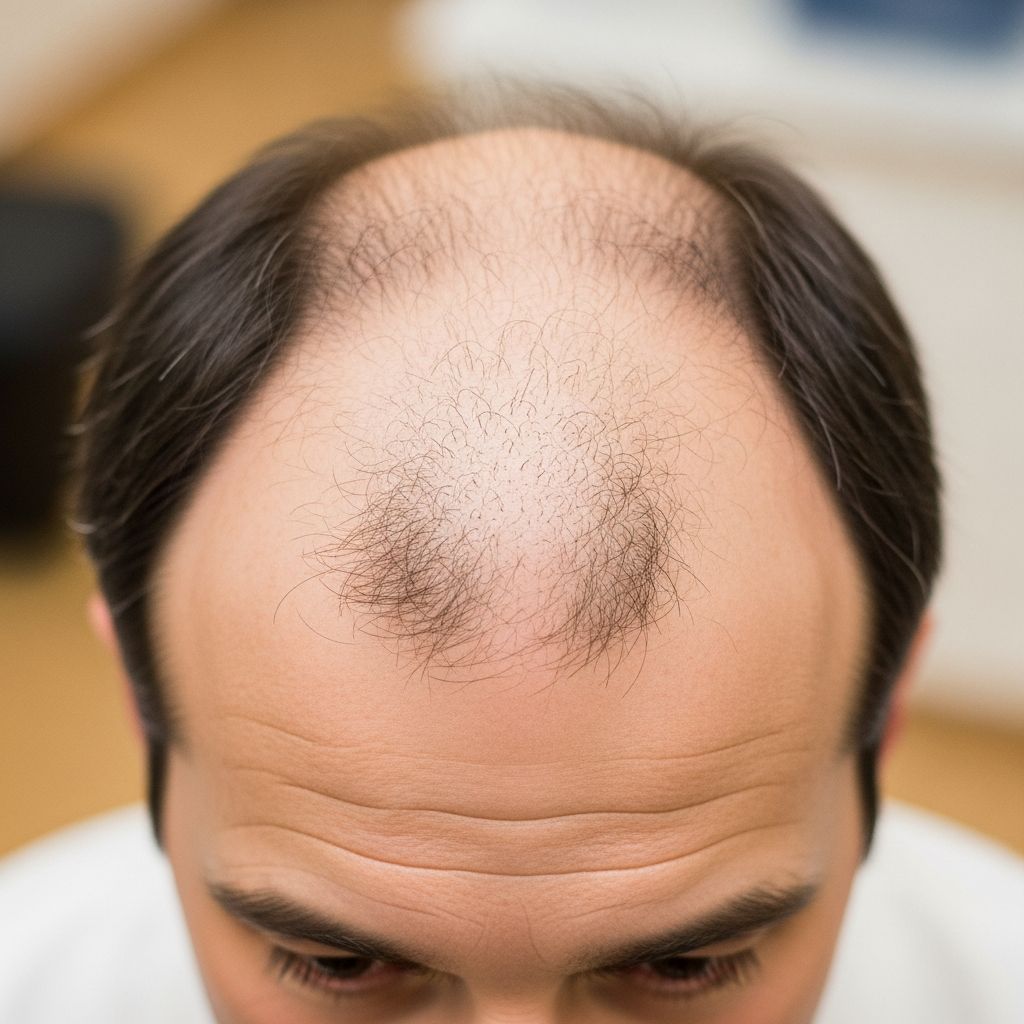
Hereditary patterned baldness, medically known as androgenetic alopecia, is the most common form of hair loss affecting millions of men and women worldwide. This condition occurs when hair follicles become progressively smaller and produce thinner, shorter hairs—a process called miniaturization. Over time, affected hair follicles may stop producing visible hair altogether, resulting in noticeable hair loss and scalp exposure.
Hair loss from hereditary baldness typically follows distinct patterns. In men, it often begins with a receding hairline or thinning at the crown, eventually progressing to significant scalp exposure. In women, the pattern differs, usually manifesting as general thinning across the scalp rather than complete baldness. Understanding this condition requires knowledge of both the genetic mechanisms involved and the hormonal factors that drive hair loss progression.
The Genetic Basis of Hereditary Baldness
Hereditary patterned baldness is one of the most heritable complex traits known to medicine. Research demonstrates that genetics accounts for approximately 80-94% of the risk for developing this condition. This remarkably high heritability suggests that if your family members have experienced pattern baldness, your own risk is substantially elevated.
A landmark genome-wide association study (GWAS) identified 71 genetic loci associated with male pattern baldness, with 30 of these representing previously unknown susceptibility locations. These 71 loci collectively explain 38% of the total heritability of the condition, accounting for 32% of autosomal contributions and 73% of X chromosome contributions. This finding is particularly significant because it demonstrates that pattern baldness results from the cumulative effects of many genes rather than a single genetic mutation.
Key Genes Involved in Hair Loss
Multiple genes play crucial roles in determining baldness susceptibility. The most well-established genes include:
Androgen Receptor (AR) Gene: Located on the X chromosome, the AR gene is central to pattern baldness development. Men inherit their X chromosome from their mothers, which explains why maternal genetics often play a significant role in baldness inheritance. Research involving 12,806 men of European ancestry found that individuals carrying specific AR gene variants had more than twice the risk of developing male pattern baldness compared to those without these variants. Variants rs6152 and rs1385699 in the AR gene explain up to 40% of heritability in European populations.
EDA2R Gene: The ectodysplasin A2 receptor gene influences hair follicle development and the duration of the hair growth phase. Loss-of-function variants in EDA2R can shorten the anagen (growth) phase by approximately 20%, leading to shorter and thinner hairs.
Chromosome 20 Variants: Research indicates that one in seven men carry variants on chromosome 20 that function as risk factors for hereditary pattern baldness. Notably, chromosome 20 inheritance is independent of X chromosome inheritance, meaning these variants can be inherited from either parent. The variant rs1160312 on chromosome 20 is particularly significant, increasing the likelihood of experiencing male pattern baldness by 60%.
PAX1 Gene: Men carrying risk alleles in the PAX1 gene typically experience temple thinning approximately five years earlier than those without these variants.
Related Stories



Inheritance Patterns and Family History
Understanding how hereditary baldness is inherited can help predict your personal risk. The inheritance pattern is more complex than previously believed, involving contributions from both maternal and paternal lineages.
Maternal Inheritance: The common adage that if your maternal grandfather was bald you will likely experience hair loss contains truth, though only partial. Since men inherit their X chromosome from their mothers, and the AR gene resides on the X chromosome, maternal genetics significantly influence baldness risk. However, this represents only one component of the overall genetic picture.
Paternal Inheritance: Contrary to older beliefs, studies have found that men whose fathers experience baldness run a higher risk of developing male pattern baldness than those whose fathers have not experienced hair loss. This demonstrates that paternal inheritance contributes substantially to baldness susceptibility.
DHT Sensitivity: Beyond individual genes, children can inherit dihydrotestosterone (DHT) sensitivity from their parents. DHT is a sex hormone that causes hair follicles to shrink over time and is the primary driver of male pattern baldness. Inheriting heightened DHT sensitivity compounds genetic risk.
Hormonal Factors in Baldness Development
While genetics determine susceptibility to baldness, hormonal factors—particularly DHT—drive the actual hair loss process. DHT is derived from testosterone through the action of the enzyme 5-alpha reductase. In genetically predisposed individuals, hair follicles respond abnormally to DHT, initiating the miniaturization process that leads to progressive hair loss.
The relationship between genetic predisposition and DHT sensitivity is crucial: you can carry baldness-associated genes without experiencing significant hair loss if your hair follicles are not particularly sensitive to DHT. Conversely, high DHT sensitivity combined with genetic susceptibility dramatically increases baldness risk and progression speed.
Risk Assessment and Age of Onset
Hereditary patterned baldness can manifest at various ages, though certain patterns are common. Hair thinning typically becomes noticeable in individuals’ 20s to early 30s, with Harvard Health noting that hereditary balding often becomes apparent during the third decade of life. However, onset can occur earlier or later depending on individual genetic and hormonal factors.
The severity and progression rate vary considerably among affected individuals. Some men experience rapid hair loss progression, while others maintain a stable pattern for years. Similarly, women may experience subtle thinning that progresses slowly or more noticeable diffuse hair loss across the scalp.
Treatment Options and Management Strategies
While genetics cannot be changed, several evidence-based treatments can effectively manage hereditary patterned baldness by slowing progression or, in some cases, promoting regrowth.
Minoxidil (Rogaine): This topical treatment is FDA-approved for treating androgenetic alopecia in both men and women. Minoxidil works by extending the growth phase of hair follicles and increasing blood flow to the scalp. When applied twice daily, it can slow hair loss and sometimes promote modest regrowth. Consistent use is necessary to maintain benefits, and discontinuation typically results in hair loss resuming within months.
Finasteride (Propecia, Proscar): This oral medication is FDA-approved for male pattern baldness treatment. Finasteride works by inhibiting the enzyme 5-alpha reductase, reducing DHT production by approximately 70%. Studies demonstrate that finasteride effectively slows hair loss progression in most men and can promote regrowth in some cases. It is not recommended for women of childbearing age due to potential effects on male fetus development.
Combination Therapy: Some dermatologists recommend combining minoxidil and finasteride for enhanced results. Research suggests this combination approach may be more effective than either treatment alone for certain individuals.
Hair Transplantation: For individuals with significant hair loss, surgical hair transplantation offers a permanent solution. This procedure involves harvesting hair follicles from donor areas (typically the back of the scalp where genetic baldness resistance is strong) and transplanting them to affected areas. Modern techniques produce natural-appearing results.
Low-Level Laser Therapy: Some studies suggest that low-level laser therapy may promote hair growth and slow loss progression, though evidence remains mixed compared to FDA-approved medications.
Prevalence and Statistics
Hereditary hair loss is remarkably common. According to Harvard Medical School, approximately four in ten people will experience genetic hair loss during their lifetime. Among men specifically, the prevalence increases with age: roughly 50% of men experience noticeable hair loss by age 50, with the condition beginning earlier in those with strong family histories and genetic predisposition.
Women also experience hereditary baldness, though typically at lower rates and with different presentation patterns than men. Female pattern baldness affects women of all ages but becomes increasingly common after menopause, when declining estrogen may unmask genetic baldness susceptibility.
Genetic Pathways Underlying Baldness
Recent research has identified specific biological pathways that contribute to pattern baldness development. Genes involved in the condition cluster into functional groups related to hair follicle development and growth. The Wnt and TGF-beta signaling pathways, which regulate hair follicle morphogenesis and the hair growth cycle, emerge as particularly important. These pathways coordinate complex developmental processes that determine hair follicle size and function.
Interestingly, pathway-specific genetic correlations link baldness to other traits, including lifespan and cancer risk, suggesting shared biological mechanisms. This finding opens new research directions for understanding the broader health implications of genes affecting hair follicle development.
Environmental and Lifestyle Factors
While genetics dominates baldness development, certain environmental and lifestyle factors may influence progression:
Stress: Psychological stress can trigger telogen effluvium, a temporary hair loss condition distinct from pattern baldness, though chronic stress may exacerbate existing genetic baldness.
Nutrition: Adequate intake of iron, zinc, biotin, and B vitamins supports optimal hair health. Severe nutritional deficiencies can accelerate hair loss in genetically susceptible individuals.
Scalp Health: Maintaining a healthy scalp through regular cleansing and treating conditions like seborrheic dermatitis may help optimize hair retention.
Smoking: Some research suggests smoking may increase baldness risk or severity, potentially through oxidative stress mechanisms.
Future Research Directions
Ongoing research continues refining understanding of hereditary baldness genetics. Scientists are investigating how European-ascertained genetic predictions translate to other populations, exploring population-specific genetic variants and evolutionary factors affecting baldness susceptibility across diverse ancestry groups. Additionally, studies examining the role of Neanderthal alleles in modern baldness susceptibility offer insights into human evolutionary history.
Emerging therapies under investigation include JAK inhibitors, which show promise in treating alopecia areata and potentially androgenetic alopecia, and stem cell-based approaches targeting hair follicle regeneration. As genetic knowledge expands, personalized treatment approaches based on individual genetic profiles may become increasingly feasible.
Frequently Asked Questions
Q: If my mother’s father was bald, am I guaranteed to lose my hair?
A: No. While maternal genetics contribute significantly to baldness risk through X-linked genes, inheriting baldness genes doesn’t guarantee hair loss. Many other genetic factors and individual variation in DHT sensitivity determine whether and when baldness develops. Additionally, paternal genetics also play a role in overall baldness risk.
Q: Can I prevent hereditary baldness if I know I’m at risk?
A: You cannot prevent genetically predetermined hair loss, but you can slow progression. Early treatment with FDA-approved medications like minoxidil or finasteride can significantly delay or minimize hair loss. Starting treatment before extensive hair loss occurs typically yields better results.
Q: At what age does hereditary baldness typically begin?
A: Hair thinning and loss typically become noticeable during the 20s to early 30s, though onset varies considerably. Some individuals experience early thinning in their late teens, while others don’t notice significant changes until their 40s or 50s. The age of onset is partially determined by genetic factors inherited from both parents.
Q: Are there any side effects from baldness medications?
A: Minoxidil may cause scalp irritation or dryness. Finasteride can cause sexual side effects in a small percentage of users, though these typically resolve after discontinuation. Both medications require ongoing use to maintain benefits. Consulting with a healthcare provider helps determine if these treatments are appropriate for your situation.
Q: Do women experience hereditary baldness differently than men?
A: Yes. While men typically experience receding hairlines or crown thinning, women usually experience diffuse thinning across the entire scalp. Female pattern baldness is less likely to result in complete baldness and may progress more slowly. Treatment approaches are similar, though finasteride is not typically recommended for women of childbearing potential.
Q: Can genetics tests predict if I’ll go bald?
A: Genetic testing can identify risk variants associated with pattern baldness, but cannot definitively predict whether you will develop the condition. Polygenic risk scores combining multiple genetic variants can estimate relative risk compared to population averages, but individual outcomes vary significantly based on numerous genetic and environmental factors.
References
- GWAS for male-pattern baldness identifies 71 susceptibility loci explaining 38% of heritability — Nature Communications, Pirastu et al. 2017-10-24. https://www.nature.com/articles/s41467-017-01490-8
- Hereditary Baldness: The Genetics of Hair Loss — Kean Health. https://www.keanhealth.com/blog/hereditary-baldness
- Uncovering the genetic architecture and evolutionary roots of androgenetic alopecia — National Center for Biotechnology Information, Janivara et al. 2024. https://pmc.ncbi.nlm.nih.gov/articles/PMC10827056/
- Will I Go Bald If My Mother’s Father Is Bald? Understanding Hair Loss Genetics — Eureka Health. https://www.eurekahealth.com/resources/hair-loss-family-history-mothers-father-bald-genetics-en
- Is Baldness Hereditary? — Manual. https://www.manual.co/blog/is-baldness-hereditary
- Baldness Gene: How Genetics Influence Hair Loss — Healthline. https://www.healthline.com/health/baldness-gene
- How You Can Manage Genetic Hair Loss? Effective Solutions You Need to Know — HairMD Pune. https://www.hairmdindia.com/blog/manage-genetic-hair-loss-effective-solutions-you-need-to-know
Similar Articles








Read full bio of medha deb