Hernia Causes: 6 Common Triggers And Prevention Tips
Understand the root causes of hernias, from muscle weakness to lifestyle factors, and learn how to reduce your risk effectively.
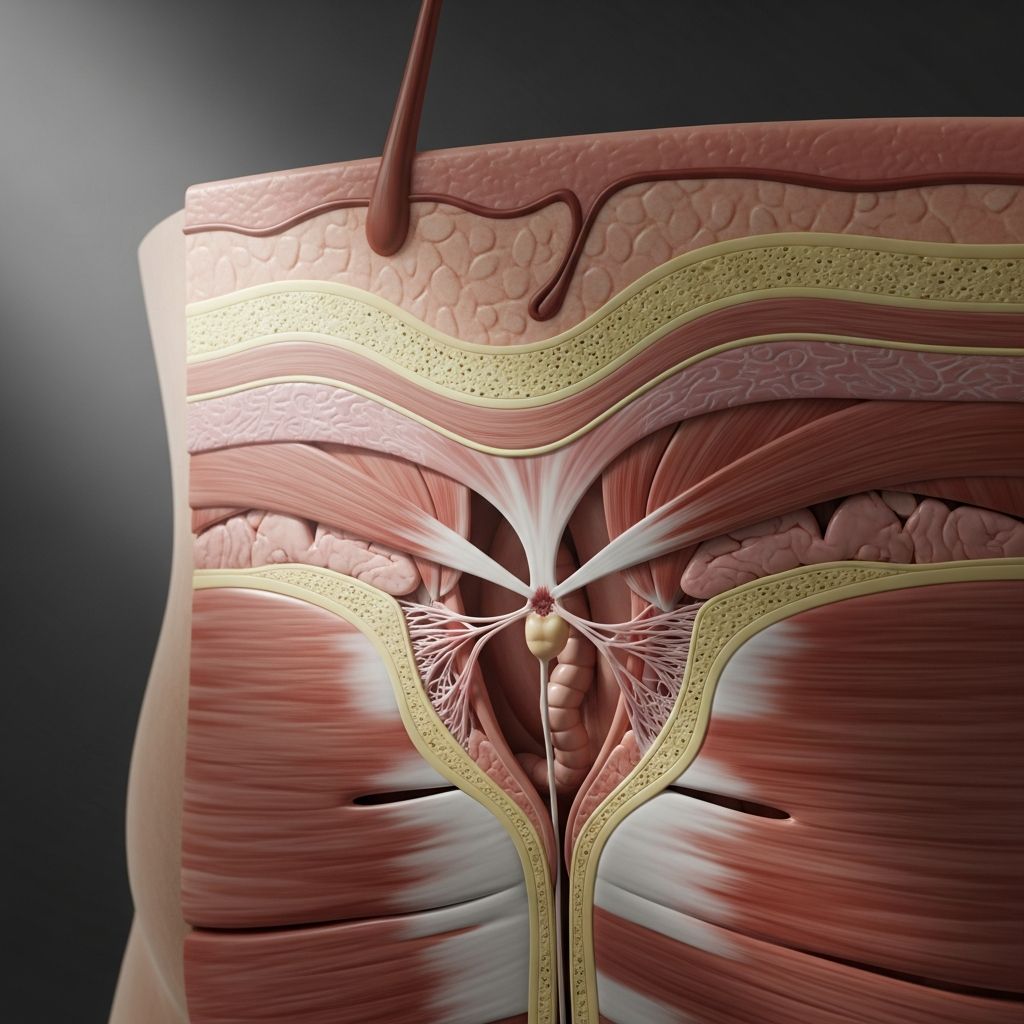
A hernia develops when an organ or fatty tissue squeezes through a weak spot in a surrounding muscle or connective tissue, often forming a noticeable bulge. This condition affects millions worldwide, with causes stemming from a mix of congenital weaknesses and acquired pressures on the body.
What Is a Hernia?
Hernias occur when internal structures protrude through weakened areas in the muscle wall that normally holds them in place. Most commonly, this involves the abdomen, where intestines or tissue push through gaps in the abdominal wall, creating a bulge that may cause pain, discomfort, or no symptoms at all. The peritoneum, a protective membrane lining the abdominal cavity, often plays a role as tissue pushes through weaknesses in it. Unlike muscle strains, hernias do not resolve on their own and can lead to serious complications if untreated, such as strangulation where blood flow is cut off.
Understanding the precise mechanics helps in prevention and early detection. Pressure builds in the abdomen from various daily activities or chronic conditions, exploiting any pre-existing muscle or tissue vulnerabilities. Common sites include the groin, belly button, and upper abdomen, with prevalence increasing with age and certain lifestyles.
Types of Hernias
Hernias are classified by their location and the tissues involved. Each type has distinct causes tied to anatomy and stressors.
- Inguinal hernia: The most common type, occurring in the groin when intestinal tissue loops through the inguinal canal. More frequent in men due to the natural pathway for testicles descending during fetal development.
- Femoral hernia: Appears in the upper thigh near the groin, pushing through the femoral canal. Primarily affects women due to wider pelvic structures.
- Hiatal (or hiatus) hernia: Part of the stomach bulges through the diaphragm into the chest cavity. Common in those over 50, often linked to age-related diaphragm weakening.
- Umbilical hernia: Emerges near the belly button through a natural weak spot. Frequent in infants but also adults with obesity or pregnancy.
- Epigastric hernia: Develops between the belly button and breastbone, where fat or tissue pokes through the abdominal wall.
- Incisional hernia: Forms at sites of previous surgical scars, exploiting weakened scar tissue.
Other rare types include congenital diaphragmatic hernias present at birth. Each type shares core causal pathways but differs in location-specific risks.
Causes of Hernias
Hernias result from two primary factors: muscle or connective tissue weakness and increased abdominal pressure. These often combine, with weakness providing the ‘door’ and strain supplying the ‘push’. Congenital factors create inherent vulnerabilities, while lifestyle and health issues exacerbate them over time.
Muscle Weakness Origins: Some individuals are born with thinner or weaker abdominal walls, particularly in the groin or navel areas. Aging naturally degrades muscle tone and collagen in connective tissues, making older adults more susceptible. Previous surgeries leave scars that never regain full strength, setting the stage for incisional hernias. Injuries or chronic conditions like cystic fibrosis further compromise tissue integrity.
Strain and Pressure Factors: Everyday actions that spike intra-abdominal pressure are major culprits. Heavy lifting improperly engages core muscles unevenly, forcing tissue through weak points. Chronic coughing from smoking, COPD, or respiratory infections repeatedly stresses the abdomen. Pregnancy imposes dual burdens: the growing uterus stretches abdominal muscles, and hormonal changes soften connective tissues.
How Does Heavy Lifting Cause a Hernia?
Lifting heavy objects dramatically increases intra-abdominal pressure—up to 100 times normal levels during improper lifts. Without engaging core stabilizers like the transverse abdominis, this pressure targets weak spots, especially inguinal areas. Weightlifters and manual laborers face higher risks; studies show sudden, explosive lifts without bracing amplify dangers. Proper technique—bracing the core, using legs, and avoiding overhead strains—mitigates this substantially.
Related Stories



Does Pregnancy Cause Hernias?
Pregnancy significantly elevates hernia risk, particularly umbilical and ventral types. The expanding uterus thins abdominal muscles, while relaxin hormone loosens ligaments for birth preparation. Multiple pregnancies compound this, and C-sections introduce incision sites prone to herniation. Postpartum, weakened tissues may not fully rebound, especially with obesity. About 10-20% of parous women develop hernias, per clinical observations.
Can Obesity Cause Hernias?
Excess body weight chronically elevates abdominal pressure, stretching muscles and promoting fat deposition that weakens walls. Obese individuals have 2-3 times higher rates of umbilical and incisional hernias. Visceral fat around organs adds direct strain. Weight loss reduces recurrence post-surgery by 50% in some studies.
Other Common Causes
- Chronic Constipation or Straining: Repeated bowel straining mimics lifting pressure, common in low-fiber diets or medications.
- Smoking: Nicotine impairs collagen synthesis, weakening tissues; coughing adds strain.
- Ascites or Abdominal Fluid: Liver disease causes fluid buildup, pressing outward.
- Peritoneal Dialysis: Introduces fluid into the abdomen, increasing pressure.
Risk Factors for Developing a Hernia
Beyond direct causes, several modifiable and non-modifiable factors heighten susceptibility.
| Risk Factor | Description | Impact Level |
|---|---|---|
| Age >50 | Muscle atrophy and tissue degeneration | High |
| Obesity | Constant pressure and poor healing | High |
| Pregnancy | Stretching and hormonal effects | High |
| Smoking | Tissue weakening + cough | Moderate |
| Chronic Cough/COPD | Repetitive straining | Moderate |
| Heavy Lifting Jobs | Frequent high-pressure events | Moderate |
| Previous Surgery | Scar weakness | High for incisional |
| Family History | Genetic tissue weakness | Low-Moderate |
Men face higher inguinal hernia rates due to anatomy, while women predominate in femoral types. Premature infants and those with undescended testicles have congenital risks.
How Can You Prevent Hernias?
Prevention targets modifiable risks through lifestyle. Maintain healthy weight via balanced diet and exercise to lessen abdominal load. Strengthen core with planks, not crunches, to build supportive muscles. Lift properly: bend knees, keep loads close, exhale on exertion. Quit smoking to preserve tissue health and curb coughing. Treat constipation with fiber (25-30g/day), hydration, and stool softeners. For high-risk jobs, use trusses or belts judiciously. Pregnant women benefit from prenatal yoga focusing on posture.
When to See a Doctor
Seek care for any new bulge, especially if painful, enlarging, or changing color. Emergency signs: severe pain, nausea, vomiting, redness—indicating possible strangulation. Early intervention prevents complications.
Frequently Asked Questions (FAQs)
Can hernias go away on their own?
No, hernias do not heal without intervention as the tissue defect persists. Watchful waiting suits asymptomatic cases, but surgery is standard for symptomatic ones.
Are hernias hereditary?
Partially; genetic weaknesses in connective tissue increase risk, but environment plays a larger role.
Does exercise cause hernias?
Strenuous, improper exercise can, but core-strengthening routines prevent them.
How common are hernias in children?
Umbilical hernias affect up to 20% of newborns, often closing by age 4; inguinal types may need surgery.
Can you live with a hernia untreated?
Yes, if small and asymptomatic, but risks rise over time.
References
- Hernia: Symptoms, types, causes, treatment, and more — Medical News Today. 2023-05-03. https://www.medicalnewstoday.com/articles/142334
- Overview: Hernias – InformedHealth.org — NCBI Bookshelf. 2023-09-12. https://www.ncbi.nlm.nih.gov/books/NBK395554/
- Stay on a Healthy Path With Hernia Prevention — Community Health Network. 2021-01-28. https://www.ecommunity.com/healthminute/2021/stay-healthy-path-hernia-prevention
- Hernia: Types, Symptoms, Causes, and More — Healthline. 2023-11-15. https://www.healthline.com/health/hernia
- Hernia — MedlinePlus (U.S. National Library of Medicine). 2024-02-20. https://medlineplus.gov/hernia.html
Similar Articles








Read full bio of medha deb