Hernia Symptoms: Types, Signs & When to Seek Care
Understand hernia symptoms, recognize warning signs, and know when medical attention is necessary.
Understanding Hernias: A Comprehensive Guide to Symptoms and Signs
A hernia occurs when tissue, such as part of the intestine, pushes through a weak spot in the abdominal muscles or surrounding tissue. This protrusion creates a bulge or lump that may be visible or felt under the skin. While many hernias are harmless and cause no symptoms, others can become painful and require medical intervention. Understanding the signs and symptoms of hernias is essential for recognizing when professional medical care is needed.
What Is a Hernia?
A hernia develops when an organ or tissue pushes through an opening in the muscle or connective tissue that normally contains it. This weakness can be present at birth or develop over time due to increased abdominal pressure, repetitive strain, or injury. The resulting bulge may appear and disappear depending on your position or activity level. Hernias most commonly occur in the abdomen and groin areas, though they can develop in other parts of the body.
Common Hernia Symptoms
Not all hernias produce noticeable symptoms, and the severity varies considerably among individuals. However, when symptoms do appear, they typically include:
- A visible bulge or lump in the affected area, particularly when standing, coughing, or straining
- Pressure, heaviness, or fullness in the affected region
- A dull ache or burning sensation at the hernia site
- Discomfort or pain when bending over, lifting heavy objects, or coughing
- A sensation of tugging or pinching
- Pain and swelling around the testicles in inguinal hernias that descend into the scrotum
In many cases, the bulge is more noticeable when you’re upright and may reduce or disappear when you lie down. The bulge often emerges during activities that increase intra-abdominal pressure, such as straining during bowel movements, urination, heavy lifting, or vigorous coughing and sneezing.
Inguinal Hernias: The Most Common Type
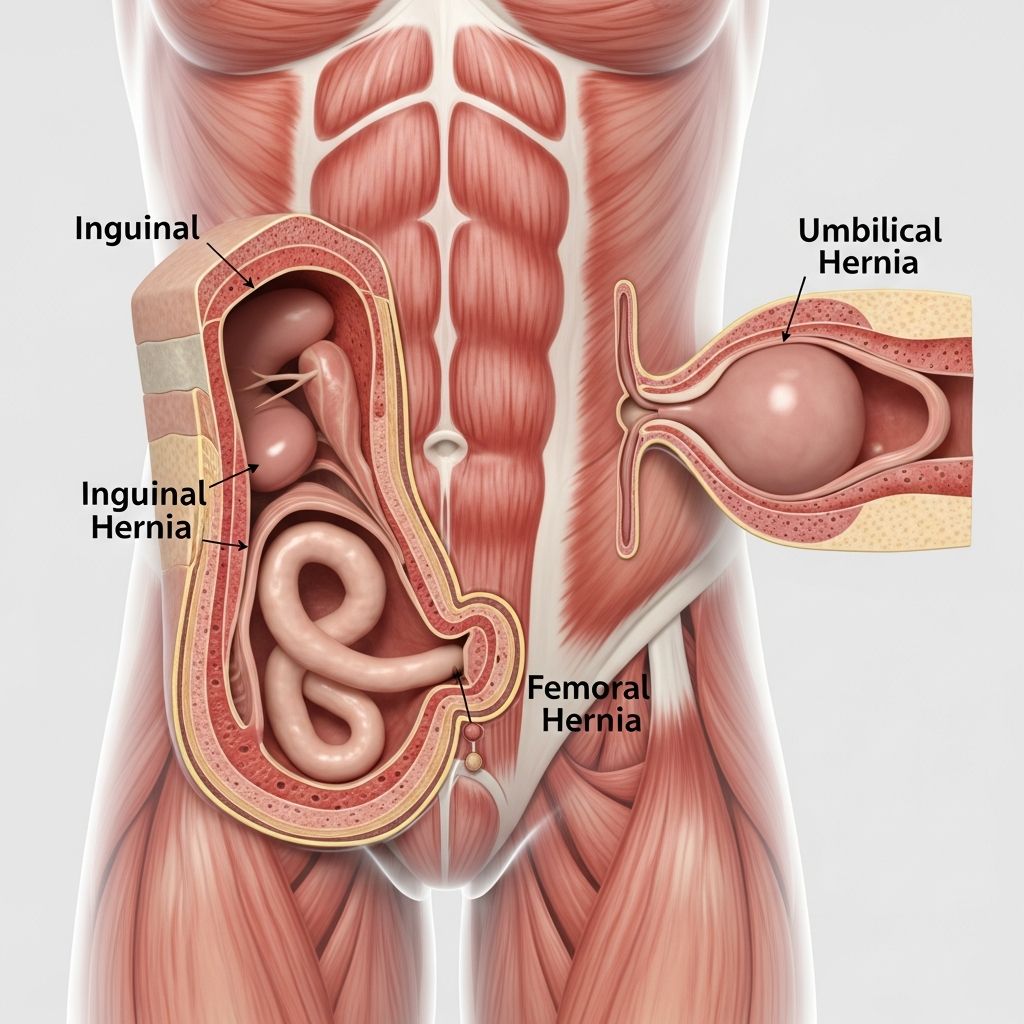
Inguinal hernias are the most frequently occurring type of hernia. These develop when tissue protrudes through the inguinal canal, which carries the spermatic cord in men or a ligament supporting the uterus in women. Inguinal hernias typically appear as a bulge on either side of the pubic bone and become more prominent when you are upright or straining.
In men, weak spots usually occur where the spermatic cord enters the scrotum. In women, hernias may develop where connective tissue attaches to tissue surrounding the pubic bone. Inguinal hernias can extend into the scrotum in men, causing additional pain and swelling in that area.
Hernias in Children and Infants
Newborns and young children can develop inguinal hernias due to a weakness in the abdominal wall present at birth. In infants, a hernia may only be visible when the baby is crying, coughing, or straining during a bowel movement. Parents may notice the baby is more irritable than usual and has less appetite.
Related Stories



In older children, hernias become more noticeable when the child coughs, strains during bowel movements, or stands for extended periods. Any visible bulge in a child’s groin or abdomen warrants evaluation by a healthcare professional.
Causes and Risk Factors
Several factors can contribute to hernia development. Some hernias have no apparent cause, while others result from specific circumstances that weaken the abdominal wall or increase intra-abdominal pressure:
- Increased pressure within the abdomen
- Preexisting weak spots in the abdominal wall
- Straining during bowel movements or urination
- Strenuous physical activity, particularly heavy lifting
- Standing or walking for many hours daily
- Pregnancy and childbirth
- Frequent coughing or sneezing
- Traumatic injury or abdominal surgery
- Chronic constipation or diarrhea
- Smoking, which causes chronic cough
Risk factors also include age (hernias become more common as you grow older), male gender (men experience inguinal hernias far more frequently than women), and family history of hernias.
Types of Hernias and Their Unique Symptoms
Different types of hernias occur in different body locations and may present with distinct symptoms. Understanding these variations helps in recognizing when a hernia may be present.
Inguinal Hernias
As previously noted, inguinal hernias present with a bulge near the pubic bone or groin area, accompanied by pain or discomfort, particularly during physical exertion or when straining.
Femoral Hernias
Femoral hernias occur in the upper thigh and are more common in women. They may cause invisible, unexplained groin pain that doesn’t always produce a visible bulge, making them particularly challenging to diagnose without imaging.
Hiatal Hernias
A hiatal hernia develops when part of the stomach protrudes through the diaphragm into the chest. Rather than a visible bulge, this type typically causes chronic acid reflux, heartburn, and indigestion. These symptoms occur because stomach acid backs up into the esophagus.
Umbilical Hernias
Umbilical hernias appear as a bulge near the belly button, particularly when a baby cries or strains. While common in infants, they usually close on their own by age 2 but may require surgical repair if they persist or become problematic.
Ventral Hernias
Ventral hernias develop in the abdominal wall and may result from abdominal surgery. They present as a bulge along the surgical scar or incision site.
When to Seek Medical Attention
While not all hernias require immediate treatment, certain situations warrant prompt medical evaluation. You should see a healthcare professional if you notice a painful or noticeable bulge in your groin on either side of your pubic bone. The bulge is likely to be more noticeable when standing, and you can usually feel it by placing your hand over the affected area.
Additionally, consult a healthcare provider if you experience frequent discomfort associated with a suspected hernia, or if a hernia is visible and bothersome to you cosmetically or functionally.
Warning Signs: When to Seek Emergency Care
Certain symptoms indicate a potentially serious complication requiring immediate medical attention. Seek emergency care right away if you experience any of the following:
- A hernia bulge that turns red, purple, or dark in color
- Sudden, severe pain that rapidly worsens
- Nausea, vomiting, or both
- Fever accompanying hernia symptoms
- Inability to move your bowels or pass gas
- The hernia bulge becomes hard and cannot be pushed back in
- Numbness or tingling sensations around the hernia site
These symptoms may indicate an incarcerated or strangulated hernia, a serious condition where the hernia contents become trapped and cut off from blood supply.
Complications: Understanding the Risks
While many hernias remain benign and asymptomatic, complications can develop, particularly if a hernia is left untreated. Understanding these potential complications underscores the importance of medical evaluation.
Incarceration
An incarcerated hernia occurs when the contents become trapped in the weak spot of the abdominal wall and cannot be pushed back in. This can block the bowel, leading to severe pain, nausea, vomiting, and constipation. Unlike a simple hernia that may reduce or disappear with position changes, an incarcerated hernia remains protruding.
Strangulation
A strangulated hernia develops when an incarcerated hernia cuts off blood flow to the trapped tissue. Without prompt treatment, the affected bowel tissue can die, leading to necrosis. Strangulation is a life-threatening condition requiring immediate emergency surgery.
Pressure on Surrounding Tissues
Most inguinal hernias enlarge over time if not surgically repaired. In men, large hernias can extend into the scrotum, causing significant pain and swelling. The expanding hernia can put pressure on adjacent organs and tissues, leading to increased discomfort and complications.
Diagnosing a Hernia
Diagnosing a hernia typically begins with a physical examination. A healthcare provider can often see or feel the bulge, or it may become apparent when you cough or adjust your position. The provider will check whether they can physically reduce the hernia—pushing it back through the opening—to assess severity.
For some types of hernias, particularly those that are not visibly apparent, imaging studies may be necessary. A computed tomography (CT) scan or ultrasound can help confirm the diagnosis and provide detailed information about the hernia’s size and contents.
Treatment Options
Treatment decisions depend on the hernia type, size, symptoms, and whether complications have developed. Small, asymptomatic hernias often don’t require intervention, though they should be monitored for changes.
Hernias that cause pain, are enlarging, or pose risk of complications typically require surgical repair. Inguinal hernia repair is one of the most commonly performed surgical procedures. Surgery can be performed using traditional open techniques, minimally invasive laparoscopic approaches, or robotic-assisted methods. While surgical repair carries a small risk of complications such as bleeding, infection, or anesthesia reactions, serious complications are uncommon.
Prevention and Management
While you cannot prevent hernias caused by factors present at birth, you can reduce your risk of developing hernias by managing modifiable risk factors. Stop smoking, as it causes chronic coughing that can trigger or worsen hernias. Maintain a healthy weight to reduce abdominal pressure. Use proper lifting techniques when handling heavy objects, and avoid straining during bowel movements or urination.
If you have been diagnosed with a hernia, avoid activities that cause symptoms or increase discomfort. Wear supportive garments or hernia trusses if recommended by your healthcare provider, though these provide temporary support rather than permanent cure.
Frequently Asked Questions
Q: Can a hernia heal on its own without surgery?
A: No, hernias do not heal or go away on their own. The opening in the muscle does not close without surgical repair. However, small, asymptomatic hernias may never cause problems and can be monitored without immediate surgery.
Q: How quickly do hernias grow?
A: Hernias tend to grow over time as the opening continues to weaken and stretch, allowing more tissue to push through. However, the rate of growth varies significantly among individuals. Some hernias remain stable for years, while others enlarge relatively quickly.
Q: Are hernias dangerous?
A: Most hernias are not immediately dangerous, but they can become serious over time. The primary risk is incarceration and strangulation, which can become life-threatening if untreated. This is why medical evaluation is important.
Q: Can you get a hernia from coughing?
A: Frequent, intense coughing can contribute to hernia development or worsen an existing hernia by increasing intra-abdominal pressure. Conditions that cause chronic coughing, such as smoking or respiratory illness, increase hernia risk.
Q: What should I do if I suspect I have a hernia?
A: Schedule an appointment with your healthcare provider for evaluation. If you experience emergency symptoms—severe pain, color changes, fever, nausea, or inability to pass gas—seek immediate medical attention.
References
- Inguinal Hernia: Symptoms & Causes — Mayo Clinic. 2025-09-10. https://www.mayoclinic.org/diseases-conditions/inguinal-hernia/symptoms-causes/syc-20351547
- Hernia: What It Is, Symptoms, Types, Causes & Treatment — Cleveland Clinic. https://my.clevelandclinic.org/health/diseases/15757-hernia
- National Institute of Diabetes and Digestive and Kidney Diseases (NIDDK) — U.S. National Institutes of Health. https://www.niddk.nih.gov/
Similar Articles








Read full bio of Sneha Tete