Herpes Zoster Images: A Complete Shingles Visual Guide
Comprehensive visual guide to herpes zoster (shingles) rashes, stages, complications, and clinical presentations across body regions.
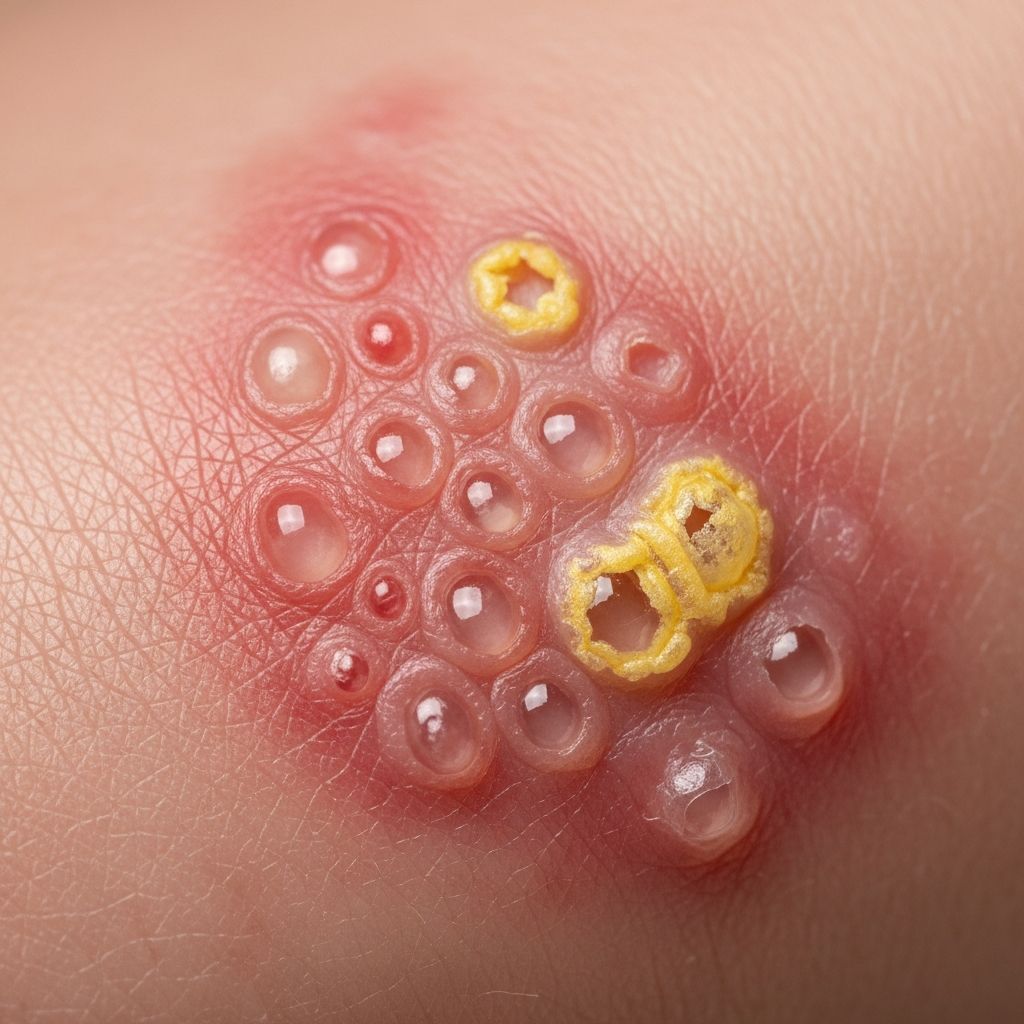
Herpes zoster, commonly known as
shingles
, results from reactivation of the varicella-zoster virus (VZV) in dorsal root ganglia after primary chickenpox infection. This localised, unilateral dermatomal rash presents with pain, vesicles, and potential complications like postherpetic neuralgia. Images below illustrate diverse presentations across age groups, skin types, and anatomical sites.What is the clinical presentation of herpes zoster?
The hallmark of herpes zoster is a
painful, vesicular eruption
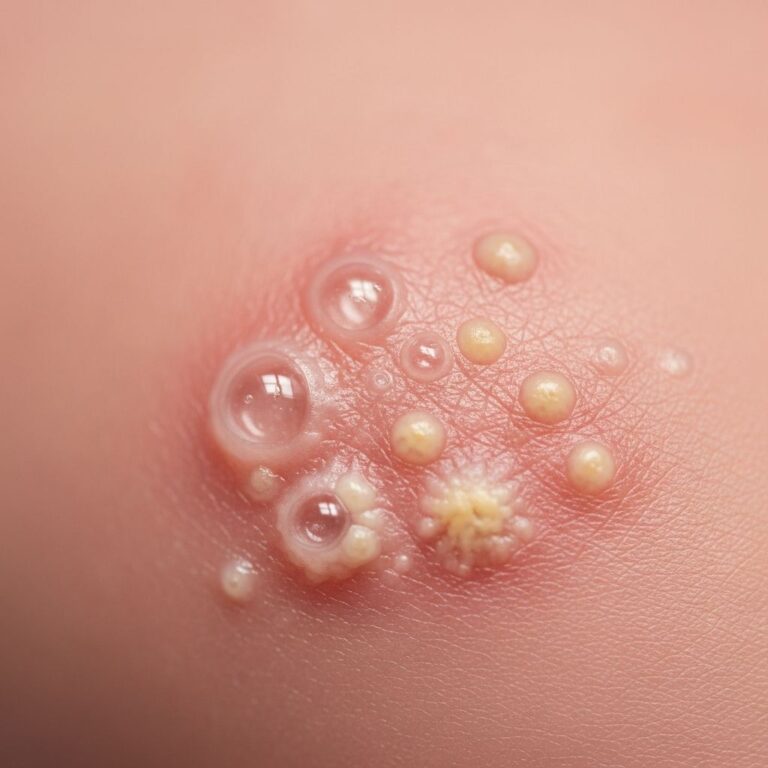
confined to one or two adjacent dermatomes, typically unilateral with a sharp midline cutoff. Prodromal pain, tingling, or burning precedes the rash by 1-3 days, often with fever, headache, or malaise. The rash evolves from erythematous papules to grouped vesicles on an erythematous base, progressing to pustules, ulcers, and crusts over 7-10 days. Healing occurs in 2-4 weeks in uncomplicated cases, though pain may persist.- Prodrome: Localised neuropathic pain without visible changes; may mimic cardiac or abdominal issues if thoracic/lumbar.
- Erythema and papules: Initial red macules/papules in dermatomal distribution.
- Vesicles: Clear, then cloudy fluid-filled blisters; highly contagious.
- Pustules and crusting: Vesicles rupture, forming golden crusts; secondary bacterial infection possible.
- Resolution: Scabs shed, leaving hypopigmentation or scarring in severe cases.
Images of herpes zoster on the trunk (thoracic dermatomes)
Thoracic dermatomes (T4-T12) are most commonly affected, presenting as band-like rashes wrapping around the chest or back. These images show typical evolution in adults.
- Early thoracic herpes zoster: Erythematous papules on the right T8 dermatome, pre-vesicular stage. Pain described as burning.
- Grouped vesicles on trunk: Multiloculated blisters on an erythematous base, left T6-T7, in a 65-year-old.
- Crusting phase: Pustular lesions drying to black eschars on the back, with early postherpetic erythema.
- Bullous herpes zoster: Large tense bullae on the abdomen, uncommon variant requiring drainage.
- Multidermatomal: Adjacent T5-T8 involvement in an immunocompromised patient, risking dissemination.
Images of herpes zoster on the neck and limbs (cervical, lumbar, sacral dermatomes)
Cervical (neck, arms), lumbar (flank, legs), and sacral (buttocks, genitals) distributions vary by age; ophthalmic increases with age.
- Cervical zoster: Vesicles along C5 dermatome extending to shoulder, with tender lymphadenopathy.
- Lumbar herpes zoster: Band-like rash on left flank (L1-L2), mimicking renal colic initially.
- Sacral involvement: Crusted lesions on gluteal cleft (S2-S3), associated with urinary retention risk.
- Arm zoster: Linear vesicles on radial forearm (C7), in a child with mild symptoms.
- Leg distribution: Pustules on anterior thigh (L3), with motor weakness in Ramsay Hunt-like presentation.
Images of ophthalmic herpes zoster (V1 dermatome)
Involving the ophthalmic branch of trigeminal nerve (V1), this affects 10-20% of cases, risking keratitis, uveitis, or vision loss. Hutchinson sign (nasal tip vesicles) indicates ocular involvement.
- V1 distribution: Forehead vesicles respecting midline, with eyelid oedema.
- Hutchinson sign positive: Nasal bridge and tip lesions, urgent ophthalmology referral needed.
- Lid involvement: Vesicles on upper eyelid causing ptosis, with conjunctival injection.
- Resolved ophthalmic zoster: Scarring and hypopigmentation on brow, post-treatment.
Related Stories



Images of herpes zoster with otalgia (Ramsay Hunt syndrome)
Ramsay Hunt syndrome (herpes zoster oticus) involves cranial nerve VII, causing facial palsy, ear pain, vesicles in the external auditory canal, and hearing loss. Affects 1% of zoster cases.
- Ear canal vesicles: Vesicles on pinna and auditory meatus with ipsilateral facial droop.
- Facial palsy: Vesicular rash on tongue and ear, Bell’s palsy mimic.
- Postauricular: Crusting behind ear with vesicles in mouth.
Images of zoster in children
Children often have milder, rash-predominant zoster without severe pain; family history of recent chickenpox triggers reactivation.
- Pediatric thoracic: Sparse papulovesicles on chest in a 5-year-old.
- Abdominal in toddler: Mild erythema without bullae.
Images of zoster in brown and black skin
In darker skin phototypes (Fitzpatrick IV-VI), inflammation is subtler; hyperpigmentation or hypopigmentation follows healing.
- Brown skin thoracic: Vesicles on hyperpigmented base, Polynesian patient.
- Black skin lumbar: Pustules with prominent post-inflammatory hyperpigmentation.
- Resolved lesions: Vitiligo-like hypopigmentation on arms.
Images of complications of herpes zoster
Complications include postherpetic neuralgia (PHN, pain >90 days in 10-20% over 60), bacterial superinfection, motor paresis, visceral involvement, and dissemination in immunocompromised.
- Postherpetic neuralgia: Erythema persisting 3 months post-rash on T10.
- Secondary infection: Impetiginised crusts with honey-colored exudate.
- Motor zoster: Wrist drop from radial nerve involvement.
- Disseminated zoster: Widespread lesions in HIV patient.
Histology of herpes zoster
Skin biopsy shows intraepidermal vesicles with acantholysis, ballooning degeneration, and VZV multinucleated giant cells. Dermal inflammation with lymphocytes.
- Intraepidermal vesicle: Tzanck smear positive for viral changes.
Frequently Asked Questions
What causes herpes zoster?
Reactivation of latent VZV in sensory ganglia due to waning cell-mediated immunity, age >50, immunosuppression, or stress.
Is herpes zoster contagious?
Vesicular fluid transmits VZV to non-immune contacts causing chickenpox, not zoster. Contagious until crusts form.
How is herpes zoster treated?
Antivirals (acyclovir 800mg 5x/day x7d, valacyclovir, famciclovir) within 72h reduce duration/PHN risk. Analgesics, calamine for rash.
Who should get the shingles vaccine?
Adults >50; recombinant zoster vaccine (Shingrix) >90% effective. Avoid live vaccine in immunocompromised.
Can children get shingles?
Yes, rare; milder course. Vaccination reduces risk.
References
- Herpes zoster — DermNet NZ. 2024-02. https://dermnetnz.org/topics/herpes-zoster
- Herpes zoster (syn. shingles) — Primary Care Dermatology Society. 2023. https://www.pcds.org.uk/clinical-guidance/herpes-zoster
- Shingles Overview: Types, Causes, Symptoms, and Treatment — Pfizer. 2024. https://www.pfizer.com/disease-and-conditions/shingles
- Herpes Zoster and Postherpetic Neuralgia: Prevention and Management — American Academy of Family Physicians. 2017-11-15. https://www.aafp.org/pubs/afp/issues/2017/1115/p656.html
- Herpes zoster: A Review of Clinical Manifestations and Management — National Library of Medicine (PMC). 2022. https://pmc.ncbi.nlm.nih.gov/articles/PMC8876683/
Similar Articles








Read full bio of Sneha Tete