Herpetic Whitlow: Comprehensive Guide To Symptoms, Treatment
Painful viral finger infection caused by herpes simplex: symptoms, causes, diagnosis, treatment, and prevention strategies.
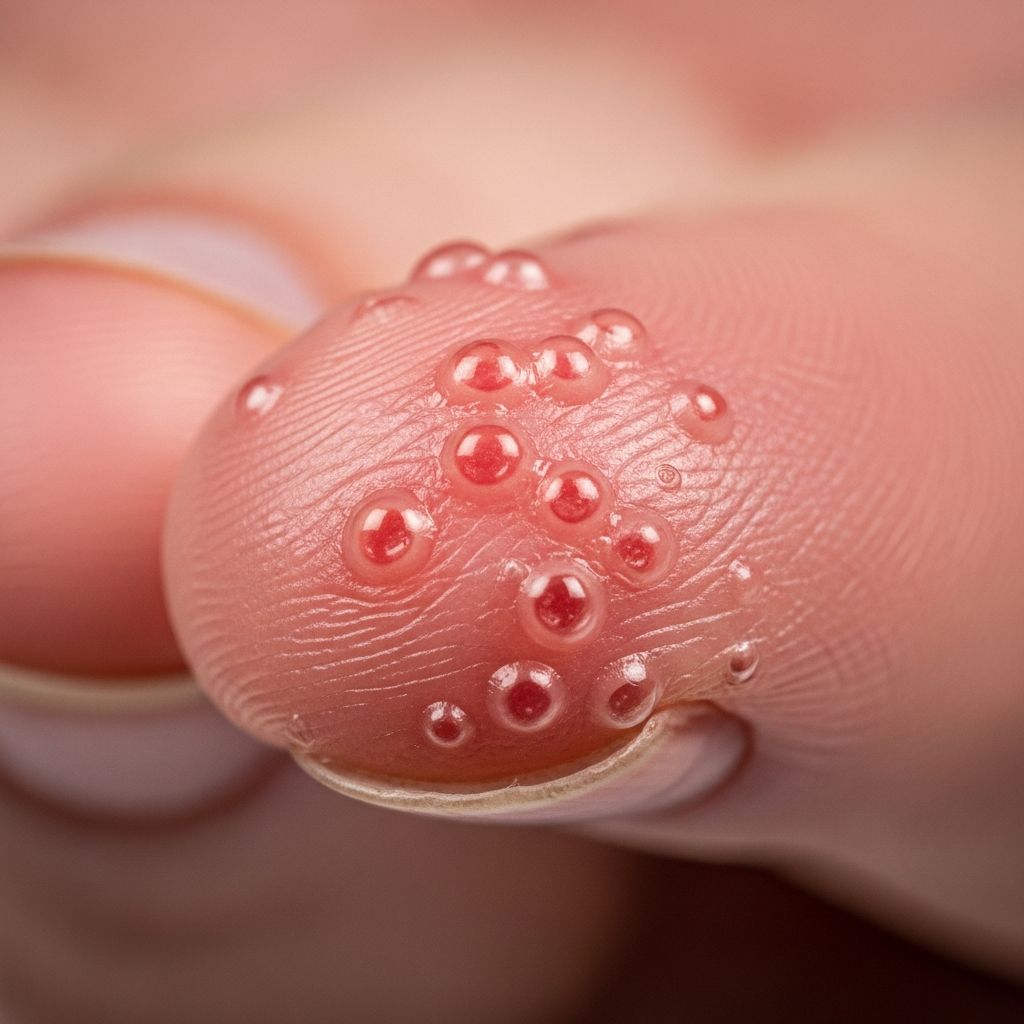
Herpetic whitlow is a painful viral cutaneous infection that typically affects the distal fingers or thumbs, and occasionally the toes. It results from infection with the herpes simplex virus (HSV), leading to localized redness, swelling, and fluid-filled blisters.
What is herpetic whitlow?
Herpetic whitlow, also known as whitlow finger, is an infection caused by the herpes simplex virus (HSV), either type 1 (HSV-1) or type 2 (HSV-2). HSV-1 is primarily associated with oral herpes (cold sores), while HSV-2 is linked to genital herpes, but both can cause whitlow. The virus enters through small cuts or abrasions on the skin, particularly around the fingertips, causing inflammation in the soft tissues.
This condition is often misdiagnosed as a bacterial infection like paronychia, leading to inappropriate treatments such as antibiotics, which are ineffective against viruses. In children, it frequently arises from autoinoculation via thumb-sucking during oral herpes outbreaks, while adults may acquire it through contact with genital lesions or occupational exposure in healthcare settings.
Who gets herpetic whitlow?
Herpetic whitlow affects individuals of all ages but is more common in certain groups. Young children are prone due to thumb-sucking and primary oral HSV infections. Healthcare workers, such as dentists and nurses, face higher risk from exposure to patients’ oral secretions or lesions.
People with a history of cold sores or genital herpes are at increased risk, as are those with weakened immune systems, including individuals with diabetes, undergoing chemotherapy, or experiencing immunosuppression. Occupational exposure in medical fields heightens susceptibility, emphasizing the need for protective measures.
What causes herpetic whitlow?
- Direct contact with HSV-infected skin or secretions, such as from cold sores, genital herpes lesions, or saliva.
- Autoinoculation in children via thumb-sucking during oral herpes episodes.
- Occupational exposure for dental and healthcare professionals handling infected patients.
- Entry through minor skin breaks on fingers or thumbs.
What are the clinical features of herpetic whitlow?
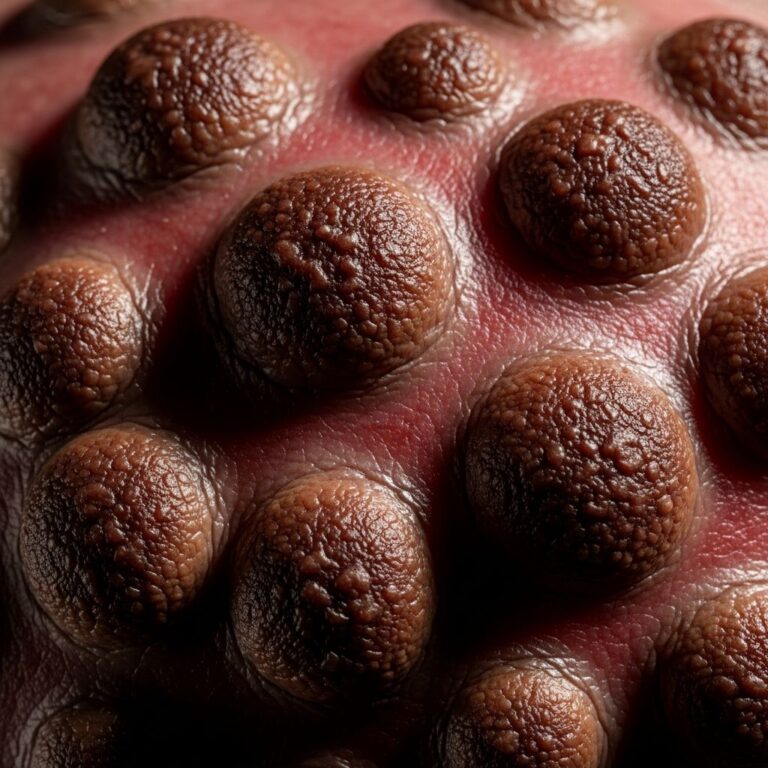
Symptoms typically begin with tingling, burning, or itching at the fingertip, progressing over days to swelling, redness, and clusters of painful, fluid-filled blisters. The affected area becomes tender, with possible lymph node swelling in the elbow or armpit, fever, and red streaks indicating possible spread.
Blisters may coalesce, rupture, and form shallow ulcers before crusting over. In primary infections, symptoms are more severe, lasting 2-4 weeks without treatment. Recurrent episodes are milder, with fewer, smaller blisters. Skin may darken or redden, and general malaise or high temperature can occur.
Diagnosis
Diagnosis is primarily clinical, based on characteristic clustered vesicles on an erythematous base and history of HSV exposure. Differential diagnoses include bacterial paronychia, felon, or fungal infections, which may require swab cultures to rule out.
Confirmation involves Tzanck smear showing multinucleated giant cells, viral culture, PCR testing, or immunofluorescence from blister fluid. In ambiguous cases, biopsy reveals intraepidermal vesicles with ballooning degeneration and HSV antigens.
Related Stories



Treatment of herpetic whitlow
While herpetic whitlow often resolves spontaneously in 2-4 weeks, early antiviral therapy shortens duration and severity, ideally within 48 hours of symptom onset. Oral antivirals include acyclovir (400 mg five times daily for 7-10 days), valacyclovir, or famciclovir.
Topical acyclovir ointment provides limited benefit. Pain management uses acetaminophen or ibuprofen. Keep the area clean, dry, and covered with dressings; avoid draining blisters to prevent bacterial superinfection or spread.
For recurrent cases or immunocompromised patients, suppressive daily antivirals reduce outbreak frequency. Antibiotics are reserved for secondary bacterial infections. Supportive care includes elevation, cool compresses, and hygiene.
Complications
- Secondary bacterial infection leading to cellulitis or osteomyelitis.
- Herpetic paronychia with nail dystrophy.
- Recurrent episodes, though milder.
- Rare systemic dissemination in immunocompromised individuals.
Prevention of herpetic whitlow
- Wear gloves during contact with HSV lesions, especially in healthcare settings.
- Avoid touching active cold sores or genital herpes sores.
- Discourage thumb-sucking in children with oral herpes.
- Maintain hand hygiene and cover cuts.
- Prophylactic antivirals for frequent recurrences or high-risk professions.
Recurrent herpetic whitlow
HSV establishes latency in sensory ganglia, allowing reactivation triggered by fever, stress, illness, sun exposure, or immunosuppression. Recurrences are less severe, shorter, and less painful than primary infections.
Herpetic whitlow in children
In pediatric cases, herpetic whitlow often stems from autoinoculation during primary gingivostomatitis via thumb-sucking. Symptoms mirror adult presentations but may be more widespread. Early antivirals are recommended, and parents should prevent nail-biting or sucking.
Occupational herpetic whitlow
Dental professionals, physicians, and nurses are at elevated risk from exposure to oral or genital HSV. Prevention includes gloving, eye protection, and avoiding procedures on active lesions. Prophylactic valacyclovir may be considered post-exposure.
Frequently Asked Questions
Is herpetic whitlow contagious?
Yes, until lesions crust over. Avoid direct contact, sharing items, or touching eyes/mucous membranes.
How long does herpetic whitlow last?
2-4 weeks without treatment; antivirals shorten to 7-10 days.
Can I pop the blisters?
No, it increases pain, bacterial risk, and viral spread.
Does herpetic whitlow go away on its own?
Yes, but treatment accelerates healing and reduces severity.
Is it caused by bacteria?
No, it’s viral; antibiotics won’t help unless secondarily infected.
References
- Herpetic whitlow: Symptoms, causes, and treatment — Medical News Today. 2023-10-12. https://www.medicalnewstoday.com/articles/317701
- Herpetic whitlow (whitlow finger) — NHS. 2023-08-15. https://www.nhs.uk/conditions/herpetic-whitlow/
- Herpetic Whitlow: The Finger Infection That’s Often Misunderstood — Call on Doc. 2024-05-20. https://www.callondoc.com/en/blogs/herpetic-whitlow-the-finger-infection-thats-often-misunderstood
- Herpetic Whitlow What Causes It & How to Treat in 2025 — Bangkok Safe Clinic. 2025-01-10. https://www.bangkoksafeclinic.com/herpetic-whitlow/
- Herpetic Whitlow – StatPearls — NCBI Bookshelf / NIH. 2023-11-03. https://www.ncbi.nlm.nih.gov/books/NBK482379/
- Herpetic Whitlow — DermNet NZ. 2024-02-18. https://dermnetnz.org/topics/herpetic-whitlow
Similar Articles








Read full bio of Sneha Tete