HIDA Scan: What It Is, Purpose, Procedure & Results
Learn everything about the HIDA scan: purpose, preparation, procedure, risks, results, and when it's used to diagnose gallbladder issues.
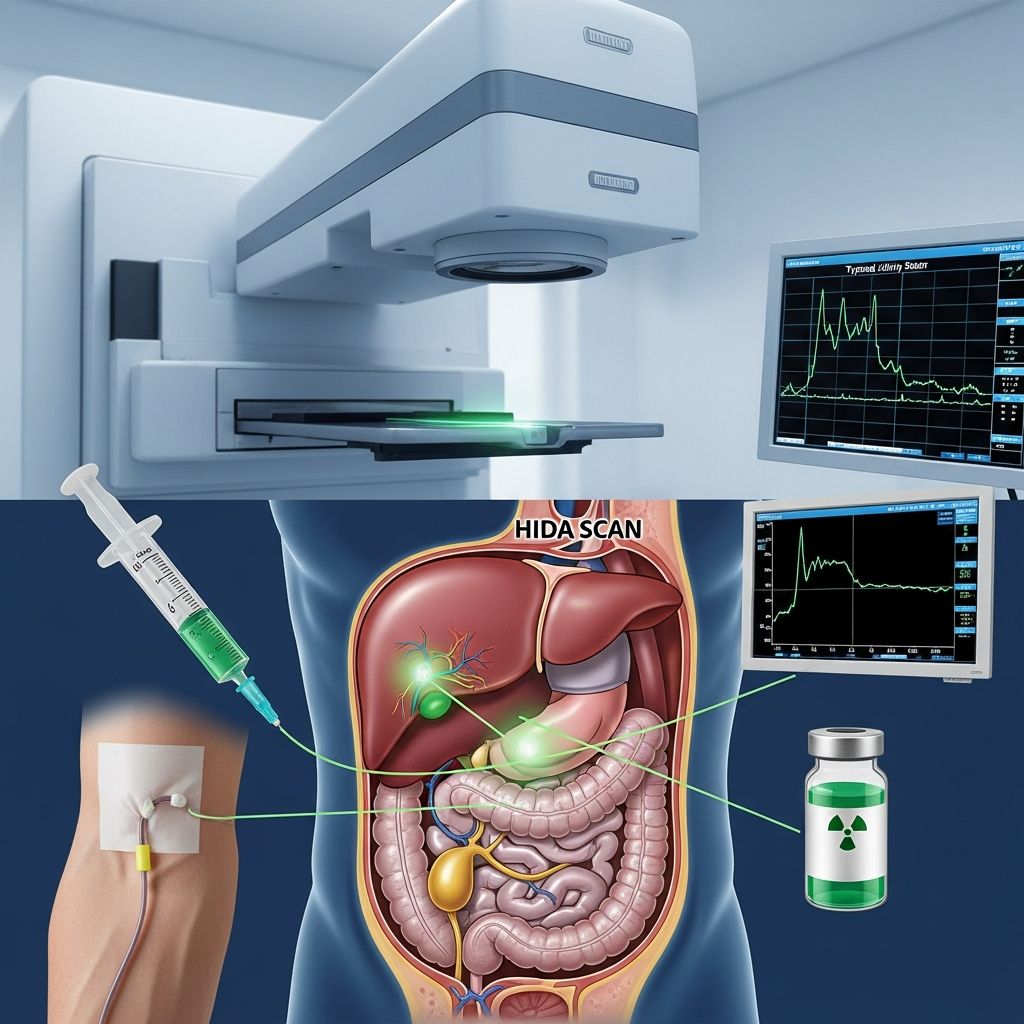
The HIDA scan, also known as hepatobiliary iminodiacetic acid scan or cholescintigraphy, is a nuclear medicine imaging test that evaluates the function of the liver, gallbladder, bile ducts, and small intestine. It uses a small amount of radioactive tracer to track bile flow, helping diagnose conditions like cholecystitis or bile duct obstructions that structural imaging like ultrasound may miss.
What Is a HIDA Scan?
A
HIDA scan
(hepatobiliary iminodiacetic acid scan) is a noninvasive diagnostic procedure that visualizes the hepatobiliary system. Technetium-99m labeled iminodiacetic acid derivatives are injected intravenously, taken up by the liver, excreted into bile, and tracked via gamma camera imaging. This reveals bile production, storage in the gallbladder, and flow into the duodenum.Unlike ultrasound or CT scans, which excel at structural abnormalities like gallstones, HIDA focuses on
functionality
—such as gallbladder ejection fraction (GEF), bile duct patency, and sphincter of Oddi function. It’s particularly valuable when symptoms persist despite normal anatomy on other tests.Purpose of a HIDA Scan
HIDA scans diagnose functional disorders of the biliary system. Common indications include:
- Acute or chronic
cholecystitis
(gallbladder inflammation) - **Bile duct obstruction** or blockages
- **Biliary dyskinesia** or poor gallbladder emptying
- **Biliary atresia** in infants (congenital bile duct absence)
- Post-surgical complications like bile leaks or fistulas
- Sphincter of Oddi dysfunction
- Liver transplant evaluation
- Biliary stent patency assessment
It measures gallbladder ejection fraction, bile excretion rate, and detects leaks by observing tracer pooling outside normal pathways.
Who Might Need a HIDA Scan?
Doctors order HIDA scans for patients with:
- Right upper quadrant abdominal pain, especially post-fatty meals
- Nausea, vomiting, or jaundice
- Unexplained fever/chills suggesting cholangitis
- Suspected biliary dyskinesia (ejection fraction <35-40%)
- Post-cholecystectomy syndrome
- Infants with conjugated hyperbilirubinemia
If ultrasound shows gallstones but symptoms don’t resolve after cholecystectomy, HIDA confirms ongoing biliary issues.
How to Prepare for a HIDA Scan
Preparation ensures accurate results:
- Fast 4-6 hours prior; clear liquids may be allowed
- Inform doctor of medications (e.g., opioids, antispasmodics may interfere)
- No pregnancy/breastfeeding without consultation—radiation risk to fetus/infant
- Remove jewelry/metals; wear gown
- Hydrate well unless contraindicated
Avoid morphine derivatives 24-48 hours prior, as they alter sphincter tone.
HIDA Scan Procedure Step-by-Step
The test lasts 1-4 hours, typically 60-90 minutes.
- Injection: IV radioactive tracer (technetium-99m HIDA compound, low radiation dose equivalent to background over months).
- Initial Imaging: Gamma camera captures liver uptake (5-15 min).
- Gallbladder Filling: Tracer enters gallbladder (30-60 min); non-visualization suggests acute cholecystitis.
- Biliary Clearance: Observe flow to duodenum/small intestine.
- CCK Stimulation (optional): Cholecystokinin injected to contract gallbladder, measuring ejection fraction (>35-40% normal).
- Delayed Images: If needed, for leaks or obstructions (up to 4 hours).
Patient lies still; no pain involved. Morphine may be used if cystic duct obstruction suspected to promote gallbladder filling.
Related Stories



How Long Does a HIDA Scan Take?
Standard: 1-1.5 hours. With CCK or delays: up to 4 hours. Dynamic imaging provides real-time data.
HIDA Scan with CCK
Cholescystokinin (CCK) mimics fatty meal, stimulating gallbladder contraction. Ejection fraction calculated as: (pre-contraction counts – post)/pre × 100. Abnormal (<35%) indicates dyskinesia.
| Normal GEF | Abnormal GEF |
|---|---|
| >35-40% | <35% |
| Healthy emptying | Biliary dyskinesia |
CCK avoids false positives from pain medications.
Risks and Side Effects of a HIDA Scan
Minimal risks due to low radiation (5-7 mSv, like CT abdomen):
- Allergic reaction to tracer (rare)
- IV site bruising/soreness
- Radiation exposure (avoid in pregnancy; pump/dump breast milk 24 hours)
- CCK side effects: nausea, abdominal cramping (mild, transient)
99% safe; repeatable if needed.
HIDA Scan Results
Normal: Tracer liver uptake → bile ducts → gallbladder → duodenum within 60 min; GEF >35%.
Abnormal:
- Non-visualized gallbladder: Acute cholecystitis (95% sensitivity)
- Delayed emptying: Chronic cholecystitis
- No duodenal activity: Common bile duct obstruction
- Tracer leak: Bile leak post-surgery
- Low GEF: Dyskinesia → cholecystectomy candidate
Radiologist report integrates with symptoms/history. False positives rare but possible with fasting >24h.
Cost of a HIDA Scan
Average $800-$1,500 USD without insurance; often covered if medically indicated. Varies by location/facility.
After a HIDA Scan
Resume normal activities/diet immediately. Tracer clears via urine/stool in 24-48 hours. Drink fluids. Results in 1-2 days via doctor.
Accuracy and Benefits of HIDA Scans
Benefits: High specificity for acalculous cholecystitis (94%), functional assessment beyond anatomy.
Accuracy: Gold standard for acute cholecystitis if ultrasound equivocal.
Limitations: Overuse noted; Tokyo Guidelines recommend after ultrasound/MRI for suspected cases.
Frequently Asked Questions (FAQs)
Is a HIDA scan painful?
No, just IV injection discomfort; lie still during imaging.
Can I drive after a HIDA scan?
Yes, unless sedated for CCK intolerance.
What if my gallbladder doesn’t show on HIDA?
Indicates acute cholecystitis; urgent intervention needed.
Is radiation from HIDA safe?
Yes, dose comparable to annual background; minimal risk.
How accurate is HIDA for gallstones?
Not for stones (use ultrasound); excels in function.
Can HIDA detect bile leaks?
Yes, highly sensitive for post-op leaks.
This guide empowers informed decisions. Consult your physician for personalized advice.
References
- HIDA Scan: A Complete Guide to Diagnosis and Preparation — Rupa Health. 2023. https://www.rupahealth.com/post/hida-scan-a-complete-guide-to-diagnosis-and-preparation
- HIDA Scan: Preparation, Results, Side Effects, and Cost — Healthline. 2018-08-23. https://www.healthline.com/health/hida-scan
- HIDA scan: Results, side effects, and why it is done — Medical News Today. 2023. https://www.medicalnewstoday.com/articles/320496
- Hepatobiliary Iminodiacetic Acid Scan — NCBI StatPearls. 2023. https://www.ncbi.nlm.nih.gov/books/NBK539781/
- HIDA Scan – The Health Plan — HealthPlan.org. 2023. https://www.healthplan.org/library/articles/hw215119
Similar Articles








Read full bio of medha deb