Hidradenitis Suppurativa Stages: 3 Hurley Levels Explained
Understand the Hurley stages of hidradenitis suppurativa (HS) to guide diagnosis, treatment, and management effectively.
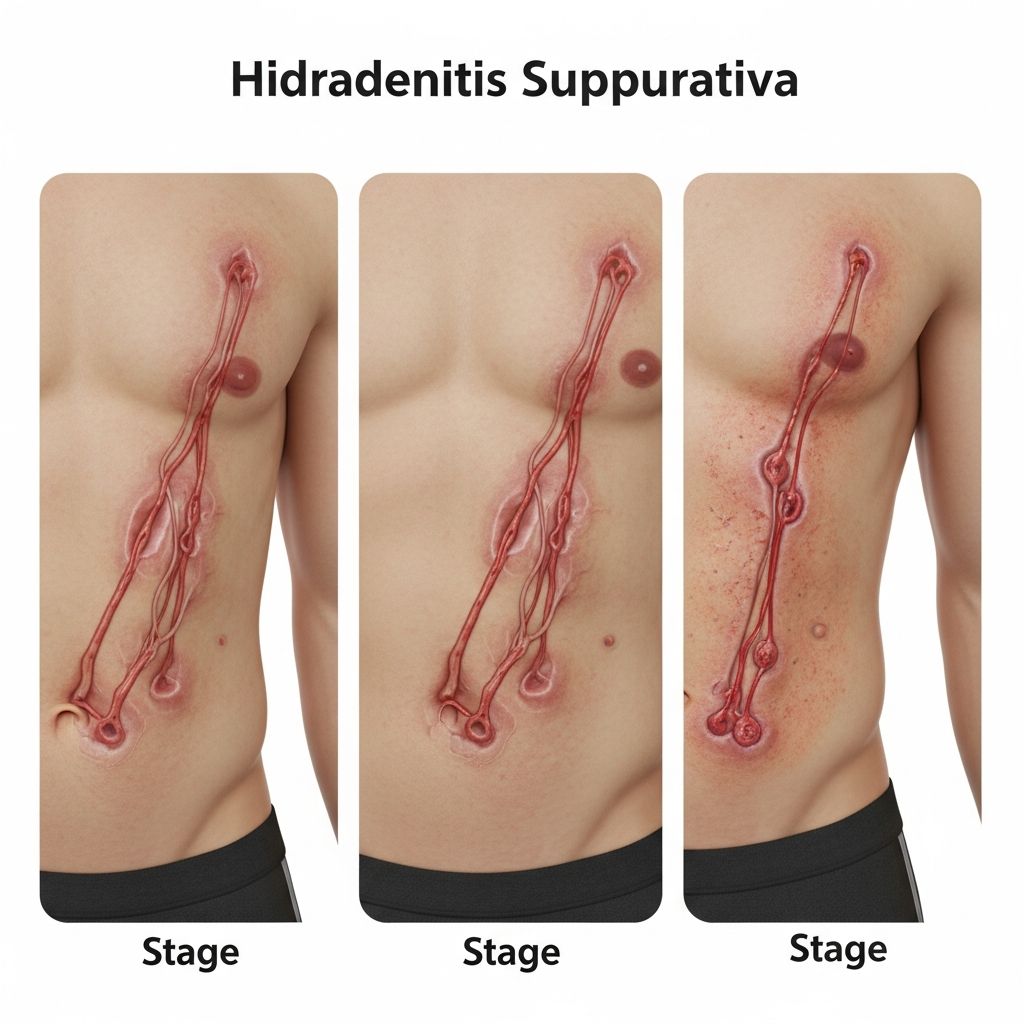
Hidradenitis suppurativa (HS) is a chronic inflammatory skin condition characterized by painful nodules, abscesses, sinus tracts, and scarring primarily in areas where skin rubs together, such as armpits, groin, and under breasts. The Hurley staging system classifies HS into three stages based on severity to guide treatment and communication with healthcare providers.
What Is Hidradenitis Suppurativa?
HS develops from blocked hair follicles leading to inflammation, often starting in adolescence or young adulthood. Common sites include axillae, inguinal areas, inner thighs, perianal regions, buttocks, and inframammary folds. Women typically experience lesions in the groin, axillae, and chest, while men see them in perianal and buttock areas. Prodromal symptoms like fatigue, itching, or burning may precede flares. Diagnosis relies on clinical history: recurrent lesions in typical locations, often with family history; biopsy is rarely needed.
What Are the Stages of Hidradenitis Suppurativa?
The Hurley staging system, introduced over 35 years ago, remains the standard for assessing HS severity. It categorizes disease as mild (Stage I), moderate (Stage II), or severe (Stage III), considering abscesses, sinus tracts, and scarring. Stages can vary by body area, and progression isn’t inevitable but possible without intervention.
Hurley Stage 1 (Mild HS)
In
Stage I
, patients experience single or multiple isolated abscesses or inflammatory nodules without sinus tracts or significant scarring. Lesions appear in skin folds like armpits or groin, healing with possible discoloration but minimal fibrosis.- Typical features: Painful, inflamed lumps resembling boils; no draining tunnels.
- Prevalence: Most common initial presentation.
- Impact: Manageable with early intervention to prevent progression.
Treatment for Stage 1 HS
Focus on control and prevention:
- **Topical therapies**: Clindamycin or resorcinol to reduce inflammation.
- **Lifestyle changes**: Loose clothing, weight management, smoking cessation, avoiding triggers like friction or certain foods.
- **Oral medications**: Short courses of tetracyclines if topicals fail.
- **Procedures**: Intralesional steroids or punch debridement for persistent nodules.
Early action at this stage can halt advancement; track symptoms in a journal.
Hurley Stage 2 (Moderate HS)
**Stage II** involves recurrent abscesses in multiple areas, formation of sinus tracts, and scarring. Lesions are separated but heal with fibrous tracks and obvious marks. Approximately 28% of HS patients fall here.
- Key signs: Repeated flares, drainage from tunnels, early fibrosis.
- Progression risk: Indicates active disease requiring escalation.
Treatment for Stage 2 HS
Treatment intensifies:
- **Antibiotics**: Oral tetracyclines (e.g., 500 mg twice daily for 4 months) or clindamycin-rifampin combination for 10 weeks.
- **Other options**: Oral retinoids, hormonal therapies for select cases.
- **Procedures**: Deroofing for flares; avoid incision and drainage due to 100% recurrence.
- **Biologics consideration**: Early use to prevent worsening.
This stage demands proactive management as symptoms persist without intervention.
Hurley Stage 3 (Severe HS)
**Stage III** features diffuse involvement with interconnected sinus tracts, multiple abscesses, extensive scarring, and chronic drainage across an entire region. It affects 4-29% of patients and poses risks like pain, mobility loss, anemia, or arthritis.
Related Stories



- Characteristics: Network of tunnels, heavy scarring, foul-smelling discharge.
- Complications: Reduced quality of life, potential squamous cell carcinoma in chronic cases.
Treatment for Stage 3 HS
Requires aggressive, multimodal approaches:
- **Biologics**: Adalimumab or infliximab for refractory disease.
- **Surgery**: Wide excision or deroofing for sinus networks.
- **Supportive care**: Pain management, wound care, psychological support.
Severe HS often needs multidisciplinary care.
Treatment Approaches by Stage
| Stage | Symptoms | Primary Treatments |
|---|---|---|
| Stage I (Mild) | Isolated abscesses, no tracts/scars | Topicals (clindamycin), lifestyle, tetracyclines |
| Stage II (Moderate) | Recurrent abscesses, tracts, scars | Oral antibiotics, deroofing, biologics |
| Stage III (Severe) | Diffuse tracts, extensive scars | Biologics, wide surgery, systemic therapy |
Treatments escalate with severity; biologics and surgery play larger roles in advanced stages.
Why Hurley Staging Matters
The system informs treatment, facilitates doctor-patient communication, and sets expectations. Stage I suits topicals; Stage III demands surgery/biologics. Clear staging language like “Hurley Stage II” streamlines discussions.
Talking to Your Doctor About HS Stages
Prepare with:
- Symptom description: “Recurrent lumps with drainage and tunnels.”
- Staging request: “What Hurley stage am I in?”
- Treatment inquiry: “What options fit my stage?”
Advocate for early biologics if progression risks exist.
Lifestyle Management for All Stages
- Avoid skin trauma, use antiseptics.
- Quit smoking, lose weight if applicable.
- Monitor for depression; seek support.
Frequently Asked Questions (FAQs)
What causes hidradenitis suppurativa stages to progress?
Untreated follicular occlusion leads to inflammation, tracts, and scarring; early intervention halts this.
Can HS stages reverse?
Stages don’t reverse but effective treatment prevents worsening and new lesions.
Is surgery needed for all HS stages?
No; useful for Stage II/III tracts, but topicals suffice for Stage I.
How is HS diagnosed by stage?
Clinically via lesions, locations, history; ultrasound aids tract detection.
Are biologics safe for early HS stages?
Considered for moderate-severe; discuss risks/benefits with dermatologist.
HS impacts emotional health; connect with support groups.
References
- What are the Stages of Hidradenitis Suppurativa? And Who the Heck is Hurley? — HS Connect. 2023. https://hsconnect.org/what-are-the-stages-of-hidradenitis-suppurativa-and-who-the-heck-is-hurley/
- Hidradenitis suppurativa – known and unknown disease — National Center for Biotechnology Information (PMC). 2019-01-28. https://pmc.ncbi.nlm.nih.gov/articles/PMC6330680/
Similar Articles








Read full bio of medha deb