High Cholesterol: Causes, Symptoms and How It Affects the Body
Understanding high cholesterol: causes, symptoms, and its serious impact on your cardiovascular health.
Understanding High Cholesterol and Its Impact on Your Health
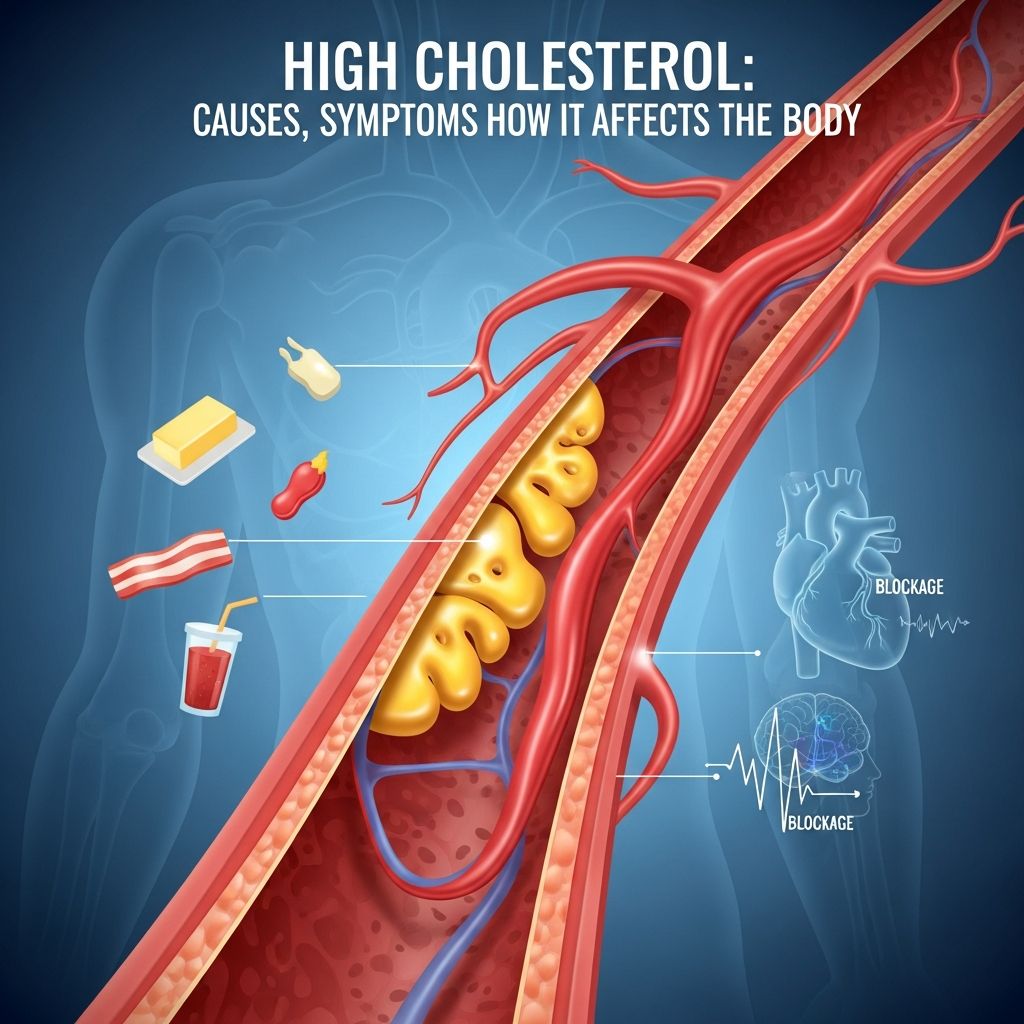
High cholesterol is a widespread health concern affecting millions of Americans. When you have high cholesterol, it means your blood contains excessive amounts of lipids (fats). This condition doesn’t typically cause noticeable symptoms in its early stages, making it a silent threat to your cardiovascular system. Over time, however, high cholesterol leads to significant health complications, particularly through the development of plaque buildup in your arteries, a process known as atherosclerosis.
The relationship between high cholesterol and various medical conditions is complex and interconnected. High cholesterol not only serves as a primary risk factor for heart disease but also acts as a contributing factor to numerous other serious health conditions. Understanding these connections is crucial for recognizing the full scope of high cholesterol’s impact on your overall health.
What Is Atherosclerosis and How Does It Develop?
Atherosclerosis represents one of the most significant consequences of untreated high cholesterol. As cholesterol accumulates in your bloodstream, it gradually deposits along the inner walls of your arteries, forming plaque. This plaque buildup narrows the blood vessels, restricting blood flow to vital organs including your heart and brain.
The danger of atherosclerosis extends beyond simple blockage. The plaque deposits can become irritated or inflamed, potentially triggering the formation of blood clots around them. These clots can completely block blood flow, leading to life-threatening events such as heart attacks or strokes, depending on which blood vessels are affected.
When high cholesterol remains untreated, plaque continues to accumulate throughout your arterial system. This ongoing buildup creates what medical professionals call a “ripple effect.” Because blood vessels serve critical functions throughout your entire body, problems in one location can trigger complications in multiple organ systems.
LDL Cholesterol: Understanding the “Bad” Cholesterol
Low-density lipoprotein (LDL) cholesterol is commonly referred to as “bad” cholesterol, and for good reason. LDL cholesterol is the most dangerous type of cholesterol because it actively causes hardened cholesterol deposits to accumulate inside your blood vessels. These deposits create the plaque formations that characterize atherosclerosis.
Current statistics reveal the extent of the LDL cholesterol problem in America. Recent estimates indicate that as of 2018, 26.4% of U.S. adults have elevated LDL cholesterol levels. Additionally, one in five Americans struggles with high LDL cholesterol, significantly increasing their risk for heart disease and stroke.
The challenge with LDL cholesterol management is multifaceted. While medications like statins can help lower LDL levels, medication adherence remains a significant problem. Research shows that approximately half of patients treated with cholesterol-lowering drugs stop taking them within a year, leaving them vulnerable to the progression of atherosclerosis and related complications.
High Cholesterol and Coronary Artery Disease
Coronary artery disease (CAD), also known as coronary heart disease (CHD) or ischemic heart disease, represents the most common form of heart disease in the United States and remains the leading cause of death in Americans. The connection between high cholesterol and CAD is direct and well-established.
Related Stories



In CAD, cholesterol plaque accumulation specifically affects the coronary arteries, which supply oxygen-rich blood to the heart muscle. When these arteries become narrowed or blocked by plaque, the heart doesn’t receive adequate oxygen. This oxygen deprivation can cause chest pain during exertion, jaw pain, and shortness of breath—classic symptoms of coronary artery disease. If blood flow is severely restricted or completely blocked, a heart attack can occur.
The development of CAD from high cholesterol typically occurs gradually over many years. Initially, you may feel completely normal with high cholesterol, experiencing no symptoms whatsoever. However, as plaque slowly accumulates, the narrowing of coronary arteries progresses silently until symptoms appear or a cardiovascular event occurs.
The Connection Between High Cholesterol and High Blood Pressure
High cholesterol and high blood pressure (hypertension) frequently occur together, and they share a common mechanism. When cholesterol and calcium deposits accumulate in your artery walls, your arteries become hardened and narrowed—a condition known as arteriosclerosis. This arterial stiffness forces your heart to work much harder to pump blood through the narrowed vessels, resulting in elevated blood pressure.
The prevalence of both conditions in the American population is striking. Approximately one in three American adults have high blood pressure, and roughly the same proportion have high cholesterol. Notably, for more than half of adults in each group, current treatment approaches aren’t providing adequate control, either because the medications aren’t working sufficiently or because patients aren’t adhering to their treatment regimens.
High blood pressure and high cholesterol together represent two of the most significant causes of heart disease. When both conditions coexist, the risk of developing serious cardiovascular complications increases exponentially. Controlling both factors is essential for protecting your heart and blood vessels from disease.
High Cholesterol and Chronic Kidney Disease
The relationship between high cholesterol and chronic kidney disease (CKD) is bidirectional and complex. People with chronic kidney disease face a substantially higher risk of developing coronary artery disease compared to those without kidney disease. This elevated risk occurs because CKD accelerates plaque buildup in the arteries, causing atherosclerosis to progress more rapidly.
Interestingly, among people with early-stage CKD, death from heart disease is more likely than death from kidney disease itself, highlighting the severity of cardiovascular complications in this population. The mechanisms behind this increased risk involve multiple lipid abnormalities.
CKD creates a perfect storm for cholesterol-related problems. The condition increases triglycerides (a type of blood fat) and very low-density lipoprotein (VLDL) cholesterol levels. Simultaneously, CKD lowers “good cholesterol” (HDL) levels and impairs HDL’s ability to function properly. Additionally, CKD alters the structure of LDL cholesterol particles, making them more harmful to your arteries.
High Cholesterol in HIV and Immune System Dysfunction
People living with HIV face a significantly elevated cardiovascular risk. Studies show that individuals with HIV are nearly twice as likely as people without HIV to experience a heart attack or stroke. Historically, researchers attributed this increased risk to HIV medications (antiretroviral therapy), which were thought to raise cholesterol levels. However, newer research has revealed a different culprit.
Contemporary scientific understanding points to the immune system itself as the primary driver of cardiovascular risk in HIV patients. Even when HIV is well-managed through medication, the immune system may remain in a state of chronic activation. This persistent immune activation creates a chronic inflammatory state throughout the body, which triggers plaque buildup and accelerates atherosclerosis.
This discovery has important implications for HIV care and cardiovascular disease prevention. It emphasizes that managing HIV involves more than just controlling viral load; addressing the inflammatory components of the disease is equally important for preventing heart disease and stroke.
Thyroid Disease and Cholesterol-Related Heart Problems
Researchers continue to investigate the connections between thyroid disease and heart disease. The relationship appears to extend beyond simple cholesterol mechanisms. Studies indicate that both hyperthyroidism (overactive thyroid) and hypothyroidism (underactive thyroid) may increase the risk of heart failure, independent of their effects on cholesterol levels.
The thyroid gland influences metabolism and affects how your body handles lipids and manages cardiovascular function. Understanding the full scope of thyroid disease’s cardiac effects requires ongoing research, but evidence suggests that patients with thyroid disorders should be particularly vigilant about monitoring both their thyroid function and cardiovascular health.
High Cholesterol and Lupus
Lupus, an autoimmune inflammatory disease, significantly impacts cholesterol levels and cardiovascular risk. People with lupus typically have abnormally high levels of “bad cholesterol” including both LDL and VLDL cholesterol, while simultaneously having lower levels of “good cholesterol” (HDL). This unfavorable lipid profile increases their cardiovascular disease risk.
The severity of cholesterol problems in lupus patients correlates with disease activity. People who have active lupus face a substantially greater risk of high cholesterol compared with those whose lupus is well-managed and in remission. This observation highlights the inflammatory nature of lupus and its direct impact on lipid metabolism and cardiovascular health.
Emerging Gene-Editing Therapy for Cholesterol Management
Recent developments offer promising hope for patients with treatment-resistant high cholesterol. Cleveland Clinic conducted a groundbreaking Phase 1 clinical trial of a CRISPR-Cas9 gene-editing therapy called CTX310, with results published in the New England Journal of Medicine in November 2025. This represents a significant advancement in cholesterol treatment options.
The trial involved 15 adults aged 31 to 68 with uncontrolled high triglycerides and LDL cholesterol levels who had not responded adequately to standard medications. Participants received a single intravenous infusion of CTX310 at varying doses. The results were remarkable: the treatment reduced LDL cholesterol by approximately 50% and triglycerides by about 55%. Importantly, these reductions were achieved within two weeks and remained sustained for at least 60 days, with ongoing follow-up continuing.
The safety profile of this experimental treatment was excellent, with no serious adverse events reported during the short-term follow-up period. If future clinical trials continue to demonstrate both safety and efficacy, this therapy could revolutionize cholesterol treatment by offering patients a one-time infusion instead of daily pills or monthly injections.
Understanding the Prevalence of High Cholesterol
High cholesterol remains extremely common across the United States. In some regions, the problem is particularly acute. In Northeast Ohio, nearly 39% of residents reported having high cholesterol levels in 2023, demonstrating the widespread nature of this health challenge. Some areas, such as Tuscarawas County in Ohio, report even higher incidences, with more than 43% of residents affected.
Frequently Asked Questions About High Cholesterol
Q: What is the difference between LDL and HDL cholesterol?
A: LDL (low-density lipoprotein) cholesterol is called “bad” cholesterol because it deposits in your arteries and causes plaque buildup. HDL (high-density lipoprotein) is called “good” cholesterol because it helps remove cholesterol from your arteries and blood. Your HDL should ideally be above 60, while your LDL should be below 100.
Q: Can you have high cholesterol without any symptoms?
A: Yes, high cholesterol is often called a silent condition because it typically doesn’t cause noticeable symptoms in its early stages. Many people don’t realize they have high cholesterol until they have bloodwork done or experience a cardiovascular event like a heart attack or stroke.
Q: How does high cholesterol lead to a heart attack?
A: High cholesterol causes plaque to build up in your arteries through atherosclerosis. This plaque can become irritated or inflamed, triggering clot formation. If a clot completely blocks blood flow in a coronary artery, it prevents oxygen-rich blood from reaching your heart, resulting in a heart attack.
Q: Is high cholesterol related to high blood pressure?
A: Yes, high cholesterol and high blood pressure are closely linked. Cholesterol and calcium deposits harden and narrow your arteries, forcing your heart to work harder to pump blood through them, which raises blood pressure.
Q: What is the new gene-editing therapy for cholesterol?
A: CTX310 is an experimental CRISPR-Cas9 gene-editing therapy that was shown in a Cleveland Clinic Phase 1 trial to reduce LDL cholesterol by 50% and triglycerides by 55% with a single intravenous infusion. The treatment is still in early development stages but shows promise for patients who don’t respond to traditional medications.
Q: Why do so many people stop taking cholesterol medications?
A: Adherence to daily cholesterol medications is challenging for many patients, with research showing that approximately half of patients stop taking their cholesterol-lowering drugs within a year. Factors include medication side effects, pill burden, and lack of immediate symptoms that reinforce the importance of treatment.
References
- Cleveland Clinic First-In-Human Trial of CRISPR Gene-Editing Therapy Shown to Safely Lower Cholesterol and Triglycerides — Cleveland Clinic Newsroom. 2025-11-08. https://newsroom.clevelandclinic.org/2025/11/08/cleveland-clinic-first-in-human-trial-of-crispr-gene-editing-therapy-shown-to-safely-lower-cholesterol-and-triglycerides
- Hyperlipidemia (High Cholesterol): Levels, Causes, Symptoms — Cleveland Clinic Health Library. 2025. https://my.clevelandclinic.org/health/diseases/21656-hyperlipidemia
- Gene editing is the revolution in medical history — WKYC Channel 3 Cleveland. 2025-11-10. https://www.youtube.com/watch?v=szDUq0AAAYY
- High Cholesterol: Causes, Symptoms and How It Affects the Body — Cleveland Clinic Health Library. 2025. https://my.clevelandclinic.org/health/articles/11918-cholesterol-high-cholesterol-diseases
- Cleveland study finds single-dose treatment could cut cholesterol in half — Ideastream. 2025-11-10. https://www.ideastream.org/health/2025-11-10/cleveland-study-finds-single-dose-treatment-could-cut-cholesterol-in-half
- Cholesterol: Understanding Levels & Numbers — Cleveland Clinic Health Library. 2025. https://my.clevelandclinic.org/health/articles/11920-cholesterol-numbers-what-do-they-mean
Similar Articles








Read full bio of Sneha Tete