High Diastolic Blood Pressure: Causes, Risks, Essential Guide
Understanding the risks, causes, symptoms, and management strategies for high diastolic blood pressure.
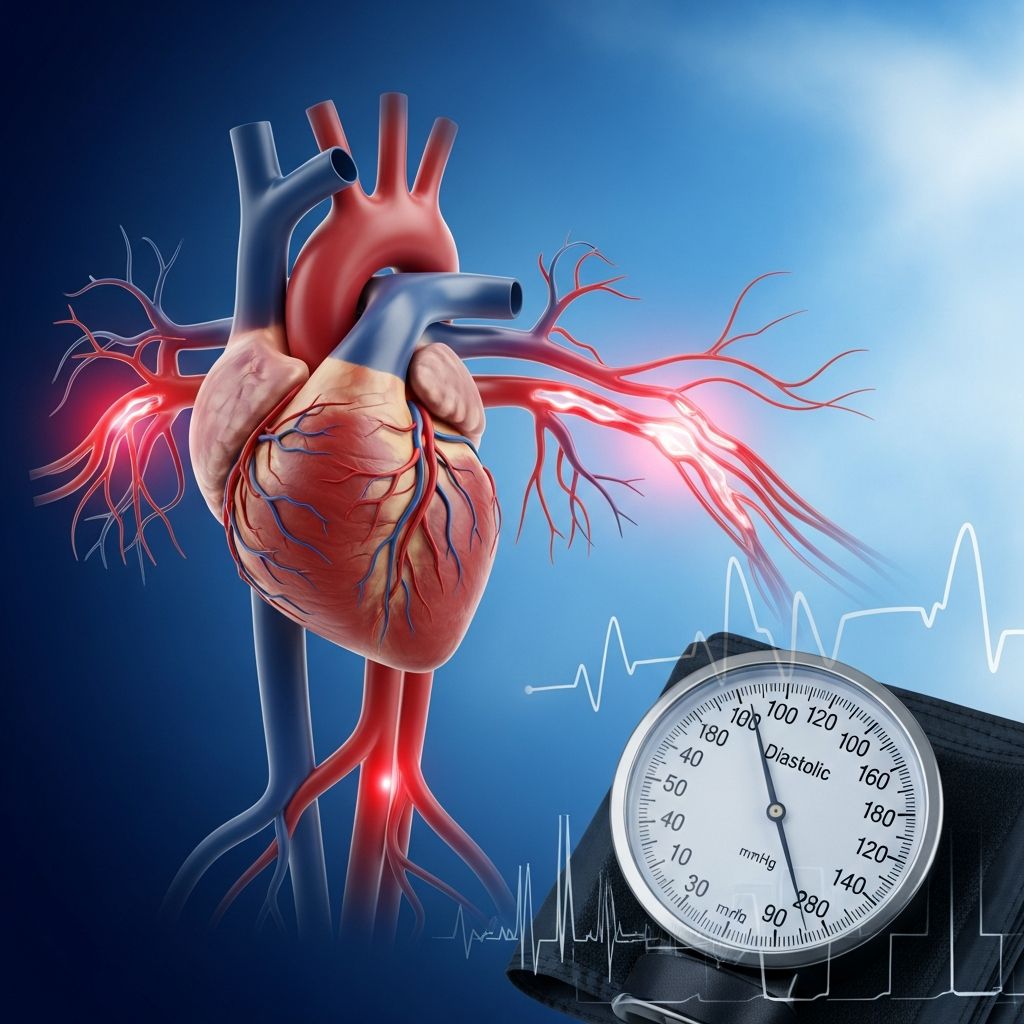
High diastolic blood pressure, the bottom number in a blood pressure reading, indicates the pressure in arteries when the heart rests between beats. When elevated above 80 mm Hg, it signals potential cardiovascular risks, independent of systolic pressure.
What Is Diastolic Blood Pressure?
Diastolic blood pressure measures arterial pressure during the heart’s relaxation phase. Normal levels are under 80 mm Hg, while high readings contribute to hypertension. A large Kaiser Permanente study with over 36 million readings from 1 million people confirmed both systolic and diastolic pressures independently predict heart attack and stroke risk, challenging prior focus on systolic alone.
Systolic pressure (top number) reflects heart contraction force, while diastolic (bottom) shows resting vessel resistance. Elevated diastolic often stems from arteriolar narrowing due to hormonal or lifestyle factors.
High Diastolic Blood Pressure Readings
Blood pressure categories per NHLBI guidelines: normal is less than 120/80 mm Hg; elevated systolic 120-129/<80; stage 1 hypertension 130-139/80-89; stage 2 ≥140/≥90. Isolated diastolic hypertension (IDH) occurs when diastolic ≥80 mm Hg with normal systolic (<130 mm Hg).
- Stage 1 IDH: Diastolic 80-89 mm Hg
- Stage 2 IDH: Diastolic ≥90 mm Hg
Each 10 mm Hg diastolic increase in ages 40-89 raises heart disease and stroke risk. Recent guidelines lowered thresholds to 130/80, supported by data showing risks at these levels.
Symptoms of High Diastolic Blood Pressure
Often asymptomatic, called the ‘silent killer,’ high diastolic pressure may cause headaches, shortness of breath, or nosebleeds in severe cases. Seek immediate care for readings ≥180/120 mm Hg or symptoms like chest pain.
Causes and Risk Factors
Causes include obesity, high triglycerides, smoking, alcohol, metabolic syndrome, chronic kidney disease, thyroid issues, and sleep apnea. Non-modifiable factors: age (common under 50), family history, ethnicity.
| Risk Factor | Description | Impact |
|---|---|---|
| Obesity | Excess weight strains vessels | Increases IDH prevalence |
| Smoking | Damages arteries | Elevates diastolic pressure |
| High Triglycerides | Lowers HDL, raises LDL | Boosts CVD risk |
| Sleep Apnea | Interrupts oxygen flow | Contributes to hypertension |
IDH awareness is lowest among hypertension types, especially in younger adults.
Health Risks and Complications
High diastolic impairs heart oxygen delivery, raising heart attack, stroke, heart failure, kidney damage, and aneurysm risks. Kaiser study: both components strongly predict events, with diastolic impact notable at 130/80 threshold. IDH links to future CVD events, particularly with comorbidities.
- Heart disease and stroke
- Left ventricular hypertrophy
- Vascular dementia
- Peripheral artery disease
Diagnosis
Diagnosis involves multiple readings using validated monitors. Home monitoring tracks patterns; ambulatory monitoring assesses 24-hour averages. Doctors classify based on averages.
IDH requires confirming normal systolic with elevated diastolic.
Treatment Options
Lifestyle first: DASH diet, exercise (150 min/week), weight loss, limit alcohol/sodium, quit smoking. Medications like ACE inhibitors, beta-blockers, diuretics if needed. Target <130/80 for high-risk; HOT trial showed DBP <80 mm Hg reduces CVD events 51% vs. <90.
Avoid over-lowering DBP (<70 mm Hg increases risks).
Prevention Strategies
Maintain healthy weight, balanced diet, regular activity, stress management, routine checks. WHO notes hypertension affects 1.28 billion adults, preventable via lifestyle.
Related Stories



- Reduce sodium <2,300 mg/day
- Exercise regularly
- Monitor BP annually
When to See a Doctor
Consult for consistent ≥130/80, symptoms, or risks like diabetes. Urgent for hypertensive crisis.
Frequently Asked Questions (FAQs)
What is considered high diastolic blood pressure?
≥80 mm Hg, with stages 80-89 (stage 1) and ≥90 (stage 2) for IDH.
Is high diastolic worse than high systolic?
Both independently risky; systolic often has greater impact, but diastolic matters, per large studies.
Can lifestyle changes lower diastolic pressure?
Yes, weight loss, exercise, diet reduce it effectively.
Does IDH increase stroke risk?
Yes, each 10 mm Hg rise boosts risk; lowering improves brain blood flow.
What medications treat high diastolic BP?
ACE inhibitors, calcium channel blockers, diuretics; tailored by doctor.
References
- New study finds both components of blood pressure predict heart attack, stroke risk — Kaiser Permanente Division of Research. 2024-05-14. https://divisionofresearch.kaiserpermanente.org/new-study-finds-both-components-of-blood-pressure-predict-heart-attack-stroke-risk/
- What causes high diastolic blood pressure? — Medical News Today. 2023-11-01. https://www.medicalnewstoday.com/articles/high-diastolic-pressure
- Isolated Diastolic Hypertension and Risk of Cardiovascular Disease — American Heart Association Hypertension Journal. 2022-10-01. https://www.ahajournals.org/doi/10.1161/HYPERTENSIONAHA.122.18459
- What Is High Blood Pressure? — National Heart, Lung, and Blood Institute (NHLBI), NIH. 2024-01-01. https://www.nhlbi.nih.gov/health/high-blood-pressure
- Understanding Blood Pressure Readings — American Heart Association. 2023-05-01. https://www.heart.org/en/health-topics/high-blood-pressure/understanding-blood-pressure-readings
- Hypertension — World Health Organization (WHO). 2023-03-17. https://www.who.int/news-room/fact-sheets/detail/hypertension
Similar Articles








Read full bio of Sneha Tete