Best High-Fiber Cereals for a Healthy Diet
Boost your fiber intake with these top high-fiber cereals that support digestion, heart health, and weight management for better daily wellness.
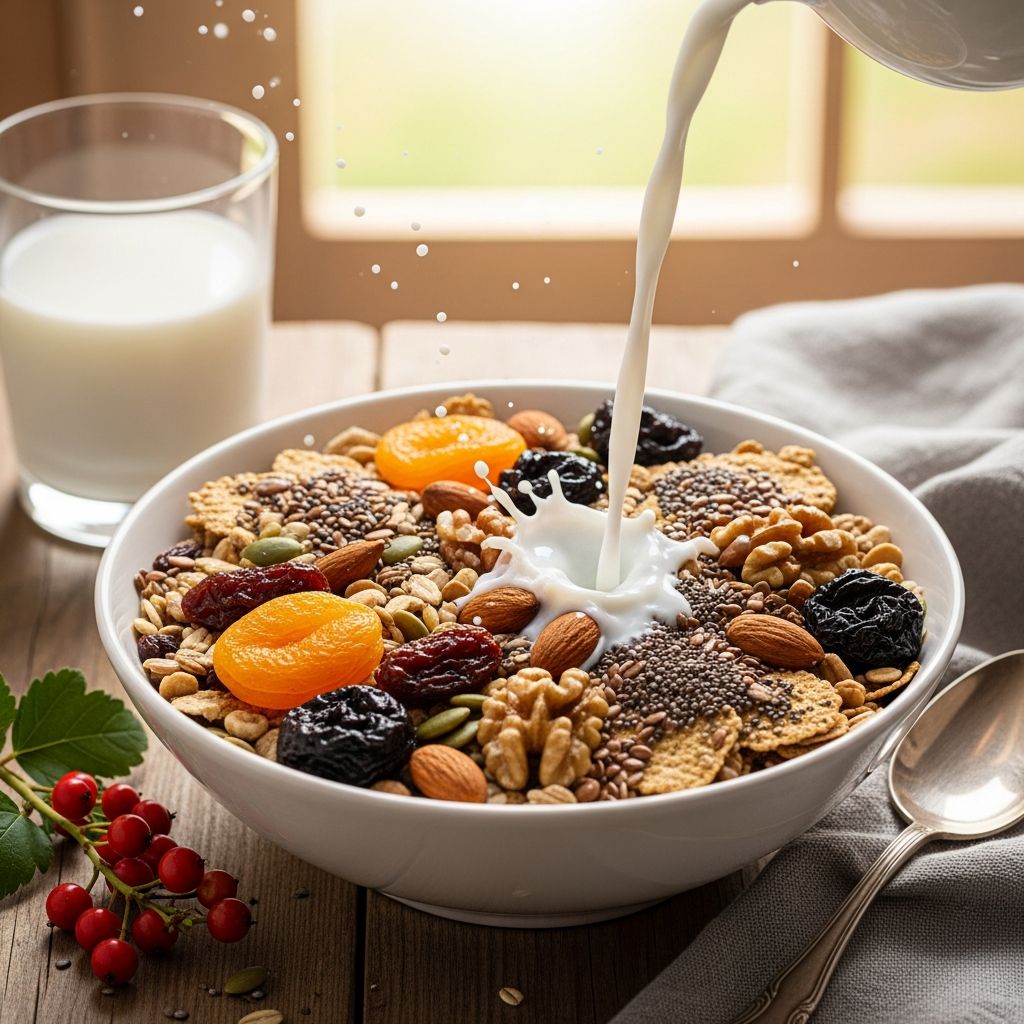
High-fiber cereals are a convenient way to meet your daily fiber needs, promoting digestive health, heart wellness, stable blood sugar, and effective weight management. Whole-grain and high-fiber breakfast cereals provide essential nutrients while helping reduce risks of chronic diseases like diabetes and cardiovascular issues.
What Is High-Fiber Cereal?
High-fiber cereal refers to ready-to-eat (RTE) breakfast cereals containing at least 5 grams of dietary fiber per serving, often derived from whole grains like wheat, oats, or bran. These cereals contribute significantly to the recommended daily fiber intake of 25-38 grams for adults, as per dietary guidelines. Unlike low-fiber options, they enhance satiety, support gut regularity, and deliver vitamins, minerals, and antioxidants.
Fiber in cereals comes in soluble and insoluble forms: soluble fiber lowers cholesterol and stabilizes blood sugar, while insoluble fiber adds bulk to stool for better bowel movements. Studies show regular consumption of high-fiber cereals improves bowel function (grade A evidence) and is linked to lower body mass index.
Why You Should Eat High-Fiber Cereal
Incorporating high-fiber cereal into your routine offers multifaceted health benefits supported by systematic reviews. Key advantages include:
- Improved Digestion: High-fiber wheat-based cereals enhance bowel function, reducing constipation risk.
- Heart Health: Associated with lower cardiovascular disease risk (grade C), thanks to cholesterol-lowering effects.
- Blood Sugar Control: Lowers diabetes risk (grade B) by slowing glucose absorption.
- Weight Management: Linked to lower BMI and reduced obesity risk (grade B); promotes fullness to curb overeating.
- Nutrient Boost: Higher intakes of protein, fiber, niacin, folate, calcium, and zinc compared to other cereals.
Regular eaters report greater well-being and potentially lower hypertension risk, though more research is needed (grade D).
How We Chose the Best High-Fiber Cereals
Selections prioritize cereals with 5+ grams of fiber per serving, whole-grain ingredients, minimal added sugars (<10g/serving), and fortification for balanced nutrition. We reviewed nutritional data, prioritizing bran and oat-based options for superior benefits. Evidence favors higher-fiber varieties for protective effects against disease.
Best High-Fiber Cereals
Here are the top 10 high-fiber cereals, ranked by fiber content per serving. Nutritional values are approximate based on standard servings; always check labels.
Fiber One Original Bran
18g fiber per 1-cup (60g) serving. This bran-heavy cereal excels in digestive support with insoluble fiber dominating. Low in sugar (minimal), it’s ideal for constipation relief and satiety. Pairs well with milk or yogurt.
All-Bran Buds
17g fiber per 1/3 cup (30g). Packed with wheat bran and psyllium, it delivers unparalleled bowel regularity. Studies highlight wheat bran’s efficacy for gut health.
All-Bran
10g fiber per 1/2 cup (31g). A classic with whole wheat and bran; supports daily fiber goals without excess calories.
Fiber One 97%
14g fiber per 3/4 cup (41g). Nearly sugar-free, great for low-carb diets while maximizing fiber benefits.
Bran Flakes
7g fiber per 3/4 cup (30g). Affordable whole-grain option with balanced macros; evidence shows fiber aids weight loss when used in meal replacements.
Shredded Wheat
6g fiber per 2 biscuits (51g). 100% whole wheat, no additives; linked to positive weight outcomes in trials.
Cheerios Oat Crunch
6g fiber per 1 cup (42g). Oats provide soluble beta-glucan for heart health.
Kashi GO Original
12g fiber per 1 cup (59g). Plant-powered with multiple grains; promotes sustained energy.
Nature’s Path Heritage Flakes
7g fiber per 1 cup (40g). Organic ancient grains for nutrient density.
Post Bran Flakes
7g fiber per 3/4 cup (30g). Reliable everyday choice with proven fiber perks.
Fiber Content Comparison
| Cereal | Serving Size | Fiber (g) | Sugar (g) | Calories |
|---|---|---|---|---|
| Fiber One Original | 1 cup (60g) | 18 | 0 | 120 |
| All-Bran Buds | 1/3 cup (30g) | 17 | 6 | 90 |
| All-Bran | 1/2 cup (31g) | 10 | 6 | 80 |
| Fiber One 97% | 3/4 cup (41g) | 14 | 1 | 120 |
| Bran Flakes | 3/4 cup (30g) | 7 | 5 | 100 |
| Shredded Wheat | 2 biscuits (51g) | 6 | 0 | 170 |
| Cheerios Oat Crunch | 1 cup (42g) | 6 | 3 | 150 |
| Kashi GO | 1 cup (59g) | 12 | 8 | 180 |
| Nature’s Path Heritage | 1 cup (40g) | 7 | 6 | 160 |
| Post Bran Flakes | 3/4 cup (30g) | 7 | 5 | 100 |
Benefits of High-Fiber Cereal
Weight Loss and Management
High-fiber cereals aid weight control by increasing satiety. Trials show consumption leads to lower energy intake at subsequent meals; one study found cumulative intake dropped from 1422 to 1130 kcal after high-fiber breakfast. Linked to lower BMI (grade B).
Heart Health
Related Stories



Soluble fibers reduce LDL cholesterol; associated with lower CVD risk (grade C). Oat cereals show particular promise.
Blood Sugar and Diabetes Prevention
Slows carb digestion, reducing diabetes risk (grade B). Ideal for stable energy.
Digestive Wellness
Improves bowel function (grade A); bran cereals excel here.
Overall Nutrient Intake
Boosts protein, fiber, vitamins; markers of healthy lifestyles.
High-Fiber Cereal Nutrition Facts
Typical profile per serving: 100-200 calories, 5-18g fiber, 1-10g sugar, 2-6g protein. Fortified with iron, B-vitamins. Choose low-sugar to avoid blood sugar spikes.
Delicious Ways to Eat High-Fiber Cereal
- Mix with Greek yogurt and berries for protein-fiber combo.
- Top with almond butter and banana slices.
- Blend into smoothies for portable nutrition.
- Use as crunchy topping for oatmeal.
- Pair with milk alternatives like almond or soy.
What to Look for in High-Fiber Cereal
- Fiber >5g/serving: Aim for 10g+ for max benefits.
- Whole Grains First: Bran, oats top ingredient list.
- Low Sugar <10g: Avoid presweetened if possible.
- No Artificial Additives: Minimal preservatives.
- Fortified Nutrients: Bonus vitamins/minerals.
High-Fiber Cereal FAQs
Is high-fiber cereal good for weight loss?
Yes, it promotes satiety and lower calorie intake; effective as meal replacement in short-term trials.
Which cereal has the most fiber?
Fiber One Original with 18g per serving leads, followed by All-Bran Buds at 17g.
Can kids eat high-fiber cereal?
In moderation; presweetened varieties don’t increase obesity risk (grade C). Start with lower-fiber options.
Does high-fiber cereal help with constipation?
Absolutely; wheat-based provide grade A evidence for bowel improvement.
Is high-fiber cereal healthy every day?
Yes, when part of balanced diet; supports lower disease risks.
References
- Benefits of Breakfast Cereal Consumption: Systematic Review — Hodgson et al., Nutrition Today. 2014. https://pmc.ncbi.nlm.nih.gov/articles/PMC4188247/
- Dietary Guidelines for Americans, 2020-2025 — U.S. Department of Agriculture and HHS. 2020-09-01. https://www.dietaryguidelines.gov/sites/default/files/2020-12/Dietary_Guidelines_for_Americans_2020-2025.pdf
- Whole Grains, Legumes, and Human Health — World Health Organization. 2023-07-15. https://www.who.int/news-room/fact-sheets/detail/healthy-diet
- High-Fiber Foods and Heart Health — American Heart Association. 2024-03-20. https://www.heart.org/en/healthy-living/healthy-eating/eat-smart/nutrition-basics/whole-grains-refined-grains-and-dietary-fiber
- Dietary Fiber Intake and Risks of CVD — Reynolds et al., The Lancet. 2019-01-10. https://doi.org/10.1016/S0140-6736(18)31809-9
Similar Articles








Read full bio of medha deb