High-Protein Diet: Ultimate Guide To Weight Loss & Muscle
Discover the benefits, risks and meal ideas for a high-protein diet to support weight loss and muscle health effectively.
A
high-protein diet
prioritizes foods rich in protein to promote weight loss, preserve muscle mass, enhance satiety, and support overall metabolic health. Clinical trials demonstrate it reduces body weight by 3-4 kg over 6 months while improving body composition by decreasing fat mass and maintaining fat-free mass.What Is a High-Protein Diet?
A high-protein diet typically provides 25-35% of daily calories from protein, or 1.2-2.0 grams per kilogram of body weight, exceeding the RDA of 0.8 g/kg. This approach leverages protein’s high thermic effect (20-30% of calories burned during digestion versus 5-10% for carbs/fats) to boost metabolism and fullness.
Unlike low-carb or keto diets, high-protein plans allow flexible carbs and fats, focusing on lean sources like poultry, fish, eggs, dairy, legumes, and plant proteins. Long-term studies (6-12 months) confirm it prevents weight regain post-loss by sustaining resting energy expenditure (REE).
High-Protein Diet Food List
Incorporate these nutrient-dense foods to meet protein goals without excess calories:
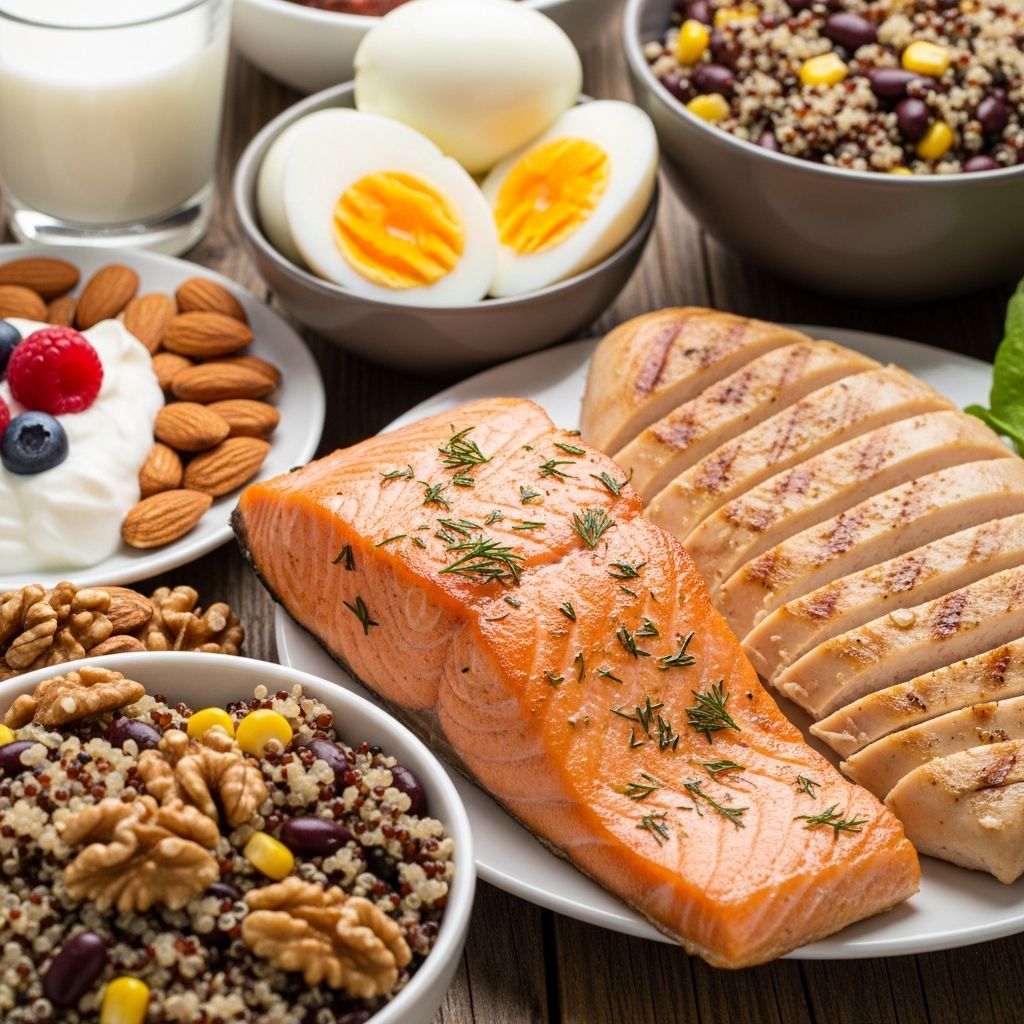
- Animal-based: Chicken breast (31g protein/165g serving), turkey, lean beef, pork tenderloin, salmon (22g/85g), tuna, eggs (6g each), Greek yogurt (20g/cup), cottage cheese (25g/cup), whey protein powder.
- Plant-based: Lentils (18g/cup cooked), chickpeas (15g/cup), black beans (15g/cup), tofu (10g/100g), tempeh (19g/100g), edamame (17g/cup), quinoa (8g/cup), nuts/seeds (e.g., almonds 6g/oz).
- Dairy/Alternatives: Low-fat milk (8g/cup), kefir (10g/cup), cheese (7g/oz).
Prioritize whole foods over processed meats to minimize saturated fats and sodium.
Benefits of a High-Protein Diet
Research highlights multiple advantages:
- Weight Loss: Meta-analyses of RCTs show high-protein diets (1.25 g/kg) yield greater fat loss (-3.3 kg) and BW reduction (-3.7 kg) vs. high-carb diets over 6 months, even ad libitum.
- Increased Satiety: Protein elevates GLP-1, CCK, PYY (anorexigenic hormones) and lowers ghrelin, reducing hunger and energy intake by 142 kcal/day.
- Muscle Preservation: Prevents fat-free mass loss during calorie deficits, maintaining REE 142 kcal/day higher than standard-protein diets.
- Boosted Metabolism: Higher diet-induced thermogenesis (DIT) from protein oxidation increases energy expenditure.
- Muscle Building & Repair: Essential for strength training gains and injury recovery.
- Blood Sugar Control: Slows digestion, stabilizing glucose levels.
Potential High-Protein Diet Downsides
While effective short-term, excesses (>2.5 g/kg) may strain kidneys in those with pre-existing issues, elevate LDL cholesterol from red meats, or cause digestive discomfort from low fiber. Balance with veggies/fruits; hydrate well. Long-term trials >12 months are needed.
High-Protein Diet Meal Plan
A sample 1,800-calorie day (adjust for needs):
| Meal | Foods | Protein (g) | Calories |
|---|---|---|---|
| Breakfast | Greek yogurt parfait: 1 cup nonfat Greek yogurt, berries, 1 tbsp chia seeds, ¼ cup granola | 28 | 350 |
| Snack | Apple + 1 oz almonds | 7 | 250 |
| Lunch | Grilled chicken salad: 4 oz chicken breast, mixed greens, cherry tomatoes, cucumber, 1 tbsp olive oil vinaigrette | 35 | 400 |
| Snack | Cottage cheese (½ cup) + carrot sticks | 14 | 150 |
| Dinner | Baked salmon (4 oz), quinoa (½ cup), steamed broccoli (1 cup) | 35 | 450 |
| Evening Snack | Protein shake (1 scoop whey + almond milk) | 25 | 200 |
| Total | ~144g protein (30% calories) | 144 | 1,800 |
Aim for 20-40g protein per meal for optimal muscle protein synthesis.
High-Protein Recipes
Chicken Stir-Fry (Serves 4, ~30g protein/serving)
Ingredients: 1 lb chicken breast (cubed), 2 cups broccoli, 1 bell pepper, 2 tbsp soy sauce (low-sodium), 1 tsp ginger, 1 cup brown rice.
Related Stories



- Sauté chicken until cooked; add veggies, soy, ginger. Serve over rice.
Prep: 10 min, Cook: 15 min, Calories: 400/serving.
Protein-Packed Overnight Oats
Ingredients: ½ cup oats, 1 cup Greek yogurt, 1 scoop protein powder, chia seeds, berries.
Mix, refrigerate overnight. ~35g protein.
High-Protein Diet for Weight Loss
For fat loss, combine 1.6-2.2 g/kg protein with resistance training and 500 kcal deficit. Studies show superior outcomes vs. standard diets, with less muscle catabolism. Track via apps; consult RD for personalization.
How Much Protein Do You Need on a High-Protein Diet?
- Sedentary: 1.2-1.6 g/kg
- Athletes: 1.6-2.2 g/kg
- Weight loss: 1.6-2.4 g/kg
- Older adults: 1.2-2.0 g/kg (to combat sarcopenia)
Distribute evenly across meals. Example: 70kg person needs 112-168g daily.
Frequently Asked Questions
Is a high-protein diet safe for kidneys?
For healthy individuals, yes; monitor if you have CKD. Studies show no harm up to 2.0 g/kg long-term.
Can vegetarians follow a high-protein diet?
Absolutely—combine beans, lentils, tofu, tempeh, seitan, dairy/eggs, or plant powders.
Will it help build muscle?
Yes, paired with training; preserves/builds lean mass during cuts.
How does it affect metabolism?
Increases DIT by 15-30%, sustains REE.
Any foods to avoid?
Limit processed meats; focus on lean, varied sources.
References
- Clinical Evidence and Mechanisms of High-Protein Diet-Induced Weight Loss — PMC/NCBI. 2020-10-29. https://pmc.ncbi.nlm.nih.gov/articles/PMC7539343/
- The Benefits of a High Protein Diet Meal Plan — Nutrisystem The Leaf. 2023-05-15. https://leaf.nutrisystem.com/benefits-of-high-protein-diet-meal-plan/
- Will a High-Protein Diet Really Help You Lose Weight in 2026? — CTCD. 2025-12-01. https://www.ctcd.edu/sites/myctcd/detail/?p=will-a-high-protein-diet-really-help-you-lose-weight-in-2026-a-deep-real-world-look-before-you-decide-69775e0a599e4
Similar Articles








Read full bio of Sneha Tete