High-Protein Spaghetti with Chicken & Broccoli
A quick 30-minute high-protein pasta dish packed with tender chicken, broccoli, and whole-wheat spaghetti for a nutritious family dinner.
This
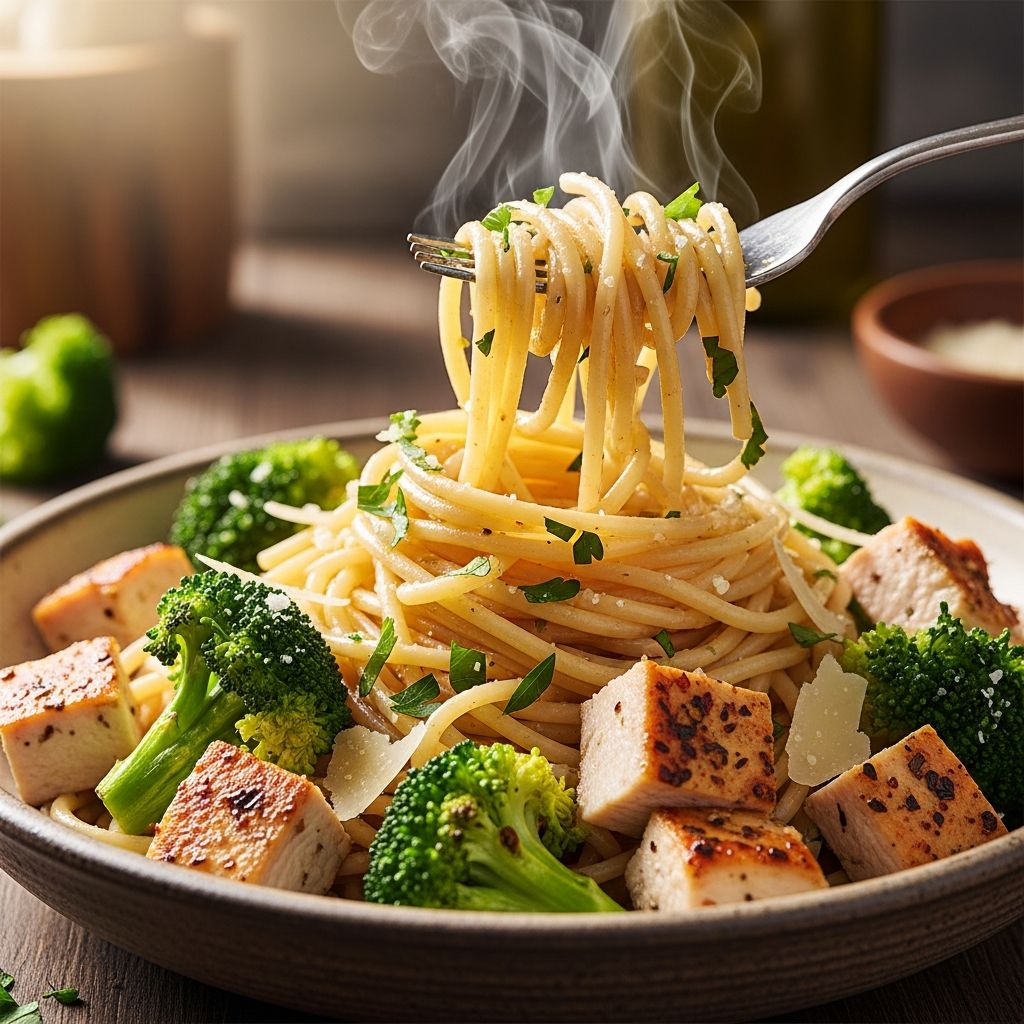
high-protein spaghetti with chicken and broccoli
is the ultimate weeknight dinner that’s ready in just 30 minutes. Tender pieces of chicken breast are paired with crisp-tender broccoli florets and whole-wheat spaghetti, all tossed in a light, garlicky sauce made with olive oil, white wine, and a touch of Parmesan. Each generous serving provides31 grams of protein
, making it a satisfying meal that supports muscle health, satiety, and balanced nutrition without feeling heavy.Unlike traditional creamy pasta dishes loaded with heavy sauces, this recipe keeps things light and fresh while maximizing flavor and nutrition. The whole-wheat spaghetti adds fiber for better digestion and sustained energy, while broccoli delivers vitamins C and K, folate, and antioxidants. It’s naturally gluten-free adaptable (use gluten-free pasta) and can be customized for dairy-free diets by skipping the Parmesan. Perfect for meal prep, family dinners, or when you need a healthy meal that doesn’t skimp on taste.
Why You’ll Love This High-Protein Pasta Recipe
- Quick and easy: Everything cooks in one skillet in under 30 minutes—ideal for busy weeknights.
- High in protein: 31g per serving from lean chicken breast helps keep you full longer.
- Nutrient-packed: Broccoli provides fiber, vitamins, and minerals; whole-wheat pasta boosts whole grains.
- Family-friendly: Kid-approved flavors with garlic, lemon, and cheese that even picky eaters enjoy.
- Meal-prep friendly: Stores well in the fridge for up to 4 days; reheat with a splash of broth.
- Customizable: Swap in shrimp, tofu, or other veggies like zucchini or spinach.
Ingredients for High-Protein Chicken Broccoli Pasta (4 servings)
| Ingredient | Amount |
|---|---|
| Whole-wheat spaghetti | 8 oz (225g) |
| Boneless, skinless chicken breast | 1 lb (450g), cut into 1-inch pieces |
| Broccoli florets | 4 cups (about 1 large head) |
| Olive oil | 3 Tbsp, divided |
| Garlic cloves | 4, minced |
| Dry white wine (or chicken broth) | ½ cup |
| Low-sodium chicken broth | ½ cup |
| Fresh lemon juice | 2 Tbsp |
| Grated Parmesan cheese | ¼ cup, plus more for serving |
| Salt | ¾ tsp, divided |
| Black pepper | ½ tsp |
| Crushed red pepper flakes | ¼ tsp (optional) |
How to Make High-Protein Spaghetti with Chicken & Broccoli: Step-by-Step
This one-skillet recipe (plus pasta pot) comes together effortlessly. Follow these steps for perfect results every time.
Step 1: Cook the Pasta
Bring a large pot of water to a boil. Add
¾ tsp salt
and cook the whole-wheat spaghetti according to package directions until al dente (typically 8-10 minutes). Reserve1 cup pasta cooking water
, then drain the pasta and set aside. The starchy water will help create a silky sauce later.Step 2: Cook the Chicken
While pasta cooks, heat
2 Tbsp olive oil
in a large skillet over medium-high heat. Season chicken pieces with¼ tsp salt
and¼ tsp black pepper
. Add to the skillet and cook, stirring occasionally, until golden brown and cooked through (internal temp 165°F), about 5-7 minutes. Remove chicken to a plate.Related Stories



Step 3: Sauté Broccoli and Garlic
In the same skillet, add remaining
1 Tbsp olive oil
. Add broccoli and cook, stirring often, until bright green and crisp-tender, about 4 minutes. Add minced garlic and¼ tsp crushed red pepper
(if using); cook 1 minute until fragrant, being careful not to burn the garlic.Step 4: Build the Sauce
Pour in white wine (or broth) and chicken broth, scraping up any browned bits from the pan. Simmer until slightly reduced, about 2 minutes. Stir in lemon juice, cooked chicken, drained pasta, and
¼ cup Parmesan
. Toss to coat, adding reserved pasta water¼ cup at a time
until saucy (you may not need all of it). Cook 1-2 minutes to meld flavors. Season with remaining¼ tsp salt
and¼ tsp pepper
.Step 5: Serve
Divide into bowls and top with extra Parmesan and black pepper. Serve immediately with lemon wedges on the side for squeezing.
Nutrition Information (Per Serving)
| Nutrient | Amount |
|---|---|
| Calories | 447 |
| Protein | 31g |
| Carbohydrates | 47g |
| Dietary Fiber | 7g |
| Total Sugars | 3g |
| Total Fat | 14g |
| Saturated Fat | 3g |
| Sodium | 581mg |
Nutrition calculated using USDA data and standard recipe yields. Values may vary based on exact ingredients and portion sizes.
Recipe Tips and Variations
- Make it dairy-free: Omit Parmesan or use nutritional yeast for a cheesy flavor.
- Gluten-free option: Swap whole-wheat spaghetti for gluten-free pasta; check labels for certified options.
- Boost veggies: Add sliced bell peppers, zucchini, or spinach during the broccoli step.
- Protein swaps: Use shrimp, turkey, or firm tofu for variety. Adjust cooking times accordingly.
- Spice it up: Increase red pepper flakes or add fresh herbs like basil or parsley at the end.
- Storage: Refrigerate in an airtight container up to 4 days. Reheat in microwave or stovetop with a splash of broth.
- Freezing: Freeze portions up to 3 months; thaw overnight and reheat gently.
Health Benefits of Key Ingredients
This recipe shines nutritionally thanks to its wholesome ingredients. Here’s why they matter:
- Chicken breast: Lean protein source with all essential amino acids; supports muscle repair and immune function. A 3-oz serving provides about 26g protein with minimal fat.
- Broccoli: Cruciferous veggie rich in vitamin C (over 100% DV per cup), vitamin K, folate, and sulforaphane—an antioxidant linked to cancer prevention.
- Whole-wheat spaghetti: Higher in fiber (7g per serving) than refined pasta, promoting gut health, blood sugar control, and fullness.
- Garlic and olive oil: Anti-inflammatory compounds; olive oil provides heart-healthy monounsaturated fats.
- Lemon juice: Adds vitamin C and bright acidity to enhance iron absorption from broccoli.
Common Mistakes to Avoid
- Don’t overcook broccoli—it should be crisp-tender, not mushy.
- Reserve pasta water! It’s key for silky sauce texture.
- Cook chicken to 165°F; use a meat thermometer for safety.
- Taste and adjust seasoning before serving—pasta water adds saltiness.
- Avoid overcrowding the skillet; cook chicken in batches if needed.
Frequently Asked Questions
Can I use regular spaghetti instead of whole-wheat?
Yes, but you’ll miss out on extra fiber and nutrients. Whole-wheat adds 7g fiber per serving for better satiety and digestion.
Is this recipe suitable for meal prep?
Absolutely! It reheats well and stays flavorful for up to 4 days. Portion into containers with sauce to prevent drying out.
Can I make it ahead for a dinner party?
Yes, cook everything up to step 4, then toss with pasta just before serving to keep textures perfect.
What if I don’t have white wine?
Substitute with equal parts chicken broth plus 1 tsp lemon juice or vinegar for brightness.
How do I know when chicken is cooked?
Use an instant-read thermometer—internal temp should reach 165°F (74°C). No pink should remain.
Can I add more protein?
Sure! Stir in a can of white beans or top with a fried egg for extra boost.
Similar High-Protein Pasta Recipes to Try
- Chicken Pesto Pasta with Spinach
- Shrimp Scampi with Zucchini Noodles
- Turkey Meatball Spaghetti Squash
- One-Pot Lentil Bolognese
This high-protein spaghetti delivers comfort food vibes with serious nutrition. It’s proof that healthy eating can be delicious, quick, and satisfying. Pin it, save it, and make it your go-to pasta dish!
References
- Dietary Guidelines for Americans, 2020-2025 — U.S. Department of Agriculture and U.S. Department of Health and Human Services. 2020-12-01. https://www.dietaryguidelines.gov/sites/default/files/2020-12/Dietary_Guidelines_for_Americans_2020-2025.pdf
- Broccoli: Nutrient Composition and Health Benefits — National Center for Biotechnology Information (NCBI). 2023-05-15. https://www.ncbi.nlm.nih.gov/pmc/articles/PMC10377803/
- Protein Intake and Muscle Health — Harvard T.H. Chan School of Public Health. 2024-01-10. https://www.hsph.harvard.edu/nutritionsource/protein/
- Whole Grains and Chronic Disease Risk — American Journal of Clinical Nutrition (Oxford Academic). 2022-08-20. https://doi.org/10.1093/ajcn/nqac146
- USDA FoodData Central: Chicken Breast Nutrition — United States Department of Agriculture. 2025-01-15. https://fdc.nal.usda.gov/fdc-app.html#/food-details/171477/nutrients
Similar Articles








Read full bio of Sneha Tete