HIIT Workouts for Older Adults: Safe and Effective Training
Master high-intensity interval training safely as you age with expert guidance.
HIIT Workouts for Older Adults: A Guide to Safe and Effective High-Intensity Interval Training
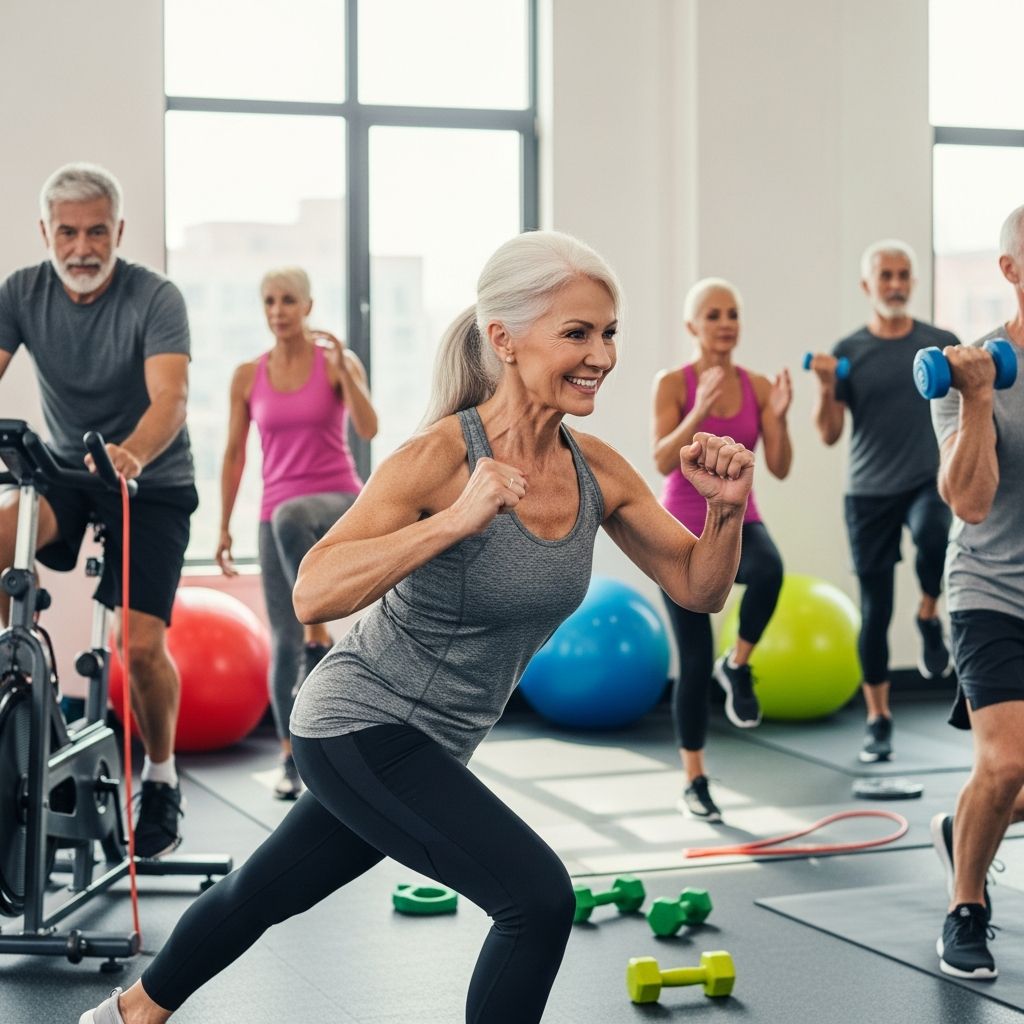
High-intensity interval training (HIIT) has emerged as one of the most efficient and evidence-based exercise approaches for improving health outcomes across all age groups. For older adults, HIIT offers remarkable benefits that can enhance quality of life, maintain independence, and reduce the risk of age-related diseases. Despite common misconceptions that intense exercise is unsuitable for seniors, recent scientific evidence demonstrates that well-designed HIIT protocols are not only safe but highly effective for this population.
This comprehensive guide explores how older adults can safely incorporate HIIT into their fitness routines, the science behind its benefits, practical implementation strategies, and important safety considerations.
Understanding HIIT: What It Is and How It Works
High-intensity interval training is a workout strategy that alternates short bursts of intense physical activity with periods of recovery or lower-intensity exercise. Unlike traditional steady-state cardio, HIIT maximizes the physiological benefits of exercise in minimal time by challenging the cardiovascular and muscular systems intensely during work intervals, then allowing partial recovery during rest periods.
For older adults, HIIT protocols typically involve 3 to 4 intervals performed at 90 to 95 percent of peak heart rate, with each interval lasting 1 to 4 minutes, followed by active recovery periods of 3 to 7 minutes at 50 to 70 percent of peak heart rate. The frequency usually ranges from 2 to 4 sessions per week, with sessions lasting 20 to 40 minutes total.
The Science Behind HIIT Benefits for Older Adults
Cardiovascular and Respiratory Improvements
One of the most significant benefits of HIIT for older adults is its impact on cardiovascular fitness. Research demonstrates that HIIT leads to a 9 to 20 percent increase in VO₂max (maximum oxygen consumption), a crucial marker of cardiovascular health and longevity. This improvement occurs because HIIT stimulates adaptations in the heart’s ability to pump blood, enhances vascular function, and improves the efficiency of oxygen utilization by muscles.
HIIT also effectively reduces blood pressure, a major risk factor for cardiovascular disease in aging populations. Studies show that systolic blood pressure decreases significantly following HIIT interventions, contributing to better heart health and reduced risk of stroke and other cardiovascular events.
Muscle Strength and Mass Preservation
Age-related muscle loss, known as sarcopenia, is a critical concern for older adults as it contributes to weakness, falls, and loss of independence. HIIT combats this decline by promoting quadriceps hypertrophy and increasing muscle strength by approximately 12 percent. The intense contractions during work intervals stimulate muscle protein synthesis and activate pathways that preserve and build muscle tissue.
Additionally, HIIT increases muscle microvascular blood flow and enhances muscle capillarization, ensuring better oxygen and nutrient delivery to muscle tissue. These adaptations support functional capacity and help maintain the strength needed for daily activities.
Cognitive Function Enhancement
Emerging research reveals that HIIT provides substantial benefits for brain health in older adults. Studies demonstrate that HIIT improves executive function, memory, and information processing—cognitive domains that often decline with age. Participants engaging in regular HIIT show improvements comparable to younger, healthy adults in executive function tests.
For older adults with mild cognitive impairment, HIIT programs have been shown to improve attention, verbal fluency, and concentration significantly. These cognitive benefits are thought to result from enhanced blood flow to the brain, improved neuroplasticity, and the activation of neural pathways involved in executive function.
Related Stories



Metabolic and Inflammatory Benefits
HIIT produces greater anti-inflammatory responses compared to moderate-intensity continuous training. Studies show that HIIT decreases markers of inflammation such as TNF-α and MMP-9, particularly in individuals with cardiovascular conditions. This anti-inflammatory effect is crucial for older adults, as chronic inflammation is linked to many age-related diseases.
Furthermore, HIIT enhances metabolic health by improving insulin sensitivity and glucose control, reducing the risk of type 2 diabetes—a condition increasingly prevalent in aging populations.
Key HIIT Protocols for Older Adults
Research has identified several effective HIIT protocols specifically tested and validated for older adults:
| Protocol Type | Frequency | Interval Intensity | Interval Duration | Recovery Period | Modality |
|---|---|---|---|---|---|
| Standard HIIT | 3-4x/week | 90-95% HRpeak | 4 minutes | 3 min active (50-70% HRpeak) | Treadmill, cycle ergometer |
| Modified HIIT | 2x/week | 90-95% HRmax | 1 minute | 4-7 min (70-75% HRmax) | Cycle ergometer |
| Sprint HIIT | 2 sessions, 3-5 days apart | All-out intensity | 20 seconds | 3 min self-paced | Cycle ergometer |
| Progressive HIIT | 2x/week for 8 weeks | Progressive (0-4 intervals) | 1 minute | 4-7 min (70-75% HRmax) | Cycle ergometer |
Safety Considerations and Medical Screening
Pre-Exercise Medical Evaluation
Before beginning any HIIT program, older adults should undergo medical screening, particularly those with existing cardiovascular conditions, hypertension, diabetes, or other chronic diseases. A healthcare provider can assess individual risk factors and recommend appropriate intensity levels and modifications.
Monitoring and Adherence
Research demonstrates that HIIT protocols are well-tolerated by older adults, with compliance rates often exceeding 95 percent. Adverse events are rare, and when they do occur, they are typically mild and transient. Participants find HIIT enjoyable and report greater adherence compared to moderate-intensity continuous training, likely due to the time-efficient nature and perceived effectiveness of the workouts.
Proper Progression and Individualization
HIIT intensity should be individualized based on fitness level, health status, and personal goals. Progressive protocols that gradually increase interval intensity and duration over weeks or months allow older adults to adapt safely to the demands of HIIT while minimizing injury risk.
HIIT Modalities for Older Adults
Various exercise modalities can be used for HIIT training in older populations:
Cardiovascular Equipment
Treadmills, stationary cycles, rowing machines, and elliptical trainers provide controlled environments for HIIT. Non-weight-bearing options like stationary cycles and rowing machines are particularly beneficial for individuals with joint concerns or balance issues.
Functional and Resistance-Based HIIT
HIIT can incorporate resistance exercises, bodyweight movements, or functional activities. These modalities not only improve cardiovascular fitness but also enhance muscular strength and functional capacity directly relevant to daily activities.
Water-Based HIIT
Aquatic HIIT provides excellent cardiovascular benefits with reduced joint stress, making it particularly suitable for older adults with arthritis or mobility limitations. The buoyancy of water supports proper movement patterns while water resistance challenges muscles effectively.
Expected Outcomes and Timeline
Older adults typically experience measurable improvements within 8 to 12 weeks of consistent HIIT training. Initial adaptations include improved exercise tolerance and reduced perception of effort during workouts. Significant cardiovascular improvements, including increased VO₂max and reduced blood pressure, usually become apparent after 8 weeks. Muscular strength gains and cognitive benefits develop over similar timeframes, with continued improvements as training progresses.
HIIT and Quality of Life
Beyond physiological metrics, HIIT significantly enhances quality of life in older adults. The Generation 100 study, which followed over 1,500 adults in their 70s for five years, found that HIIT improved quality of life and cardiorespiratory fitness more substantially than moderate-intensity exercise. Participants report increased energy levels, improved mood, better sleep quality, and greater confidence in performing daily activities.
Time Efficiency and Practical Application
One of HIIT’s greatest advantages for busy older adults is its time efficiency. Significant health benefits can be achieved with just 20 to 40 minutes of HIIT performed 2 to 4 times weekly. This makes HIIT a feasible option for older adults who struggle to find time for longer exercise sessions or who face physical limitations affecting extended workouts.
Combining HIIT with Other Exercise Forms
While HIIT is highly effective independently, combining it with resistance training and flexibility work creates a comprehensive fitness program. Resistance training complements HIIT by targeting specific muscle groups and addressing sarcopenia more directly, while flexibility work maintains range of motion and supports functional movement patterns.
Frequently Asked Questions About HIIT for Older Adults
Q: Is HIIT safe for someone with heart disease or hypertension?
A: HIIT can be safe for individuals with cardiovascular conditions, but medical clearance and individualized programming are essential. Many studies demonstrate cardiovascular benefits for those with existing conditions when properly supervised. Start with modified protocols at lower intensities and work closely with your healthcare provider.
Q: How do I know if I’m working at the correct intensity?
A: Monitor intensity using heart rate (aim for 90-95% of your age-predicted maximum during intervals), perceived exertion (feeling like you’re working at 8-9 out of 10 difficulty), or talk test (unable to hold a conversation during high-intensity periods). Heart rate monitors provide objective feedback and are recommended for older adults new to HIIT.
Q: How often should I do HIIT workouts per week?
A: Most research supports 2 to 4 HIIT sessions weekly, with at least one day of recovery between sessions. Beginners should start with 2 sessions weekly, allowing adequate adaptation time between workouts.
Q: Can HIIT help prevent cognitive decline?
A: Yes, research demonstrates that HIIT improves executive function, memory, and information processing in older adults. These cognitive benefits may help reduce the risk of age-related cognitive decline and dementia when performed regularly over extended periods.
Q: What should I do if I experience dizziness or chest discomfort during HIIT?
A: Stop exercising immediately and rest. Seek medical attention if symptoms persist. Consult your healthcare provider before resuming HIIT to rule out underlying conditions. These symptoms warrant professional evaluation and possible protocol adjustments.
Q: Is it ever too late to start HIIT training?
A: No. Research confirms that older adults of all ages benefit from HIIT, including those in their 70s, 80s, and beyond. Start gradually with modified protocols suited to your current fitness level, and improvements will follow with consistent training.
References
- High-Intensity Interval Training in Older Adults: a Scoping Review — National Center for Biotechnology Information (NCBI). 2022. https://pmc.ncbi.nlm.nih.gov/articles/PMC8289951/
- Enhancing active aging through exercise: a comparative study of high-intensity interval training and continuous aerobic training — Frontiers in Aging. 2025. https://www.frontiersin.org/journals/aging/articles/10.3389/fragi.2025.1493827/full
- The effects of high-intensity interval training on cognitive performance — Nature Scientific Reports. 2024. https://www.nature.com/articles/s41598-024-83802-9
- What Every Older Adult Should Know About HIIT — Peloton Blog. 2024. https://www.onepeloton.com/blog/hiit-advice-for-older-adults
- 7 Benefits of High Intensity Interval Training (HIIT) — Healthline. 2024. https://www.healthline.com/nutrition/benefits-of-hiit
- High-Intensity Interval Training (HIIT): It’s for Everyone! — Cleveland Clinic Health. 2024. https://health.clevelandclinic.org/think-you-cant-do-high-intensity-interval-training-think-again
Similar Articles








Read full bio of Sneha Tete