Himalayan Salt vs. Sea Salt: Complete Comparison And Benefits
Discover the key differences between Himalayan pink salt and sea salt, from origins and minerals to health benefits and best uses in your kitchen.
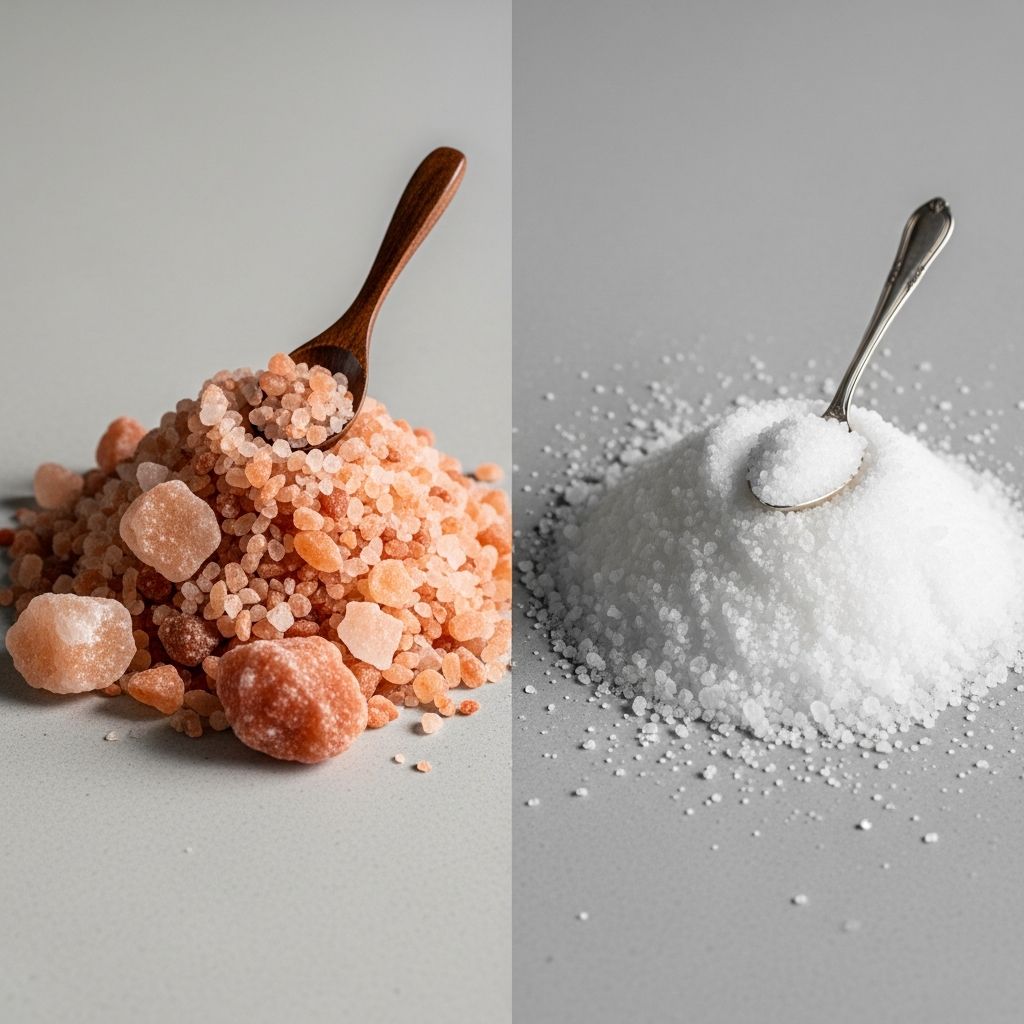
Both Himalayan pink salt and sea salt serve as popular alternatives to refined table salt, offering trace minerals and natural flavors. Himalayan salt, mined from ancient deposits, stands out for its purity and mineral density, while sea salt from evaporated ocean water often carries modern pollutants like microplastics.
What Is Himalayan Salt?
Himalayan salt, also known as pink Himalayan salt, originates from the Khewra Salt Mine in Pakistan, formed from an ancient sea deposit about 200 million years ago. This rock salt is hand-mined, minimally processed, and retains its natural pink hue from iron oxide and over 80 trace minerals, including potassium, zinc, manganese, and copper.
Unlike modern salts, its prehistoric source predates environmental pollution, ensuring it is free from microplastics and heavy metals. The minimal processing preserves these minerals, making it a nutrient-dense option for seasoning and health-conscious cooking.
What Is Sea Salt?
Sea salt is produced by evaporating seawater or from saltwater lakes, often using sun and wind for natural harvesting. This process retains minerals like magnesium, calcium, and potassium, giving it a coarser texture and briny flavor.
However, because it comes from current ocean sources, sea salt frequently contains microplastics—tiny plastic particles found in 90% of tested samples. These contaminants, along with potential heavy metals, raise concerns for long-term health impacts like inflammation and endocrine disruption.
Himalayan Salt vs. Sea Salt: Key Differences
While both salts contain sodium chloride and trace elements, their sourcing, purity, and composition differ significantly. Here’s a detailed comparison:
| Aspect | Himalayan Salt | Sea Salt |
|---|---|---|
| Source | Ancient underground deposit (200M years old), Pakistan | Evaporated modern seawater or lakes |
| Processing | Hand-mined, minimally ground | Evaporated, sometimes refined |
| Color | Pink (iron oxide) | White, gray, pink (varies by source) |
| Minerals | 84 trace minerals (high iron, zinc) | Magnesium, calcium, potassium (variable) |
| Purity | No microplastics, pollutants | Often contains microplastics, heavy metals |
| Flavor | Mild, earthy, slightly sweet | Briny, clean, intense |
This table highlights why Himalayan salt is often preferred for its cleaner profile.
Mineral Content Comparison
Himalayan salt boasts up to 84 trace minerals essential for cellular function, enzymatic reactions, hormonal balance, and nutrient absorption. Key elements include iron (for color and oxygen transport), zinc (immune support), and magnesium (muscle function).
Sea salt provides magnesium, calcium, and potassium but in lower, variable amounts depending on the harvest location. Studies note that while beneficial, these levels are insufficient to significantly impact daily mineral needs compared to a balanced diet.
- Himalayan advantages: Higher density of bioavailable minerals; supports electrolyte balance without additives.
- Sea salt limitations: Mineral variability; potential dilution by pollutants.
Taste and Texture
Himalayan salt offers a subtler, earthier taste with hints of sweetness, ideal for finishing dishes. Its finer crystals dissolve evenly in cooking.
Related Stories



Sea salt delivers a bright, briny punch with larger, crunchier flakes that provide texture as a garnish. The flavor intensity varies by origin, like French Celtic sea salt, which is cleaner but still risks contamination.
Health Benefits and Risks
Both salts improve upon table salt by avoiding anti-caking agents and retaining minerals, potentially aiding hydration and electrolyte replenishment. Himalayan salt’s purity makes it superior: no microplastics linked to inflammation, cancer risks, or neurological issues.
- Supports blood pressure management when used moderately (low intake risks heart issues).
- Himalayan: Promotes better nutrient absorption; zero pollutants.
- Sea salt: Microplastics may cause pulmonary, cardiovascular, and autoimmune concerns.
Excess sodium from any salt raises hypertension risks, so moderation is key—aim for under 2,300 mg daily per health guidelines.
Culinary Uses
Himalayan Salt: Versatile for grinding over salads, meats, or veggies; salt blocks for grilling impart subtle flavor without sogginess. Great in baking for mineral enhancement.
Sea Salt: Flaky types excel as finishers on chocolates, caramel, or roasted foods for crunch and burst of brine. Use in brines or baths for natural minerals.
Choose based on dish: Himalayan for everyday, sea for texture-focused presentations.
Which Is Healthier?
Himalayan pink salt edges out sea salt due to its ancient, uncontaminated source, higher mineral retention, and lack of microplastics. Experts recommend it over table or polluted sea salts for purity and nutrient density.
That said, neither replaces a mineral-rich diet; use sparingly. Celtic sea salt is a cleaner sea option if preferred.
Frequently Asked Questions (FAQs)
Is Himalayan salt better than sea salt?
Yes, Himalayan salt is generally better due to its purity, absence of microplastics, and richer mineral profile from an ancient source.
Does sea salt have microplastics?
Yes, up to 90% of sea salts contain microplastics from ocean pollution, potentially causing inflammation and health issues.
Are Himalayan and sea salt the same?
No, Himalayan is mined rock salt from prehistoric deposits; sea salt is evaporated modern seawater.
Can I use Himalayan salt for cooking?
Absolutely—its mild flavor suits all cooking, baking, and finishing; salt blocks add unique presentation.
Is pink salt natural?
Yes, its pink color and minerals come naturally from iron oxide; no dyes or additives.
Which salt has more minerals?
Himalayan salt contains more trace minerals (up to 84) than most sea salts.
References
- Sea Salt vs. Himalayan Salt: How Are They Different? — Sea Salt Superstore. 2023. https://www.seasaltsuperstore.com/blogs/what-is-salt/sea-salt-vs-himalayan-salt-how-are-they-different
- Himalayan Pink Salt vs Sea Salt: A Smart Guide — Dr. Berg. 2024-05-15. https://www.drberg.com/blog/himalayan-salt-vs-sea-salt
- Himalayan Salt vs Sea Salt: Which is better for you? — The Aging Room. 2023. https://www.theagingroom.com/news/himalayan-salt-vs-sea-salt-which-is-better-for-you
- Himalayan Salt vs. Sea Salt — Dr. Berg (YouTube Transcript). 2023. https://www.youtube.com/watch?v=3AkZN4FFDLE
Similar Articles








Read full bio of Sneha Tete