Hip Fracture: Expert Guide To Symptoms, Treatment & Recovery
Understand the causes, symptoms, treatments, recovery process, and prevention strategies for hip fractures in older adults.
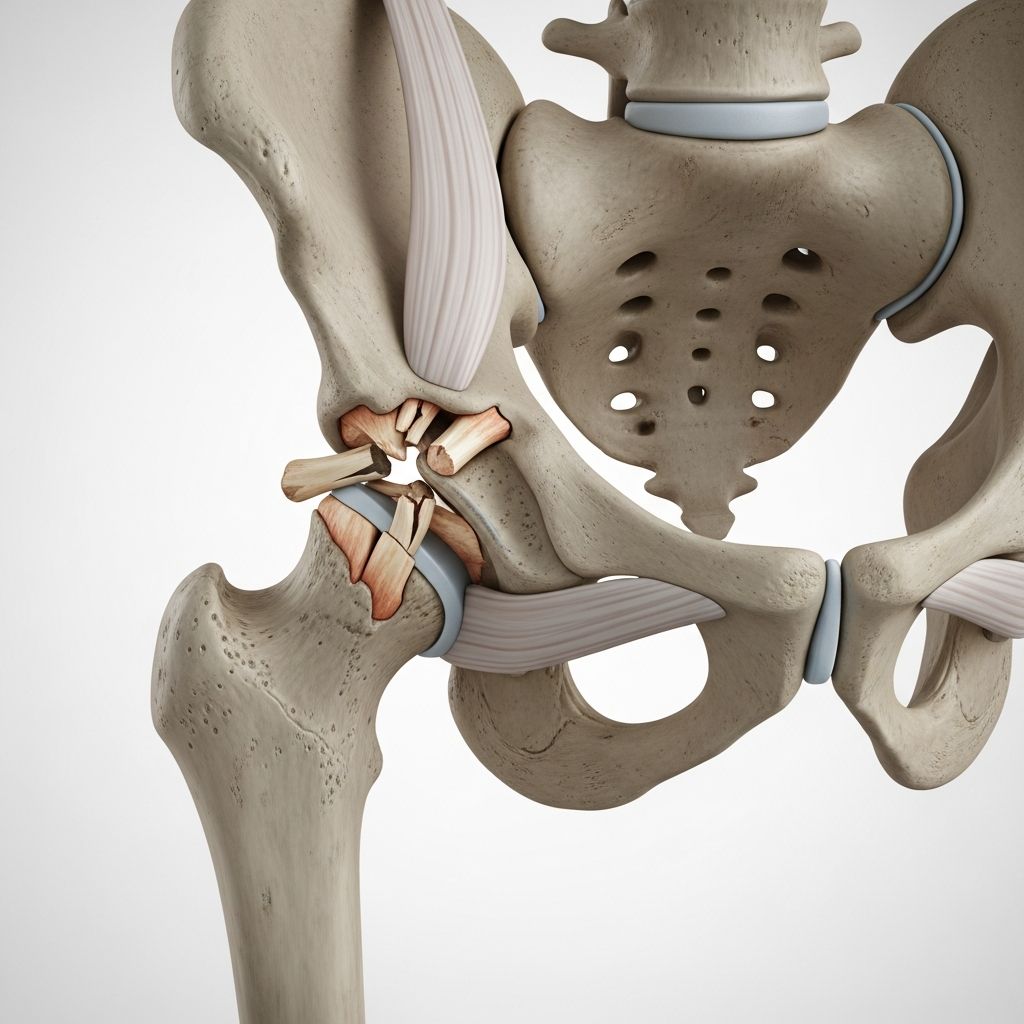
A
hip fracture
is a break in the upper part of the femur (thighbone), often called a broken hip or femoral neck fracture. It primarily affects older adults due to weakened bones from osteoporosis and falls.What is a hip fracture?
A hip fracture occurs when the femur breaks near the hip joint. The hip joint connects the femur to the pelvis, allowing movement. Fractures are classified as
intracapsular
(within the joint capsule) orextracapsular
(outside the capsule), influencing treatment choices.- Intracapsular fractures: Affect the femoral neck inside the capsule; about half of all hip fractures. They risk disrupting blood supply to the femoral head, potentially causing avascular necrosis.
- Extracapsular fractures: Include intertrochanteric (between trochanters) or subtrochanteric types, outside the capsule, with mechanical stability issues.
These fractures demand urgent care to prevent complications like blood clots or pneumonia from immobility.
Hip fracture symptoms
Recognizing symptoms promptly is crucial for timely intervention. Common signs include:
- Severe
pain
in the hip, groin, or outer upper thigh, worsening with movement. - Inability to
stand, walk, or bear weight
on the affected leg. - Leg appears
shorter
andexternally rotated
(turned outward). - Light-headedness from pain or dropping blood pressure.
Diagnosis involves X-rays; MRI or CT scans may confirm subtle fractures.
How common is a hip fracture?
Hip fractures are prevalent among the elderly. In the U.S., over
300,000 occur annually
, mostly in adults 65+ from household falls. Globally, incidence rises with age, linked to osteoporosis. Women face higher risk post-menopause due to bone density loss.What causes a hip fracture?
The primary cause is a
fall from standing height
in older adults withosteoporosis
, where bones are fragile (fragility fracture). Osteoporosis reduces bone density, requiring minimal force for breakage.Other factors:
- High-energy trauma in younger people (e.g., car accidents).
- Risk factors: age >65, female sex, low body weight, smoking, alcohol use, vitamin D deficiency, and comorbidities like dementia or stroke history.
Fragility fractures signal underlying osteoporosis needing evaluation.
Hip fracture treatment
Most require
surgery
within 24-48 hours to relieve pain and enable mobility, reducing complications. Treatment varies by fracture type and patient health.Intracapsular hip fractures
Non-displaced: Internal fixation with screws, nails, plates, or rods holds fragments; promotes quicker healing and mobility. Conservative management (no surgery) is rare, for frail patients, risking displacement and longer hospital stays.
Displaced: Preferred is
hip replacement
(hemiarthroplasty or total hip replacement). NICE recommends total hip replacement for active, independent patients without cognitive impairment. Internal fixation is an alternative but risks non-union.Extracapsular hip fractures
Treated with
sliding compression hip screw
(plate with lag screw for compression) orintramedullary nail
for stability and healing.| Fracture Type | Common Surgical Options | Advantages |
|---|---|---|
| Intracapsular Non-displaced | Internal fixation (screws/plates) | Preserves native hip; faster mobility |
| Intracapsular Displaced | Hip replacement | Lower reoperation risk; better function |
| Extracapsular | Compression screw or IM nail | Stable fixation; good healing |
Surgical goals include euvolemia, multimodal analgesia (regional blocks to minimize opioids), and VTE prophylaxis. Preoperative optimization addresses anemia, AKI, and cardiac issues.
Related Stories



What should I do if I am concerned that I have a hip fracture?
Seek
immediate emergency care
. Do not try to walk; call for help. Pain relief and immobilization en route prevent further damage.What happens when I arrive at hospital?
Expect:
- Assessment of pain, vital signs, and blood loss (possible transfusion).
- X-rays and blood tests.
- Pre-op optimization: fluids, anemia correction, VTE prophylaxis.
- Surgery within 48 hours ideally.
Multimodal pain management with nerve blocks reduces delirium risk.
Hip fracture recovery
Recovery is individualized, spanning
6-8 weeks
for bone healing, longer for full function. Key elements:- Early mobilization: Use walker/crutches; weight-bearing as tolerated per X-rays.
- Physical therapy: Daily to rebuild strength, balance.
- Nutrition: Oral supplements for malnourished patients to aid healing.
- Pain control: Continue multimodal approach.
Discharge to rehab if needed; home with support for others. Full recovery may take months.
Are there any possible complications after a hip fracture?
Complications are common, with 1-year mortality 14-36% in >65. Include:
- Medical: VTE, infection, delirium, pneumonia, bedsores.
- Surgical: Blood loss, non-union, avascular necrosis, implant failure (from poor reduction or instability).
- Long-term: Reduced mobility, chronic pain, dependency.
Early surgery, nutrition, and delirium prevention mitigate risks.
What is the prognosis after a hip fracture?
Prognosis varies: Many regain pre-fracture function with rehab, but 20-30% lose independence. Mortality highest first year, especially in men/frail. Active patients fare better post-replacement.
Can a hip fracture be prevented?
Yes, via:
- Falls prevention: Home safety, balance exercises, vision checks.
- Osteoporosis management: Calcium/vitamin D, bisphosphonates; DXA screening.
- Lifestyle: Quit smoking, limit alcohol, strength training.
Post-fracture, refer for bone protection and PT.
Frequently Asked Questions (FAQs)
Q: How long does it take to recover from a hip fracture?
A: Bone healing takes 6-8 weeks, but full recovery, including mobility, can take 3-12 months with rehab.
Q: Is surgery always needed for hip fractures?
A: Most yes, especially displaced; rare non-surgical cases for very frail patients.
Q: What is the best treatment for displaced intracapsular fractures?
A: Hip replacement, preferably total for fit, active patients.
Q: Can hip fractures be fatal?
A: 1-year mortality 14-36%; complications like infections contribute.
Q: How can I prevent hip fractures?
A: Manage osteoporosis, prevent falls with exercise, home modifications, and nutrition.
References
- Hip Fracture: Causes, Symptoms, and Treatment — Patient.info. 2023. https://patient.info/bones-joints-muscles/hip-problems/hip-fracture
- Femoral Fractures (Types, Symptoms, and Management) — Patient.info. 2023. https://patient.info/doctor/orthopaedics/femoral-fractures
- Update on medical management of acute hip fracture — Cleveland Clinic Journal of Medicine. 2020-04-01. https://www.ccjm.org/content/88/4/237
- Hip Fractures — OrthoInfo – AAOS. 2023. https://orthoinfo.aaos.org/en/diseases–conditions/hip-fractures/
- Complications of hip fractures: A review — PMC – PubMed Central. 2014. https://pmc.ncbi.nlm.nih.gov/articles/PMC4133447/
- Hip Fracture – ORIF — Columbia Orthopaedic Group. 2023. https://education.columbiaorthogroup.com/patient-education-article/hip-fracture-orif-125/
Similar Articles








Read full bio of Sneha Tete