Hip Pain Misdiagnosis: Why It’s Not Always Bursitis
Discover why 90% of hip pain diagnoses may be incorrect and explore alternative causes of your symptoms.
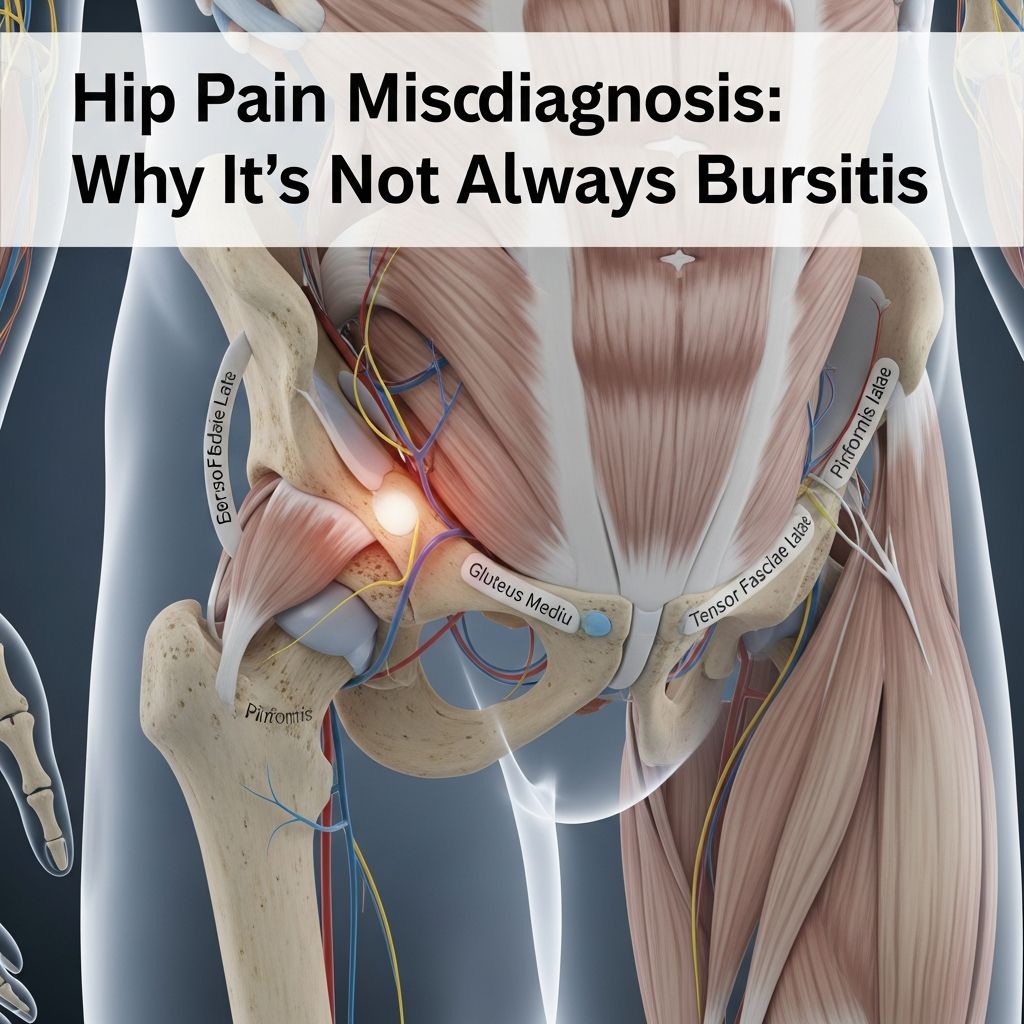
Think That Hip Pain Is Bursitis? Think Again
Hip pain is one of the most common complaints that bring patients to orthopedic specialists and primary care physicians. When someone experiences pain on the outer side of their hip, the automatic assumption from many healthcare providers is that the patient has hip bursitis, or trochanteric bursitis. However, this widespread assumption may be leading to widespread misdiagnosis. According to experts at Harvard-affiliated Massachusetts General Hospital, doctors often assume that pain on the outer side of the hip is due to bursitis. But the reality is far different: 90% of the time, it’s not bursitis. This staggering statistic highlights a critical gap in hip pain diagnosis that affects countless patients seeking relief from their symptoms.
The consequences of this misdiagnosis are significant. When patients receive an incorrect diagnosis, they often undergo treatments designed to address bursitis—such as cortisone injections—when the actual underlying cause of their pain remains untreated. This not only prolongs suffering but can also lead to worsening conditions and unnecessary complications. Understanding the true causes of hip pain is essential for anyone experiencing discomfort in this region, as proper diagnosis leads to effective treatment and faster recovery.
Understanding Hip Bursitis: The Basics
Before exploring why hip bursitis is so frequently misdiagnosed, it’s important to understand what hip bursitis actually is. Bursitis occurs when the bursae—small, fluid-filled sacs that cushion the joints—become inflamed or irritated. In the hip, there are two main types of bursae that commonly experience inflammation:
Greater Trochanter Bursa: Located over the bony point on the outside of the hip, inflammation of this bursa is commonly referred to as trochanteric bursitis. This is the most frequently diagnosed type of hip bursitis.
Iliopsoas Bursa: Situated on the front of the hip, inflammation of this bursa typically causes groin pain and is less commonly diagnosed than trochanteric bursitis.
True hip bursitis symptoms include pain that often comes on suddenly with sharp pain, which may then become more of an ache or dull pain spreading over the hip. Additional symptoms may include difficulty standing for long periods, pain or clicking when moving the hip, stiffness, swelling, and a feeling of warmth around the hip joint. The pain often worsens when lying down on the affected hip or after periods of sitting or walking.
The Overdiagnosis Problem
The tendency to over-diagnose hip bursitis stems from several factors. First, the symptoms of bursitis are fairly common and can overlap with many other conditions. When a patient presents with lateral hip pain, bursitis becomes the default diagnosis. Second, imaging studies like X-rays may show a bursa that appears inflamed, leading clinicians to assume this is the source of the pain without thoroughly investigating other potential causes. Third, the treatment for bursitis—particularly cortisone injections—often provides temporary relief, which reinforces the incorrect diagnosis and perpetuates the cycle of misdiagnosis.
The problem with this approach is that cortisone injections, while potentially offering short-term pain relief, do not address the underlying cause of the pain. In many cases, patients who receive cortisone injections for presumed hip bursitis continue to experience the same pain after the injection. Even worse, repeated cortisone injections can weaken surrounding tissues, potentially leading to more serious problems down the road.
Related Stories



The Real Culprits: What’s Actually Causing Your Hip Pain
If hip bursitis accounts for only about 10% of lateral hip pain cases, what is causing pain in the remaining 90%? The answer lies in several alternative conditions that are frequently overlooked or misattributed to bursitis.
Hip Tendonitis
One of the most common actual causes of hip pain is tendonitis, specifically inflammation of the tendons of the hip abductor and rotator muscles. These are the muscles responsible for moving the leg away from the body’s midline and rotating the hip. When these tendons become inflamed, they can cause a deep ache in the outer hip that feels remarkably similar to bursitis.
What makes hip tendonitis particularly problematic when misdiagnosed as bursitis is that over time, chronically inflamed hip tendons can develop calcific changes. These deposits reduce the elasticity of the tendons and intensify the pain. Unlike bursitis, which typically responds well to rest and anti-inflammatory medications, tendonitis often requires more targeted treatment approaches such as physical therapy, regenerative medicine techniques like Platelet Rich Plasma (PRP) injections, or specialized rehabilitation programs.
Hip Muscle Tears
Small tears in the tendons of the hip muscles represent another frequently misdiagnosed cause of outer hip pain. These micro-tears may occur due to trauma, repetitive stress, or sudden movements. When a tendon has small tears, the muscle’s firing capacity becomes weakened. As the muscle continues to contract repeatedly on this damaged and weakened tendon, it produces a deep pain and ache on the outside of the hip.
The challenge with muscle tears is that they may not be immediately apparent on standard imaging, and their symptoms can closely mimic bursitis. However, the treatment approach differs significantly. While bursitis may benefit from rest and anti-inflammatory medications, muscle tears often require regenerative treatment options such as PRP injections or Bone Marrow Concentrate (BMAC) to promote healing and restore muscle function.
Tight Muscles and Muscle Imbalances
Sometimes, the cause of hip pain is even simpler than inflammation or tears—it can be tight muscles and muscle imbalances. The muscles in the hip and hamstrings can become tightened due to prolonged sitting, repetitive activities, or lack of flexibility. When these muscles are tight and imbalanced, they can pull on the structures around the hip joint, causing pain on the outer hip.
Fortunately, this type of hip pain is often the most straightforward to address. A thorough physical examination by a qualified physician can identify whether hip muscles are stiff or tight. If tissue inflammation or damage is not present, the recommended treatment typically involves simple hip stretches and visits to a physical therapist. However, it’s crucial not to ignore this type of muscle imbalance, as untreated tight muscles can eventually develop into hip tendonitis or glute tears that would require more intensive therapeutic interventions.
Other Conditions Mimicking Hip Bursitis
Beyond the three main conditions discussed above, several other diagnoses can present with symptoms similar to hip bursitis and are frequently misdiagnosed as such:
Osteoarthritis: Hip osteoarthritis can cause pain, stiffness, and reduced range of motion that may seem identical to bursitis, particularly in older adults or those with a history of hip trauma.
Hamstring Avulsion Injury: In this condition, the hamstring muscle partially tears away from the bone, causing significant pain and dysfunction that can be confused with bursitis.
Muscle Sprains and Strains: Injuries to the various muscles surrounding the hip joint can produce symptoms that overlap with bursitis.
Iliopsoas Tendonitis (Snapping Hip Syndrome): This condition involves inflammation of the iliopsoas tendon and can cause pain in the hip region, sometimes accompanied by a snapping or clicking sensation.
The Importance of Proper Diagnosis
Given that 90% of hip pain cases are not actually bursitis, the importance of obtaining a proper diagnosis cannot be overstated. A thorough diagnostic process should include a detailed patient history, comprehensive physical examination, and appropriate imaging studies when necessary. However, imaging alone should not determine the diagnosis. Instead, clinical findings must correlate with imaging results to establish an accurate diagnosis.
When seeking care for hip pain, patients should look for healthcare providers who take time to perform a detailed evaluation and consider the full range of possible causes rather than immediately assuming bursitis. This approach leads to more accurate diagnoses and, consequently, more effective treatment plans.
Treatment Approaches Vary by Diagnosis
One of the most important reasons to obtain an accurate diagnosis is that different conditions respond to different treatments. What works for true hip bursitis may not work for tendonitis, and what helps with muscle tightness will not address a muscle tear.
Treatment approaches may include:
– Rest and activity modification to avoid aggravating the condition- Physical therapy and targeted exercises to improve flexibility and strength- Nonsteroidal anti-inflammatory drugs (NSAIDs) for pain management- Regenerative medicine techniques such as PRP or BMAC injections- Stretching and flexibility programs for muscle tightness- In rare cases, surgical intervention if conservative treatments fail
Pursuing the correct treatment for your specific condition accelerates healing and prevents the development of chronic problems. Conversely, undergoing treatment for a misdiagnosed condition delays recovery and can potentially worsen the underlying problem.
When to Seek Medical Attention
Hip pain that persists, feels severe, or causes concern warrants a visit to a qualified healthcare provider. While hip bursitis itself is not a life-threatening condition, other more serious conditions can appear similar to bursitis, and only a trained physician can accurately identify the difference. If you experience any of the following, seek medical attention promptly:
– Hip pain that lasts more than a few weeks- Severe pain that limits your ability to walk or bear weight- Pain that worsens despite rest and over-the-counter medications- Pain accompanied by significant swelling, warmth, or redness- Pain that develops after a traumatic injury
Frequently Asked Questions
Q: How is hip bursitis actually diagnosed?
A: Proper diagnosis typically involves a physical examination by a healthcare provider, assessment of your symptoms and their history, and potentially imaging studies such as ultrasound or MRI. However, imaging findings must correlate with clinical symptoms to establish a true diagnosis of bursitis.
Q: What makes hip bursitis different from hip tendonitis?
A: Hip bursitis involves inflammation of fluid-filled sacs (bursae) that cushion the joints, while hip tendonitis involves inflammation of the tendons that attach muscles to bone. The treatments differ significantly, making accurate diagnosis essential.
Q: Are cortisone injections effective for hip pain?
A: Cortisone injections may provide temporary pain relief for true bursitis, but they do not address underlying causes such as tendonitis, muscle tears, or muscle imbalances. Repeated cortisone injections can weaken surrounding tissues and lead to complications.
Q: Can tight muscles cause hip pain that mimics bursitis?
A: Yes, muscle tightness and imbalances can cause outer hip pain similar to bursitis. This type of pain typically responds well to stretching, physical therapy, and flexibility exercises.
Q: What should I do if I’ve been diagnosed with hip bursitis but my symptoms persist?
A: If your symptoms continue despite bursitis treatment, seek a second opinion from another qualified healthcare provider. Your pain may stem from a different condition that requires a different treatment approach.
Q: How long does it take to recover from hip pain?
A: Recovery time varies depending on the actual cause of your pain. Muscle tightness may improve within days to weeks with appropriate stretching and therapy, while tendonitis or muscle tears may require several weeks to months of targeted treatment.
Q: Can hip pain be prevented?
A: While not all hip pain is preventable, maintaining good flexibility, strength, and proper posture; avoiding repetitive stress injuries; and engaging in appropriate warm-up and cool-down routines can significantly reduce your risk of developing hip problems.
References
- Hip Bursitis: Symptoms, Causes, Treatments, and Prevention — Healthgrades. 2025. https://resources.healthgrades.com/right-care/bones-joints-and-muscles/hip-bursitis
- Beyond Bursitis: Uncovering Hidden Hip Pain Causes — New Regeneration Orthopedics. 2025. https://newregenortho.com/its-not-hip-bursitis-3-reasons-why-your-hip-hurts/
Similar Articles








Read full bio of medha deb