HIV Treatment Guide In 2025: Key Insights On ART
Comprehensive overview of antiretroviral therapy (ART), its benefits, regimens, side effects, and the latest advancements in HIV management.
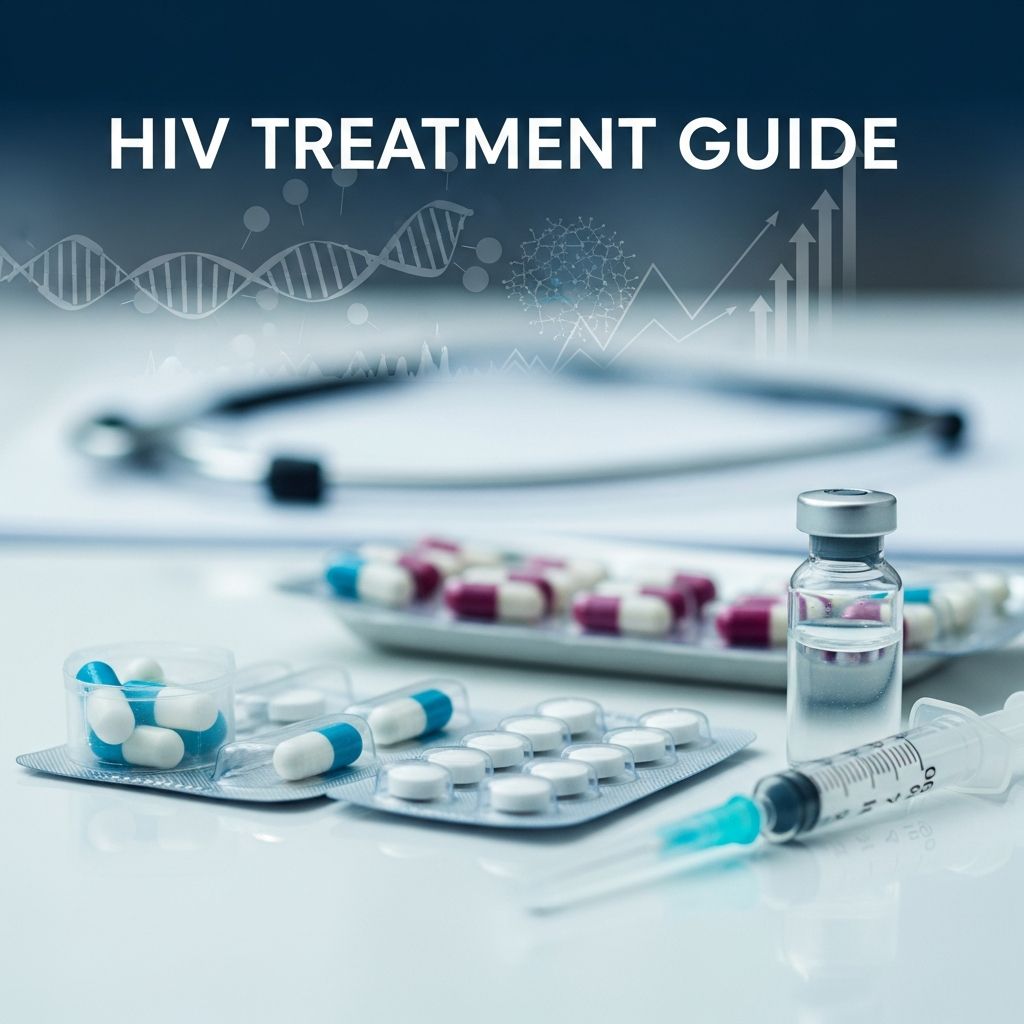
HIV Treatment Guide: Antiretroviral Therapy (ART) Explained
HIV treatment primarily relies on antiretroviral therapy (ART), a combination of medications taken regularly to suppress the virus, restore immune function, and prevent transmission. While no cure exists, ART enables people with HIV to live long, healthy lives by reducing viral load to undetectable levels.
What Is HIV Treatment?
The standard treatment for HIV is antiretroviral therapy (ART), involving daily pills, monthly, or every-other-month injections of multiple HIV medicines. ART is recommended for all people diagnosed with HIV, regardless of disease stage, to halt viral replication, bolster the immune system via increased CD4 cells, and minimize transmission risk.
By preventing HIV from multiplying, ART lowers the viral load—the amount of virus in the blood. An undetectable viral load means effectively no risk of sexual transmission (U=U: Undetectable = Untransmittable) and reduced risk via other routes like shared needles.
How Does ART Work?
HIV medicines target different stages of the virus’s life cycle, grouped into seven classes:
- Nucleoside Reverse Transcriptase Inhibitors (NRTIs): Block HIV’s reverse transcriptase enzyme, preventing viral DNA synthesis.
- Non-Nucleoside Reverse Transcriptase Inhibitors (NNRTIs): Bind directly to reverse transcriptase, inhibiting it.
- Protease Inhibitors (PIs): Prevent maturation of new HIV virions by blocking protease enzyme.
- Integrase Strand Transfer Inhibitors (INSTIs): Stop HIV genetic material from integrating into host DNA.
- Fusion Inhibitors: Prevent HIV from fusing with and entering CD4 cells.
- CCR5 Antagonists and Post-Attachment Inhibitors: Block HIV entry by targeting CD4 cell surface molecules.
- Attachment Inhibitors: Bind to HIV’s envelope protein, halting cell entry.
Regimens combine 2-4 drugs from different classes, tailored to individual factors like side effects, drug interactions, resistance history, and comorbidities.
Who Needs HIV Treatment?
Everyone with HIV should start ART immediately upon diagnosis. Early initiation maximizes immune recovery, reduces morbidity/mortality, and curtails transmission. Delaying allows immune damage and resistance development.
Pregnant individuals, those with advanced disease, or high viral loads benefit most urgently. Primary care providers play a key role in starting and maintaining therapy.
Choosing an HIV Treatment Regimen
Healthcare providers select regimens based on:
- Potential side effects and tolerability.
- Drug interactions with other medications.
- Patient preferences (e.g., pill burden, injections).
- Viral resistance testing results.
- Age, kidney/liver function, and co-infections like hepatitis.
Common initial regimens include two NRTIs plus an INSTI or NNRTI. Long-acting injectables like cabotegravir/rilpivirine offer monthly dosing for better adherence.
| Regimen Type | Examples | Dosing | Pros | Cons |
|---|---|---|---|---|
| Daily Oral | Bictegravir/emtricitabine/tenofovir | 1 pill/day | High efficacy, once-daily | Pill fatigue |
| Long-Acting Injectable | Cabotegravir + rilpivirine | Monthly IM | Discreet, no daily pills | Injection site reactions |
| Protease Inhibitor-Based | Darunavir/ritonavir + 2 NRTIs | 1-2 pills/day | Robust for resistance | GI side effects |
Importance of Medication Adherence
Adherence—taking medicines exactly as prescribed—is critical. Consistent use suppresses viral load, prevents resistance (where HIV mutates to evade drugs), and sustains health. Suboptimal adherence risks treatment failure and limited future options.
Tips for adherence:
- Set daily reminders or alarms.
- Use pill boxes or apps.
- Integrate into routines (e.g., with meals).
- Discuss barriers with providers for regimen switches.
- Join support groups for motivation.
Side Effects of HIV Medicines
Most side effects are manageable; benefits outweigh risks. Common ones include nausea, fatigue, diarrhea, rash, or weight changes. Serious but rare issues: lactic acidosis, liver toxicity, or bone density loss.
Monitor via regular blood tests. Providers adjust regimens if needed. Long-term, ART mitigates HIV-related inflammation, reducing heart, kidney, and cancer risks.
Monitoring HIV Treatment
Regular check-ups track:
- Viral load: Goal—undetectable (<50 copies/mL) within 3-6 months.
- CD4 count: Rises with suppression, indicating immune recovery.
- Kidney, liver function, lipids, bone health.
- Resistance testing if virologic failure.
Quarterly visits initially, then biannually if stable.
Living With HIV: Prevention and Lifestyle
ART reduces transmission to zero sexually (U=U). Still, use condoms, PrEP for partners, avoid sharing needles. Manage co-infections (TB, STIs), vaccinate, eat well, exercise, and screen for non-HIV conditions like CVD.
Progress Toward an HIV Cure
No cure yet; HIV hides dormant in CD4+ T-cell reservoirs, reactivating post-ART cessation. Strategies like ‘shock and kill’ (induce latent virus, then eliminate) are in trials, including IAP inhibitors.
Stem cell transplants cured rare cases (e.g., Geneva patient, 2023) via HIV-resistant donor cells—not scalable. Gene-editing like EBT-101 got FDA fast-track; trials end 2025. Long-acting preventives like lenacapavir advance care.
Functional cures (control sans ART) and sterilizing cures (total elimination) remain goals via ViiV Healthcare and collaborators.
Frequently Asked Questions (FAQs)
What is the first step after HIV diagnosis?
Start ART immediately to suppress the virus and protect health/transmission.
Can HIV be cured?
No, but ART controls it lifelong. Cure research targets reservoirs; rare cases cured via transplants.
What does undetectable viral load mean?
HIV < detectable levels; no sexual transmission risk (U=U).
Are HIV injections available?
Yes, long-acting like cabotegravir/rilpivirine monthly/every 2 months.
How to manage ART side effects?
Report to provider; most resolve or switch regimens. Regular monitoring essential.
Does ART prevent mother-to-child transmission?
Yes, >99% effective with proper use.
References
- HIV Treatment: The Basics — National Institutes of Health (NIH). 2024. https://hivinfo.nih.gov/understanding-hiv/fact-sheets/hiv-treatment-basics
- HIV cure: ending the HIV epidemic — ViiV Healthcare. 2024. https://viivhealthcare.com/ending-hiv/towards-a-hiv-cure/
- HIV and AIDS — World Health Organization (WHO). 2024-07-17. https://www.who.int/news-room/fact-sheets/detail/hiv-aids
- HIV Infection in Adults: Initial Management — American Academy of Family Physicians (AAFP). 2021-04-01. https://www.aafp.org/pubs/afp/issues/2021/0401/p407.html
- HIV Medicines — MedlinePlus (U.S. National Library of Medicine). 2024. https://medlineplus.gov/hivmedicines.html
Similar Articles





Read full bio of Sneha Tete