Hodgkin Lymphoma vs. Non-Hodgkin Lymphoma
Understand the key differences between Hodgkin and non-Hodgkin lymphoma, from symptoms and diagnosis to treatment and prognosis.
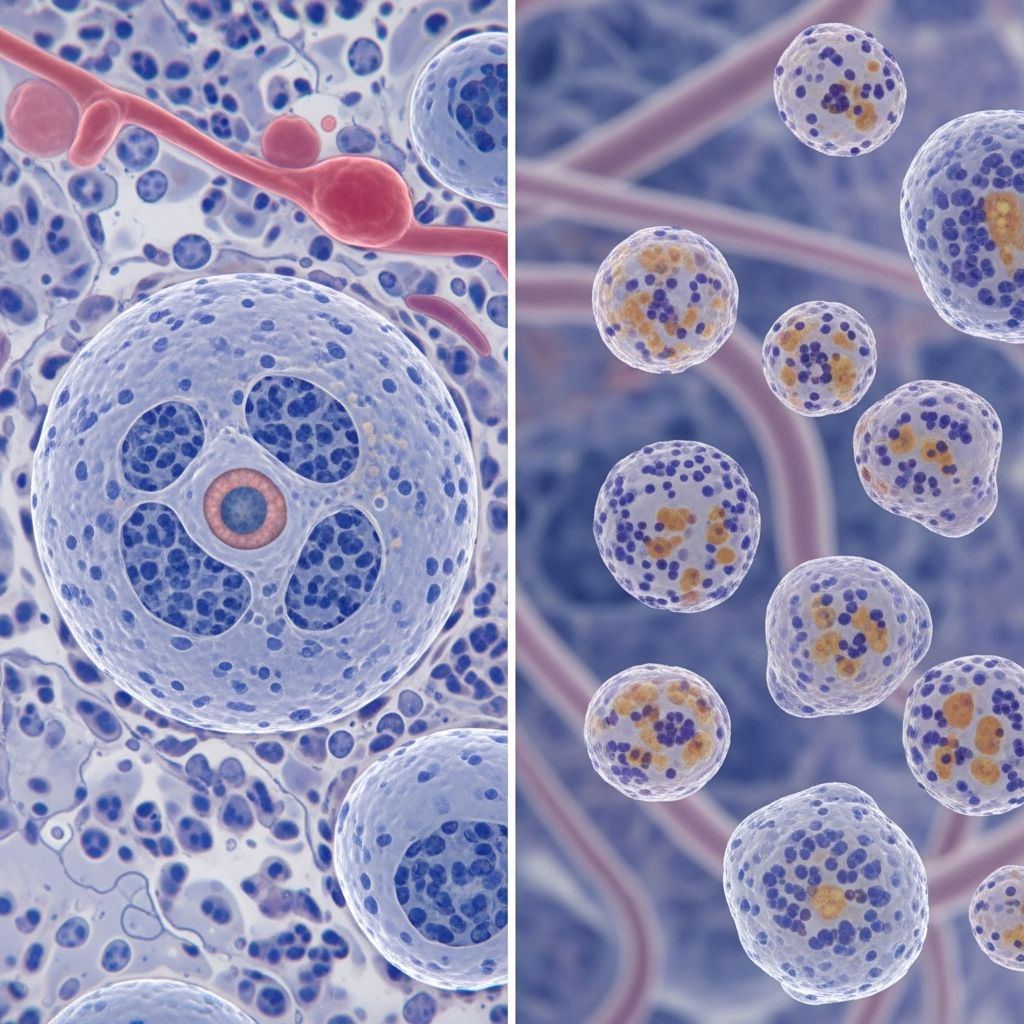
Lymphoma is a type of blood cancer that originates in the lymphatic system, specifically affecting lymphocytes, a kind of white blood cell essential for immune function. There are two primary categories:
Hodgkin lymphoma (HL)
andnon-Hodgkin lymphoma (NHL)
. The key distinguishing feature is the presence of Reed-Sternberg cells in HL, which are absent in NHL. HL accounts for about 10% of cases and is rarer, while NHL makes up 90%, affecting diverse lymphocyte types including B-cells, T-cells, or others. This article breaks down their differences in prevalence, symptoms, diagnosis, spread patterns, subtypes, treatments, and prognosis to provide clarity on these complex conditions.What Are Lymphomas?
The lymphatic system, comprising lymph nodes, spleen, thymus, and bone marrow, circulates lymph fluid carrying lymphocytes that fight infections. When these cells grow uncontrollably, lymphoma develops. HL typically arises from B-cells with Reed-Sternberg cells—large, multinucleated giants identifiable under a microscope. NHL involves various lymphocytes without these cells and can originate from T-cells, B-cells, plasma cells, or NK cells. Both disrupt immune surveillance, but their behaviors differ significantly in spread and response to therapy.
How Common Are They?
**NHL** is far more prevalent, ranking as the seventh-most common cancer in the U.S., with about 80,470 new cases estimated in 2022. Globally, it accounts for 90% of lymphomas.
HL
is rare, representing 0.4% of new cancers, with roughly 8,540 U.S. cases annually. Incidence rates highlight NHL’s dominance, influenced by factors like age and immune status.Who Gets Them?
Age patterns vary markedly. HL peaks bimodally: young adults aged 15-34 (especially 15-24) and those over 55-60, with a median diagnosis age of 39. NHL predominantly affects older adults, median age 67, though it occurs across ages. Both are slightly more common in men. Risk factors for HL include Epstein-Barr virus, family history, and HIV; for NHL, autoimmune diseases, infections, and immunosuppression elevate risk. Swollen lymph nodes in neck, armpits, groin, or abdomen signal potential issues, alongside fever, night sweats, weight loss, fatigue, and itching.
| Aspect | Hodgkin Lymphoma | Non-Hodgkin Lymphoma |
|---|---|---|
| Prevalence | ~10% of lymphomas; 8,540 U.S. cases/year | ~90%; 80,470 U.S. cases/year |
| Median Age | 39 years (peaks 15-34, >55) | 67 years |
| Gender | Slightly more men | Slightly more men |
Symptoms
Both present with
B symptoms
: unexplained fever, drenching night sweats, and weight loss over 10% in six months. Painless lymph node swelling is hallmark, often in neck/chest for HL, widespread for NHL. HL may cause cough or breathing issues from chest involvement; NHL can enlarge spleen/liver or infiltrate bone marrow, causing anemia or infections. Fatigue, chills, and pruritus (itching) occur in both, but NHL’s varied sites lead to diverse manifestations like abdominal pain.Where Does It Start and Spread?
HL usually begins in upper body lymph nodes (neck, chest, armpits), spreading predictably—contiguously to adjacent node groups. This orderly progression aids early detection. NHL arises unpredictably in any nodes (groin, abdomen) or extranodal sites (GI tract, skin, bone marrow), with non-contiguous spread to distant areas. Extranodal involvement is more extensive in NHL (e.g., thyroid, spleen), while HL stays nodal longer.
Diagnosis
Diagnosis starts with physical exam for enlarged nodes, followed by
biopsy
—core needle or excisional. Pathologists seek Reed-Sternberg cells: their presence confirms HL; absence points to NHL. Immunohistochemistry, flow cytometry, and genetic tests classify subtypes. Staging uses PET/CT scans, bone marrow biopsy, blood tests (CBC, LDH), and lumbar puncture if needed. Ann Arbor staging (I-IV) with A/B for symptoms applies to both, but HL’s predictability simplifies it.Related Stories



Types and Subtypes
**HL subtypes** (two categories): Classical HL (90-95%, including nodular sclerosis ~70%, mixed cellularity ~20-25%, lymphocyte-rich, lymphocyte-depleted) features Reed-Sternberg cells prominently. Nodular lymphocyte-predominant HL (5-10%) has “popcorn cells,” grows slowly.
NHL
boasts 60+ subtypes, mostly B-cell (85-90%): diffuse large B-cell (DLBCL, ~30%), follicular (~20%), marginal zone, mantle cell, Burkitt. T-cell NHL (~10-15%) includes anaplastic large cell. DLBCL is aggressive; follicular indolent.- HL Classical Types: Nodular sclerosis (most common, young women), mixed cellularity (older, men, EBV-linked).
- NHL Common: DLBCL (rapid-growing), follicular (slow, incurable but manageable).
Treatment
Treatment mirrors staging/risk.
HL
boasts high cure rates (>90% early-stage) via ABVD chemotherapy (doxorubicin, bleomycin, vinblastine, dacarbazine) plus radiation for bulky disease. Advanced cases use escalated BEACOPP or brentuximab vedotin. Relapsed: stem cell transplant, checkpoint inhibitors (nivolumab).NHL
tailors to subtype: R-CHOP (rituximab + CHOP chemo) for DLBCL; watchful waiting for indolent like follicular. Radiation, CAR-T (axicabtagene ciloleucel), targeted therapies (ibrutinib for mantle cell). Both employ chemo, radiation, immunotherapy; stem cell transplant for high-risk/relapse.| Treatment | Hodgkin Lymphoma | Non-Hodgkin Lymphoma |
|---|---|---|
| Primary | ABVD chemo ± radiation | R-CHOP, subtype-specific |
| Advanced/Relapse | BEACOPP, transplant, PD-1 inhibitors | CAR-T, BTK inhibitors, transplant |
| Curability | 60-75% aggressive; variable indolent |
Prognosis and Survival Rates
HL offers superior outcomes: 89% five-year survival overall (>90% early-stage), thanks to predictable spread and therapy sensitivity. NHL’s 74% five-year rate varies—high for DLBCL if early, lower for advanced (~60%). Factors: age, stage, LDH, performance status (IPI score for NHL). HL’s >90% five-year survival post-treatment underscores its treatability. Ongoing research improves both via immunotherapies.
Frequently Asked Questions (FAQs)
What is the main difference between Hodgkin and non-Hodgkin lymphoma?
The presence of Reed-Sternberg cells defines HL; NHL lacks them.
Which is more common, HL or NHL?
NHL is more common (90% of cases) vs. HL (10%).
What are common symptoms of both?
Swollen nodes, B symptoms (fever, sweats, weight loss), fatigue.
Is HL curable?
Yes, over 80-90% cure rate, especially early.
How is lymphoma diagnosed?
Via lymph node biopsy examining for Reed-Sternberg cells and further tests.
What treatments are used?
Chemo, radiation, immunotherapy; subtype/stage-specific.
Does lymphoma spread differently?
HL: orderly from upper nodes; NHL: random, extranodal.
References
- Differences between Hodgkin and Non Hodgkin lymphoma — YouTube (Medical Video). 2023. https://www.youtube.com/watch?v=tElCKSpV5gM
- Hodgkin’s vs. Non-Hodgkin’s Lymphoma: What’s the Difference? — National Foundation for Cancer Research. 2023-10-12. https://www.nfcr.org/blog/hodgkins-vs-non-hodgkins-lymphoma/
- Difference Between Hodgkin vs Non-Hodgkin Lymphoma — Cancer Treatment Centers of America. 2022. https://www.cancercenter.com/lymphoma/hodgkin-vs-non-hodgkin-lymphoma
- Comparing Hodgkin lymphoma and non-Hodgkin lymphoma — CVS Specialty. 2024. https://www.cvsspecialty.com/resource-center/hodgkin-lymphoma/hodgkin-lymphoma-vs-non-hodgkin-lymphoma.html
- Hodgkin Lymphoma vs. Non-Hodgkin Lymphoma — Moffitt Cancer Center. 2023. https://www.moffitt.org/cancers/lymphomas-hodgkin-and-non-hodgkin/faqs/hodgkin-lymphoma-vs-non-hodgkin-lymphoma/
Similar Articles








Read full bio of Sneha Tete