Holy Basil: 6 Benefits, Uses, and Side Effects
Discover the adaptogenic power of holy basil (tulsi) for stress relief, immunity, blood sugar control, and more in this comprehensive guide.
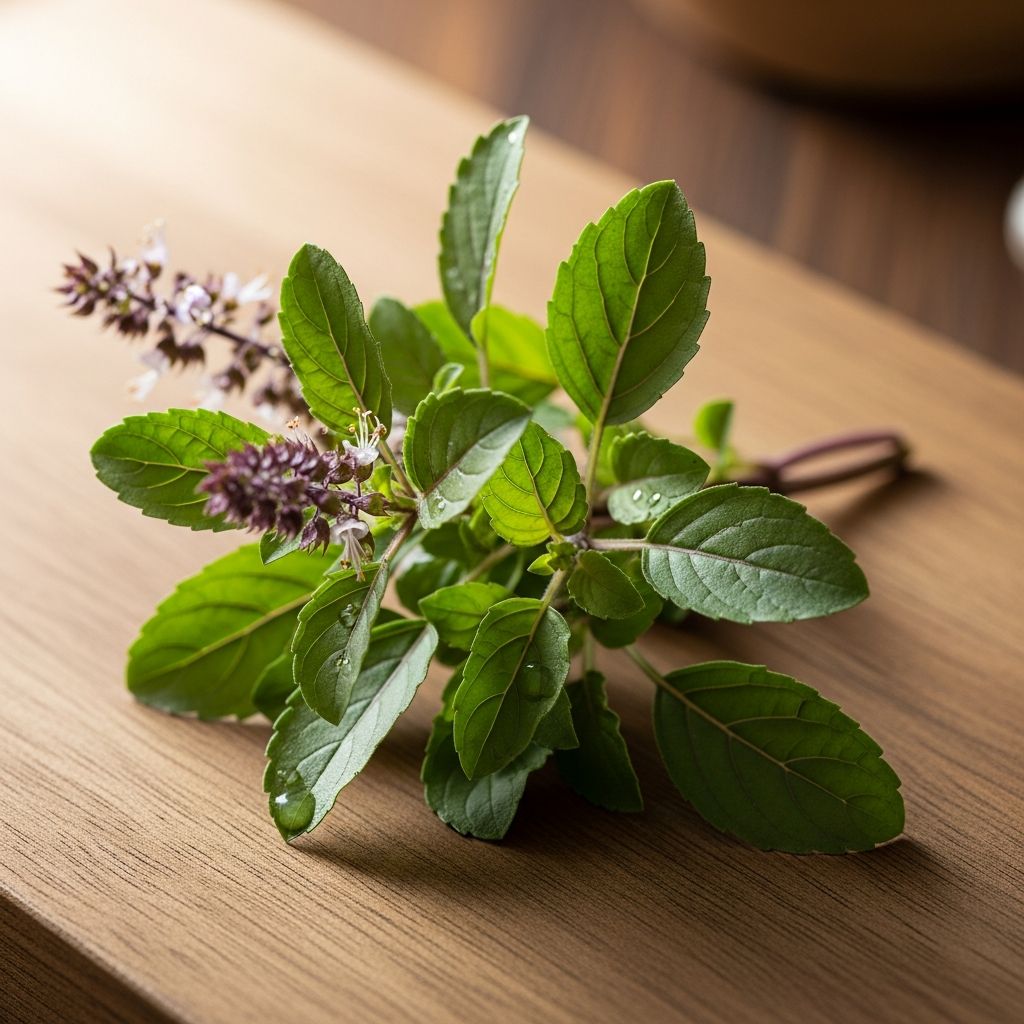
Holy basil (Ocimum sanctum or Ocimum tenuiflorum), known as tulsi in Ayurveda, is an aromatic perennial plant native to the Indian subcontinent and revered as the “Queen of Herbs” for its adaptogenic properties. This herb helps the body adapt to stress, supports immunity, and promotes overall vitality, with traditional uses spanning respiratory health, digestion, and fever reduction. Modern research confirms its anti-inflammatory, antioxidant, antimicrobial, and metabolic benefits, making it a staple in herbal medicine.
What Is Holy Basil?
Holy basil is closely related to sweet basil (Ocimum basilicum) but distinguished by its medicinal potency. In Indian traditions, tulsi symbolizes purity and protection, often grown in homes for spiritual and health benefits. The leaves, stems, seeds, and essential oil contain bioactive compounds like eugenol, rosmarinic acid, ursolic acid, luteolin, and β-caryophyllene, which drive its therapeutic effects including antimicrobial, anti-inflammatory, and adaptogenic actions.
As a secondary adaptogen, holy basil modulates the stress response, elevates adaptive energy, and nourishes vital spirit without overstimulating the body, similar to ashwagandha but with unique uplifting qualities. It’s cultivated ethically through small-scale farming, supporting livelihoods in tropical regions.
6 Benefits of Holy Basil
Backed by preclinical, animal, and limited human studies, holy basil offers multifaceted health support. Here’s a breakdown of its key evidence-based benefits:
- Stress and Anxiety Reduction: Holy basil lowers cortisol levels and balances neurotransmitters, promoting calm. A clinical review confirms its efficacy for psychological stress and lifestyle-related disorders like metabolic syndrome. Human trials show reduced anxiety symptoms after 8 weeks.
- Anti-Inflammatory and Antioxidant Effects: Compounds like eugenol and rosmarinic acid combat oxidative stress and inflammation. Animal studies demonstrate protection against chronic inflammation, with linolenic acid contributing to pain relief.
- Blood Sugar and Metabolic Support: Holy basil reduces fasting blood glucose by up to 60% in studies, improves insulin sensitivity, and lowers cholesterol (total, LDL) while raising HDL. It’s beneficial for diabetes and metabolic syndrome.
- Immune and Antimicrobial Protection: Antiviral, antibacterial, and antifungal properties aid respiratory infections, wounds, and gum disease. During a 1978 encephalitis outbreak, holy basil achieved 60% recovery vs. 0% with conventional care.
- Cardiovascular Health: It normalizes blood pressure, reduces platelet aggregation, and improves lipid profiles, offering cardioprotective effects.
- Cognitive and Other Benefits: Neuroprotective actions support memory and mood; additional perks include liver protection, wound healing, and anticancer potential via apoptosis induction and metastasis inhibition in preclinical models.
How Holy Basil Supports Stress Relief
Holy basil’s adaptogenic nature helps regulate the HPA axis, reducing physical and emotional stress. Users report better sleep and resilience; regular intake yields cumulative calming effects.
How to Take Holy Basil
Holy basil is versatile: consume as fresh leaves, tea, capsules, tinctures, or oil. Start low to assess tolerance.
- Tea: Steep 2-3 fresh leaves or 1 tsp dried in hot water, 2-3x daily. Combine with ginger for digestion.
- Capsules/Extracts: 300-2,000 mg/day standardized to eugenol or ursolic acid. For stress, 500 mg 2x daily.
- Tincture: 10-20 drops in water, 2-3x daily.
- Topical: Oil or paste for wounds, skin issues.
- Dosage Note: Safe up to 8 weeks orally; long-term data limited. Consult a doctor for personalized dosing.
| Form | Typical Dosage | Best For |
|---|---|---|
| Tea | 1-3 cups/day | Digestion, relaxation |
| Capsules | 300-1200 mg/day | Stress, blood sugar |
| Tincture | 15-30 drops, 2x/day | Quick absorption |
| Oil | Topical/diffuse | Skin, aromatherapy |
Holy Basil Side Effects
Holy basil is generally safe for most adults at recommended doses. Common mild effects include nausea or diarrhea at high doses. It may lower blood sugar, risking hypoglycemia in diabetics on medication—monitor closely. Avoid if pregnant, breastfeeding, or trying to conceive, as it may affect fertility. Rare allergic reactions possible; discontinue if rash occurs. No major interactions noted, but consult for blood thinners or antidiabetics.
Precautions
- Not for pregnant/lactating women or fertility seekers.
- Monitor blood sugar if diabetic.
- Quality matters: Choose organic, third-party tested products to avoid contaminants.
- Children: Limited data; use under supervision.
Related Stories



Frequently Asked Questions (FAQs)
What is another name for holy basil?
Holy basil is also called tulsi (Sanskrit/Hindi), Ocimum sanctum, or Ocimum tenuiflorum.
Can holy basil help with anxiety?
Yes, as an adaptogen, it reduces anxiety and stress by modulating cortisol and supporting neurotransmitter balance, per clinical evidence.
Is holy basil safe for daily use?
Up to 8 weeks orally; long-term safety unstudied. Cycle use and consult a healthcare provider.
Does holy basil lower blood sugar?
Yes, studies show significant reductions in fasting glucose and improved metabolic markers.
Can I take holy basil if pregnant?
No, avoid due to potential fertility and pregnancy risks.
How long does holy basil take to work for stress?
Some feel calm immediately; metabolic benefits appear with 4-13 weeks of regular use.
Incorporate holy basil mindfully for optimal benefits, prioritizing whole-food forms like tea alongside a balanced lifestyle.
References
- Holy Basil Benefits | Herbal Medicine | Mederi Center — Mederi Center. 2023. https://medericenter.org/the-mederi-blog/holy-basil-an-herb-with-incomparable-benefits.html
- The Benefits of Holy Basil | Wellness Hub — iHerb. 2019. https://www.iherb.com/blog/benefits-of-holy-basil/2019
- Holy Basil – Special Subjects — Merck Manual Professional Edition. 2025. https://www.merckmanuals.com/professional/special-subjects/dietary-supplements/holy-basil
- What is holy basil, and can it provide health benefits? — Ohio State University Wexner Medical Center. 2024. https://health.osu.edu/wellness/exercise-and-nutrition/holy-basil-good-for-health
- Holy basil: Benefits, side effects, and more — Medical News Today. 2024. https://www.medicalnewstoday.com/articles/holy-basil
- The Clinical Efficacy and Safety of Tulsi in Humans — National Center for Biotechnology Information (PMC). 2017. https://pmc.ncbi.nlm.nih.gov/articles/PMC5376420/
Similar Articles








Read full bio of medha deb