Home Eye Tests: 3 Simple Checks, 7 Essential Tools
Discover simple, effective ways to check vision at home for children and adults, helping detect issues early before professional care.
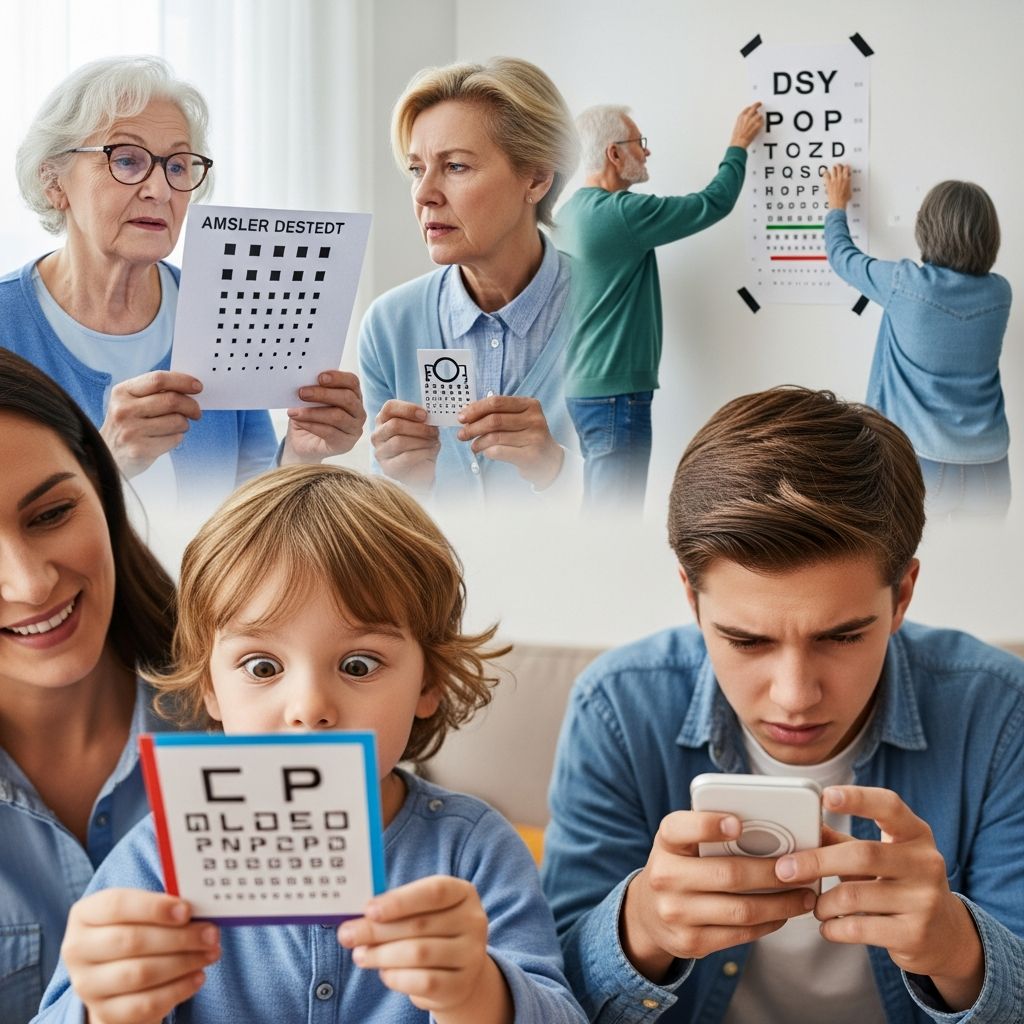
Regular vision checks play a vital role in maintaining overall eye health, and simple home tests offer a convenient way to monitor changes between professional appointments. These assessments can reveal potential issues like reduced sharpness or early signs of conditions affecting the central vision field. While not a replacement for comprehensive exams by eye care professionals, home tests empower families to stay proactive about eyesight.
Why Conduct Home Vision Assessments?
At-home eye evaluations provide quick insights into visual acuity and retinal health, allowing early detection of problems that might otherwise go unnoticed. For instance, distance vision tests measure the ability to see clearly far away, essential for activities like driving or spotting distant objects. Near vision checks assess reading capabilities, crucial for daily tasks. Specialized grids help identify distortions linked to common age-related issues. Families benefit particularly during periods of limited access to clinics, ensuring timely awareness of any decline.
Guidelines from health authorities emphasize starting screenings early in childhood to catch developmental delays, with optotype-based methods recommended from age 3. For adults, routine self-checks complement annual visits, spotting shifts that warrant further investigation.
Essential Tools and Setup for Accurate Testing
To ensure reliable outcomes, gather specific items and create an optimal environment. Key requirements include:
- A printable eye chart calibrated for standard sizes—verify the top symbol measures about 1 inch or 23 mm tall.
- A measuring tape or yardstick for precise 10-20 foot distances.
- Tape, tacks, or clips to secure charts on a wall.
- An eye cover like a paper cup, tissue, or hand (avoid pressure on the eye).
- A pencil for noting results and ideally a helper to call out letters.
- Good lighting, preferably natural or a flashlight for illumination.
- A quiet, window-free space at least 10 feet long.
For digital options, use screens displaying charts at the correct scale. Print materials from trusted sources, folding or clipping as needed for child-friendly versions.
Distance Vision Screening Methods
Distance tests evaluate far vision using Snellen-style charts with letters or symbols arranged in decreasing sizes. Position the chart at eye level, 10-20 feet away depending on instructions.
Steps for Adults and Older Children
- Sit or stand 10-20 feet from the chart in a well-lit area.
- Wear distance glasses if normally used.
- Cover one eye completely without peeking.
- Read lines aloud from largest to smallest, stopping when half the letters are missed.
- Record the smallest line read correctly (e.g., 20/40).
- Repeat for the other eye.
Normal adult vision reaches the 20/20 line. Scores worse than 20/40 suggest consulting a specialist.
Adapting for Younger Children
Children under 5 may not recognize letters, so use Tumbling E or HOTV charts. Demonstrate directions first:
- Print HOTV chart and matching guide.
- Place chart 10 feet away; child sits comfortably.
- Point to symbols; child matches or indicates direction with fingers.
- Credit a line if at least 3 of 5 symbols are identified correctly.
- Expected: 20/40 by ages 3-4, 20/30 by age 5.
| Age Group | Chart Type | Distance | Normal Score |
|---|---|---|---|
| Adults | Snellen/ETDRS | 20 ft | 20/20 |
| 3-4 years | HOTV/Tumbling E | 10 ft | 20/40 |
| 5+ years | Snellen/HOTV | 10-20 ft | 20/30 |
Near Vision Evaluation Techniques
Near tests assess close-up clarity using Jaeger-style charts with paragraphs of varying font sizes. Hold 14 inches from the face.
Related Stories



- Print the chart; ensure J1 (smallest) is readable for 20/20 equivalent.
- Cover one eye; wear reading glasses or bifocals if used.
- Read from smallest readable paragraph upward.
- Note the smallest line (J1-J11) read comfortably.
- Switch eyes and compare.
Difficulty beyond J1-J2 indicates presbyopia or other issues common after age 40.
Detecting Central Vision Distortions with Grid Tests
The Amsler grid screens for macular problems like age-related degeneration. It features a dot-centered graph of intersecting lines.
- Print a standard grid.
- In good light, hold 14 inches away.
- Cover one eye; stare at the center dot.
- Note if lines appear wavy, missing, or blurred.
- Repeat per eye.
Straight, uniform lines are normal. Any distortion signals urgency for professional evaluation.
Understanding Your Test Results
Interpret scores contextually:
- 20/20: Standard normal vision.
- 20/40: Acceptable for many kids; adults may need correction.
- Worse than 20/50: Seek exam promptly.
- Unequal eyes or changes over time require attention.
For children, track progress annually. Vision worse than age norms or sudden drops merit immediate care.
Common Pitfalls and Best Practices
Avoid errors like poor lighting, incorrect distances, or peeking. Test when rested, not fatigued. Glasses must match the task—distance for charts, reading for near. Children need engagement; use games for cooperation. Retest if inconsistent.
When to Schedule a Professional Exam
Home tests flag issues but lack depth for color vision, fields, or refraction. See an eye doctor if:
- Scores below norms.
- Grid distortions or blind spots.
- Symptoms like headaches, double vision, or family history risks.
- No exam in 1-2 years (adults) or per pediatric schedules.
Instrument-based screenings suit non-participants.
Frequently Asked Questions (FAQs)
Can home tests replace doctor visits?
No, they screen but don’t diagnose fully.
What if a child refuses to participate?
Use fun charts, short sessions; consider professional screening.
How often should we test?
Quarterly monitoring or if symptoms arise; annually routine.
Are phone apps reliable?
Only if calibrated; prefer printable standards.
What about color blindness?
Home tests don’t cover; needs specialist plates.
Promoting Lifelong Eye Wellness
Integrate home checks into routines alongside healthy habits: UV protection, screen breaks, balanced diet. Early intervention preserves vision long-term. Share charts with schools or communities for broader impact.
References
- Home vision tests — UCSF Health. 2023. https://www.ucsfhealth.org/medical-tests/home-vision-tests
- Home Eye Test — Safe Eyes America. 2020. https://www.safeeyesamerica.org/home-eye-test
- Is a Home Vision Test as Good as Seeing an Eye Doctor? — Glasses.com. 2023. https://www.glasses.com/gl-us/blog/home-eye-test
- AAO visual acuity guide — VA Eye. 2020-04-01. https://www.vaeye.com/wp-content/uploads/2020/04/AAO-visual-acuity-guide-1.pdf
- Home Visual Acuity Testing — Associated Eye Care. 2023. https://www.associatedeyecare.com/wp-content/uploads/AEC-Home-Vision-Testing.pdf
- Vision Screening Guidelines by Age — Prevent Blindness. 2023. https://preventblindness.org/vision-screening-guidelines-by-age/
Similar Articles








Read full bio of medha deb