Home IV Antibiotics: 6-Step At-Home Routine For Safe Recovery
Discover how home intravenous antibiotic therapy offers safe, effective treatment for serious infections while allowing patients to recover comfortably at home.
Receiving intravenous (IV) antibiotics at home represents a transformative approach to managing serious bacterial infections. This method enables patients who are stable enough to leave the hospital to complete their treatment course in a familiar environment, promoting comfort, independence, and substantial healthcare savings. Programs like Outpatient Parenteral Antimicrobial Therapy (OPAT) have demonstrated high success rates, with studies showing cure rates exceeding 90% in appropriately selected cases.
Understanding the Need for IV Antibiotics
Serious infections such as osteomyelitis, endocarditis, cellulitis, and vascular graft infections often require high doses of antibiotics delivered directly into the bloodstream via IV. Oral medications may not suffice due to poor absorption or inadequate potency against resistant bacteria. Hospital initiation ensures close monitoring for initial responses and adverse reactions. Once stabilized, transitioning to home care becomes feasible for many patients aged 19 to 84, as evidenced by pilot programs treating diverse conditions effectively.
Who Qualifies for Home-Based IV Treatment?
Not every patient is a candidate for home IV antibiotics. Eligibility depends on factors like infection stability, home environment suitability, and support availability. Ideal candidates feel well aside from the infection, have no complicating comorbidities requiring hospitalization, and reside in accessible locations. Healthcare teams assess:
- Ability to follow schedules (1-3 doses daily for 1-8 weeks)
- Presence of a reliable caregiver or self-administration capability
- Access to refrigeration for antibiotic storage
- A clean workspace free from contaminants
Contraindications include unstable vital signs, frequent complications, or lack of phone access for emergencies. Providers coordinate rapid transitions, often within hours of physician orders.
The Transition from Hospital to Home
The shift to home therapy begins in the hospital. Patients receive their first doses under supervision to confirm tolerance. A home health nurse conducts an initial visit for hands-on training in administration techniques. This education covers aseptic handling, recognizing complications, and adherence to dosing intervals critical for efficacy. Pharmacies premix antibiotics, delivering them refrigerated until use. Supervised practice sessions ensure competence before discharge.
Essential Equipment and Daily Routine
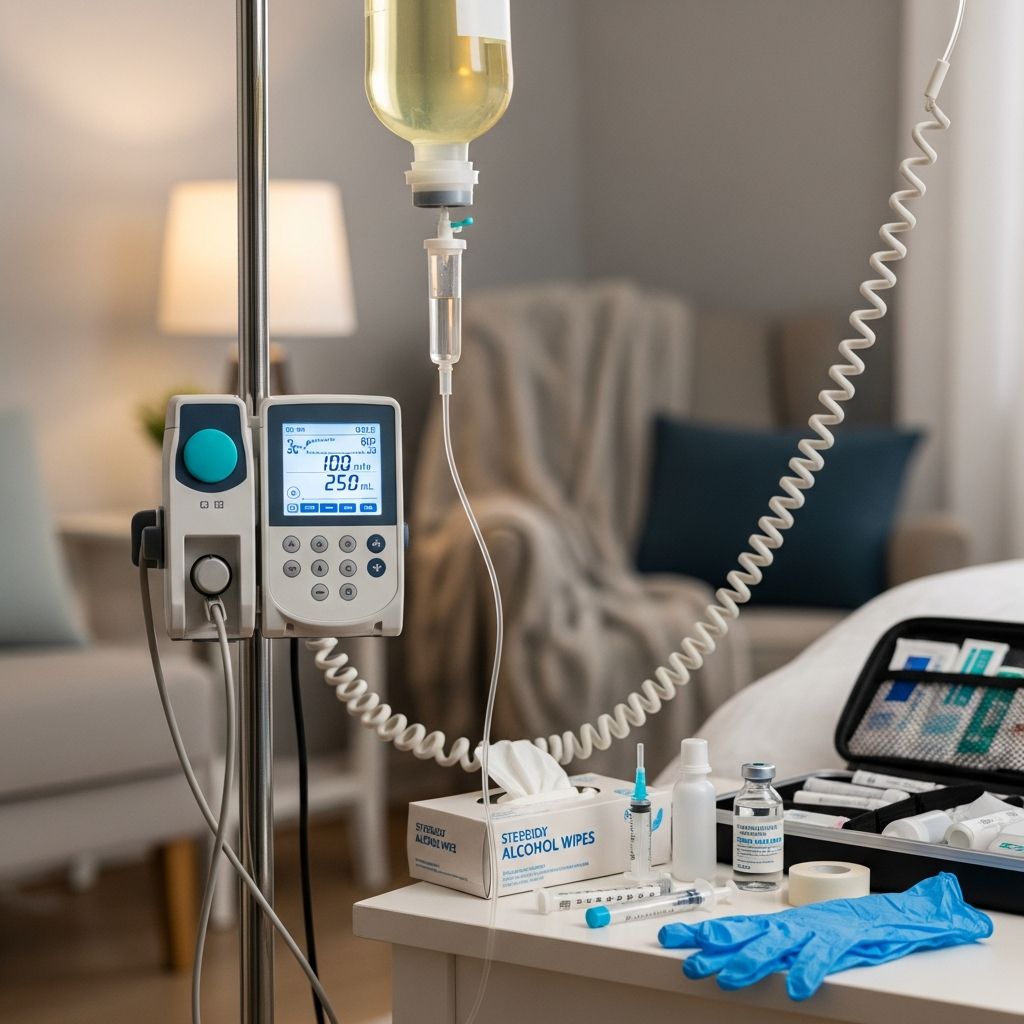
Key supplies include a peripherally inserted central catheter (PICC) line for secure venous access, elastomeric infusors (balloon-like devices releasing medication steadily), saline syringes for flushing, alcohol swabs, tape, and a portable waist bag for mobility. Here’s a typical step-by-step process:
- Warm the infusor to room temperature.
- Clean the workspace with soap and water.
- Gather supplies: infusor, two saline syringes (NaCl), swabs, tape, bag.
- Flush the PICC line with saline before and after infusion.
- Connect the infusor, open the clamp, and monitor flow until empty (typically hours).
- Secure tubing and discard used items properly.
Infusors deflate as they deliver medication, allowing patients to maintain daily activities. Nurses visit weekly for PICC dressing changes and blood draws.
Role of Healthcare Providers in Home Care
A multidisciplinary team supports home IV therapy: infectious disease specialists prescribe and monitor via weekly labs and clinic visits; nurses handle training, site care, and troubleshooting; pharmacists ensure precise compounding. Community teams may administer doses or empower self-injection after assessment. Contact details for 24/7 support prevent unnecessary readmissions.
Related Stories



| Aspect | Home IV | Hospital IV |
|---|---|---|
| Setting | Familiar environment | Inpatient ward |
| Cost Savings | $112+ per day | Higher due to bed occupancy |
| Duration | 11-44 days typical | Prolonged stays |
| Monitoring | Weekly visits/labs | Daily nursing |
| Patient Autonomy | High (self-admin) | Low |
Safety Measures and Complication Prevention
Home IV therapy boasts low complication rates, with studies reporting no major issues in cohorts of 20+ patients. Common risks include line occlusion, phlebitis, or infusion reactions, mitigated by strict hygiene and protocols. Patients learn to:
- Inspect sites daily for redness/swelling.
- Avoid tugging PICC lines.
- Report fever, chills, or pain immediately.
Blood tests track drug levels, renal function, and infection markers. First doses at home follow reaction protocols. Cure achieved in 90% of cases, reducing hospital throughput needs by 86-107 patients yearly.
Financial and Lifestyle Benefits
Beyond clinical outcomes, home IV cuts costs significantly—mean savings of $112 daily across 538 treatment days. Patients avoid disrupted routines, returning to work or family life sooner. Reduced bed usage optimizes hospital resources for acute cases. Quality-of-life improvements stem from comfort and mobility.
Alternatives When Home IV Isn’t Suitable
For non-qualifiers, options include skilled nursing facilities, daily clinic visits, or switching to oral equivalents if clinically viable. Providers tailor plans, ensuring continuity without compromising care.
Frequently Asked Questions (FAQs)
What conditions are treated with home IV antibiotics?
Osteomyelitis, endocarditis, septic arthritis, cellulitis, and device-related infections.
How long does treatment last?
Typically 1-8 weeks, 1-3 doses daily.
Can family members administer doses?
Yes, after nurse-led training and hospital assessment.
What if complications arise?
Contact the team immediately; rapid assessment may lead to readmission if needed.
Do I need special storage?
Yes, refrigerate infusors until use; inform if unavailable.
Patient Success Stories and Evidence
Pilot programs confirm tolerability and efficacy: 18/20 patients cured, spanning ages 19-84. Broader adoption via OPAT/OPIVA/HITH services expands access. Ongoing monitoring ensures sustained improvements in infection control and patient satisfaction.
References
- Home intravenous antibiotic therapy. A safe and effective alternative — PubMed. 1995. https://pubmed.ncbi.nlm.nih.gov/7891605/
- Home Intravenous Antibiotic Therapy – Infectious Diseases — JAMA Network. 2019-01-29. https://jamanetwork.com/journals/jama/fullarticle/2737175
- Infused Antibiotics at Home — Advocate Health. 2024. https://www.advocatehealth.com/health-services/advocate-health-at-home/home-infusion-services/infused-antibiotics
- Intravenous antibiotic treatment at home | 3/5 — YouTube. N/A. https://www.youtube.com/watch?v=vHZcHVNgzGo
- Intravenous antibiotics at home — Healthify.nz. N/A. https://healthify.nz/medicines-a-z/i/intravenous-antibiotics-at-home
Similar Articles








Read full bio of medha deb