Home Phototherapy: Guide To Safe, Effective UVB
Safe, effective home-based UV light therapy for treating psoriasis, eczema, vitiligo and more under medical supervision.
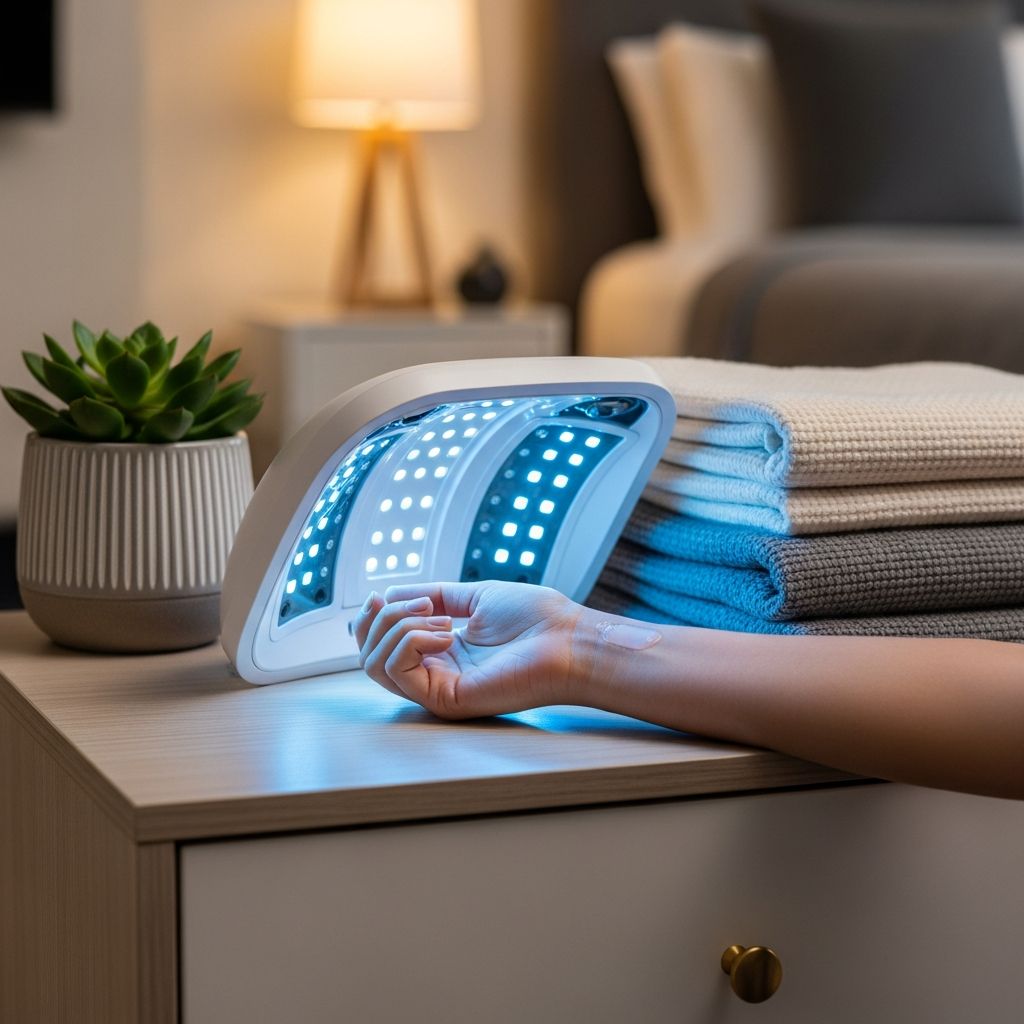
Home phototherapy provides a convenient and effective non-drug treatment option for various skin disorders, allowing patients to receive ultraviolet (UV) light therapy in the privacy of their own homes under medical supervision.
What is home phototherapy?
Home phototherapy involves the use of specialized medical devices that emit controlled wavelengths of ultraviolet light, primarily narrowband ultraviolet B (nbUVB), to treat inflammatory skin conditions. Unlike commercial tanning beds, these units deliver precise, therapeutic UV radiation that suppresses DNA synthesis in skin cells, reducing inflammation, scaling, and abnormal cell proliferation without the cancer-causing wavelengths found in tanning equipment.
The therapy works by penetrating the epidermis to modulate immune responses, promote pigmentation in depigmented areas, and slow keratinocyte hyperproliferation common in diseases like psoriasis. Treatment sessions are short, typically 2-10 minutes, and administered 2-3 times per week, with dosing tailored to skin phototype to minimize risks.
Physician oversight is essential, including initial assessment, device prescription, dosing schedules, and regular follow-ups to monitor progress and adjust protocols. Not all dermatologists supervise home therapy due to concerns over misuse, but growing evidence supports its safety and noninferiority to clinic-based treatment.
Who is home phototherapy suitable for?
Home phototherapy is ideal for patients with chronic skin conditions requiring frequent treatments who face barriers to clinic access, such as long travel distances, work commitments, or living in remote areas. It suits motivated individuals committed to adherence, capable of following precise instructions, and without contraindications like photosensitivity disorders, active skin infections, or history of skin cancer.
Candidates typically have mild-to-moderate disease responsive to phototherapy. Patient selection involves evaluating skin phototype (I-VI), medical history, and ability to self-administer safely. Children over 12, pregnant individuals (with caution), and people of all skin tones can benefit, as studies show consistent efficacy across phototypes.
It is not suitable for acute flares, widespread infections, or patients unable to commit to monitoring. Results vary; some achieve clearance in 12 weeks, while others require maintenance therapy.
Skin conditions treated by home phototherapy
- Psoriasis: Plaque, guttate, or palmoplantar types respond well to nbUVB, reducing plaques, scales, and itch. The LITE study showed 60% of adherent patients achieving clear/almost clear skin after 12 weeks, comparable to office therapy.
- Atopic dermatitis (eczema): Reduces inflammation and itch in moderate cases, especially when topical treatments fail.
- Vitiligo: Promotes repigmentation, particularly on face/neck; home units address access barriers for consistent twice-weekly use.
- Chronic urticaria: Clears hives unresponsive to antihistamines.
- Localized scleroderma (morphea): Softens plaques and improves flexibility.
- Graft-versus-host disease: Manages cutaneous manifestations post-transplant.
- Prurigo nodularis and other itch disorders: Alleviates severe pruritus.
Response rates: Psoriasis clearance in 60-80% of adherent patients; vitiligo repigmentation in 50-75% over 6-12 months. Not all patients respond equally; combination with topicals enhances outcomes.
Devices available for home phototherapy
Home units range from compact, targeted devices to full-body cabinets, all FDA-cleared for medical use and emitting nbUVB at 311-313 nm, the optimal wavelength for efficacy with minimal side effects.
| Type | Description | Best For |
|---|---|---|
| Hand-held wands | Small, portable UVB emitters for precise spot treatment. | Small patches (hands, feet, face). |
| Table-top panels | Flat panels for limbs or torso sections. | Localized areas like arms/legs. |
| Pod/booth units | Upright standing cabinets enclosing the body. | Full-body or extensive disease. |
| Half-body cabinets | Smaller enclosures for upper/lower body. | Moderate coverage needs. |
Related Stories



Devices include timers, skin-type dosing charts, and logs for tracking exposure. Manufacturers like Daavlin provide units for studies, with rentals/purchases covered variably by insurance.
How is home phototherapy prescribed?
Dermatologists prescribe after confirming suitability via exam, phototype assessment (Fitzpatrick scale), and minimal erythema dose (MED) testing if needed. Protocols specify wavelength (nbUVB preferred), starting dose (e.g., 50-70% MED), frequency (2-3x/week), maximal weekly dose, and duration (8-12 weeks induction).
- Patient education on setup, eye protection, dosing, and logging.
- Device delivery/setup by vendor.
- Initial treatments at low dose, incremental increases (20-40% per session).
- Weekly logs submitted; office visits every 4 weeks for PGA/DLQI assessment.
- Maintenance: Reduced frequency post-clearance.
Adherence is higher at home (51% vs 16% full course completion).
Safety of home phototherapy
Controlled nbUVB minimizes risks compared to broadband UVB or PUVA. Common side effects: Erythema (36%), itch (8%), dryness (1%), rare blisters (1%). No increased skin cancer risk in studies up to 30 years; long-term data reassuring.
Safety features in modern units:
- Built-in timers with auto-shutoff.
- Skin-type specific dosing programs.
- UVA-block filters.
- Patient verification systems (e.g., RFID).
- Exposure logs downloadable to physicians.
Precautions: Protective eyewear mandatory; cover genitals, lips. Avoid photosensitizers. Monitor for burns; stop if severe erythema. Contraindications: Lupus, xeroderma pigmentosum, arsenic history.
Effectiveness of home vs office phototherapy
The LITE trial (783 patients) proved home nbUVB noninferior to office: 62% vs 60% clear/almost clear PGA at 12 weeks; similar DLQI improvements. Home patients adhered 3x better, with lower burden/costs. Erythema slightly higher at home (5.9% vs 1.2% sessions) but no discontinuations.
Psoriasis: 33% overall clear (60% adherers). Vitiligo: 50-70% repigmentation with consistent use. Quality of life gains sustained; patient-centered design boosts satisfaction.
Access and insurance coverage
Many insurers cover home units if criteria met (e.g., failed topicals, distance >30 miles to clinic). Prior authorization requires physician letter. Rentals (~$300-500/month) cheaper long-term than office visits. Programs like PCORI-supported trials expand access.
Frequently Asked Questions
What is the main difference between home and clinic phototherapy?
Both use identical nbUVB wavelengths; home offers convenience/higher adherence with physician oversight via logs/visits.
Is home phototherapy safe for dark skin?
Yes; LITE study confirmed equal efficacy across phototypes I-VI.
How long until I see results?
Psoriasis: 4-12 weeks; vitiligo: 3-6 months. Consistency key.
Does insurance cover home units?
Often yes for medically necessary cases; check policy.
Can children use it?
Yes, ages 12+ under supervision.
Conclusion
Home phototherapy empowers patients with safe, effective treatment mirroring clinic outcomes, enhanced by convenience and adherence. Consult a dermatologist to determine suitability.
References
- Home phototherapy – DermNet — DermNet NZ. 2023. https://dermnetnz.org/topics/home-phototherapy
- At-home phototherapy proves effective for psoriasis treatment — News-Medical.net. 2024-10-24. https://www.news-medical.net/news/20241024/At-home-phototherapy-proves-effective-for-psoriasis-treatment.aspx
- Home-Based Phototherapy for Psoriasis as Effective as Office-Based Treatment With Less Patient Burden — AJMC. 2024. https://www.ajmc.com/view/home-based-phototherapy-for-psoriasis-as-effective-as-office-based-treatment-with-less-patient-burden
- Home phototherapy for patients with vitiligo: challenges and solutions — PubMed. 2019-07-29. https://pubmed.ncbi.nlm.nih.gov/31388308/
- Phototherapy for Dermatologic Conditions — BCBSTX Medical Policies. 2025-01-01. https://medicalpolicy.bcbstx.com/content/dam/bcbs/medicalpolicy/pdf/therapy/THE801.033_2025-01-01.pdf
Similar Articles








Read full bio of Sneha Tete