Home Pregnancy Tests: Complete Guide To Accurate Results
Discover how home pregnancy tests work, their accuracy levels, optimal usage tips, and when to seek professional confirmation for reliable results.
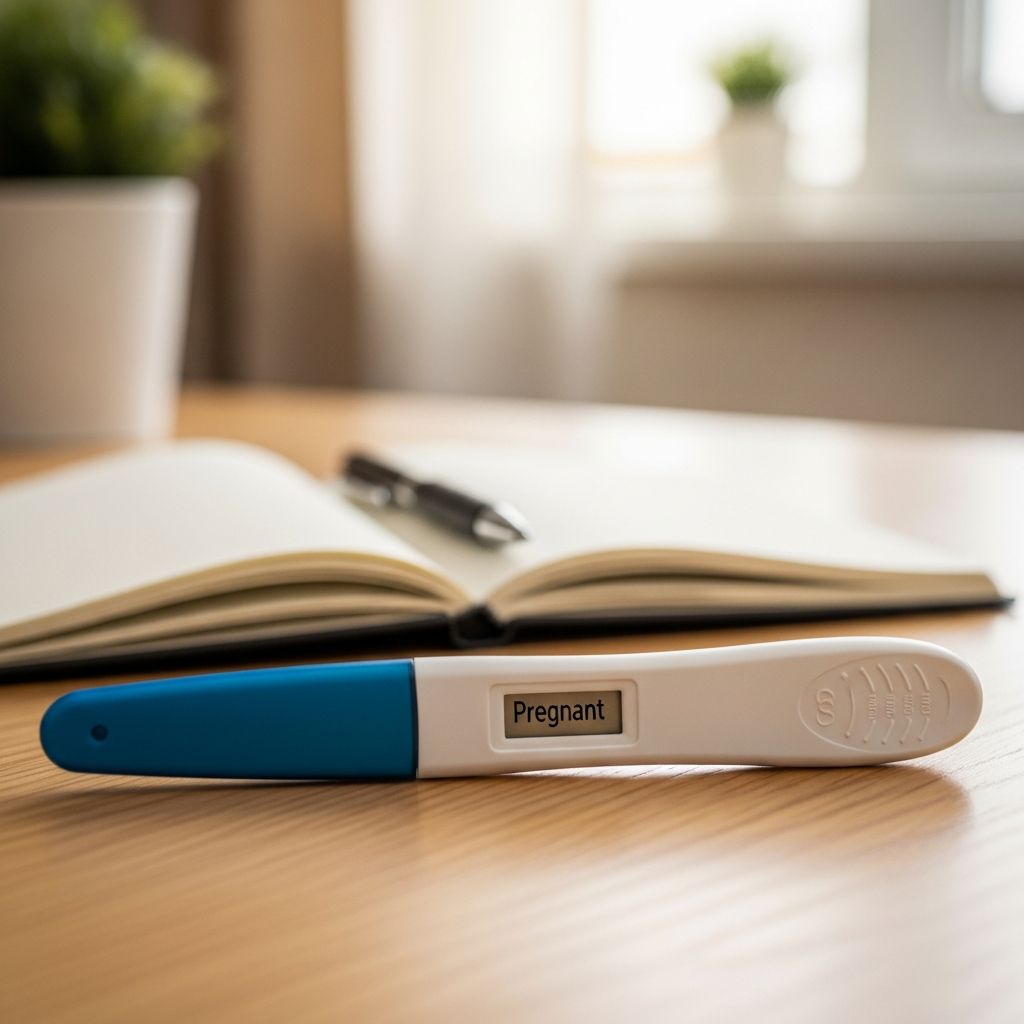
Home pregnancy tests offer a quick, private way to detect pregnancy by measuring human chorionic gonadotropin (hCG), a hormone produced after implantation. These kits typically achieve over 99% accuracy when used correctly after a missed period, though early testing reduces reliability due to low hCG levels.
Understanding hCG and How Tests Detect Pregnancy
The key to any home pregnancy test is its ability to identify hCG in urine. This hormone rises rapidly after a fertilized egg implants in the uterus, usually 6-12 days post-ovulation. Tests use antibodies that bind to hCG, triggering a color change or digital readout.
Sensitivity varies: some detect as low as 6.3 mIU/mL hCG, ideal for early use, while others need 25 mIU/mL or more. For 95% detection on the expected period day, a sensitivity of about 12.4 mIU/mL is required. Tests claiming 25 mIU/mL sensitivity often promise 99% accuracy from that day and detection up to 4 days prior.
- hCG rise pattern: Doubles every 48-72 hours in early pregnancy.
- Urine vs. blood: Urine tests are convenient but less sensitive than blood tests, which detect lower levels sooner.
- Implantation timing: Occurs 8-10 days after ovulation, affecting when hCG becomes detectable.
Timing Your Test for Maximum Accuracy
The biggest factor in test reliability is timing. Testing too early risks false negatives because hCG may not yet be sufficient. Manufacturers provide detection rates relative to the expected period day.
| Test Type | Days Before Expected Period | Accuracy Rate |
|---|---|---|
| Early Detection (e.g., First Response) | 5 days | 76% |
| Standard Early Tests | 4 days | 93% |
| Most Brands | 3 days | 98-99% |
| After Missed Period | Day of/after | >99% |
First morning urine is best, as it’s most concentrated with hCG. Diluted urine from daytime hydration can lower detection odds. Wait at least 3 weeks from unprotected sex or use cycle-tracking apps for precision.
Types of Home Pregnancy Tests Available
Options range from basic strips to advanced digital models, each with pros and cons.
- Strip tests: Dip in urine or midstream; affordable but faint lines can confuse users. Sensitivity around 25 mIU/mL; 99% accurate post-miss.
- Midstream wands: Hold in urine stream; user-friendly like First Response (6.3 mIU/mL sensitivity, >99% at 3 days before period).
- Digital tests: Display “Pregnant” or “Not Pregnant”; eliminates interpretation errors. Brands like Clearblue offer weeks estimators via hCG levels.
Choose based on needs: early testers prefer high-sensitivity wands; budget users opt for strips.
Factors That Can Affect Test Results
Even high-quality tests falter if mishandled. Common pitfalls include:
- Diluted urine: Drink less before testing; first morning is optimal.
- Medications: Fertility drugs with hCG can cause false positives; most others don’t interfere.
- Medical conditions: Rare cysts or tumors produce hCG; recent miscarriage may linger.
- User error: Not following wait times (usually 1-5 minutes) or reading after the window leads to evaporation lines.
- Expiration: Old kits lose sensitivity; check dates.
Studies show tests must detect 25 mIU/mL reliably for 99% accuracy on expected period day, with no false positives.
Related Stories



Comparing Popular Pregnancy Test Brands
Not all tests perform equally. Independent evaluations reveal discrepancies between claims and reality.
| Brand | Sensitivity (mIU/mL) | Early Accuracy (5 Days Before) | Notes |
|---|---|---|---|
| First Response Early Result | 6.3 | 76% | Top for early detection; >99% at 3 days before. |
| Clearblue Early Detection | 25 | 77% | 93% at 4 days; digital options available. |
| Clearblue Digital | 25 | 78% | Highest at 5 days; weeks indicator. |
| Easy@Home Strips | 25 | Not recommended early | 99% post-miss; cost-effective. |
Brands meeting FDA standards (e.g., Clearblue, First Response) consistently hit claims, unlike some with exaggerated early-detection promises.
Interpreting Results: Positive, Negative, or Invalid
Clear instructions prevent misreads. Positive: bold line or “Pregnant”—confirm in days if early. Negative: single line or “Not Pregnant”—retest if period absent. Invalid: no lines—redo with new kit.
Faint positives are valid if within time frame; hCG rises quickly. Evaporation lines (gray, post-window) aren’t positives. Digital tests minimize ambiguity.
What to Do After a Positive Result
Congratulations! Schedule prenatal care promptly. See a doctor for blood test confirmation, ultrasound, and dating. Discuss prenatal vitamins, lifestyle, and risks like ectopic pregnancy (rare, but hCG rises abnormally).
Handling Negative Results and Retesting
A negative doesn’t rule out pregnancy if tested early. Retest in 2-3 days or after missed period. Persistent negatives with no period warrant medical check for issues like PCOS or stress.
When to Consult a Healthcare Professional
Seek advice for:
- Positive but irregular bleeding/pain (possible ectopic).
- Consistent negatives but missed periods/ symptoms.
- False positive suspicions (meds, conditions).
- Results uncertainty.
Blood tests offer quantitative hCG, more precise for viability.
FAQs About Home Pregnancy Tests
Q: Can I test before a missed period?
A: Yes, with early-detection kits (70-80% accurate 4-5 days prior), but wait for reliability.
Q: Do hook effect or diluted urine cause false negatives?
A: Dilution yes; hook effect (very high hCG) rare, more in multiples—dilute urine and retest.
Q: Are digital tests more accurate?
A: Equally accurate if same sensitivity; clearer results reduce user error.
Q: How soon after implantation can I test?
A: 1-2 days post-implantation if sensitive test used.
Q: Can pregnancy tests expire?
A: Yes, after 2-3 years; faded lines indicate poor performance.
Advances in Home Pregnancy Testing Technology
Digital readouts and weeks estimators (based on hCG baselines) improve usability. Future innovations may include app integration for tracking. FDA-reviewed tests ensure consistent performance.
Always prioritize tests from reputable makers with clinical data. Proper use maximizes the 99% post-miss accuracy most brands claim.
References
- Accuracy of Home Pregnancy Tests and New Developments — PMC (NCBI). 2014-07-22. https://pmc.ncbi.nlm.nih.gov/articles/PMC4119102/
- Are Home Pregnancy Tests Always Accurate? — Eve Medical of Miami. Accessed 2026. https://www.evemedicalmiami.com/blog/are-home-pregnancy-tests-always-accurate
- 5 Best Pregnancy Tests, Tested and Approved by Moms-to-Be — The Bump. Accessed 2026. https://www.thebump.com/a/best-pregnancy-tests
- Understanding the Accuracy of Pregnancy Tests — First Response. Accessed 2026. https://www.firstresponse.com/en/articles-listings/accuracy-and-knowing-sooner
- Pregnancy Tests: When to Take One, Accuracy, and Results — WebMD. Accessed 2026. https://www.webmd.com/baby/pregnancy-tests
- Home pregnancy tests: Can you trust the results? — Mayo Clinic. Accessed 2026. https://www.mayoclinic.org/healthy-lifestyle/getting-pregnant/in-depth/home-pregnancy-tests/art-20047940
Similar Articles








Read full bio of Sneha Tete