Homocystinuria: Symptoms, Diagnosis, And Treatment Guide
Inherited metabolic disorder causing elevated homocysteine levels, leading to multisystem complications like lens dislocation, thromboembolism, and skeletal issues.
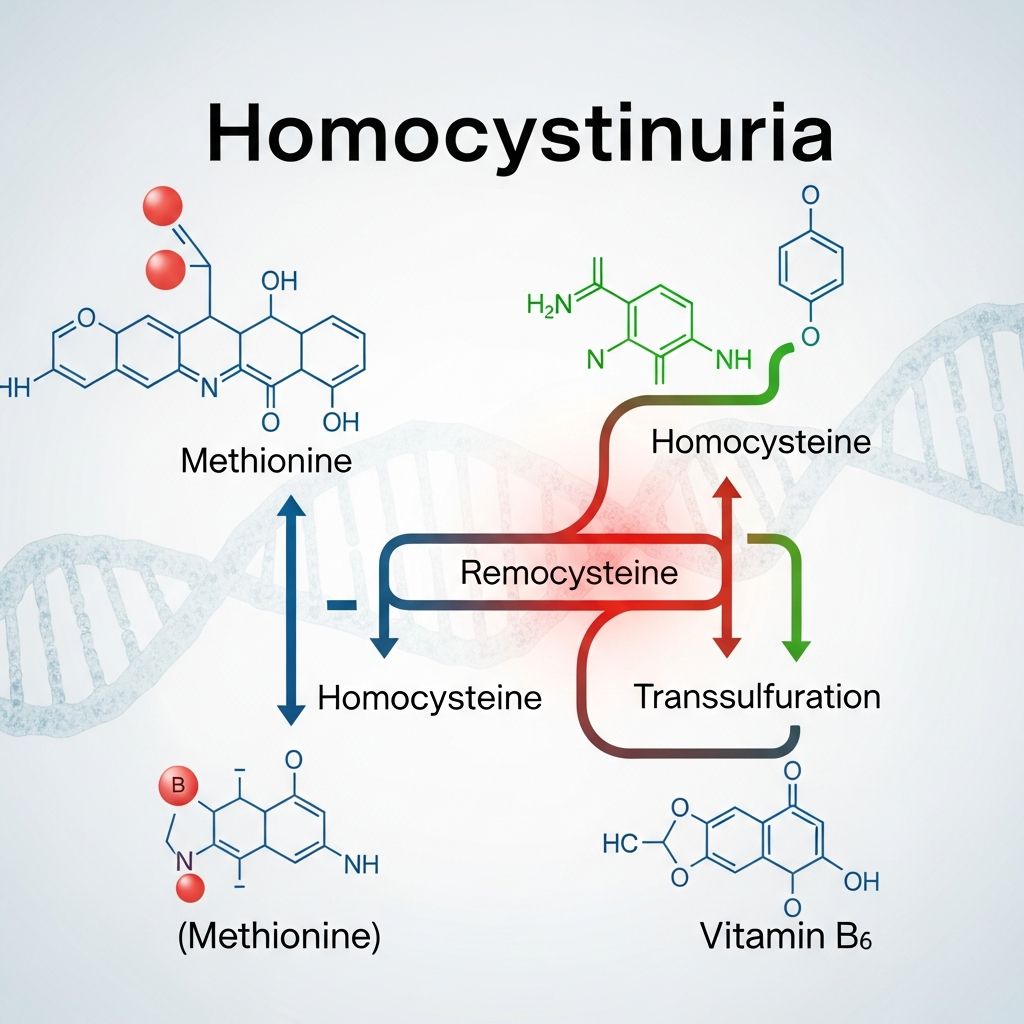
Authoritative facts about the clinical features, causes, diagnosis, and management of homocystinuria from high-credibility medical sources.
What is homocystinuria?
Homocystinuria is a rare inherited metabolic disorder characterized by the accumulation of the amino acid homocysteine in blood and urine due to defects in methionine metabolism. The most common form, classic homocystinuria, results from cystathionine beta-synthase (CBS) deficiency, an autosomal recessive condition where the enzyme fails to convert homocysteine to cystathionine. This leads to elevated homocysteine and methionine levels, causing multisystem complications including tall stature, myopia, ectopia lentis, thromboembolism, osteoporosis, and intellectual impairment if untreated.
Less common forms involve deficiencies in methylenetetrahydrofolate reductase (MTHFR) or methionine synthase, often presenting with megaloblastic anemia, failure to thrive, seizures, and movement disorders. Symptoms typically emerge in childhood, though mild cases may manifest in adulthood. Global prevalence is approximately 1 in 300,000, higher in regions with consanguinity like Ireland, Germany, Norway, and Qatar.
Who gets homocystinuria?
Homocystinuria affects individuals inheriting two defective gene copies (autosomal recessive inheritance), one from each carrier parent. Carriers are typically asymptomatic. Newborn screening in places like the U.S. detects it early via elevated methionine levels, preventing symptom onset which rarely appears before age one without treatment. It impacts all ethnic groups but is more prevalent in certain populations due to founder mutations.
Clinical features
Ocular features
Ocular manifestations are the earliest and most common, affecting 90% of untreated cases. Ectopia lentis (lens dislocation) typically develops bilaterally by age 10, downward rather than upward as in Marfan syndrome, due to homocysteine disrupting collagen cross-linking in zonular fibers. This causes severe myopia, iridodonesis, astigmatism, glaucoma, retinal detachment, and potential blindness.
Skeletal features
Skeletal abnormalities mimic Marfan syndrome, including dolichostenomelia (long limbs), arachnodactyly (long fingers), genu valgum (knock knees), pes cavus (high-arched feet), scoliosis, pectus carinatum or excavatum, and osteoporosis leading to fractures. Patients exhibit tall stature with excessive long bone growth.
Vascular features
A life-threatening complication is thromboembolism, with risks increasing from childhood. Elevated homocysteine promotes vascular damage, clotting, and events like strokes, myocardial infarctions, and pulmonary embolisms.
Central nervous system features
Intellectual disability affects 50-75% of untreated patients, with developmental delays, learning difficulties, psychiatric issues, seizures, and extrapyramidal movement disorders.
Cutaneous features
- Thin, translucent skin with prominent veins due to connective tissue weakness.
- Scalp hair often fair and sparse.
- Subcutaneous lipodystrophy and hypopigmentation in some cases.
Diagnosis
Diagnosis combines clinical suspicion with biochemical confirmation. Elevated plasma total homocysteine (>50 µmol/L) and methionine, with normal or low cysteine, is diagnostic. Newborn screening measures methionine; positive cases require enzyme assay or genetic testing for CBS mutations. Pyridoxine response is tested by measuring homocysteine decline post-vitamin B6 administration. Differential diagnoses include Marfan syndrome (upward ectopia lentis, aortic dilation) and nutritional B12/folate deficiencies.
| Test | Classic Homocystinuria | Marfan Syndrome |
|---|---|---|
| Lens dislocation direction | Downward | Upward |
| Aortic aneurysm | Rare | Common |
| Thromboembolism risk | High | Low |
| Homocysteine levels | Elevated | Normal |
Treatment
Treatment aims to lower homocysteine via pyridoxine (vitamin B6), methionine restriction, betaine, and supplements. About 50% are B6-responsive, showing dramatic homocysteine reduction.
- Pyridoxine: 100-500 mg/day for responsive cases, often lifelong.
- Methionine-restricted diet: Low-methionine formula, cystine/carnitine supplementation from infancy.
- Betaine: Remethylates homocysteine to methionine, 6-9 g/day.
- Folate/B12: Support remethylation pathway.
Betaine anhydrous (Cystadane®) is FDA-approved. Early intervention prevents complications; lens extraction for ectopia lentis, antithrombotics for clot prevention.
Complications
Untreated, complications include blindness, recurrent thromboembolism (up to 50% mortality by age 30), severe osteoporosis, and progressive intellectual decline. Vascular events can occur at any age.
Prognosis
With early diagnosis and treatment, life expectancy normalizes, and complications are minimized. B6-nonresponsive cases have guarded prognosis without strict adherence.
Frequently Asked Questions
Q: Is homocystinuria curable?
A: No cure exists, but early treatment with diet, supplements, and medications effectively manages symptoms and prevents complications.
Q: How is homocystinuria inherited?
A: Autosomal recessive; both parents must be carriers.
Q: Can homocystinuria be detected at birth?
A: Yes, via newborn screening for elevated methionine in many countries.
Q: What is the main difference from Marfan syndrome?
A: Downward lens dislocation and high thromboembolism risk versus upward dislocation and aortic issues.
Q: Does treatment reverse intellectual disability?
A: Early treatment prevents it; established impairment may not fully reverse.
Guidelines
- Screen newborns universally where possible.
- Initiate pyridoxine trial immediately on suspicion.
- Monitor plasma homocysteine quarterly.
- Annual ophthalmic and skeletal evaluations.
- Prophylactic aspirin/low-dose anticoagulants for vascular risk.
References
- Homocystinuria – Genetics – MedlinePlus — U.S. National Library of Medicine. 2023-10-15. https://medlineplus.gov/genetics/condition/homocystinuria/
- Homocystinuria – UF Health — University of Florida Health. 2024-05-20. https://ufhealth.org/conditions-and-treatments/homocystinuria
- Homocystinuria: Advances in metabolic and molecular therapies — National Center for Biotechnology Information (PMC). 2024-01-12. https://pmc.ncbi.nlm.nih.gov/articles/PMC12612801/
- Homocystinuria due to Cystathionine Beta-Synthase Deficiency — National Organization for Rare Disorders. 2023-11-08. https://rarediseases.org/rare-diseases/homocystinuria-due-to-cystathionine-beta-synthase-deficiency/
- Homocystinuria — Pentec Health. 2024-02-14. https://pentechealth.com/homocystinuria/
- Homocystinuria — Child Neurology Foundation. 2023-09-22. https://www.childneurologyfoundation.org/disorder/homocystinuria/
Similar Articles








Read full bio of Sneha Tete