Honey In Dermatology: Evidence-Based Uses & Expert Guide
Discover the remarkable antibacterial, wound-healing, and therapeutic properties of honey for skin conditions and dermatological care.
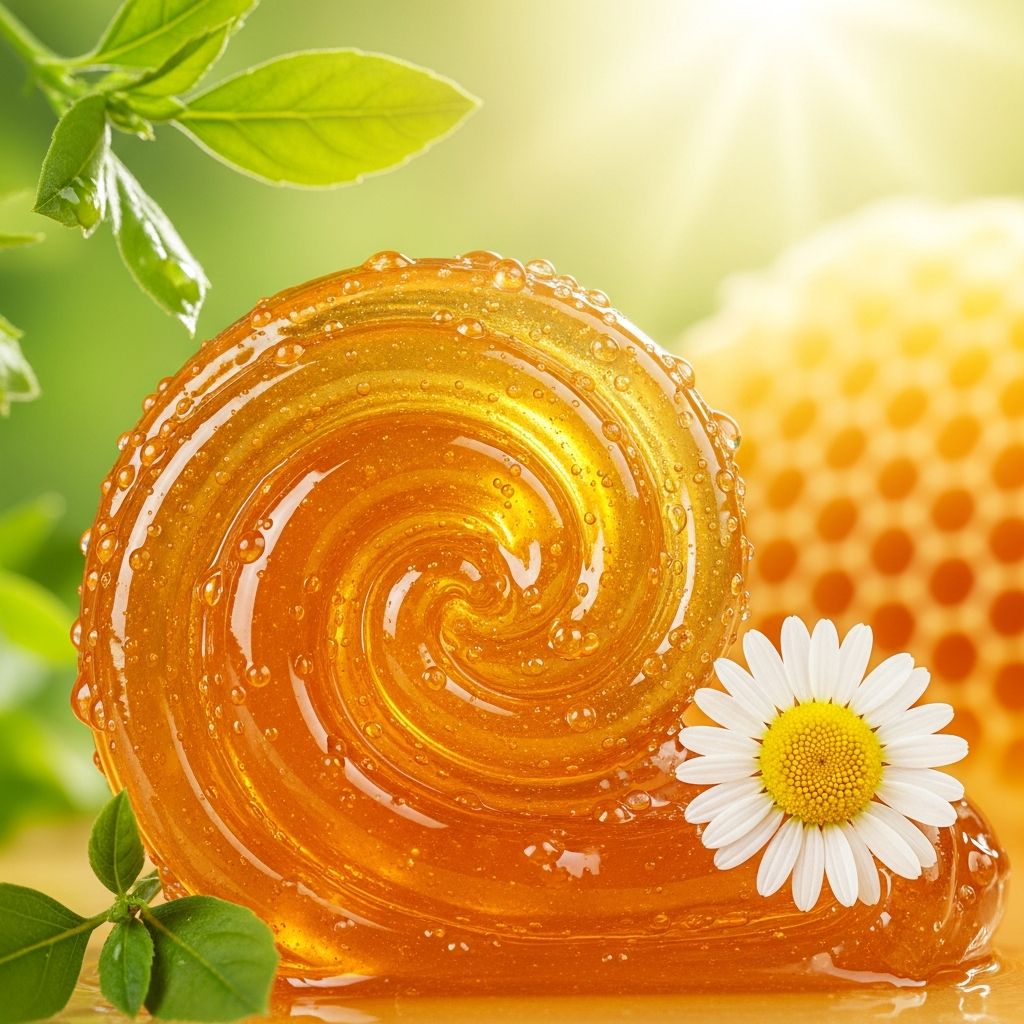
Honey, a natural product derived from bees, has been utilized for centuries in wound care and dermatological treatments due to its potent antibacterial, anti-inflammatory, and healing properties. Composed primarily of fructose and glucose, along with enzymes, vitamins, minerals, and antioxidants, honey provides remarkable benefits for various skin conditions.
What is Honey?
Honey is a supersaturated solution produced by honeybees from flower nectar. It contains mainly sugars like fructose and glucose (about 80%), water (17-20%), and minor components including proteins, amino acids, vitamins, enzymes such as glucose oxidase, minerals, flavonoids, and phenolic acids. These elements contribute to its therapeutic effects, particularly the enzymatic production of hydrogen peroxide for antimicrobial action and its hyperosmolar nature that dehydrates bacteria.
Historical records trace honey’s use in skin care to ancient civilizations, including Egyptians, Greeks, and Romans, who applied it to wounds, burns, and ulcers as a binder and healer. In modern dermatology, honey’s revival stems from its efficacy against antibiotic-resistant bacteria and promotion of tissue repair.
Types of Honey Used in Dermatology
Different honeys vary in antimicrobial potency based on floral source, processing, and geographical origin. Key types include:
- Manuka honey from Leptospermum scoparium in New Zealand and Australia: Contains high levels of methylglyoxal (MGO), responsible for non-peroxide antibacterial activity. Rated by Unique Manuka Factor (UMF), with higher ratings (e.g., UMF 10+) indicating greater potency. Medical-grade versions are gamma-irradiated for sterility without losing activity.
- Honeydew honeys (e.g., fir honeydew from Slovakia): Rich in antioxidants and effective against inflammation via cytokine modulation.
- Other varieties: Kanuka honey for rosacea, thyme and pine honeys for wounds, showing broad-spectrum activity against Staphylococcus aureus, Pseudomonas aeruginosa, and fungi.
Medical-grade honey must be sterilized and sourced from certified suppliers to ensure purity and consistent bioactivity.
Mechanisms of Action
Honey’s dermatological benefits arise from multiple mechanisms:
- Antimicrobial: Hyperosmolarity draws water from bacteria, dehydrating them. Glucose oxidase produces hydrogen peroxide. Non-peroxide factors like MGO in Manuka kill even resistant strains like MRSA. In vitro studies show activity against dermatophytes (tinea), Candida albicans (candidiasis), and Propionibacterium acnes (acne).
- Anti-inflammatory and immunomodulatory: Stimulates cytokines (TNF-α, IL-6) from keratinocytes and monocytes, aiding early wound healing. Inhibits matrix metalloproteinase-9 (MMP-9) in chronic inflammation.
- Wound healing promotion: Induces epithelial-mesenchymal transition, fibroblast activity, angiogenesis, and collagen deposition. Maintains moist wound environment, reduces scarring, and debrides necrotic tissue.
- Antioxidant: Flavonoids and phenolics neutralize free radicals, protecting against UV damage and aging.
Honey in Wound Care
Honey excels in managing acute and chronic wounds, outperforming conventional dressings in clinical trials.
- Burns: Faster healing than silver sulfadiazine or amniotic membrane (9.4 vs. 17.5 days for partial-thickness burns). Reduces pain, inflammation, and contractures.
- Ulcers (diabetic, venous, pressure): Clears infection, promotes granulation. In one study, 29/33 patients healed in 5-6 weeks with good-quality tissue.
- Surgical wounds: Prevents infection post-Caesarean or amputation, reducing hospital stays.
Application: Use sterile honey-impregnated dressings changed daily, covering with secondary absorbent layer. Effective even on infected wounds due to biofilm disruption.
Honey for Other Skin Conditions
Beyond wounds, honey treats various dermatoses:
| Condition | Evidence | Honey Type |
|---|---|---|
| Acne | Inhibits P. acnes; reduces lesions in trials. | Manuka, kanuka |
| Rosacea | Kanuka honey lotion reduced severity vs. placebo. | Kanuka |
| Atopic dermatitis | Moisturizes, reduces Staphylococcus; improves SCORAD scores. | Medical-grade |
| Psoriasis | Anti-inflammatory; case reports show plaque reduction. | Manuka |
| Tinea/seborrhea | Antifungal activity against dermatophytes, Malassezia. | Various |
| Infantile haemangiomas | Topical application regressed lesions in case series. | Manuka |
Related Stories



Positive effects also in radiation dermatitis (lower incidence and shorter duration vs. aqueous cream) and necrotizing fasciitis adjunct therapy.
Honey in Cosmetics
In formulations (1-10%, up to 70% in gels), honey acts as humectant, emollient, and pH regulator:
- Lip balms, cleansing milks, hydrating creams, shampoos, conditioners.
- Retards wrinkles, conditions hair, prevents infections.
Intermediate-moisture or modified honeys enhance stability.
Adverse Effects
Honey is generally safe topically. Rare issues:
- Pain/stinging in 1-2% of burns due to osmosis (resolves quickly).
- Allergy in bee-sting allergic patients (test patch first).
- Infant botulism risk orally (not topical).
Non-medical honeys may contain contaminants; use UMF-certified only.
Conclusion
Honey bridges traditional remedies and evidence-based dermatology, offering cost-effective treatment for wounds and skin disorders amid rising antimicrobial resistance. Further RCTs are needed, but current data support its integration into clinical practice.
Frequently Asked Questions
What type of honey is best for wounds?
Medical-grade Manuka honey with UMF 10+ or higher for potent non-peroxide activity.
Can honey be used on infected wounds?
Yes, it clears biofilms and kills resistant bacteria like MRSA.
Is honey safe for children’s skin?
Yes topically, but avoid oral use in infants under 1 year due to botulism spores.
How does Manuka honey differ from regular honey?
Manuka has MGO for stable antibacterial action beyond peroxide, unlike regular honey.
Can honey help with acne or eczema?
Clinical evidence shows reduction in acne lesions and eczema severity via antimicrobial and anti-inflammatory effects.
References
- Honey in dermatology and skin care: A review — ResearchGate/Uniupo. 2017. https://research.uniupo.it/en/publications/honey-in-dermatology-and-skin-care-a-review/
- Honey: A Therapeutic Agent for Disorders of the Skin — PMC/NCBI. 2017-10-01. https://pmc.ncbi.nlm.nih.gov/articles/PMC5661189/
- Honey’s use in skin therapy — Dermatology Times. 2023. https://www.dermatologytimes.com/view/honeys-use-skin-therapy
- Honey in Wound Care — DermNet NZ. 2024. https://dermnetnz.org/topics/honey
- Honey therapies for dermatological disorders — Wiley Online Library. 2023-05-12. https://onlinelibrary.wiley.com/doi/10.1111/ijd.16925
- Honey as a dressing for wounds, burns and ulcers — Beekeeping.co.nz. 2003. http://www.beekeeping.co.nz/info/molan.htm
Similar Articles








Read full bio of medha deb