Honeydew Melon Benefits: 7 Key Health Perks for Heart & Skin
Discover the impressive health benefits of honeydew melon, from hydration and blood pressure support to immune boosting and skin health.
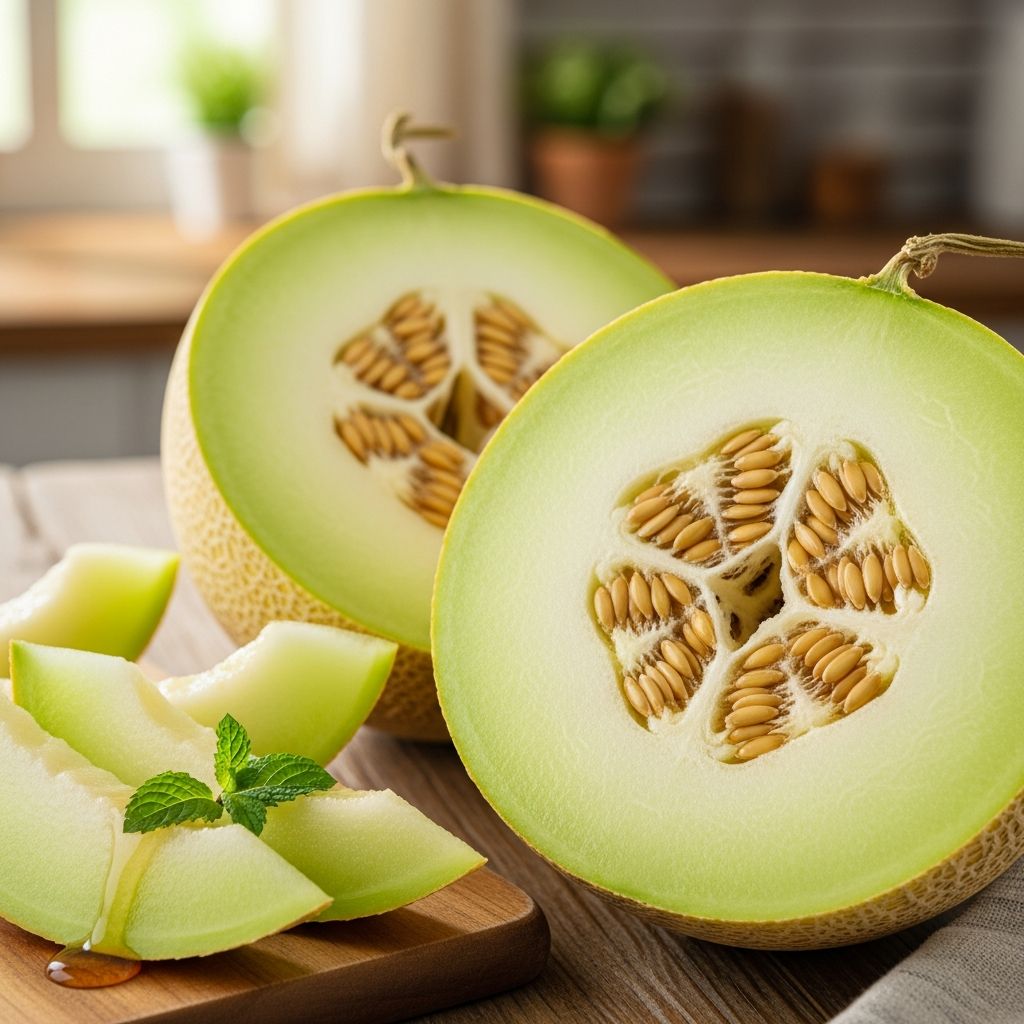
Honeydew melon, with its pale green flesh and sweet, juicy flavor, is more than just a refreshing summer treat. This low-calorie fruit is packed with essential nutrients like vitamin C, potassium, folate, and magnesium, offering a range of health benefits from heart health to immune support.
What Is Honeydew Melon?
Honeydew melon (Cucumis melo var. inodorus) is a member of the melon family, characterized by its smooth, light green or yellowish rind and vibrant green interior. Originating from the Middle East and parts of Asia, it has become a staple in diets worldwide due to its mild sweetness and high water content, making it ideal for hydration.
One cup (about 170 grams) of honeydew provides approximately 60 calories, primarily from natural sugars, along with 51% of the daily recommended value for vitamin C and 11% for potassium. It also contains fiber, folate, vitamin B6, and antioxidants like hydroxycinnamic acid, flavonoids, and polyphenols.
Honeydew Melon Nutrition Facts
Honeydew is nutrient-dense yet low in calories, making it an excellent addition to a balanced diet. Key nutritional highlights per 1-cup (170g) serving include:
- Calories: 60
- Carbohydrates: 15g (including 8g sugars)
- Fiber: 1.4g (5% DV)
- Vitamin C: 34% DV (essential for immunity and skin)
- Potassium: 8-11% DV (supports blood pressure)
- Folate: 8% DV (bone health)
- Vitamin K: 4% DV
- Magnesium: 4-17mg (4% DV)
- Water content: ~90%
These nutrients contribute to its role in hydration, electrolyte balance, and disease prevention.
Potential Health Benefits of Honeydew Melon
May Help Reduce Blood Pressure
A diet rich in fruits and vegetables like honeydew can lower the risk of high blood pressure and heart disease. Honeydew is low in sodium and high in potassium—one cup provides about 8% of the recommended daily intake (RDI)—which helps regulate blood pressure by counteracting sodium’s effects and relaxing blood vessel walls.
Research on melons shows their high water and mineral content, including nitric oxide (NO) induction activity, may further reduce blood pressure. Some varieties exhibit significant ACE inhibition, linked to hypertension prevention.
Contains Nutrients Vital to Bone Health
Honeydew supplies folate, vitamin K, and magnesium, all crucial for bone maintenance. Folate (8% RDI per serving) helps break down homocysteine, high levels of which are associated with reduced bone mineral density. Vitamin K (4% RDI) aids in osteocalcin production, a key bone protein, while magnesium supports bone-building cells.
Including honeydew in your diet may promote bone strength, especially when combined with other nutrient-rich foods.
May Improve Blood Sugar Management
Regular consumption of whole fruits like honeydew is linked to better blood sugar control. A 2022 study of over 79,000 adults found daily fresh fruit intake associated with a 2.8% lower diabetes risk. An older 2017 study of 500,000 people showed daily fruit eaters were 12% less likely to develop diabetes, with benefits for those already diagnosed.
Related Stories



Despite its carbs, honeydew’s fiber and nutrients help moderate blood sugar responses over time.
Rich in Electrolytes and Water
Comprising about 90% water, honeydew also provides electrolytes like potassium, magnesium, sodium, and calcium. This makes it superior for hydration compared to water alone, especially post-workout, during illness, or in hot weather.
Melons’ low-energy density and high fiber content promote satiety, aiding weight management without empty calories.
May Support Healthy Skin
Honeydew’s vitamin C (34% RDI per cup) is vital for collagen production, essential for skin repair and elasticity. As an antioxidant, it may protect against sun damage.
May Support Your Immune System
Vitamin C is a cornerstone of immune function. Adequate intake may shorten colds, manage infections like pneumonia, and reduce risks of cancer and cardiovascular disease. Honeydew’s 34% DV per serving makes it a potent immune booster.
May Promote Proper Digestion
With 1.4g fiber per cup (5% RDI), honeydew supports bowel regularity, slows blood sugar absorption, and fosters healthy gut bacteria.
How to Select and Store Honeydew Melon
Choose honeydews that are heavy for their size, with a waxy, creamy rind free of soft spots. A slight yellowish tint indicates ripeness. Store whole melons at room temperature until ripe, then refrigerate cut pieces for up to 5 days.
Healthy Ways to Enjoy Honeydew Melon
- Fresh slices or cubes as a snack
- Added to fruit salads or smoothies
- Wrapped in prosciutto for a savory twist
- Blended into sorbet or gazpacho
- Topped with yogurt and nuts for breakfast
Incorporate 1-2 cups daily for optimal benefits.
Frequently Asked Questions (FAQs)
Is honeydew melon good for you?
Yes, honeydew is low-calorie, hydrating, and rich in vitamin C, potassium, and antioxidants, supporting heart health, bones, immunity, and more.
Can you eat honeydew melon every day?
Absolutely, in moderation as part of a balanced diet. Its nutrients enhance overall health without high calories.
Does honeydew melon have a lot of sugar?
It contains natural sugars (8g per cup), but fiber and water help manage blood sugar. Better than processed sweets.
Is honeydew better than watermelon?
Both are healthy; honeydew excels in vitamin C and folate, watermelon in lycopene. Variety is key.
Can honeydew help with weight loss?
Its low calories, high water, and fiber promote fullness, aiding weight management.
References
- 10 Surprising Benefits of Honeydew Melon — Healthline. 2023. https://www.healthline.com/nutrition/honeydew
- Discover the Sweet Health Benefits of Summertime Melons — Baton Rouge Clinic. 2023. https://batonrougeclinic.com/news-education/discover-the-sweet-health-benefits-of-summertime-melons/
- Beat the heat with heart-healthy cantaloupe, honeydew, and watermelon — UT Southwestern Medical Center. 2023. https://utswmed.org/medblog/health-benefits-cantaloupe-watermelon/
- Nutritional Composition and Health Benefits of Various Botanical Forms of Melons — PMC (Peer-reviewed). 2021-09-22. https://pmc.ncbi.nlm.nih.gov/articles/PMC8469201/
Similar Articles








Read full bio of medha deb